Species · Insects · Extinct
Napakimyrma paskapooensis
Napakimyrma paskapooensis has no English name on record in the checklists used here. It is an extinct species of insect in the family Formicidae (ant), order Hymenoptera. The name dates from 2018.
- Scientific name
- Napakimyrma paskapooensis LaPolla & Barden, 2018
- Genus
- Napakimyrma
- Family
- Formicidae (Ant)
- Order
- Hymenoptera
- Class
- Insecta
- Name status
- accepted in the Catalogue of Life
Classification of Napakimyrma paskapooensis
| Kingdom | Animalia |
|---|---|
| Phylum | Arthropoda |
| Subphylum | Hexapoda |
| Class | Insecta (Insect) |
| Order | Hymenoptera (Ants) |
| Suborder | Apocrita (Ants) |
| Infraorder | Aculeata |
| Superfamily | Formicoidea |
| Family | Formicidae (Ant) |
| Subfamily | Aneuretinae |
| Genus | Napakimyrma |
| Species | Napakimyrma paskapooensis LaPolla & Barden, 2018 |
Related species
-
 Bullet AntParaponera clavata
-
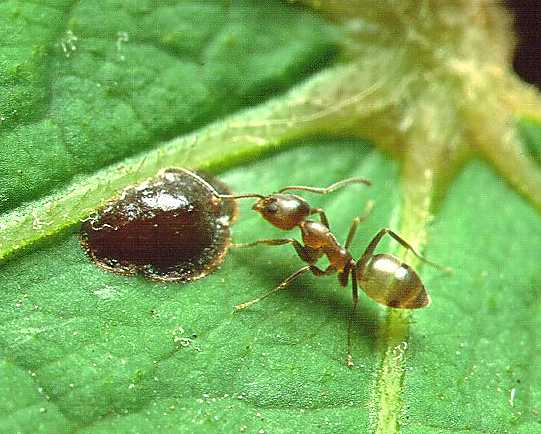 Argentine AntLinepithema humile
-
 Red Imported Fire AntSolenopsis invicta
-
 Yellow Crazy AntAnoplolepis gracilipes
-
 Pharaoh AntMonomorium pharaonis
- Jack Jumper AntMyrmecia pilosula
- Meat AntIridomyrmex purpureus
-
 Black Garden AntLasius niger
Compare
Sources
Data
- Catalogue of Life, 2026-10-16 XR cc by
- Within the Catalogue of Life, this name comes from An Online Catalog of the Ants of the World cc by
References
- LaPolla, J. S., & Barden, P. (2018). A new aneuretine ant from the Paleocene Paskapoo Formation of Canada. Acta Palaeontologica Polonica, 63 (3), 435–440. https://doi.org/10.4202/app.00478.2018 Link where the name was published
This species in other databases
Page built on 26 November 2026. See how the catalog is made and all sources and licences.
Cite this page
ScientificNames.org. (2026). Napakimyrma paskapooensis. Retrieved November 26, 2026, from https://scientificnames.org/species/napakimyrma-paskapooensis
“Napakimyrma paskapooensis.” ScientificNames.org, 2026, scientificnames.org/species/napakimyrma-paskapooensis. Accessed 26 Nov. 2026.
ScientificNames.org. “Napakimyrma paskapooensis.” Accessed November 26, 2026. https://scientificnames.org/species/napakimyrma-paskapooensis.
@misc{scientificnames_napakimyrma_paskapooensis,
  author = {{ScientificNames.org}},
  title = {Napakimyrma paskapooensis},
  year = {2026},
  url = {https://scientificnames.org/species/napakimyrma-paskapooensis},
  note = {Accessed 2026-11-26}
}