Species · Amphibians
Mount Nimba Viviparous Toad Nimbaphrynoides occidentalis
The scientific name of the Mount Nimba Viviparous Toad is Nimbaphrynoides occidentalis. It is a species of amphibian in the family Bufonidae (true toad), order Anura. The name dates from 1943.
- Scientific name
- Nimbaphrynoides occidentalis (Angel, 1943)
- Common name
- Mount Nimba Viviparous Toad
- Genus
- Nimbaphrynoides
- Family
- Bufonidae (True Toad)
- Order
- Anura
- Class
- Amphibia
- Red List category
- CR Critically Endangered
- Recorded in
- 5 countries
- Name status
- accepted in the Catalogue of Life

Overview
Nimbaphrynoides occidentalis occurs in the Mount Nimba region of Guinea, Liberia, and Côte d'Ivoire. Females give birth to fully developed, very small toadlets after internal fertilization.
Written 26 November 2026 from the sources listed below. Each statement was checked against the passage it cites; statements that could not be supported were removed.
Habitat
The Mount Nimba Viviparous Toad inhabits montane grasslands at elevations between 1,200 and 1,680 metres above sea level. It is associated with less disturbed areas where the soil is uncompacted or only slightly compacted.[1][2]
Appearance
Adult dorsal coloration is variable and commonly ranges from brown to black. Some individuals have uniformly coloured backs or irregular mixtures of lighter and darker brown.[3][4]
Lighter coloration occurs on parts of the head, including the snout and eyelids. The legs are light brown with irregularly bordered darker stripes or dots, and the underside is typically white.[5][6][7]
Juveniles have brighter-coloured backs than adults.[8]
Adult males of the western subspecies average 18 mm in snout–vent length, while adult females average 20.5 mm.[9][10]
Behaviour
The species is intolerant of habitat disturbance.[11]
The male advertisement call is very faint and short and resembles a metallic 'bing'.[12]
Reproduction and life cycle
The species reproduces through internal fertilization. Females give birth to fully developed, very small toadlets.[13][14]
The eggs measure approximately 0.5–0.6 mm in diameter.[15]
Conservation
The species can be locally very common despite having a severely fragmented population. Mining has affected its habitat in the Mount Nimba region.[16][17]
A proposed iron ore mining concession is identified as a future threat. Part of the population is protected within the Mount Nimba Strict Nature Reserve.[18][19]
Improved management of the Mount Nimba Strict Nature Reserve is considered necessary.[20]
Similar species
The calls of the two historically recognized forms are similar, and their genetic differences are minor.[21]
Classification of the Mount Nimba Viviparous Toad
| Kingdom | Animalia |
|---|---|
| Phylum | Chordata |
| Subphylum | Vertebrata |
| Infraphylum | Gnathostomata |
| Parvphylum | Osteichthyes |
| Megaclass | Tetrapoda |
| Class | Amphibia (Amphibians) |
| Order | Anura (Frogs) |
| Family | Bufonidae (True Toad) |
| Genus | Nimbaphrynoides (Nimba Toads) |
| Species | Nimbaphrynoides occidentalis (Angel, 1943) |
Where the Mount Nimba Viviparous Toad is found
Checklists and occurrence records place Nimbaphrynoides occidentalis in 5 countries across Africa. GBIF holds 3,299 georeferenced records of it.
Countries
Regions and cities with the most records
Range as the checklists state it
Africa
A number beside a place is its count of GBIF occurrence records. A place without a number comes from a checklist alone. Records show where a species has been observed or collected, which can include escapes and vagrants.
Common names
English
- Mount Nimba Viviparous Toad
- Western Nimba Toad
Names in 3 other languages
- Czech
- ropucha nimba
- Japanese
- ニシコモチヒキガエル
- Russian
- Живородящая жаба
Synonyms
5 other scientific names have been used for this species and are now treated as synonyms of Nimbaphrynoides occidentalis.
- Nectophrynoides liberiensis Xavier, 1979
- Nectophrynoides occidentalis Angel, 1943
- Nectophrynoides occidentalis liberiensis Xavier, 1979
- Nectophrynoides occidentalis occidentalis Angel, 1943
- Nimbaphrynoides liberiensis (Xavier, 1979)
Related species
- Cane ToadRhinella marina
-
 Colorado River ToadIncilius alvarius
-
 Common ToadBufo bufo
-
 American ToadAnaxyrus americanus
-
 Panamanian Golden FrogAtelopus zeteki
-
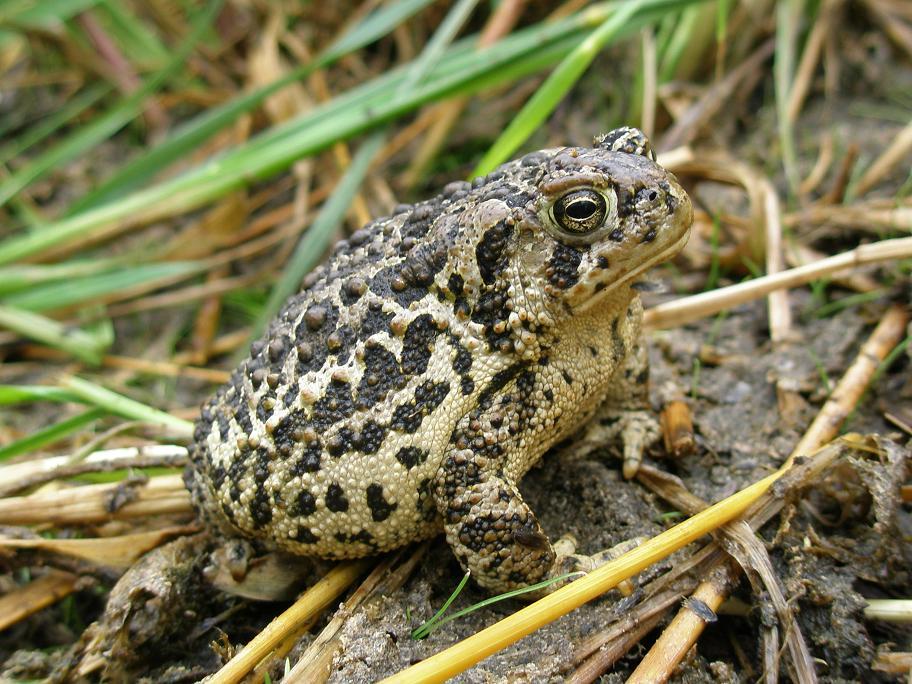 Wyoming ToadAnaxyrus baxteri
-
 Kihansi Spray ToadNectophrynoides asperginis
-
 Natterjack ToadEpidalea calamita
Compare
Questions and answers
What is the scientific name of the Mount Nimba Viviparous Toad?
The scientific name of the Mount Nimba Viviparous Toad is Nimbaphrynoides occidentalis. Written with its author, the full name is Nimbaphrynoides occidentalis (Angel, 1943).
Which family does the Mount Nimba Viviparous Toad belong to?
Nimbaphrynoides occidentalis belongs to the family Bufonidae, in the order Anura and the class Amphibia.
Where is the Mount Nimba Viviparous Toad found?
Checklists and occurrence records place Nimbaphrynoides occidentalis in 5 countries: Guinea, Ivory Coast, Liberia, Benin and Sierra Leone.
What is the conservation status of the Mount Nimba Viviparous Toad?
The IUCN Red List category recorded for Nimbaphrynoides occidentalis is Critically Endangered (CR).
What other names does the Mount Nimba Viviparous Toad have?
Nimbaphrynoides occidentalis is also known in English as Western Nimba Toad.
Sources
Passages the profile rests on
- The species inhabits montane grasslands at elevations between 1,200 and 1,680 metres above sea level. Source passage: “Nimbaphrynoides occur in montane grasslands at elevations of 1,200–1,680 m (3,940–5,510 ft) above sea level.” — English Wikipedia
- The species is associated with less disturbed areas where the soil is uncompacted or only slightly compacted. Source passage: “recent observations are from less impacted areas where soil was not compacted or little compacted.” — English Wikipedia
- The adult dorsal coloration is variable and commonly ranges from brown to black. Source passage: “The dorsum in most individuals is brown to black backs, without a distinct border between the two colours.” — English Wikipedia
- Some individuals have uniformly coloured backs or irregular mixtures of lighter and darker brown. Source passage: “It may also be uniform in colouration, or have lighter and darker browns irregularly mixed.” — English Wikipedia
- Lighter coloration occurs on parts of the head, including the snout and eyelids. Source passage: “There are some lighter areas in the head, at least on the snout and the eye-lids.” — English Wikipedia
- The legs are light brown and bear irregularly bordered darker stripes or dots. Source passage: “The legs are light brown with irregularly bordered darker stripes or dots.” — English Wikipedia
- The underside is typically white. Source passage: “The venter is typically white” — English Wikipedia
- Juveniles have brighter-coloured backs than adults. Source passage: “Juveniles had brighter coloured backs than adults.” — English Wikipedia
- Adult males of the western subspecies average 18 mm in snout–vent length. Source passage: “Adult males of Nimbaphrynoides occidentalis occidentalis measure on average 18 mm (0.7 in)” — English Wikipedia
- Adult females of the western subspecies average 20.5 mm in snout–vent length. Source passage: “adult females on average 20.5 mm (0.8 in) in snout–vent length.” — English Wikipedia
- The species is intolerant of habitat disturbance. Source passage: “It is not tolerant to disturbance” — English Wikipedia
- The male advertisement call is very faint and short and resembles a metallic 'bing'. Source passage: “The male advertisement call is very faint, short, and resembles a metallic "bing".” — English Wikipedia
- The species reproduces through internal fertilization. Source passage: “Nimbaphrynoides are viviparous—they have internal fertilisation” — English Wikipedia
- Females give birth to fully developed, very small toadlets. Source passage: “the female gives birth to fully developed, tiny toadlets.” — English Wikipedia
- The eggs measure approximately 0.5–0.6 mm in diameter. Source passage: “Eggs are small, ranging from 0.5–0.6 mm in diameter.” — English Wikipedia
- The species can be locally very common despite having a severely fragmented population. Source passage: “It can be locally very common, but the population is severely fragmented.” — English Wikipedia
- Mining has affected the species' habitat in the Mount Nimba region. Source passage: “The area has been affected by mining” — English Wikipedia
- A proposed iron ore mining concession is identified as a future threat. Source passage: “Future threats include a proposed iron ore mining concession” — English Wikipedia
- Part of the species' population is protected within the Mount Nimba Strict Nature Reserve. Source passage: “Part of the population is protected by the Mount Nimba Strict Nature Reserve” — English Wikipedia
- Improved management of the Mount Nimba Strict Nature Reserve is considered necessary. Source passage: “although improved management of the site is required.” — English Wikipedia
- The calls of the two historically recognized forms are similar, and their genetic differences are minor. Source passage: “However, their calls are similar, and the genetic differences are minor.” — English Wikipedia
- The species was originally described under the genus Nectophrynoides in 1943. Source passage: “Nimbaphrynoides occidentalis was first described as Nectophrynoides occidentalis by Fernand Angel in 1943.” — English Wikipedia
- The species was transferred to the genus Nimbaphrynoides in 1987. Source passage: “The two were then transferred to a newly erected genus Nimbaphrynoides in 1987.” — English Wikipedia
Data
- Catalogue of Life, 2026-10-16 XR cc by
- Global Biodiversity Information Facility CC BY 4.0
- Wikidata CC0
- GeoNames CC BY 4.0
- Wikimedia Commons per image; credit shown with each image
- Within the Catalogue of Life, this name comes from The Integrated Taxonomic Information System cc0
This species in other databases
Page built on 28 November 2026. See how the catalog is made and all sources and licences.
Cite this page
ScientificNames.org. (2026). Nimbaphrynoides occidentalis (Mount Nimba Viviparous Toad). Retrieved November 28, 2026, from https://scientificnames.org/species/nimbaphrynoides-occidentalis
“Nimbaphrynoides occidentalis (Mount Nimba Viviparous Toad).” ScientificNames.org, 2026, scientificnames.org/species/nimbaphrynoides-occidentalis. Accessed 28 Nov. 2026.
ScientificNames.org. “Nimbaphrynoides occidentalis (Mount Nimba Viviparous Toad).” Accessed November 28, 2026. https://scientificnames.org/species/nimbaphrynoides-occidentalis.
@misc{scientificnames_nimbaphrynoides_occidentalis_mount_nimba_viviparous_toad,
  author = {{ScientificNames.org}},
  title = {Nimbaphrynoides occidentalis (Mount Nimba Viviparous Toad)},
  year = {2026},
  url = {https://scientificnames.org/species/nimbaphrynoides-occidentalis},
  note = {Accessed 2026-11-28}
}