Species · Fishes
Nothobranchius chochamandai
Nothobranchius chochamandai has no English name on record in the checklists used here. It is a species of fish in the family Nothobranchiidae (african rivulines), order Cyprinodontiformes. The name dates from 2014.
- Scientific name
- Nothobranchius chochamandai Nagy, 2014
- Genus
- Nothobranchius
- Family
- Nothobranchiidae (African Rivulines)
- Order
- Cyprinodontiformes
- Class
- Teleostei
- Red List category
- VU Vulnerable
- Environment
- freshwater
- Recorded in
- 1 country
- Name status
- accepted in the Catalogue of Life
Overview
The name honours Auguste Chocha Manda of the University of Lubumbashi for his dedication to researching fishes in his country.
Written 27 November 2026 from the sources listed below. Each statement was checked against the passage it cites; statements that could not be supported were removed.
Classification of Nothobranchius chochamandai
| Kingdom | Animalia |
|---|---|
| Phylum | Chordata |
| Subphylum | Vertebrata |
| Infraphylum | Gnathostomata |
| Parvphylum | Osteichthyes |
| Gigaclass | Actinopterygii |
| Superclass | Actinopteri |
| Class | Teleostei (Teleost) |
| Order | Cyprinodontiformes |
| Family | Nothobranchiidae (African Rivulines) |
| Genus | Nothobranchius (Nothobranchs) |
| Species | Nothobranchius chochamandai Nagy, 2014 |
Where Nothobranchius chochamandai is found
Checklists and occurrence records place Nothobranchius chochamandai in 1 country. GBIF holds 10 georeferenced records of it.
Countries
Regions and cities with the most records
A number beside a place is its count of GBIF occurrence records. A place without a number comes from a checklist alone. Records show where a species has been observed or collected, which can include escapes and vagrants.
Related species
-
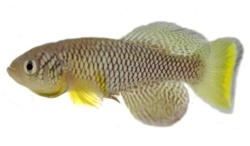 Turquoise KillifishNothobranchius furzeri
-
 Bluefin NothoNothobranchius rachovii
-
 Redtail NothoNothobranchius guentheri
-
 Spotted KillifishNothobranchius orthonotus
-
 Egger's KillifishNothobranchius eggersi
-
 Nothobranchius foerschi
- Nothobranchius attenboroughi
-
 Nothobranchius flammicomantis
Compare
Questions and answers
Where is Nothobranchius chochamandai found?
It is endemic to south-eastern Democratic Republic of Congo.[1]
Who is Nothobranchius chochamandai named after?
Its name honours Auguste Chocha Manda of the University of Lubumbashi for his dedication to researching fishes in his country.[2]
Sources
Passages the profile rests on
- Nothobranchius chochamandai is endemic to south-eastern Democratic Republic of Congo. Source passage: “This species is endemic to south-eastern Democratic Republic of Congo.” — English Wikipedia
- The species' name honours Auguste Chocha Manda of the University of Lubumbashi for his dedication to researching fishes in his country. Source passage: “The fish is named in honor of Auguste Chocha Manda, of the University of Lubumbashi in Katanga, Democratic Republic of the Congo, because of his dedication in the research of the fishes of his country.” — English Wikipedia
Data
- Catalogue of Life, 2026-10-16 XR cc by
- Global Biodiversity Information Facility CC BY 4.0
- Wikidata CC0
- GeoNames CC BY 4.0
- Within the Catalogue of Life, this name comes from World Register of Marine Species cc by
References
- Nagy, B. (2014). Nothobranchius flagrans, a new species of annual killifish from the Lufira drainage, Democratic Republic of Congo (Cyprinodontiformes: Nothobranchiidae). Ichthyological Exploration of Freshwaters, 25. where the name was published
This species in other databases
- Catalogue of Life 47SLD
- Wikidata Q21761054
- iNaturalist 618260
- WoRMS urn:lsid:marinespecies.org:taxname:1007108
Page built on 28 November 2026. See how the catalog is made and all sources and licences.
Cite this page
ScientificNames.org. (2026). Nothobranchius chochamandai. Retrieved November 28, 2026, from https://scientificnames.org/species/nothobranchius-chochamandai
“Nothobranchius chochamandai.” ScientificNames.org, 2026, scientificnames.org/species/nothobranchius-chochamandai. Accessed 28 Nov. 2026.
ScientificNames.org. “Nothobranchius chochamandai.” Accessed November 28, 2026. https://scientificnames.org/species/nothobranchius-chochamandai.
@misc{scientificnames_nothobranchius_chochamandai,
  author = {{ScientificNames.org}},
  title = {Nothobranchius chochamandai},
  year = {2026},
  url = {https://scientificnames.org/species/nothobranchius-chochamandai},
  note = {Accessed 2026-11-28}
}