Species · Insects
Black Fog-basking Namib Darkling Onymacris unguicularis
The scientific name of the Black Fog-basking Namib Darkling is Onymacris unguicularis. It is a species of insect in the family Tenebrionidae (darkling beetle), order Coleoptera.
- Scientific name
- Onymacris unguicularis
- Common name
- Black Fog-basking Namib Darkling
- Genus
- Onymacris
- Family
- Tenebrionidae (Darkling Beetle)
- Order
- Coleoptera
- Class
- Insecta
- Recorded in
- 1 country
- Name status
- accepted in the Catalogue of Life

Overview
The species inhabits the coastal regions and major dune fields of the northern and southern sand seas of the Namib Desert. It is distinguished by its headstanding fog-basking behaviour, during which fog droplets condense on its elytra and flow into its mouth.
Written 26 November 2026 from the sources listed below. Each statement was checked against the passage it cites; statements that could not be supported were removed.
Appearance
The beetle has an entirely black body. Its elytra are fused, and it lacks wings.[1][2]
The elytra are almost entirely smooth, with prominent grooves on their rear halves. These grooves are approximately 0.5 mm wide and separated by narrow ridges.[3][4]
Males have longer legs than females and possess setose brushes on their anterior femora. Females generally have wider elytra than males.[5][6][7]
The northern subspecies has shorter elytra than the southern subspecies.[8]
Among the four beetle species examined in a comparative study, O. unguicularis had the second-largest dorsal surface area.[9]
Habitat
The species inhabits the coastal regions of the Namib Desert and occupies major dune fields in its northern and southern sand seas. The Namib Desert receives less than 50 mm of rainfall annually.[10][11][12]
Fog provides an important source of moisture in the species' desert environment. Fog originating from the coastal current can extend as far as 100 km inland into the Namib Desert.[13][14]
Fog events occur approximately 30 days per year in the inland Namib Desert.[15]
Diet
The species obtains some moisture while foraging on detritus during the daytime.[16]
Behaviour
During fog-basking, the beetle faces into the wind, positions its head toward the ground, and raises its back toward the wind. Its headstand posture has been observed at an angle of 23 degrees from horizontal.[17][18]
Fog droplets condense on the elytra and flow down the body into the beetle's mouth. Individual beetles have been recorded collecting water equivalent to as much as 34% of their body weight.[19][20]
High humidity associated with fog triggers the headstand posture. Temperatures below 20 degrees Celsius may influence fog-basking, but low temperatures alone do not trigger the posture. Fog is necessary to trigger the headstanding behaviour.[21][22][23]
Among the four beetle species examined in a comparative experiment, O. unguicularis was the only one that displayed headstanding fog-basking. Fog-basking is more important in water collection than differences in the structural characteristics of beetle elytra.[24][25]
The beetle's elytra are hydrophobic. Fog-basking provides the species with its primary source of water, and the collected water contributes to its osmoregulation.[26][27][28]
Fog-basking allows the species to maintain daytime activity in hot desert conditions. During normal activity, the beetle can maintain body temperatures between 32 and 38 degrees Celsius, while during fog-basking its body temperature can fall to one degree Celsius.[29][30][31]
The beetle has relatively high concentrations of glycerol and trehalose in its hemolymph compared with similar daytime-active beetles.[32]
Reproduction and life cycle
Male beetles mount stationary or moving females before copulation. Copulation can last between one and ten minutes.[33][34]
Males transfer a spermatophore into the female through a penile tube inserted into her bursa copulatrix. Newly transferred spermatophores can displace previously deposited spermatophores.[35][36]
Females exhibit polyandrous mating behaviour and mate an average of three times over a period of 35 days.[37][38]
Classification of the Black Fog-basking Namib Darkling
| Kingdom | Animalia |
|---|---|
| Phylum | Arthropoda |
| Subphylum | Hexapoda |
| Class | Insecta (Insect) |
| Order | Coleoptera (Beetle) |
| Suborder | Polyphaga |
| Series | Cucujiformia |
| Superfamily | Tenebrionoidea |
| Family | Tenebrionidae (Darkling Beetle) |
| Subfamily | Pimeliinae |
| Tribe | Adesmiini |
| Genus | Onymacris (Namib Darkling Beetles) |
| Species | Onymacris unguicularis |
This name was added to the Catalogue of Life from a contributing dataset by automated merging and has not yet been reviewed by its editors.
Where the Black Fog-basking Namib Darkling is found
Checklists and occurrence records place Onymacris unguicularis in 1 country. GBIF holds 57 georeferenced records of it.
Countries
Regions and cities with the most records
A number beside a place is its count of GBIF occurrence records. A place without a number comes from a checklist alone. Records show where a species has been observed or collected, which can include escapes and vagrants.
Common names
English
- Black Fog-basking Namib Darkling
Names in 2 other languages
- Arabic
- خنفساء رأسية الوقوف
- German
- Nebeltrinker-Käfer
Subspecies and varieties
- Onymacris unguicularis schulzeae subspecies
- Onymacris unguicularis unguicularis (Southern Black Fog-basking Namib Darkling) subspecies
Related species
- Onymacris plana
- Pied Fog-basking Namib DarklingOnymacris bicolor
- Onymacris rugatipennis
- Braine's Namib Darkling BeetleOnymacris brainei
-
 MealwormTenebrio molitor
-
 Blue Death Feigning BeetleAsbolus verrucosus
-
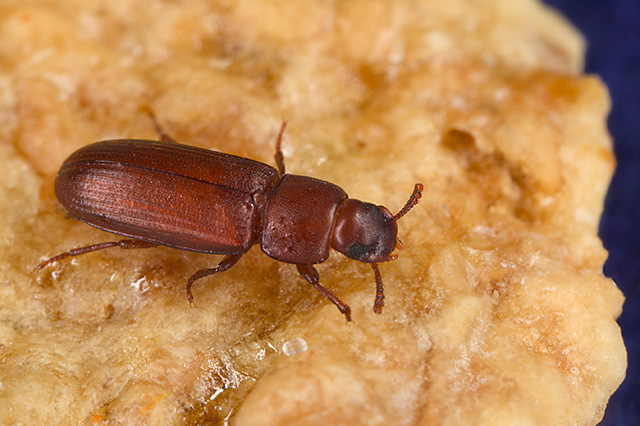 Red Flour BeetleTribolium castaneum
-
 Confused Flour BeetleTribolium confusum
Compare
Questions and answers
What is the scientific name of the Black Fog-basking Namib Darkling?
The scientific name of the Black Fog-basking Namib Darkling is Onymacris unguicularis.
Which family does the Black Fog-basking Namib Darkling belong to?
Onymacris unguicularis belongs to the family Tenebrionidae, in the order Coleoptera and the class Insecta.
Where is the Black Fog-basking Namib Darkling found?
Checklists and occurrence records place Onymacris unguicularis in 1 country: Namibia.
Sources
Passages the profile rests on
- The beetle has an entirely black body. Source passage: “Onymacris unguicularis is a fully black beetle” — English Wikipedia
- Its elytra are fused and it lacks wings. Source passage: “with a fused elytra and no wings.” — English Wikipedia
- The elytra are almost entirely smooth, with prominent grooves on their rear halves. Source passage: “The elytra are almost completely smooth, except for the back half which has large distinct grooves.” — English Wikipedia
- The grooves on the rear halves of its elytra are approximately 0.5 mm wide and separated by narrow ridges. Source passage: “These grooves are approximately 0.5 mm wide and are divided by narrow ridges.” — English Wikipedia
- Males have longer legs than females. Source passage: “Males have longer legs compared to females” — English Wikipedia
- Males possess setose brushes on their anterior femora. Source passage: “as well as setose brushes on the anterior femora.” — English Wikipedia
- Females generally have wider elytra than males. Source passage: “Females tend to have wider elytra than their male counterparts.” — English Wikipedia
- The northern subspecies has shorter elytra than the southern subspecies. Source passage: “the northern Onymacris unguicularis schulzeae having shorter elytra when compared to the southern Onymacris unguicularis unguicularis.” — English Wikipedia
- Among the four beetle species examined in a comparative study, O. unguicularis had the second-largest dorsal surface area. Source passage: “the second largest O. unguicularis” — pmc.ncbi.nlm.nih.gov
- The species inhabits the coastal regions of the Namib Desert. Source passage: “The coastal regions of the Namib Desert serve as the natural habitat of Onymacris unguicularis.” — English Wikipedia
- The species occupies major dune fields in the northern and southern sand seas of the Namib Desert. Source passage: “The species is confined to the major dune fields within the northern (Cunene, Skeleton Coast) and southern (Namib) sand seas of the desert.” — English Wikipedia
- The Namib Desert receives less than 50 mm of rainfall annually. Source passage: “The Namib Desert annually receives less than 50 mm of rainfall overall” — English Wikipedia
- Fog provides an important source of moisture in the species' desert environment. Source passage: “A majority of the moisture is brought in by fogs blowing from the ocean, bringing water droplets that condensate across the environment.” — English Wikipedia
- Fog originating from the coastal current can extend as far as 100 km inland into the Namib Desert. Source passage: “fog that can reach as much as 100 km inland from the coast” — pmc.ncbi.nlm.nih.gov
- Fog events occur approximately 30 days per year in the inland Namib Desert. Source passage: “These fog events occur approximately 30 days per year in the inland desert” — pmc.ncbi.nlm.nih.gov
- The species obtains some moisture while foraging on detritus during the daytime. Source passage: “Moisture obtained from foraging detritus during the daytime is insufficient to maintain maximum foraging activity or egg production.” — English Wikipedia
- During fog-basking, the beetle faces into the wind while positioning its head toward the ground and raising its back toward the wind. Source passage: “Positioning themselves against the wind, they conduct a "headstand" posture, angling their heads toward the ground and lifting their dorsal side towards the wind.” — English Wikipedia
- The beetle's headstand posture has been observed at an angle of 23 degrees from horizontal. Source passage: “The angle from resting was observed to be 23 degrees from horizontal.” — English Wikipedia
- Fog droplets condense on the elytra and flow down the body into the beetle's mouth. Source passage: “fog water condenses on the surface of the beetle's elytra and runs down their body into their mouth.” — English Wikipedia
- Individual beetles have been recorded collecting water equivalent to as much as 34% of their body weight. Source passage: “others have been recorded taking in 34% of their total body weight.” — English Wikipedia
- High humidity associated with fog triggers the headstand posture. Source passage: “The "headstand" posture is caused by high humidity caused by fog conditions.” — English Wikipedia
- Temperatures below 20 degrees Celsius may influence fog-basking, but low temperatures alone do not trigger the headstand posture. Source passage: “low temperatures do not seem to be capable of triggering the "headstand" posture without high humidity conditions.” — English Wikipedia
- Fog is necessary to trigger the headstanding fog-basking behaviour. Source passage: “fog is necessary to trigger this behaviour.” — pmc.ncbi.nlm.nih.gov
- Among the four beetle species examined in a comparative experiment, O. unguicularis was the only one that displayed headstanding fog-basking. Source passage: “O. unguicularis is the only one of the four beetles that assumes the head standing fog-basking behaviour” — pmc.ncbi.nlm.nih.gov
- Fog-basking is a more important factor in water collection than differences in the structural characteristics of beetle elytra. Source passage: “We therefore conclude that the fog-basking behaviour itself is a more important factor than structural adaptations when O. unguicularis collect water from fog.” — pmc.ncbi.nlm.nih.gov
- The beetle's elytra are hydrophobic. Source passage: “the elytra of all beetles were found to be completely hydrophobic.” — pmc.ncbi.nlm.nih.gov
- Fog-basking provides the species with its primary source of water. Source passage: “Fog-basking is clearly an adaptation for obtaining water, but research has shown that it is the primary source of water intake for Onymacris unguicularis.” — English Wikipedia
- Water obtained through fog-basking contributes to the beetle's osmoregulation. Source passage: “The water obtained through fog-basking also seems to play a key role in O. unguicularis's osmoregulation.” — English Wikipedia
- Fog-basking allows the species to maintain daytime activity in hot desert conditions. Source passage: “allows for daytime activity even in hot desert temperatures.” — English Wikipedia
- The beetle can maintain body temperatures between 32 and 38 degrees Celsius during normal activity. Source passage: “O. unguicularis's body temperature has been recorded to be between 32-38 degrees Celsius.” — English Wikipedia
- During fog-basking, the beetle's body temperature can fall to one degree Celsius. Source passage: “falling as low as one degree Celsius.” — English Wikipedia
- The beetle has relatively high concentrations of glycerol and trehalose in its hemolymph compared with similar daytime-active beetles. Source passage: “It has been shown that the beetle employs large amounts of glycerol and trehalose in its hemolymph, relative to other similar daytime-active beetles.” — English Wikipedia
- Male beetles mount stationary or moving females before copulation. Source passage: “male Onymacris unguicularis beetles will mount stationary or moving females” — English Wikipedia
- Copulation can last between one and ten minutes. Source passage: “The whole copulation process may take anywhere from one to ten minutes.” — English Wikipedia
- Males transfer a spermatophore into the female through a penile tube inserted into her bursa copulatrix. Source passage: “Males directly transfer a spermatophore into the female through the insertion of a penile tube extending from the aedeagus into the bursa copulatrix of the female.” — English Wikipedia
- Newly transferred spermatophores can displace previously deposited spermatophores. Source passage: “during copulation, the newly inserted spermatophore will push the old spermatophore out of the female's body and into the sand.” — English Wikipedia
- Females exhibit polyandrous mating behaviour. Source passage: “Female Onymacris unguicularis are known to practice a polyandrous mating system.” — English Wikipedia
- Females mate an average of three times over a period of 35 days. Source passage: “with the average number of matings for a female being three times in 35 days.” — English Wikipedia
Data
- Catalogue of Life, 2026-10-16 XR cc by
- Global Biodiversity Information Facility CC BY 4.0
- Wikidata CC0
- GeoNames CC BY 4.0
- Wikimedia Commons per image; credit shown with each image
- Within the Catalogue of Life, this name comes from iNaturalist Taxonomy cc by
This species in other databases
Page built on 28 November 2026. See how the catalog is made and all sources and licences.
Cite this page
ScientificNames.org. (2026). Onymacris unguicularis (Black Fog-basking Namib Darkling). Retrieved November 28, 2026, from https://scientificnames.org/species/onymacris-unguicularis
“Onymacris unguicularis (Black Fog-basking Namib Darkling).” ScientificNames.org, 2026, scientificnames.org/species/onymacris-unguicularis. Accessed 28 Nov. 2026.
ScientificNames.org. “Onymacris unguicularis (Black Fog-basking Namib Darkling).” Accessed November 28, 2026. https://scientificnames.org/species/onymacris-unguicularis.
@misc{scientificnames_onymacris_unguicularis_black_fog_basking_namib_darkling,
  author = {{ScientificNames.org}},
  title = {Onymacris unguicularis (Black Fog-basking Namib Darkling)},
  year = {2026},
  url = {https://scientificnames.org/species/onymacris-unguicularis},
  note = {Accessed 2026-11-28}
}