Species · Birds
Yellow-bellied Whistler Pachycephala philippinensis
The scientific name of the Yellow-bellied Whistler is Pachycephala philippinensis. It is a species of bird in the family Pachycephalidae (whistlers & allies), order Passeriformes. The name dates from 1872.
- Scientific name
- Pachycephala philippinensis (Walden, 1872)
- Common name
- Yellow-bellied Whistler
- Genus
- Pachycephala
- Family
- Pachycephalidae (Whistlers & Allies)
- Order
- Passeriformes
- Class
- Aves
- Red List category
- LC Least Concern
- Recorded in
- 1 country
- Name status
- accepted in the Catalogue of Life

Overview
The Yellow-bellied Whistler is a bird endemic to the Philippines. It inhabits tropical moist lowland forests and the lower reaches of tropical moist montane forests, occurring in primary and secondary forests up to 1,220 metres above sea level. It feeds on insects while foraging in the forest understory.
Written 26 November 2026 from the sources listed below. Each statement was checked against the passage it cites; statements that could not be supported were removed.
Habitat
The Yellow-bellied Whistler inhabits tropical moist lowland forests and the lower reaches of tropical moist montane forests. It occurs in primary and secondary forests at elevations up to 1,220 metres above sea level.[1][2]
Diet
The species feeds on insects while foraging in the forest understory.[3]
Behaviour
The Yellow-bellied Whistler frequently joins mixed-species flocks containing other small birds.[4]
Reproduction and life cycle
Adult individuals have enlarged gonads between January and May. Nests and eggs have been recorded in May.[5][6]
The species builds open-cup nests from fine roots and leaves. It places its nest approximately three metres above the understory.[7][8]
Conservation
The Yellow-bellied Whistler was assessed as a least-concern species by the IUCN. The IUCN Red List assessment cited for the species was most recently conducted in 2016.[9][10]
Deforestation in the Philippines is associated with slash-and-burn farming, mining, illegal logging and habitat conversion. Protection in Philippine protected areas is lax, and deforestation continues.[11][12]
The species occurs in Bicol Natural Park, Pasonanca Natural Park, Rajah Sikatuna Protected Landscape and Samar Island Natural Park.[13]
Classification of the Yellow-bellied Whistler
| Kingdom | Animalia |
|---|---|
| Phylum | Chordata |
| Subphylum | Vertebrata |
| Infraphylum | Gnathostomata |
| Parvphylum | Osteichthyes |
| Megaclass | Tetrapoda |
| Class | Aves (Bird) |
| Order | Passeriformes (Passerine) |
| Family | Pachycephalidae (Whistlers & Allies) |
| Genus | Pachycephala (Thickheads) |
| Species | Pachycephala philippinensis (Walden, 1872) |
Where the Yellow-bellied Whistler is found
Checklists and occurrence records place Pachycephala philippinensis in 1 country. GBIF holds 4,608 georeferenced records of it.
Countries
Regions and cities with the most records
- Impasugong, Philippines 395
- Malaybalay, Philippines 395
- Bislig, Philippines 357
- Loboc, Philippines 346
- Tagbina, Philippines 251
- Sampaloc, Philippines 226
- Recodo, Philippines 225
- Zamboanga, Philippines 224
- Cabuyao, Philippines 208
- Calauan, Philippines 208
- Del Remedio, Philippines 208
- San Pablo, Philippines 208
- Santo Tomas, Philippines 208
- Tanauan, Philippines 208
- Calamba, Philippines 207
- Los Baños, Philippines 207
- Malvar, Philippines 207
- Mamatid, Philippines 207
- Alaminos, Philippines 206
- Bay, Philippines 206
- Victoria, Philippines 205
- Pangil, Philippines 203
- Hinatuan, Philippines 171
- Pila, Philippines 159
- Manolo Fortich, Philippines 115
- NIA Valencia, Philippines 65
- Nagcarlan, Philippines 52
- Talisay, Philippines 51
- Tupi, Philippines 47
- Polomolok, Philippines 46
- Atimonan, Philippines 39
- Pagbilao, Philippines 38
- Kidapawan, Philippines 36
- Digos, Philippines 33
- Lilio, Philippines 27
- Lucban, Philippines 27
A number beside a place is its count of GBIF occurrence records. A place without a number comes from a checklist alone. Records show where a species has been observed or collected, which can include escapes and vagrants.
Common names
English
- Yellow-bellied Whistler
Names in 24 other languages
- Catalan
- xiuladora de les Filipines
- Chinese
- 黃腹嘯鶲, 黄腹啸鹟
- Croatian
- žutotrba zviždavka
- Czech
- pištec žlutobřichý
- Danish
- Gulbuget Fløjter
- Dutch
- Filipijnse Fluiter
- Esperanto
- flavaventra pakicefalo
- Finnish
- filippiinienviheltäjä
- French
- Siffleur des Philippines
- German
- Philippinen-Dickkopf, Philippinendickkopf
- Hungarian
- fillipin légyvadász
- Italian
- Zufolatore panciagialla
- Japanese
- フィリピンモズヒタキ
- Lithuanian
- filipininis švilpikas
- Norwegian
- filippinerplystrer
- Polish
- fletówka złotobrzucha
- Portuguese
- assobiadeira-de-barriga-amarela, sibilante-filipino
- Russian
- Филиппинский свистун
- Serbian
- Žutotrbi zviždač
- Slovak
- hlaváčik filipínsky
- Spanish
- Silbador filipino
- Swedish
- gulbukig visslare
- Turkish
- Filipin Islıkçısı
- Ukrainian
- свистун філіпінський
Synonyms
2 other scientific names have been used for this species and are now treated as synonyms of Pachycephala philippinensis.
- Hyloterpe philippinensis Walden, A, 1872
- Pachycephala philippensis Walden, A, 1872
Subspecies and varieties
- Pachycephala philippinensis apoensis subspecies
- Pachycephala philippinensis basilanica subspecies
- Pachycephala philippinensis boholensis subspecies
- Pachycephala philippinensis fallax subspecies
- Pachycephala philippinensis illex subspecies
- Pachycephala philippinensis philippinensis subspecies
- Pachycephala philippinensis siquijorensis subspecies
Related species
-
 Australian Golden WhistlerPachycephala pectoralis
-
 Rufous WhistlerPachycephala rufiventris
-
 Tongan WhistlerPachycephala jacquinoti
-
 Olive WhistlerPachycephala olivacea
-
 Mangrove Golden WhistlerPachycephala melanura
-
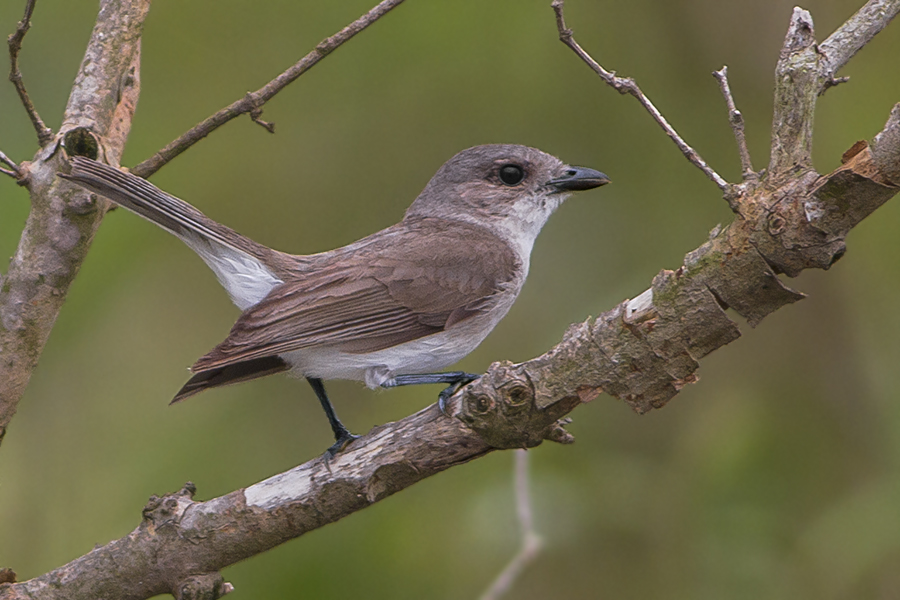 Mangrove WhistlerPachycephala cinerea
-
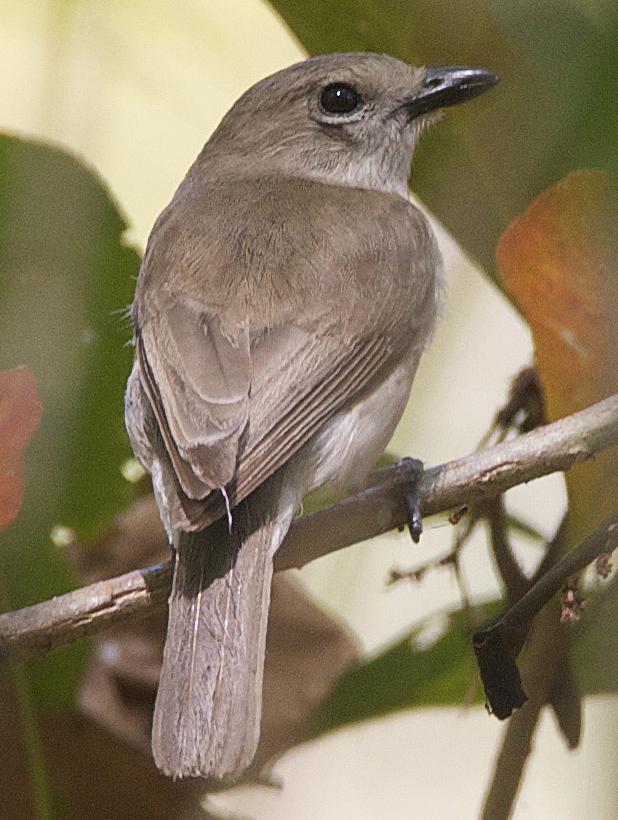 Grey WhistlerPachycephala simplex
-
 Gilbert's WhistlerPachycephala inornata
Compare
Questions and answers
What is the scientific name of the Yellow-bellied Whistler?
The scientific name of the Yellow-bellied Whistler is Pachycephala philippinensis. Written with its author, the full name is Pachycephala philippinensis (Walden, 1872).
Which family does the Yellow-bellied Whistler belong to?
Pachycephala philippinensis belongs to the family Pachycephalidae, in the order Passeriformes and the class Aves.
Where is the Yellow-bellied Whistler found?
Checklists and occurrence records place Pachycephala philippinensis in 1 country: Philippines.
What is the conservation status of the Yellow-bellied Whistler?
The IUCN Red List category recorded for Pachycephala philippinensis is Least Concern (LC).
Sources
Passages the profile rests on
- The species inhabits tropical moist lowland forests and the lower reaches of tropical moist montane forests. Source passage: “Its natural habitats are tropical moist lowland forest and the lower reaches tropical moist montane forest.” — English Wikipedia
- The species occurs in primary and secondary forests at elevations up to 1,220 metres above sea level. Source passage: “This species habitat is primary and secondary forest up to 1,220 metres (4,000 ft) above sea level.” — English Wikipedia
- The species feeds on insects while foraging in the forest understory. Source passage: “Forages in the understory for insects” — English Wikipedia
- The species frequently joins mixed-species flocks containing other small birds. Source passage: “often joins mixed-species flocks that include Blue-headed fantail, Golden-crowned babbler, Lemon-throated leaf warbler, Black-crowned babbler Little pied flycatcher, Turquoise flycatcher, Negros leaf warbler and other small birds.” — English Wikipedia
- Adult individuals have enlarged gonads between January and May. Source passage: “Adults with enlarged gonads from January to May” — English Wikipedia
- Nests and eggs have been recorded in May. Source passage: “nest and eggs in May.” — English Wikipedia
- The species builds open-cup nests from fine roots and leaves. Source passage: “Nest is an open cup made out of fine roots and leaves” — English Wikipedia
- The species places its nest approximately three metres above the understory. Source passage: “placed 3 meters above understorey.” — English Wikipedia
- The Yellow-bellied Whistler was assessed as a least-concern species by the IUCN. Source passage: “IUCN has assessed this bird as least-concern species” — English Wikipedia
- The IUCN Red List assessment cited for the species was most recently conducted in 2016. Source passage: “has most recently been assessed for The IUCN Red List of Threatened Species in 2016.” — iucnredlist.org
- Deforestation in the Philippines is associated with slash-and-burn farming, mining, illegal logging and habitat conversion. Source passage: “due to slash and burn farming, mining, illegal logging and habitat conversion.” — English Wikipedia
- The source reports that protection in Philippine protected areas is lax and deforestation continues. Source passage: “protection is lax and deforestation continues despite this protection on paper.” — English Wikipedia
- The species occurs in Bicol Natural Park, Pasonanca Natural Park, Rajah Sikatuna Protected Landscape and Samar Island Natural Park. Source passage: “It is found in multiple protected areas such as Bicol Natural Park, Pasonanca Natural Park, Rajah Sikatuna Protected Landscape, Samar Island Natural Park” — English Wikipedia
Data
- Catalogue of Life, 2026-10-16 XR cc by
- Global Biodiversity Information Facility CC BY 4.0
- Wikidata CC0
- GeoNames CC BY 4.0
- Wikimedia Commons per image; credit shown with each image
- Within the Catalogue of Life, this name comes from The Integrated Taxonomic Information System cc0
References
- Gill, Frank, & and Minturn Wright. (2006). Birds of the World: Recommended English Names.
This species in other databases
Page built on 27 November 2026. See how the catalog is made and all sources and licences.
Cite this page
ScientificNames.org. (2026). Pachycephala philippinensis (Yellow-bellied Whistler). Retrieved November 27, 2026, from https://scientificnames.org/species/pachycephala-philippinensis
“Pachycephala philippinensis (Yellow-bellied Whistler).” ScientificNames.org, 2026, scientificnames.org/species/pachycephala-philippinensis. Accessed 27 Nov. 2026.
ScientificNames.org. “Pachycephala philippinensis (Yellow-bellied Whistler).” Accessed November 27, 2026. https://scientificnames.org/species/pachycephala-philippinensis.
@misc{scientificnames_pachycephala_philippinensis_yellow_bellied_whistler,
  author = {{ScientificNames.org}},
  title = {Pachycephala philippinensis (Yellow-bellied Whistler)},
  year = {2026},
  url = {https://scientificnames.org/species/pachycephala-philippinensis},
  note = {Accessed 2026-11-27}
}