Species · Fishes
Common Pandora Pagellus erythrinus
The scientific name of the Common Pandora is Pagellus erythrinus. It is a species of fish in the family Sparidae (porgies), order Perciformes. The name dates from 1758.
- Scientific name
- Pagellus erythrinus (Linnaeus, 1758)
- Common name
- Common Pandora
- Genus
- Pagellus
- Family
- Sparidae (Porgies)
- Order
- Perciformes
- Class
- Teleostei
- Red List category
- LC Least Concern
- Environment
- marine
- Recorded in
- 18 countries
- Name status
- accepted in the Catalogue of Life

Overview
Pagellus erythrinus occurs in the eastern Atlantic, the Mediterranean Sea, the western Black Sea and the North Sea, reaching as far as Norway. It has a bright pink body with small blue spots on its upper flanks and is a protogynous hermaphrodite.
Written 26 November 2026 from the sources listed below. Each statement was checked against the passage it cites; statements that could not be supported were removed.
Appearance
The Common Pandora has an oval, laterally compressed body with a straight dorsal profile toward the head. Its overall coloration is bright pink, with small blue spots scattered across the upper flanks.[1][2]
The upper margin of the gill cover is carmine, and a reddish spot occurs at the base of the pectoral fin. The dorsal fin has 12 spines and 10 or 11 soft rays, while the anal fin has three spines and eight or nine soft rays.[3][4][5][6]
Its front jaw teeth are pointed, whereas the rear teeth are molar-like. The maximum published total length is 60 cm, although 25 cm is more typical, and the maximum published weight is 3.2 kg.[7][8][9][10]
Habitat
The Common Pandora is a demersal fish occurring at depths down to 300 m, although it is typically found at depths no greater than 100 m. Its habitat includes sandy, muddy, rocky and gravel substrates.[11][12][13]
Juveniles occur closer to shore than adults.[14]
It occurs along the eastern Atlantic coast from Guinea-Bissau north to the Strait of Gibraltar, with an Atlantic distribution that includes Cape Verde, Madeira and the Canary Islands. It also occurs throughout the Mediterranean Sea, extends into the western Black Sea, and reaches the North Sea and as far as Norway.[15][16][17][18][19]
Diet
Recorded prey includes decapod crustaceans, bivalves, polychaetes, krill, bony fishes, mysids and cephalopods. Decapod crustaceans are particularly important prey for medium-sized individuals.[20][21]
Individuals longer than 21 cm mainly consume decapods and bony fishes, while individuals measuring 13–21 cm mainly consume polychaetes.[22][23]
Frequently recorded prey species include the shrimps Alpheus dentipes and Processa canaliculata and the polychaete Aphrodite aculata.[24]
Reproduction and life cycle
The Common Pandora is a protogynous hermaphrodite in which females change sex into males. Sex change occurs at lengths between 12.8 and 20.3 cm and typically takes place when individuals are three to four years old.[25][26][27]
Small males and large females are also recorded in this species.[28]
The spawning season extends from April through September, with spawning peaking in May and June. The peak spawning period varies between geographical regions.[29][30][31]
Conservation
FishBase reports moderate vulnerability scores of 40 out of 100 and 41 out of 100 in separate assessments. There are indications that Common Pandora stocks are overfished in several Mediterranean areas.[32][33][34]
Uses
The Common Pandora is an important target species for fisheries in the Mediterranean and Atlantic. It is highly valued as a food fish and is sold in markets throughout the Mediterranean.[35][36]
It is marketed fresh, smoked, frozen, dried and salted, and is also used to produce fish meal and fish oil.[37][38]
The species is a quarry species for recreational anglers. In Italy, it is among the most important landed Sparidae.[39][40]
Classification of the Common Pandora
| Kingdom | Animalia |
|---|---|
| Phylum | Chordata |
| Subphylum | Vertebrata |
| Infraphylum | Gnathostomata |
| Parvphylum | Osteichthyes |
| Gigaclass | Actinopterygii |
| Superclass | Actinopteri |
| Class | Teleostei (Teleost) |
| Order | Perciformes |
| Suborder | Percoidei |
| Family | Sparidae (Porgies) |
| Genus | Pagellus |
| Species | Pagellus erythrinus (Linnaeus, 1758) |
Where the Common Pandora is found
Checklists and occurrence records place Pagellus erythrinus in 18 countries. GBIF holds 8,453 georeferenced records of it.
Countries
- Albania 15
- Belgium 3
- Croatia 316
- Cyprus 9
- France 788
- Greece 85
- Israel 645
- Italy 285
- Lebanon 81
- Malta 4
- Monaco 4
- Montenegro 5
- Palestinian Territory 4
- Portugal 694
- Slovenia 21
- Spain 5,374
- Turkey 97
- United Kingdom 23
Regions and cities with the most records
- Camargo, Spain 455
- El Astillero, Spain 454
- Santander, Spain 454
- Castro-Urdiales, Spain 404
- Catalonia, Spain 340
- Javea, Spain 302
- Altea, Spain 268
- Acre, Israel 248
- Denia, Spain 246
- Calp, Spain 234
- Qiryat Bialik, Israel 232
- Qiryat Motsqin, Israel 232
- Qiryat Yam, Israel 232
- l'Alfàs del Pi, Spain 229
- la Nucia, Spain 224
- Haifa, Israel 219
- Nesher, Israel 218
- Lagos, Portugal 216
- Porto de Mós, Portugal 216
- Qiryat Ata, Israel 213
- Tirat Karmel, Israel 210
- Daliyat al Karmel, Israel 205
- Benidorm, Spain 199
- Rekhasim, Israel 194
- Torrelavega, Spain 189
- Villajoyosa, Spain 186
- Judeida Makr, Israel 184
- Hod HaSharon, Israel 163
- Ramat HaSharon, Israel 163
- Herzliya, Israel 161
- Ra'anana, Israel 160
- Portimão, Portugal 152
- Alicante, Spain 148
- El Campello, Spain 147
- Givatayim, Israel 147
- H̱olon, Israel 147
8 more countries have a few records outside this range
These countries hold a few records of Pagellus erythrinus but lie outside the range the checklists give for it. Such records are often zoo or garden specimens, museum material or vagrants, so the species is not counted as occurring there.
A number beside a place is its count of GBIF occurrence records. A place without a number comes from a checklist alone. Records show where a species has been observed or collected, which can include escapes and vagrants.
Common names
English
- Common Pandora
- Becker
- King Of The Breams
- Spanish Sea Bream
- Pandora
Names in 25 other languages
- Albanian
- eritrini, spalca e kuqe
- Asturian
- pica
- Catalan
- pagell, pitxell
- Chinese
- 緋小鯛
- Croatian
- Arbun
- Czech
- růžicha červená
- Danish
- rød blankesten
- Dutch
- gewone zeebrasem
- Finnish
- punapagelli
- French
- Pageau, Pageot commun, pagel, pageot commum
- German
- Rotbrasse, Rotbrassen
- Greek
- Λυθρίνι
- Hebrew
- ורדית שישנית
- Italian
- Pagello, fragolino, pagello bastardo
- Norwegian Bokmål
- rødpagell
- Norwegian Nynorsk
- raudpagell
- Polish
- Morlesz Szkarłatny
- Portuguese
- bica
- Russian
- Атлантический пагель, Красный пагель, Красный пагр, Пагель, Пагр красный
- Slovenian
- ribon
- Spanish
- Pajel, breca
- Swedish
- rödpagell
- Turkish
- kirma mercan
- Ukrainian
- Пагель червоний, Пагр червоний
- Welsh
- Pandorâu, pandora
Synonyms
2 other scientific names have been used for this species and are now treated as synonyms of Pagellus erythrinus.
- Pagellus canariensis Valenciennes, 1838
- Sparus erythrinus Linnaeus, 1758
Related species
-
 Blackspot SeabreamPagellus bogaraveo
-
 Axillary SeabreamPagellus acarne
-
 Red PandoraPagellus bellottii
-
 Sand SoldierPagellus natalensis
-
 Arabian PandoraPagellus affinis
-
 Gilt-head BreamSparus aurata
-
 BogueBoops boops
-
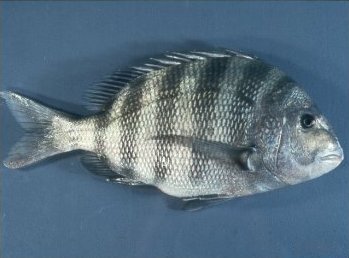 SheepsheadArchosargus probatocephalus
Compare
Questions and answers
What is the scientific name of the Common Pandora?
The scientific name of the Common Pandora is Pagellus erythrinus. Written with its author, the full name is Pagellus erythrinus (Linnaeus, 1758).
Which family does the Common Pandora belong to?
Pagellus erythrinus belongs to the family Sparidae, in the order Perciformes and the class Teleostei.
Where is the Common Pandora found?
Checklists and occurrence records place Pagellus erythrinus in 18 countries, including Spain, France, Portugal, Israel, Croatia and Italy.
What is the conservation status of the Common Pandora?
The IUCN Red List category recorded for Pagellus erythrinus is Least Concern (LC).
What other names does the Common Pandora have?
Pagellus erythrinus is also known in English as Becker, King Of The Breams, Spanish Sea Bream and Pandora.
Sources
Passages the profile rests on
- The common pandora has an oval, laterally compressed body with a straight dorsal profile toward the head. Source passage: “The common pandora has an oval, compressed body with a straight dorsal profile to the head.” — English Wikipedia
- Its overall coloration is bright pink, with small blue spots scattered across the upper flanks. Source passage: “The overall colour is bright pink with a scattering of small blue spots on the upper flanks.” — English Wikipedia
- The upper margin of its gill cover is carmine. Source passage: “The upper margin of the gill cover is carmine” — English Wikipedia
- A reddish spot occurs at the base of its pectoral fin. Source passage: “there is a reddish spot on the base of the pectoral fin.” — English Wikipedia
- Its dorsal fin has 12 spines and 10 or 11 soft rays. Source passage: “The dorsal fin is supported by 12 spines and 10 or 11 soft rays” — English Wikipedia
- Its anal fin has three spines and eight or nine soft rays. Source passage: “the anal fin contains 3 spines and 8 or 9 soft rays.” — English Wikipedia
- Its front jaw teeth are pointed, whereas the rear teeth are molar-like. Source passage: “there are pointed teeth in the front of the jaws while the teeth in the rear of the jaws are molar-like” — English Wikipedia
- The species has a maximum published total length of 60 cm. Source passage: “a maximum published total length of 60 cm (24 in)” — English Wikipedia
- A total length of 25 cm is more typical for this species. Source passage: “although 25 cm (9.8 in) is more typical” — English Wikipedia
- Its maximum published weight is 3.2 kg. Source passage: “a maximum published weight of 3.2 kg (7.1 lb).” — English Wikipedia
- The common pandora is a demersal fish occurring at depths down to 300 m. Source passage: “This demersal fish occurs at depths down to 300 m (980 ft)” — English Wikipedia
- It is typically found at depths no greater than 100 m. Source passage: “although it is typically found no deeper than 100 m (330 ft)” — English Wikipedia
- Its habitat includes sandy, muddy, rocky and gravel substrates. Source passage: “over sand, mud, rock and gravel substrates.” — English Wikipedia
- Juveniles occur closer to shore than adults. Source passage: “Young fish are found farther inshore than the adults.” — English Wikipedia
- The species occurs along the eastern Atlantic coast from Guinea-Bissau north to the Strait of Gibraltar. Source passage: “from the coast of West Africa from Guinea Bissau north to the Strait of Gibraltar” — English Wikipedia
- Its Atlantic distribution includes Cape Verde, Madeira and the Canary Islands. Source passage: “including Cape Verde, Madeira and the Canary Islands” — English Wikipedia
- The common pandora occurs throughout the Mediterranean Sea. Source passage: “throughout the Mediterranean Sea” — English Wikipedia
- Its range extends into the western Black Sea. Source passage: “and into the western Black Sea” — English Wikipedia
- Its northern distribution reaches the North Sea and extends as far as Norway. Source passage: “extends northward in the North Sea as far as Norway.” — English Wikipedia
- Its recorded prey includes decapod crustaceans, bivalves, polychaetes, krill, bony fishes, mysids and cephalopods. Source passage: “decapod crustaceans, bivavlves, polychaetes, krill, bony fishes, mysids and cephalopods.” — English Wikipedia
- Decapod crustaceans are particularly important prey for medium-sized individuals. Source passage: “The most important prey found in the stomachs were decapods, particularly in medium-sized specimens” — English Wikipedia
- Individuals longer than 21 cm mainly consume decapods and bony fishes. Source passage: “both decapods and bony fishes were the dominant prey in larger fish with a total length in excess of 21 cm” — English Wikipedia
- Individuals measuring 13–21 cm mainly consume polychaetes. Source passage: “the smallest fishes, with total lengths between 13 and 21 cm (5.1 and 8.3 in) ate mainly polychaetes.” — English Wikipedia
- Frequently recorded prey species include the shrimps Alpheus dentipes and Processa canaliculata and the polychaete Aphrodite aculata. Source passage: “the shrimps Alpheus dentipes and Processa canaliculata and the polychaete worm Aphrodite aculata.” — English Wikipedia
- The common pandora is a protogynous hermaphrodite in which females change sex into males. Source passage: “The common pandora is a protogynous hermaphroditism in which the females change sex to become males” — English Wikipedia
- Sex change occurs at lengths between 12.8 and 20.3 cm. Source passage: “when they reach lengths between 12.8 and 20.3 cm (5.0 and 8.0 in).” — English Wikipedia
- Sex change typically occurs when individuals are three to four years old. Source passage: “This sex change typically when they are 3–4 years old” — English Wikipedia
- Small males and large females are also recorded in this species. Source passage: “small males and even large females are often recorded.” — English Wikipedia
- The spawning season extends from April through September. Source passage: “The spawning season for this species runs from April to September” — English Wikipedia
- Spawning peaks in May and June. Source passage: “peaking in May and June.” — English Wikipedia
- The peak spawning period varies between geographical regions. Source passage: “However, the peak spawning period varies from region to region.” — English Wikipedia
- FishBase reports moderate vulnerability for the species, with a score of 40 out of 100. Source passage: “Moderate vulnerability (40 of 100).” — fishbase.se
- The species has a reported moderate vulnerability score of 41 out of 100 in another FishBase assessment. Source passage: “Moderate vulnerability (41 of 100).” — fishbase.se
- There are indications that common pandora stocks are overfished in several Mediterranean areas. Source passage: “there are indications that the stocks are being overfished in a number of areas of the Mediterranean.” — English Wikipedia
- The common pandora is an important target species for fisheries in the Mediterranean and Atlantic. Source passage: “The common pandora is an important target species for fisheries in the Mediterranean and Atlantic” — English Wikipedia
- The species is highly valued as a food fish and is sold in markets throughout the Mediterranean. Source passage: “The fish landed are found in markets throughout the Mediterranean as the fish is highly valued” — English Wikipedia
- It is marketed fresh, smoked, frozen, dried and salted. Source passage: “and is sold fresh or preserved as smoked fish, frozen fish and dried and salted fish” — English Wikipedia
- The species is also used to produce fish meal and fish oil. Source passage: “as well as being used to make fish meal and fish oil.” — English Wikipedia
- The common pandora is a quarry species for recreational anglers. Source passage: “It is also an important quarry for recreational anglers.” — English Wikipedia
- In Italy, the species is among the most important landed Sparidae. Source passage: “In Italy this species is one of the most important species of Sparid landed” — English Wikipedia
Data
- Catalogue of Life, 2026-10-16 XR cc by
- Global Biodiversity Information Facility CC BY 4.0
- Wikidata CC0
- GeoNames CC BY 4.0
- Wikimedia Commons per image; credit shown with each image
- Within the Catalogue of Life, this name comes from World Register of Marine Species cc by
This species in other databases
- Catalogue of Life 4BZBJ
- Wikidata Q1156691
- iNaturalist 118659
- WoRMS urn:lsid:marinespecies.org:taxname:127060
- ITIS 169215
Page built on 26 November 2026. See how the catalog is made and all sources and licences.
Cite this page
ScientificNames.org. (2026). Pagellus erythrinus (Common Pandora). Retrieved November 26, 2026, from https://scientificnames.org/species/pagellus-erythrinus
“Pagellus erythrinus (Common Pandora).” ScientificNames.org, 2026, scientificnames.org/species/pagellus-erythrinus. Accessed 26 Nov. 2026.
ScientificNames.org. “Pagellus erythrinus (Common Pandora).” Accessed November 26, 2026. https://scientificnames.org/species/pagellus-erythrinus.
@misc{scientificnames_pagellus_erythrinus_common_pandora,
  author = {{ScientificNames.org}},
  title = {Pagellus erythrinus (Common Pandora)},
  year = {2026},
  url = {https://scientificnames.org/species/pagellus-erythrinus},
  note = {Accessed 2026-11-26}
}