Species · Fishes
Gilt-head Bream Sparus aurata
The scientific name of the Gilt-head Bream is Sparus aurata. It is a species of fish in the family Sparidae (porgies), order Perciformes. The name dates from 1758.
- Scientific name
- Sparus aurata Linnaeus, 1758
- Common name
- Gilt-head Bream
- Genus
- Sparus
- Family
- Sparidae (Porgies)
- Order
- Perciformes
- Class
- Teleostei
- Red List category
- LC Least Concern
- Environment
- brackish, marine
- Recorded in
- 33 countries
- Name status
- accepted in the Catalogue of Life

Overview
Sparus aurata inhabits sandy substrates and seagrass beds at depths of 1–150 m. It is distinguished by a golden bar between the eyes, a large dark spot behind the eye and a red operculum margin.
Written 26 November 2026 from the sources listed below. Each statement was checked against the passage it cites; statements that could not be supported were removed.
Appearance
Gilt-head Bream has a deep body and a large, deep head, with relatively small eyes positioned high on the head. Its back is blue-grey and its sides are silvery, with a large dark spot behind the eye, a red operculum margin and a golden bar between the eyes.[1][2]
The jaws have four to six large, pointed canine-like teeth at the front and two to four rows of blunt, round lateral teeth. The dorsal fin has 11 robust spines and 13 or 14 branched soft rays, while the anal fin has three spines and 11 or 12 branched soft rays.[3][4][5]
The species reaches a maximum total length of 70 cm, while 35 cm standard length is more typical. Its maximum published weight is 17.2 kg.[6][7]
Habitat
Gilt-head Bream inhabits sandy substrates and seagrass beds at depths of 1–150 m. It tolerates a wide range of salinities and can enter brackish waters.[8][9]
Adult individuals occupy deeper waters than juveniles, which typically remain above 30 m depth.[10]
Diet
Gilt-head Bream feeds primarily on shellfish but also consumes some plant material.[11]
Reproduction and life cycle
Gilt-head Bream is a protandrous sequential hermaphrodite. Individuals initially mature as males before some develop ovaries and lose their testes.[12]
Individuals mature as males by approximately two years of age.[13]
Uses
Gilt-head Bream is highly valued as a food fish and is an important aquaculture species. It is particularly valued for culinary purposes in Southern Europe because its flesh has a mild, sweet flavour and separates into small flakes.[14][15]
The species has traditionally been farmed extensively in coastal lagoons and saltwater ponds. Intensive rearing systems were developed during the 1980s.[16][17]
Aquaculture production reached 140,000 metric tons in 2010. Turkey is identified as the world's largest seabream producer, followed by Greece.[18][19]
Classification of the Gilt-head Bream
| Kingdom | Animalia |
|---|---|
| Phylum | Chordata |
| Subphylum | Vertebrata |
| Infraphylum | Gnathostomata |
| Parvphylum | Osteichthyes |
| Gigaclass | Actinopterygii |
| Superclass | Actinopteri |
| Class | Teleostei (Teleost) |
| Order | Perciformes |
| Suborder | Percoidei |
| Family | Sparidae (Porgies) |
| Genus | Sparus |
| Species | Sparus aurata Linnaeus, 1758 |
Where the Gilt-head Bream is found
Checklists and occurrence records place Sparus aurata in 33 countries. GBIF holds 7,983 georeferenced records of it.
Countries
- Albania 61
- Algeria 23
- Belgium 14
- China 9
- Croatia 648
- Denmark 13
- Egypt 199
- France 2,936
- Germany 4
- Greece 579
- Hong Kong 8
- Ireland 3
- Israel 70
- Italy 369
- Japan 5
- Lebanon 48
- Malaysia 5
- Malta 15
- Mauritania 218
- Monaco 7
- Montenegro 17
- Morocco 4
- Portugal 247
- Slovenia 21
- Spain 1,971
- Sweden 7
- Taiwan 5
- The Netherlands 89
- Tunisia 32
- Turkey 265
- Ukraine 3
- United Kingdom 82
- Western Sahara 6
Regions and cities with the most records
- Marseille 09, France 454
- Roses, Spain 450
- Marseille 11, France 427
- Marseille 10, France 424
- Marseille, France 421
- Marseille 01, France 421
- Marseille 02, France 421
- Marseille 03, France 421
- Marseille 04, France 421
- Marseille 05, France 421
- Marseille 06, France 421
- Marseille 07, France 421
- Marseille 08, France 421
- Marseille 13, France 415
- Marseille 12, France 412
- Marseille 14, France 402
- Allauch, France 371
- Provence-Alpes-Côte d'Azur, France 360
- Fréjus, France 351
- Saint-Raphaël, France 351
- La Ciotat, France 349
- Occitanie, France 274
- Mandelieu-la-Napoule, France 262
- Aubagne, France 256
- Marseille 16, France 253
- Catalonia, Spain 249
- Javea, Spain 229
- Frontignan, France 210
- Denia, Spain 208
- Sète, France 206
- Altea, Spain 191
- Calp, Spain 183
- Valencia, Spain 179
- Marseille 15, France 177
- Palafrugell, Spain 169
- Villajoyosa, Spain 169
2 more countries have a few records outside this range
These countries hold a few records of Sparus aurata but lie outside the range the checklists give for it. Such records are often zoo or garden specimens, museum material or vagrants, so the species is not counted as occurring there.
A number beside a place is its count of GBIF occurrence records. A place without a number comes from a checklist alone. Records show where a species has been observed or collected, which can include escapes and vagrants.
Common names
English
- Gilt-head Bream
- Gilt-head Seabream
- Silver Seabream
- Snapper
- Gilthead
- Gilthead Seabream
Names in 31 other languages
- Albanian
- kocja, spari kokëpraruar, ullorja
- Basque
- urraburu
- Catalan
- daurada, moixarra, orada
- Chinese
- 金頭鯛
- Croatian
- Komarča
- Czech
- mořan zlatý
- Danish
- guldbrasen
- Dutch
- goudbrasem
- Estonian
- Kuld-merikoger
- Finnish
- kultaotsasargi
- French
- Daurade, Dorade, daurade royale, dorade royale
- Galician
- dourada
- German
- Goldbrasse, Goldbrassen
- Greek
- Τσιπούρα
- Hebrew
- ספרוס זהוב
- Hungarian
- aranydurbincs
- Italian
- orata
- Japanese
- ヨーロッパヘダイ
- Norwegian Bokmål
- gyllen havkaruss
- Polish
- dorada
- Portuguese
- dourada
- Romanian
- doradă
- Russian
- Золотистый спар
- Serbian
- орада
- Slovenian
- zlatobrov
- Spanish
- Chaparreta, Dorada Del Pacífico, Zapata Morisca, dorada
- Swedish
- guldsparid
- Turkish
- cipura, Çipura
- Ukrainian
- Дорада, Спар золотистий
- Welsh
- Merfogiaid Eurben, merfog eurben
- cos
- dorata, palmata
Synonyms
10 other scientific names have been used for this species and are now treated as synonyms of Sparus aurata.
- Aurata aurata (Linnaeus, 1758)
- Chrysophris aurata , C. V
- Chrysophrys aurata (Linnaeus, 1758)
- Chrysophrys aurata Valenciennes, 1830
- Chrysophrys aurathus (Linnaeus, 1758)
- Chrysophrys crassirostris Valenciennes, 1830
- Chrysoprys aurata (Linnaeus, 1758)
- Sparus auratus Linnaeus, 1758
- Chrysophrys auratus (Linnaeus, 1758) ambiguous synonym
- Pagrus auratus (Linnaeus, 1758) ambiguous synonym
Subspecies and varieties
- Sparus aurata americana subspecies
Related species
- Sparus capistratus
- Sparus heterodus
- Sparus swinhonis
-
 BogueBoops boops
-
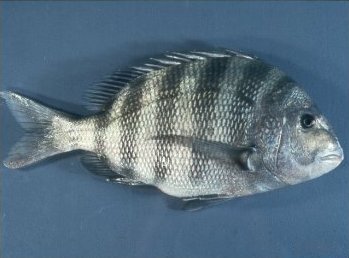 SheepsheadArchosargus probatocephalus
-
 Red Sea BreamPagrus major
-
 Salema PorgySarpa salpa
-
 White Sea BreamDiplodus sargus
Compare
Questions and answers
What is the scientific name of the Gilt-head Bream?
The scientific name of the Gilt-head Bream is Sparus aurata. Written with its author, the full name is Sparus aurata Linnaeus, 1758.
Which family does the Gilt-head Bream belong to?
Sparus aurata belongs to the family Sparidae, in the order Perciformes and the class Teleostei.
Where is the Gilt-head Bream found?
Checklists and occurrence records place Sparus aurata in 33 countries, including France, Spain, Croatia, Greece, Italy and Turkey.
What is the conservation status of the Gilt-head Bream?
The IUCN Red List category recorded for Sparus aurata is Least Concern (LC).
What other names does the Gilt-head Bream have?
Sparus aurata is also known in English as Gilt-head Seabream, Silver Seabream, Snapper, Gilthead and Gilthead Seabream.
Is gilt-head bream good to eat?
Gilt-head Bream is highly valued as a food fish, particularly for culinary purposes in Southern Europe. Its flesh has a mild, sweet flavour and separates into small flakes.[14][15]
Is gilthead bream good to eat?
Gilt-head Bream is highly valued as a food fish. Its flesh has a mild, sweet flavour and separates into small flakes.[14][15]
What is gilthead bream?
Gilt-head Bream (Sparus aurata Linnaeus, 1758) is a fish in the family Sparidae, order Perciformes and class Teleostei. It is distinguished by a golden bar between the eyes, a large dark spot behind the eye and a red operculum margin.[2]
Sources
Passages the profile rests on
- The species has a deep body and a large, deep head with relatively small eyes positioned high on the head. Source passage: “The gilt-head bream has a deep body, with a large, deep head which has its relatively small eyes placed high on the head.” — English Wikipedia
- The species has a blue-grey back and silvery sides, with a large dark spot behind the eye, a red operculum margin and a golden bar between the eyes. Source passage: “It has a blue-grey back, the sides are silvery with a large dark spot behind the eye, it is red along the margin of the operculum and there is a golden bar on the head between the eyes.” — English Wikipedia
- The species has four to six large, pointed canine-like teeth at the front of its jaws and two to four rows of blunt, round lateral teeth. Source passage: “with four to six large, pointed canine-like teeth in the front the jaws with 2 to 4 rows of blunt, round teeth laterally.” — English Wikipedia
- Its dorsal fin has 11 robust spines and 13 or 14 branched soft rays. Source passage: “It has a long-based dorsal fin which is supported by 11 robust spines and 13 or 14 branched soft rays.” — English Wikipedia
- Its anal fin has three spines and 11 or 12 branched soft rays. Source passage: “The anal fin is short based and is held up by three spines and 11 or 12 branched soft rays.” — English Wikipedia
- The species reaches a maximum total length of 70 cm, while 35 cm standard length is more typical. Source passage: “This species has a maximum total length of 70 cm (28 in), although a standard length of 35 cm (14 in) is more typical” — English Wikipedia
- The maximum published weight for the species is 17.2 kg. Source passage: “a maximum published weight of 17.2 kg (38 lb).” — English Wikipedia
- The species inhabits sandy substrates and seagrass beds at depths of 1–150 m. Source passage: “This species is found over sandy substrates and in seagrass beds at depths between 1 and 150 m (3 ft 3 in and 492 ft 2 in)” — English Wikipedia
- The species can enter brackish waters because it tolerates a wide range of salinities. Source passage: “It is a euryhaline species that will enter brackish waters.” — English Wikipedia
- Adult individuals occupy deeper waters than juveniles, which typically remain above 30 m depth. Source passage: “with adults in deeper waters than juveniles, the young fish typically going no deeper than 30 m (98 ft).” — English Wikipedia
- The species feeds primarily on shellfish but also consumes some plant material. Source passage: “The gilt-head bream feeds mainly on shellfish, but also some plant material” — English Wikipedia
- The species is a protandrous sequential hermaphrodite, initially maturing as a male before some individuals develop ovaries and lose their testes. Source passage: “Gilt-head bream are protandrous sequential hermaphrodites, maturing as males by age 2, before some develop ovaries and lose their testes in later life.” — English Wikipedia
- Individuals of this species mature as males by approximately two years of age. Source passage: “maturing as males by age 2” — English Wikipedia
- The species is highly valued as a food fish and is an important aquaculture species. Source passage: “It is a highly esteemed food fish and an important species in aquaculture.” — English Wikipedia
- The species is particularly valued for culinary purposes in Southern Europe because its flesh has a mild, sweet flavour and separates into small flakes. Source passage: “especially in Southern Europe where the mild and sweet flavour of the flesh, which breaks into small flakes, is popular.” — English Wikipedia
- The species has traditionally been farmed extensively in coastal lagoons and saltwater ponds. Source passage: “Gilt-head seabream have traditionally been cultured extensively in coastal lagoons and saltwater ponds.” — English Wikipedia
- Intensive rearing systems for the species were developed during the 1980s. Source passage: “However, intensive rearing systems were developed during the 1980s” — English Wikipedia
- Aquaculture production of the species reached 140,000 metric tons in 2010. Source passage: “but reached 140,000 metric tons (140,000 long tons; 150,000 short tons) in 2010” — English Wikipedia
- Turkey is identified as the world's largest seabream producer, followed by Greece. Source passage: “Turkey is the biggest seabream producer in the world, followed by Greece.” — English Wikipedia
Data
- Catalogue of Life, 2026-10-16 XR cc by
- Global Biodiversity Information Facility CC BY 4.0
- Wikidata CC0
- GeoNames CC BY 4.0
- Wikimedia Commons per image; credit shown with each image
- Within the Catalogue of Life, this name comes from World Register of Marine Species cc by
References
- Linnaeus, C. (1758). Systema Naturae per regna tria naturae, secundum classes, ordines, genera, species, cum characteribus, differentiis, synonymis, locis. Tomus I. Editio decima, reformata. Laurentii Salvii. Holmiae [Stockholm]. [iii] + 824 pp. https://doi.org/10.5962/bhl.title.542 Link where the name was published
This species in other databases
- Catalogue of Life 4YF8Y
- Wikidata Q237046
- iNaturalist 1494783
- WoRMS urn:lsid:marinespecies.org:taxname:151523
- ITIS 647901
Page built on 26 November 2026. See how the catalog is made and all sources and licences.
Cite this page
ScientificNames.org. (2026). Sparus aurata (Gilt-head Bream). Retrieved November 26, 2026, from https://scientificnames.org/species/sparus-aurata
“Sparus aurata (Gilt-head Bream).” ScientificNames.org, 2026, scientificnames.org/species/sparus-aurata. Accessed 26 Nov. 2026.
ScientificNames.org. “Sparus aurata (Gilt-head Bream).” Accessed November 26, 2026. https://scientificnames.org/species/sparus-aurata.
@misc{scientificnames_sparus_aurata_gilt_head_bream,
  author = {{ScientificNames.org}},
  title = {Sparus aurata (Gilt-head Bream)},
  year = {2026},
  url = {https://scientificnames.org/species/sparus-aurata},
  note = {Accessed 2026-11-26}
}