Species · Fishes
Red Porgy Pagrus pagrus
The scientific name of the Red Porgy is Pagrus pagrus. It is a species of fish in the family Sparidae (porgies), order Perciformes. The name dates from 1758.
- Scientific name
- Pagrus pagrus (Linnaeus, 1758)
- Common name
- Red Porgy
- Genus
- Pagrus
- Family
- Sparidae (Porgies)
- Order
- Perciformes
- Class
- Teleostei
- Red List category
- LC Least Concern
- Environment
- marine
- Recorded in
- 44 countries
- Name status
- accepted in the Catalogue of Life

Overview
Pagrus pagrus inhabits warm coastal waters on both sides of the Atlantic Ocean. It is a protogynous hermaphrodite, with most individuals beginning life as females and later changing into males.
Written 26 November 2026 from the sources listed below. Each statement was checked against the passage it cites; statements that could not be supported were removed.
Appearance
Red Porgy has a moderately deep, oblong body with a silvery-pink coloration and darker patches on its nape and behind its pectoral fins. Its caudal fin is dark pink with paler tips, while its other fins are pale pink.[1][2][3]
The dorsal fin has eleven to thirteen spines and nine to ten soft rays. The anal fin has three spines and seven to eight soft rays.[4][5]
The species can reach a standard length of 75 cm. Its typical length is approximately half its maximum reported standard length.[6][7]
Habitat
Red Porgy inhabits warm coastal waters on both sides of the Atlantic Ocean. It commonly occurs in continental shelf waters at depths of 10 to 80 metres, but can occur at depths reaching 250 metres.[8][9][10]
The species inhabits rocky areas and areas with soft sediment. Juveniles often inhabit seagrass beds and sometimes enter lagoons.[11][12][13]
Diet
Red Porgy feeds mostly on or near the seabed. Its diet includes crustaceans, molluscs and small fish.[14][15]
Behaviour
Red Porgy is a demersal fish.[16]
Reproduction and life cycle
Red Porgy is a protogynous hermaphrodite, with most individuals beginning life as females and later changing into males. The species reaches sexual maturity at two to three years of age.[17][18]
Sex change occurs at total lengths ranging from 206 to 417 mm and has been recorded in individuals aged between two and nine years.[19][20]
Some individuals remain female even when large, possessing only rudimentary male tissue. Others are primary males whose ovarian tissue atrophies before maturity.[21][22]
Some secondary males behave as females for several reproductive cycles before changing sex. The timing of sex change may be associated with social or environmental factors.[23][24]
Conservation
Red Porgy populations have declined in some areas because of over-exploitation. Minimum size limits have been established in some areas to address population declines.[25][26]
FishBase reports moderate to high vulnerability for the species, with a score of 51 out of 100.[27]
Uses
Red Porgy is an important species for commercial and recreational fishing. It is usually caught using rod and line.[28][29]
Aquaculture has been used to augment Red Porgy stocks, particularly in the Mediterranean.[30]
Similar species
Red Porgy is also called white snapper along the Gulf Coast, although it is not a true snapper.[31]
Classification of the Red Porgy
| Kingdom | Animalia |
|---|---|
| Phylum | Chordata |
| Subphylum | Vertebrata |
| Infraphylum | Gnathostomata |
| Parvphylum | Osteichthyes |
| Gigaclass | Actinopterygii |
| Superclass | Actinopteri |
| Class | Teleostei (Teleost) |
| Order | Perciformes |
| Suborder | Percoidei |
| Family | Sparidae (Porgies) |
| Genus | Pagrus |
| Species | Pagrus pagrus (Linnaeus, 1758) |
Where the Red Porgy is found
Checklists and occurrence records place Pagrus pagrus in 44 countries. GBIF holds 12,348 georeferenced records of it.
Countries
- Albania 6
- Algeria 18
- Angola 29
- Argentina 70
- Benin 10
- Brazil 6,109
- Cabo Verde 3
- Cameroon 43
- Colombia 8
- Croatia 19
- Cyprus 10
- Democratic Republic of the Congo 11
- Egypt 8
- Equatorial Guinea 19
- France 583
- Gabon 78
- Germany 4
- Ghana 77
- Greece 167
- Guadeloupe 59
- Guernsey 15
- Guinea 34
- Guinea-Bissau 22
- Italy 92
- Ivory Coast 71
- Liberia 64
- Malta 11
- Mauritania 5
- Mexico 21
- Montenegro 3
- Morocco 9
- Nigeria 118
- Portugal 671
- Republic of the Congo 11
- Sierra Leone 41
- Spain 3,043
- Togo 12
- Trinidad and Tobago 4
- Tunisia 22
- United Kingdom 53
- United States 666
- Uruguay 16
- Venezuela 8
- Western Sahara 5
Regions and cities with the most records
- Los Llanos de Aridane, Spain 555
- Santa Cruz de la Palma, Spain 377
- Sesimbra, Portugal 225
- Azeitão, Portugal 221
- Canary Islands, Spain 217
- Quinta Do Conde, Portugal 217
- Altea, Spain 191
- Setúbal, Portugal 189
- Calp, Spain 167
- Javea, Spain 165
- l'Alfàs del Pi, Spain 165
- la Nucia, Spain 160
- Benidorm, Spain 148
- Palmela, Portugal 140
- Denia, Spain 127
- Villajoyosa, Spain 120
- Marseille 09, France 111
- Marseille 10, France 108
- Marseille 11, France 108
- Marseille 12, France 108
- Roses, Spain 100
- Marseille, France 99
- Marseille 01, France 99
- Marseille 02, France 99
- Marseille 03, France 99
- Marseille 04, France 99
- Marseille 05, France 99
- Marseille 06, France 99
- Marseille 07, France 99
- Marseille 08, France 99
- Marseille 13, France 99
- Marseille 14, France 98
- Allauch, France 85
- Catalonia, Spain 85
- Marseille 16, France 79
- La Ciotat, France 67
4 more countries have a few records outside this range
These countries hold a few records of Pagrus pagrus but lie outside the range the checklists give for it. Such records are often zoo or garden specimens, museum material or vagrants, so the species is not counted as occurring there.
A number beside a place is its count of GBIF occurrence records. A place without a number comes from a checklist alone. Records show where a species has been observed or collected, which can include escapes and vagrants.
Common names
English
- Red Porgy
- Common Bream
- Couch's Bream
- Couch's Sea Bream
- Couch's Sea-bream
- Porgy
- Common Seabream
Names in 29 other languages
- Albanian
- gjanca, gjansa, pagri, pagri i zakonshëm
- Arabic
- مرجان (سمكة)
- Asturian
- rubiellu
- Basque
- txelba arrunt
- Breton
- skollaek
- Catalan
- pagre
- Chinese
- 赤鯛
- Czech
- pražman obecný
- Danish
- Almindelig blankesten
- Dutch
- Booneknaap, gewone zeebrasem
- Estonian
- Harilik pagrus
- French
- pagre, pagre commun, pagre rouge
- Galician
- Prago
- German
- gemeine Meerbrasse, gewöhnliche Rotbrasse
- Greek
- Φαγγρί, Φαγκρί
- Hebrew
- ספרוס, ספרוס הפסים
- Italian
- Pagro, dentice, pagro comune
- Japanese
- ヨーロッパマダイ
- Lithuanian
- paprastasis pagras
- Norwegian
- havsruda
- Polish
- pagrus, pagrus karaibski, pagrus różowy
- Portuguese
- Pargo-legítimo, calunga, pargo
- Russian
- Золотистый пагр, желтоперый пагр, золотистый пагрус, обыкновенный пагр
- Slovenian
- pagar
- Spanish
- Besugo, Bocinegro, Pargo-colorado, Sargo Piedra, pargo, sargo rojo
- Swedish
- rödbraxen
- Turkish
- Mercan Balığı, fangri
- Ukrainian
- Пагр звичайний, пагр
- Welsh
- Merfogiaid Couch, merfog Couch
Synonyms
7 other scientific names have been used for this species and are now treated as synonyms of Pagrus pagrus.
- Pagrus pagrus pagrus (Linnaeus, 1758)
- Pagrus sedecim Ginsburg, 1952
- Pagrus vulgaris Valenciennes, 1830
- Pagrus vulgaris Cuv.
- Pargus sedecim Ginsburg, 1952
- Sparus pagrus Linnaeus, 1758
- Sparus pagurus Linnaeus, 1758
Subspecies and varieties
- Sparus pagrus miqueli subspecies
Related species
-
 Red Sea BreamPagrus major
-
 Bluespotted SeabreamPagrus caeruleostictus
-
 Redbanded SeabreamPagrus auriga
-
 BraizePagrus africanus
- Pagrus cinctus
-
 Gilt-head BreamSparus aurata
-
 BogueBoops boops
-
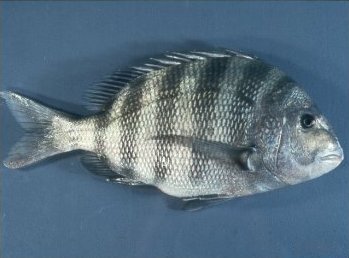 SheepsheadArchosargus probatocephalus
Compare
Questions and answers
What is the scientific name of the Red Porgy?
The scientific name of the Red Porgy is Pagrus pagrus. Written with its author, the full name is Pagrus pagrus (Linnaeus, 1758).
Which family does the Red Porgy belong to?
Pagrus pagrus belongs to the family Sparidae, in the order Perciformes and the class Teleostei.
Where is the Red Porgy found?
Checklists and occurrence records place Pagrus pagrus in 44 countries, including Brazil, Spain, Portugal, United States, France and Greece.
What is the conservation status of the Red Porgy?
The IUCN Red List category recorded for Pagrus pagrus is Least Concern (LC).
What other names does the Red Porgy have?
Pagrus pagrus is also known in English as Common Bream, Couch's Bream, Couch's Sea Bream, Couch's Sea-bream, Porgy and Common Seabream.
Is red porgy the same as red snapper?
Red Porgy is not a true snapper, although it is also called white snapper along the Gulf Coast.[31]
What type of fish is red porgy?
Red Porgy is a fish in the family Sparidae, order Perciformes and class Teleostei. It is a demersal fish.[16]
Sources
Passages the profile rests on
- The red porgy has a moderately deep body with an oblong shape. Source passage: “The red porgy is a moderately deep-bodied fish with an oblong shaped body.” — English Wikipedia
- The red porgy has a silvery-pink body with darker patches on its nape and behind its pectoral fins. Source passage: “This fish is a silvery-pink colour, with darker patches on the nape and behind the pectoral fins.” — English Wikipedia
- The caudal fin is dark pink with paler tips, while the other fins are pale pink. Source passage: “The caudal fin is dark pink with paler tips, and the other fins are pale pink.” — English Wikipedia
- The dorsal fin has eleven to thirteen spines and nine to ten soft rays. Source passage: “The dorsal fin has eleven to thirteen spines and nine to ten soft rays” — English Wikipedia
- The anal fin has three spines and seven to eight soft rays. Source passage: “the anal fin has three spines and seven to eight soft rays.” — English Wikipedia
- The species can reach a standard length of 75 cm. Source passage: “The standard length is 75 cm (30 in)” — English Wikipedia
- Its typical length is approximately half its maximum reported standard length. Source passage: “although a more typical length is about half of this.” — English Wikipedia
- The red porgy inhabits warm coastal waters on both sides of the Atlantic Ocean. Source passage: “The red porgy is found in warm coastal waters on either side of the Atlantic Ocean.” — English Wikipedia
- The species commonly inhabits continental shelf waters at depths of 10 to 80 metres. Source passage: “it more commonly occurs at depths between 10 and 80 m (30 and 260 ft), on continental shelves.” — English Wikipedia
- The species can occur at depths reaching 250 metres. Source passage: “Although it may go as deep as 250 m (820 ft)” — English Wikipedia
- The red porgy inhabits both rocky areas and areas with soft sediment. Source passage: “being found over both rocky areas and areas with soft sediment” — English Wikipedia
- Juvenile red porgies often inhabit seagrass beds. Source passage: “juveniles often inhabit beds of seagrass” — English Wikipedia
- Juvenile red porgies sometimes enter lagoons. Source passage: “or sometimes enter lagoons.” — English Wikipedia
- The red porgy feeds mostly on or near the seabed. Source passage: “Red porgies are demersal fish, feeding mostly on or near the seabed” — English Wikipedia
- The species feeds on crustaceans, molluscs and small fish. Source passage: “on crustaceans, molluscs and small fish.” — English Wikipedia
- The red porgy is a demersal fish. Source passage: “Red porgies are demersal fish” — English Wikipedia
- The red porgy is a protogynous hermaphrodite, with most individuals beginning life as females and later changing into males. Source passage: “They are protogynous hermaphrodites, with most individuals starting life as females and at some point changing sex to males.” — English Wikipedia
- The species reaches sexual maturity at two to three years of age. Source passage: “The fish reach sexual maturity at two or three years of age.” — English Wikipedia
- Sex change occurs at total lengths ranging from 206 to 417 mm. Source passage: “The sex change occurs at a wide range of sizes (206 to 417 mm (8.1 to 16.4 in) TL)” — English Wikipedia
- Sex change has been recorded in individuals aged between two and nine years. Source passage: “and a wide range of ages (two to nine years).” — English Wikipedia
- Some red porgies remain female even when large, possessing only rudimentary male tissue. Source passage: “some remain as females even when large, with only rudimentary male tissue being present.” — English Wikipedia
- Some individuals are primary males whose ovarian tissue atrophies before maturity. Source passage: “some fish are primary males whose ovarian tissue atrophies before they reach maturity” — English Wikipedia
- Some secondary males behave as females for several reproductive cycles before changing sex. Source passage: “others are secondary males, behaving as females for a few cycles before changing sex” — English Wikipedia
- The timing of sex change may be associated with social or environmental factors. Source passage: “There is some evidence that the timing of the sex change is linked to social or environmental factors.” — English Wikipedia
- Red porgy populations have declined in some areas because of over-exploitation. Source passage: “Populations have declined because of over-exploitation” — English Wikipedia
- Minimum size limits have been established in some areas to address population declines. Source passage: “in some areas minimum size limits have been set to try to redress this.” — English Wikipedia
- FishBase reports moderate to high vulnerability for the species, with a score of 51 out of 100. Source passage: “Moderate to high vulnerability (51 of 100).” — fishbase.se
- The red porgy is an important species for commercial and recreational fishing. Source passage: “The red porgy is an important species for both commercial and recreational fishing” — English Wikipedia
- The species is usually caught using rod and line. Source passage: “It is usually taken by rod and line.” — English Wikipedia
- Aquaculture has been used to augment red porgy stocks, particularly in the Mediterranean. Source passage: “Stocks have also been augmented by the use of aquaculture, particularly in the Mediterranean” — English Wikipedia
- The species is also called white snapper along the Gulf Coast, although it is not a true snapper. Source passage: “Along the Gulf Coast, it is known as the white snapper, even though it is not a true snapper.” — English Wikipedia
Data
- Catalogue of Life, 2026-10-16 XR cc by
- Global Biodiversity Information Facility CC BY 4.0
- Wikidata CC0
- GeoNames CC BY 4.0
- Wikimedia Commons per image; credit shown with each image
- Within the Catalogue of Life, this name comes from World Register of Marine Species cc by
References
- Linnaeus, C. (1758) Systema Naturae per regna tria naturae, secundum classes, ordines, genera, species, cum characteribus, differentiis, synonymis, locis. Editio decima, reformata. Tomus I. Laurentii Salvii, Holmiae, (4) + 823 + (1) pp. https: // doi. org / 10.5962 / bhl. title. 542 where the name was published
This species in other databases
- Catalogue of Life 4BZNW
- Wikidata Q946838
- iNaturalist 108196
- WoRMS urn:lsid:marinespecies.org:taxname:127063
- ITIS 169207
Page built on 29 November 2026. See how the catalog is made and all sources and licences.
Cite this page
ScientificNames.org. (2026). Pagrus pagrus (Red Porgy). Retrieved November 29, 2026, from https://scientificnames.org/species/pagrus-pagrus
“Pagrus pagrus (Red Porgy).” ScientificNames.org, 2026, scientificnames.org/species/pagrus-pagrus. Accessed 29 Nov. 2026.
ScientificNames.org. “Pagrus pagrus (Red Porgy).” Accessed November 29, 2026. https://scientificnames.org/species/pagrus-pagrus.
@misc{scientificnames_pagrus_pagrus_red_porgy,
  author = {{ScientificNames.org}},
  title = {Pagrus pagrus (Red Porgy)},
  year = {2026},
  url = {https://scientificnames.org/species/pagrus-pagrus},
  note = {Accessed 2026-11-29}
}