Species · Birds
Blackish Rail Pardirallus nigricans
The scientific name of the Blackish Rail is Pardirallus nigricans. It is a species of bird in the family Rallidae (rail), order Gruiformes. The name dates from 1819.
- Scientific name
- Pardirallus nigricans (Vieillot, 1819)
- Common name
- Blackish Rail
- Genus
- Pardirallus
- Family
- Rallidae (Rail)
- Order
- Gruiformes
- Class
- Aves
- Red List category
- LC Least Concern
- Recorded in
- 7 countries
- Name status
- accepted in the Catalogue of Life

Overview
The Blackish Rail (Pardirallus nigricans) is a bird in the family Rallidae, order Gruiformes and class Aves. It occurs in Argentina, Brazil, Colombia, Ecuador, Paraguay, Peru and Venezuela, with possible occurrence in Bolivia. It has a long yellow-green bill, pinkish legs and dark gray facial and ventral plumage.
Written 26 November 2026 from the sources listed below. Each statement was checked against the passage it cites; statements that could not be supported were removed.
Appearance
The Blackish Rail has a long yellow-green bill and pinkish legs. The nominate subspecies has unmarked dark brown upperparts, a white chin and throat, and dark gray facial and ventral plumage.[1][2]
The subspecies P. n. caucae is larger than the nominate subspecies. It has a larger, whiter throat patch and paler underparts, particularly around the vent.[3]
The species has two recognized subspecies, P. n. nigricans and P. n. caucae.[4]
Habitat
The Blackish Rail inhabits marshes, heavily vegetated waterways, rice fields, wet grasslands and lightly wooded swamps. It is primarily a lowland bird.[5][6]
In the Andes, the species occurs at elevations between 800 and 2,200 m. One record documents it at approximately 4,100 m elevation in Peru.[7][8]
Diet
The species' diet has not been established, although insects and other invertebrates are considered possible food items. One individual was recorded entering a restaurant garden to obtain food scraps.[9][10]
Behaviour
The Blackish Rail usually forages under vegetation cover but sometimes feeds in open areas along vegetation edges or in small clearings. It is secretive but is occasionally observed.[11][12]
No regular movements have been documented apart from the occurrence of a vagrant individual in Peru.[13]
The species has an extensive vocal repertoire. A vocalization thought to be the male song consists of a loud, penetrating and repeated sound described as 'whuueeee' or 'wheee'.[14][15]
Other reported vocalizations include metallic, complaining, rapidly repeated and double-squeak calls.[16]
Reproduction and life cycle
The breeding season of the Blackish Rail has not been determined. A nest attributed to either the Blackish Rail or the Plumbeous Rail consisted of a cup placed among shoots on a stump in a swamp.[17][18]
The recorded clutch size is two or three eggs. The incubation period recorded in captivity is 18 to 21 days.[19][20]
The chicks have black down and leave the nest shortly after hatching. Both parents participate in caring for the chicks.[21][22]
Similar species
The Blackish Rail and the Plumbeous Rail form a superspecies. Some authors have proposed treating them as a single species.[23][24]
Conservation
The Blackish Rail is classified as Least Concern by the IUCN. Its estimated population is up to 67,000 mature individuals, and its population trend is unknown.[25][26][27]
No immediate threats to the species have been identified. It is locally common in a few areas but is generally patchily distributed and uncommon.[28][29]
Assessing the species' status is difficult because it is secretive and difficult to observe.[30]
Uses
The species was not recorded in the trade databases reviewed by Donald and colleagues in 2024. There is no indication that the species is traded.[31][32]
Classification of the Blackish Rail
| Kingdom | Animalia |
|---|---|
| Phylum | Chordata |
| Subphylum | Vertebrata |
| Infraphylum | Gnathostomata |
| Parvphylum | Osteichthyes |
| Megaclass | Tetrapoda |
| Class | Aves (Bird) |
| Order | Gruiformes (Rails) |
| Family | Rallidae (Rail) |
| Genus | Pardirallus (Spotted Rails) |
| Species | Pardirallus nigricans (Vieillot, 1819) |
Where the Blackish Rail is found
Checklists and occurrence records place Pardirallus nigricans in 7 countries across South America. GBIF holds 29,805 georeferenced records of it.
Countries
Regions and cities with the most records
- São Paulo, Brazil 9,082
- Minas Gerais, Brazil 2,727
- Rio de Janeiro, Brazil 2,379
- Paraná, Brazil 1,848
- Misiones, Argentina 1,630
- São Caetano do Sul, Brazil 1,600
- Santa Catarina, Brazil 1,538
- São Paulo, Brazil 1,506
- Santo André, Brazil 1,411
- Antioquia, Colombia 1,270
- Risaralda Department, Colombia 1,236
- Diadema, Brazil 1,159
- Puerto Iguazú, Argentina 1,132
- Poá, Brazil 1,116
- Valle del Cauca Department, Colombia 1,096
- São Bernardo do Campo, Brazil 1,064
- Vila Galvão, Brazil 1,061
- Ferraz de Vasconcelos, Brazil 1,046
- Itaquaquecetuba, Brazil 1,037
- Taboão da Serra, Brazil 962
- Rio Grande do Sul, Brazil 933
- Jardim Presidente Dutra, Brazil 919
- Embu das Artes, Brazil 906
- Guarulhos, Brazil 850
- Mauá, Brazil 797
- Ribeirão Pires, Brazil 789
- Itapecerica da Serra, Brazil 751
- Napo, Ecuador 739
- Rio Grande da Serra, Brazil 719
- São José dos Pinhais, Brazil 686
- Pinhais, Brazil 670
- Osasco, Brazil 666
- Espírito Santo, Brazil 662
- Caldas Department, Colombia 659
- Dosquebradas, Colombia 641
- Marsella, Colombia 638
Range as the checklists state it
South America
A number beside a place is its count of GBIF occurrence records. A place without a number comes from a checklist alone. Records show where a species has been observed or collected, which can include escapes and vagrants.
Common names
English
- Blackish Rail
Names in 25 other languages
- Arabic
- مرعة مسودة
- Catalan
- rascló culnegre
- Chinese
- 暗色秧鸡, 烏秧雞
- Croatian
- siva kokošica
- Czech
- chřástal bažinný, chřástal načernalý
- Danish
- Askerikse
- Dutch
- Rouwral
- Esperanto
- nigreta ralo
- Estonian
- soo-kilthuik
- Finnish
- tummaluhtakana
- French
- Râle noirâtre
- German
- Dunkelralle, Trauerralle
- Hungarian
- özvegy guvat
- Italian
- Rallo scuro
- Japanese
- キタハイイロクイナ
- Lithuanian
- juosvoji vištelė
- Polish
- wodniczak żałobny
- Portuguese
- frango-d'água-sombrio, saracura-sanã
- Russian
- Траурная галлинета, Траурный пастушок
- Serbian
- Crni petlovan
- Slovak
- chriašteľ černastý
- Spanish
- Gallineta negruzca, Rascón negruzco
- Swedish
- svartaktig rall
- Turkish
- Karaca Sukılavuzu
- Ukrainian
- пастушок світлогорлий
Synonyms
3 other scientific names have been used for this species and are now treated as synonyms of Pardirallus nigricans.
- Ortygonax nigricans Vieillot, LJP, 1819
- Ortygonax nigricans nigricans Stotz et al. (1996)
- Rallus nigricans Vieillot, 1819
Subspecies and varieties
- Pardirallus nigricans caucae subspecies
- Pardirallus nigricans nigricans subspecies
Related species
-
 Spotted RailPardirallus maculatus
-
 Plumbeous RailPardirallus sanguinolentus
-
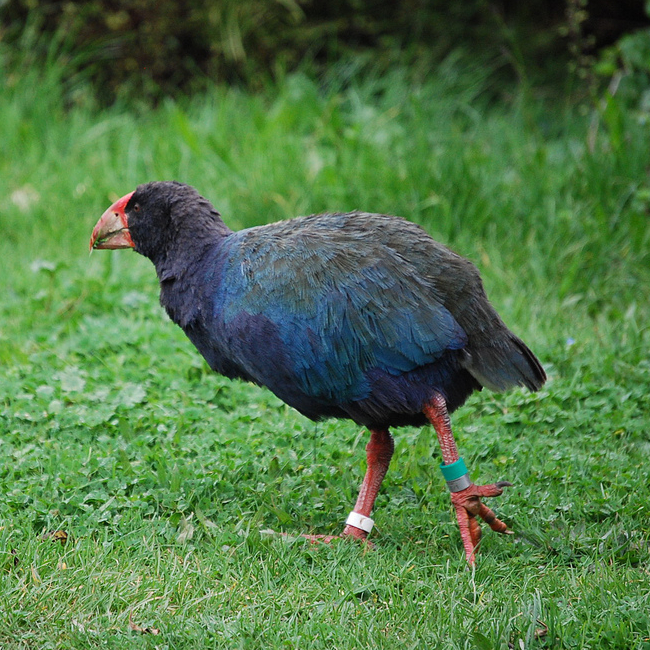 TakahēPorphyrio hochstetteri
-
 Australasian SwamphenPorphyrio melanotus
-
 American CootFulica americana
-
 Eurasian CootFulica atra
-
 Common MoorhenGallinula chloropus
-
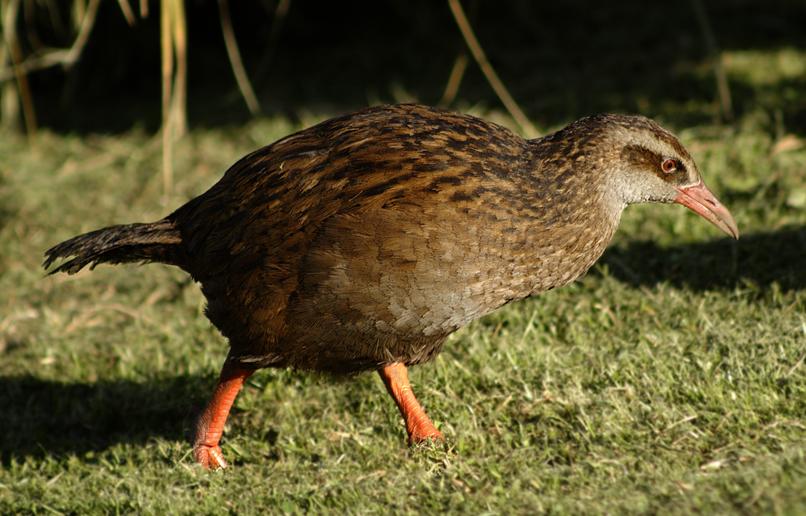 WekaGallirallus australis
Compare
Questions and answers
What is the scientific name of the Blackish Rail?
The scientific name of the Blackish Rail is Pardirallus nigricans. Written with its author, the full name is Pardirallus nigricans (Vieillot, 1819).
Which family does the Blackish Rail belong to?
Pardirallus nigricans belongs to the family Rallidae, in the order Gruiformes and the class Aves.
Where is the Blackish Rail found?
Checklists and occurrence records place Pardirallus nigricans in 7 countries, including Brazil, Colombia, Argentina, Ecuador, Peru and Paraguay.
What is the conservation status of the Blackish Rail?
The IUCN Red List category recorded for Pardirallus nigricans is Least Concern (LC).
Sources
Passages the profile rests on
- The species has a long yellow-green bill and pinkish legs. Source passage: “They have a long yellow-green bill and pinkish legs.” — English Wikipedia
- The nominate subspecies has unmarked dark brown upperparts, a white chin and throat, and dark gray facial and ventral plumage. Source passage: “The nominate subspecies has unmarked dark brown upperparts, a white chin and throat, and dark gray face and underparts.” — English Wikipedia
- The subspecies P. n. caucae is larger than the nominate subspecies and has a larger, whiter throat patch and paler underparts, particularly around the vent. Source passage: “P. n. caucae is larger than the nominate and has a larger and whiter throat patch and paler underparts especially at the vent.” — English Wikipedia
- The species has two recognized subspecies, P. n. nigricans and P. n. caucae. Source passage: “The blackish rail has two subspecies, the nominate P. n. nigricans and P. n. caucae.” — English Wikipedia
- The Blackish Rail inhabits marshes, heavily vegetated waterways, rice fields, wet grasslands and lightly wooded swamps. Source passage: “The blackish rail inhabits wet landscapes including marshes, heavily vegetated waterways, rice fields, wet grasslands, and lightly wooded swamps.” — English Wikipedia
- The species is primarily a lowland bird. Source passage: “It is mostly a bird of the lowlands” — English Wikipedia
- In the Andes, the species occurs at elevations between 800 and 2,200 m. Source passage: “in the Andes is found between 800 and 2,200 m (2,600 and 7,200 ft)” — English Wikipedia
- One record documents the species at approximately 4,100 m elevation in Peru. Source passage: “there is one record in Peru at about 4,100 m (13,500 ft).” — English Wikipedia
- The species' diet has not been established, although insects and other invertebrates are considered possible food items. Source passage: “Its diet is not known but is assumed to be insects and other invertebrates.” — English Wikipedia
- One individual was recorded entering a restaurant garden to obtain food scraps. Source passage: “venturing 5m into [a] restaurant garden for food scraps.” — English Wikipedia
- The species usually forages under vegetation cover but sometimes feeds in open areas along vegetation edges or in small clearings. Source passage: “The blackish rail usually forages in cover but occasionally in the open at the edges of vegetation or in small clear areas.” — English Wikipedia
- The species is secretive but is occasionally observed. Source passage: “Secretive but sometimes seen” — ebird.org
- No regular movements have been documented apart from the occurrence of a vagrant individual in Peru. Source passage: “No movement by the blackish rail has been documented except for the vagrant in Peru.” — English Wikipedia
- The Blackish Rail has an extensive vocal repertoire. Source passage: “The blackish rail has a large vocal repertoire.” — English Wikipedia
- A vocalization thought to be the male song consists of a loud, penetrating and repeated sound described as 'whuueeee' or 'wheee'. Source passage: “very sharp, loud, penetrating, repeated 'whuueeee' or 'wheee'.” — English Wikipedia
- Other reported vocalizations include metallic, complaining, rapidly repeated and double-squeak calls. Source passage: “a "very fast, metallic 'tii'd'dit'", a "complaining 'keeeeaaa'", a "rapid, repeated 'chchchee'" and a "sharp double squeak".” — English Wikipedia
- The breeding season of the Blackish Rail has not been determined. Source passage: “The blackish rail's breeding season has not been determined.” — English Wikipedia
- A nest attributed to either the Blackish Rail or the Plumbeous Rail consisted of a cup placed among shoots on a stump in a swamp. Source passage: “One nest of either the blackish or plumbeous rail was a cup placed among shoots on a stump in a swamp.” — English Wikipedia
- The recorded clutch size is two or three eggs. Source passage: “The clutch size is two or three” — English Wikipedia
- The incubation period recorded in captivity is 18 to 21 days. Source passage: “the incubation time (in captivity) is 18 to 21 days.” — English Wikipedia
- The chicks have black down and leave the nest shortly after hatching. Source passage: “The black downy chicks leave the nest soon after they hatch” — English Wikipedia
- Both parents participate in caring for the chicks. Source passage: “both parents care for the chicks.” — English Wikipedia
- The Blackish Rail and the Plumbeous Rail form a superspecies. Source passage: “they do form a superspecies.” — English Wikipedia
- Some authors have proposed treating the Blackish Rail and Plumbeous Rail as a single species. Source passage: “Some authors propose that the blackish and plumbeous rails are conspecific” — English Wikipedia
- The Blackish Rail is classified as Least Concern by the IUCN. Source passage: “The IUCN has assessed the blackish rail as being of Least Concern.” — English Wikipedia
- The species has an estimated population of up to 67,000 mature individuals. Source passage: “an estimated population of up to 67,000 mature individuals.” — English Wikipedia
- The population trend of the species is unknown. Source passage: “The population trend is unknown.” — English Wikipedia
- No immediate threats to the species have been identified. Source passage: “No immediate threats have been identified.” — English Wikipedia
- The species is locally common in a few areas but is generally patchily distributed and uncommon. Source passage: “It is regarded as locally common in a few areas but generally as patchy and uncommon.” — English Wikipedia
- Assessing the species' status is difficult because it is secretive and difficult to observe. Source passage: “status [is] difficult to assess, as [the] species [is] usually secretive and difficult to observe.” — English Wikipedia
- The species was not recorded in the trade databases reviewed by Donald and colleagues in 2024. Source passage: “This species was not recorded in any of the trade databases reviewed by Donald et al. (2024)” — datazone.birdlife.org
- There is no indication that the species is traded. Source passage: “there is no indication that the species is traded” — datazone.birdlife.org
Data
- Catalogue of Life, 2026-10-16 XR cc by
- Global Biodiversity Information Facility CC BY 4.0
- Wikidata CC0
- GeoNames CC BY 4.0
- Wikimedia Commons per image; credit shown with each image
- Within the Catalogue of Life, this name comes from The Integrated Taxonomic Information System cc0
References
- Taylor, & Barry. (1988). Rails: A Guide to the Rails, Crakes, Gallinules and Coots of the World.
- Gill, Frank, & and Minturn Wright. (2006). Birds of the World: Recommended English Names.
- Dickinson, E. C., and J. V. Remsen Jr., eds. (2013). The Howard and Moore Complete Checklist of the Birds of the World, 4th Edition, Vol. 1 Non-Passerines.
This species in other databases
Page built on 27 November 2026. See how the catalog is made and all sources and licences.
Cite this page
ScientificNames.org. (2026). Pardirallus nigricans (Blackish Rail). Retrieved November 27, 2026, from https://scientificnames.org/species/pardirallus-nigricans
“Pardirallus nigricans (Blackish Rail).” ScientificNames.org, 2026, scientificnames.org/species/pardirallus-nigricans. Accessed 27 Nov. 2026.
ScientificNames.org. “Pardirallus nigricans (Blackish Rail).” Accessed November 27, 2026. https://scientificnames.org/species/pardirallus-nigricans.
@misc{scientificnames_pardirallus_nigricans_blackish_rail,
  author = {{ScientificNames.org}},
  title = {Pardirallus nigricans (Blackish Rail)},
  year = {2026},
  url = {https://scientificnames.org/species/pardirallus-nigricans},
  note = {Accessed 2026-11-27}
}