Species · Amphibians
Malabar Tree Toad Pedostibes tuberculosus
The scientific name of the Malabar Tree Toad is Pedostibes tuberculosus. It is a species of amphibian in the family Bufonidae (true toad), order Anura. The name dates from 1876.
- Scientific name
- Pedostibes tuberculosus Günther, 1876
- Common name
- Malabar Tree Toad
- Genus
- Pedostibes
- Family
- Bufonidae (True Toad)
- Order
- Anura
- Class
- Amphibia
- Red List category
- LC Least Concern
- Recorded in
- 1 country
- Name status
- accepted in the Catalogue of Life

Overview
The Malabar Tree Toad (Pedostibes tuberculosus) is the sole species in the genus Pedostibes. It occurs in forests along India's Western Ghats, south of Goa, across Karnataka, Kerala, and Tamil Nadu. It has rough, tubercular upper skin, with the largest tubercles arranged along both sides of its back.
Written 26 November 2026 from the sources listed below. Each statement was checked against the passage it cites; statements that could not be supported were removed.
Appearance
The Malabar Tree Toad has a narrow, slender body and a moderately sized head. Its snout is pointed, its lores are vertical, and its tympanum is well defined, measuring approximately one-third of the eye diameter.[1][2][3][4]
Its fingers are moderately sized, flattened, and webbed at their bases. Its toes are almost completely webbed, and the tips of its fingers and toes have broad, truncated disks.[5][6]
Its upper body is brownish-grey, with darker sides and white bands below the eye and across the lumbar region. Its underside has dark spots.[7][8]
Males possess a subgular vocal sac.[9]
Adult individuals have a reported snout-to-vent length of 35.0–47.2 millimeters. They are also reported to grow to approximately 3.6–3.85 centimeters in length, and females are larger than males.[10][11][12]
Habitat
The species inhabits wet tree hollows and water-containing leaf bases. It occurs in Western Ghats forests at elevations ranging from 250 meters to over 1,000 meters, often in forest habitat beside streams.[13][14][15]
It has been recorded in Konya Wildlife Sanctuary, Cotigao Wildlife Sanctuary, Indira Gandhi National Park, Kalakad-Mundanthurai Tiger Reserve, Ponmudi Hills National Park, and Silent Valley National Park.[16]
Behaviour
Adults occur among leaf litter and climb trees at night.[17]
Its call has a dominant frequency of 3,780 Hz and lasts between three and seven seconds. Each call consists of three to ten pulses.[18][19]
Reproduction and life cycle
The species produces offspring when the monsoon rains begin. Its tadpoles develop in streams and possess suckers on their bodies.[20][21][22]
Newly hatched tadpoles are transparent except for their yolk sacs. As they develop, they become brown and may develop silver markings.[23][24]
Diet
Scientists believe that the tadpoles feed on plant material growing on stream bottoms, although this diet has not been directly observed.[25]
Conservation
The species is not currently considered at risk of extinction according to the cited IUCN assessment. Habitat loss and fragmentation associated with agriculture, roads, dams, and other human activities are principal threats.[26][27]
Vehicle collisions can kill individuals, particularly during the breeding season, when individuals gather in groups of approximately 10–15.[28][29]
Climate change may affect the species because its breeding is restricted to the beginning of the monsoon. Changes in rainfall could cause harmful runoff in its habitat.[30][31]
A 2020 examination did not detect Batrachochytrium dendrobatidis in this species.[32]
Classification of the Malabar Tree Toad
| Kingdom | Animalia |
|---|---|
| Phylum | Chordata |
| Subphylum | Vertebrata |
| Infraphylum | Gnathostomata |
| Parvphylum | Osteichthyes |
| Megaclass | Tetrapoda |
| Class | Amphibia (Amphibians) |
| Order | Anura (Frogs) |
| Family | Bufonidae (True Toad) |
| Genus | Pedostibes (Malabar Tree Toad) |
| Species | Pedostibes tuberculosus Günther, 1876 |
Where the Malabar Tree Toad is found
Checklists and occurrence records place Pedostibes tuberculosus in 1 country across Asia. GBIF holds 492 georeferenced records of it.
Countries
Regions and cities with the most records
- Karnataka, India 323
- Kerala, India 104
- Someshwar, India 93
- Kalpatta, India 69
- Tīrthahalli, India 37
- Kārkala, India 28
- Sirsi, India 21
- Sakleshpur, India 17
- Goa, India 16
- Tamil Nadu, India 11
- Virajpet, India 11
- Maharashtra, India 9
- Tondalam, India 9
- Vettaikkaranpudur, India 8
- Anaimalai, India 7
- Curchorem, India 7
- Kottur, India 7
- Yellāpur, India 7
- Madikeri, India 6
- Thazhecode, India 6
- Byndoor, India 5
- Curti, India 5
- Dandeli, India 5
- Kandamkunnu, India 5
- Kuttuparamba, India 5
- Ponda, India 5
- Pūlakkōd, India 5
- Keevallur, India 4
- Kumta, India 4
- Mangattidam, India 4
- Mattanur, India 4
- Mūdbidri, India 4
- Nilambūr, India 4
- Bicholim, India 3
- Gokarna, India 3
- Gudalur, India 3
Range as the checklists state it
Southern Asia
A number beside a place is its count of GBIF occurrence records. A place without a number comes from a checklist alone. Records show where a species has been observed or collected, which can include escapes and vagrants.
Common names
English
- Malabar Tree Toad
- Warty Asian Tree Toad
Names in 4 other languages
- Czech
- ropucha jihoindická
- German
- Baumkröte
- Japanese
- マラバルキノボリヒキガエル
- Russian
- Древесная жаба
Synonyms
One other scientific name has been used for this species and is now treated as a synonym of Pedostibes tuberculosus.
- Nectophryne tuberculosa (Günther, 1876)
Related species
- Cane ToadRhinella marina
-
 Colorado River ToadIncilius alvarius
-
 Common ToadBufo bufo
-
 American ToadAnaxyrus americanus
-
 Panamanian Golden FrogAtelopus zeteki
-
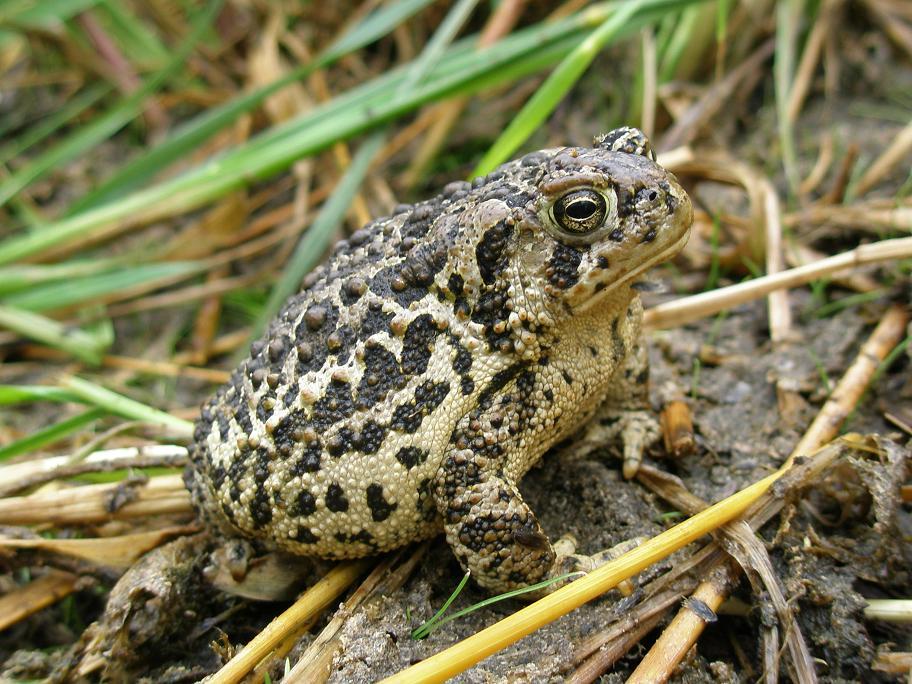 Wyoming ToadAnaxyrus baxteri
-
 Kihansi Spray ToadNectophrynoides asperginis
-
 Natterjack ToadEpidalea calamita
Compare
Questions and answers
What is the scientific name of the Malabar Tree Toad?
The scientific name of the Malabar Tree Toad is Pedostibes tuberculosus. Written with its author, the full name is Pedostibes tuberculosus Günther, 1876.
Which family does the Malabar Tree Toad belong to?
Pedostibes tuberculosus belongs to the family Bufonidae, in the order Anura and the class Amphibia.
Where is the Malabar Tree Toad found?
Checklists and occurrence records place Pedostibes tuberculosus in 1 country: India.
What is the conservation status of the Malabar Tree Toad?
The IUCN Red List category recorded for Pedostibes tuberculosus is Least Concern (LC).
What other names does the Malabar Tree Toad have?
Pedostibes tuberculosus is also known in English as Warty Asian Tree Toad.
Sources
Passages the profile rests on
- The species has a slender body and a moderately sized head. Source passage: “This is a slender frog with a moderate-sized head.” — English Wikipedia
- Its snout is pointed and its lores are vertical. Source passage: “The snout is pointed and the lores are vertical.” — English Wikipedia
- Its tympanum is well defined and measures approximately one-third of the eye diameter. Source passage: “The ear opening (tympanum) is well marked and is about a third of the diameter of the eye.” — English Wikipedia
- The species has a narrow, slender body. Source passage: “Pedostibes tuberculosus is a narrow and slender-bodied toad” — amphibiaweb.org
- Its fingers are moderately sized, flattened, and webbed at their bases. Source passage: “The fingers are moderate, depressed, and webbed at the base.” — English Wikipedia
- Its toes are almost completely webbed, and the tips of its fingers and toes have broad, truncated disks. Source passage: “The toes are almost entirely webbed and the tips of both fingers and toes are dilated into broad, truncated disks being smaller on the toes.” — English Wikipedia
- Its upper body is brownish-grey, with darker sides and white bands below the eye and across the lumbar region. Source passage: “In color, it is brownish-grey above, with the sides darker; a white band runs from below the eye to the axil; another white, longitudinal band is in the lumbar region” — English Wikipedia
- Its underside has dark spots. Source passage: “the beneath is dark-spotted.” — English Wikipedia
- Males possess a subgular vocal sac. Source passage: “The male has a subgular vocal sac.” — English Wikipedia
- Adult individuals are reported to have a snout-to-vent length of 35.0–47.2 millimeters. Source passage: “an adult snout-to-vent length ranging from 35.0 - 47.2 millimeters.” — amphibiaweb.org
- Adult individuals are reported to grow to approximately 3.6–3.85 centimeters in length. Source passage: “Adults of this toad grow to 3.6–3.85 cm in length.” — English Wikipedia
- Females are larger than males. Source passage: “Females are larger than males.” — English Wikipedia
- The species inhabits wet tree hollows and water-containing leaf bases. Source passage: “It is a small species and is found in wet tree hollows or leaf bases containing water.” — English Wikipedia
- It occurs in Western Ghats forests at elevations ranging from 250 meters to over 1,000 meters. Source passage: “They are found in the forest of the Western Ghats at elevations of 250 m to over 1000 m” — English Wikipedia
- Its forest habitat is often located beside streams. Source passage: “often beside streams.” — English Wikipedia
- The species has been recorded in Konya Wildlife Sanctuary, Cotigao Wildlife Sanctuary, Indira Gandhi National Park, Kalakad-Mundanthurai Tiger Reserve, Ponmudi Hills National Park, and Silent Valley National Park. Source passage: “Scientists have reported this frog from several protected zones: Konya Wild Life Sanctuary, Cotigao Wild Life Sanctuary, Indira Gandhi National Park, Kalakad-Mundanthurai Tiger Reserve, and Ponmudi Hills National Park, and Silent Valley National Park.” — English Wikipedia
- Adults occur among leaf litter and climb trees at night. Source passage: “adults are found among leaf litter, climbing into trees at night.” — English Wikipedia
- Its call has a dominant frequency of 3,780 Hz and lasts between three and seven seconds. Source passage: “with a dominant frequency of 3780 Hz, each call lasting 3 to 7 sec” — English Wikipedia
- Each call consists of three to ten pulses. Source passage: “with three to 10 pulses.” — English Wikipedia
- The species produces offspring when the monsoon rains begin. Source passage: “This frog has young when the monsoon rains start.” — English Wikipedia
- Its tadpoles develop in streams. Source passage: “The tadpoles develop in streams.” — English Wikipedia
- Its tadpoles possess suckers on their bodies. Source passage: “The tadpoles have suckers on their bodies.” — English Wikipedia
- Newly hatched tadpoles are transparent except for their yolk sacs. Source passage: “The youngest tadpoles are clear in color except for the yolk sac.” — English Wikipedia
- As they develop, tadpoles become brown and may develop silver markings. Source passage: “As they grow, they turn brown, sometimes with silver marks.” — English Wikipedia
- Scientists believe that the tadpoles feed on plant material growing on stream bottoms, although this diet has not been directly observed. Source passage: “Scientists believe they eat plants from the bottoms of the streams but have not directly observed their diet.” — English Wikipedia
- The species is not currently considered at risk of extinction according to the cited IUCN assessment. Source passage: “Scientists from the IUCN say this frog is not currently in danger of dying out.” — English Wikipedia
- Habitat loss and fragmentation associated with agriculture, roads, dams, and other human activities are principal threats to the species. Source passage: “The principal threats are habitat loss and fragmentation with respect to farms, roads, dams, and other human needs.” — English Wikipedia
- Vehicle collisions can kill individuals, particularly during the breeding season. Source passage: “Vehicle collisions can also kill this frog, especially during the breeding season” — English Wikipedia
- During the breeding season, individuals gather in groups of approximately 10–15. Source passage: “when they gather in groups of about 10–15.” — English Wikipedia
- Climate change may affect the species because its breeding is restricted to the beginning of the monsoon. Source passage: “Climate change could affect this frog because it only breeds at the beginning of the monsoon rains.” — English Wikipedia
- Changes in rainfall could cause harmful runoff in the species' habitat. Source passage: “Changes to rainfall could also cause dangerous runoff in its habitat.” — English Wikipedia
- A 2020 examination did not detect Batrachochytrium dendrobatidis in this species. Source passage: “They did not find any of the fungus on P. tuberculosus but they did find it on other frogs in the area.” — English Wikipedia
Data
- Catalogue of Life, 2026-10-16 XR cc by
- Global Biodiversity Information Facility CC BY 4.0
- Wikidata CC0
- GeoNames CC BY 4.0
- Wikimedia Commons per image; credit shown with each image
- Within the Catalogue of Life, this name comes from The Integrated Taxonomic Information System cc0
This species in other databases
Page built on 28 November 2026. See how the catalog is made and all sources and licences.
Cite this page
ScientificNames.org. (2026). Pedostibes tuberculosus (Malabar Tree Toad). Retrieved November 28, 2026, from https://scientificnames.org/species/pedostibes-tuberculosus
“Pedostibes tuberculosus (Malabar Tree Toad).” ScientificNames.org, 2026, scientificnames.org/species/pedostibes-tuberculosus. Accessed 28 Nov. 2026.
ScientificNames.org. “Pedostibes tuberculosus (Malabar Tree Toad).” Accessed November 28, 2026. https://scientificnames.org/species/pedostibes-tuberculosus.
@misc{scientificnames_pedostibes_tuberculosus_malabar_tree_toad,
  author = {{ScientificNames.org}},
  title = {Pedostibes tuberculosus (Malabar Tree Toad)},
  year = {2026},
  url = {https://scientificnames.org/species/pedostibes-tuberculosus},
  note = {Accessed 2026-11-28}
}