Species · Birds
Guianan Red Cotinga Phoenicircus carnifex
The scientific name of the Guianan Red Cotinga is Phoenicircus carnifex. It is a species of bird in the family Cotingidae (contingas), order Passeriformes. The name dates from 1758.
- Scientific name
- Phoenicircus carnifex (Linnaeus, 1758)
- Common name
- Guianan Red Cotinga
- Genus
- Phoenicircus
- Family
- Cotingidae (Contingas)
- Order
- Passeriformes
- Class
- Aves
- Red List category
- LC Least Concern
- Recorded in
- 5 countries
- Name status
- accepted in the Catalogue of Life

Overview
Phoenicircus carnifex inhabits humid to wet lowland forests and occurs in Brazil, French Guiana, Guyana, Suriname, and Venezuela. Adult males have a glossy bright red crown, bright red underparts and tail, and blackish to maroon-brown upperparts.
Written 26 November 2026 from the sources listed below. Each statement was checked against the passage it cites; statements that could not be supported were removed.
Appearance
Adult males have a glossy bright red crown contrasting with an otherwise blackish to maroon-brown head. Their upperparts are blackish to maroon-brown, and their wings are mostly rufescent brown with darker primary feathers.[1][2][3]
Adult males have bright red tails with a dark brownish band across the ends and bright red underparts.[4][5]
Females have dull reddish crowns and ear coverts, olive faces, olive upperparts and olive wings. Their tails are dull reddish, and their underparts are rosy red.[6][7]
Both sexes have red-brown irises, horn-colored to brownish orange bills, and pinkish to pale brownish orange legs and feet. Adults have forward-projecting forehead feathers that partly conceal the nostrils and prominent bristles around the base of the bill.[8][9]
Immature males resemble adult females but have deeper red underparts.[10]
The species measures 22–24 cm in length and weighs approximately 82–95 g. Females are larger than males.[11][12][13]
Habitat
The Guianan Red Cotinga inhabits humid to wet lowland forests. In Venezuela, it occurs at elevations up to 250 m, and in Brazil, at elevations up to 600 m.[14][15][16]
Its range extends from eastern Bolívar state in Venezuela eastward through the Guianas and south into northern Brazil. In Brazil, the western edge reaches eastern Roraima and eastern Amazonas, the eastern edge reaches the Atlantic coast in northwestern Maranhão, and the southern edge reaches the lower Tapajós River drainage.[17][18][19][20]
Diet
The species appears to feed exclusively on fruit. Fruits from at least eight botanical families have been recorded as food sources.[21][22]
Behaviour
The Guianan Red Cotinga plucks fruit while perched or during short sallies. It is believed to remain in the same general area throughout the year.[23][24]
Males display to females at leks, swooping between perches approximately 8–12 m above the ground. Perched displaying males lean forward and droop their wings and tails while calling noisily.[25][26][27]
The species produces a dawn call transcribed as pee-chew-eet. During lek displays, its wings produce a mechanical whirring sound, and when alarmed, it produces a wheep call.[28][29][30]
Reproduction and life cycle
In Suriname, the male display period extends from at least December through May.[31]
A recorded nest was a shallow cup constructed from mud and twigs and lined with rootlets and plant fibers. It was built in a tree crevice approximately 2.7 m above the ground.[32][33]
A nest discovered in late January contained two nestlings.[34]
Similar species
The black-necked red cotinga (Phoenicircus nigricollis) is the other species in the genus Phoenicircus, and the two species form a superspecies. The western part of the Guianan Red Cotinga's range slightly overlaps with the range of the black-necked red cotinga.[35][36]
Conservation
The IUCN has assessed the Guianan Red Cotinga as Least Concern. The species has a large geographic range, but its population size is unknown and is believed to be decreasing.[37][38][39]
No immediate threats to the species have been identified. It is considered rare and very local in Venezuela and uncommon in Brazil.[40][41][42]
The species is recorded in two protected areas in Venezuela.[43]
Classification of the Guianan Red Cotinga
| Kingdom | Animalia |
|---|---|
| Phylum | Chordata |
| Subphylum | Vertebrata |
| Infraphylum | Gnathostomata |
| Parvphylum | Osteichthyes |
| Megaclass | Tetrapoda |
| Class | Aves (Bird) |
| Order | Passeriformes (Passerine) |
| Family | Cotingidae (Contingas) |
| Genus | Phoenicircus (Red Cotingas) |
| Species | Phoenicircus carnifex (Linnaeus, 1758) |
Where the Guianan Red Cotinga is found
Checklists and occurrence records place Phoenicircus carnifex in 5 countries across South America. GBIF holds 2,182 georeferenced records of it.
Countries
Regions and cities with the most records
- Amazonas, Brazil 574
- Potaro-Siparuni, Guyana 392
- Pará, Brazil 242
- Upper Takutu-Upper Essequibo, Guyana 149
- Presidente Figueiredo, Brazil 129
- Sipaliwini District, Suriname 97
- Brokopondo District, Suriname 32
- Amapá, Brazil 30
- Bolívar, Venezuela 28
- Cuyuni-Mazaruni, Guyana 21
- Upper Demerara-Berbice, Guyana 18
- Kourou, French Guiana 17
- Pedra Branca do Amapari, Brazil 16
- Matoury, French Guiana 14
- Oiapoque, Brazil 14
- Parauapebas, Brazil 14
- Maranhão, Brazil 12
- Barima-Waini, Guyana 11
- Rémire-Montjoly, French Guiana 9
- Saint-Laurent-du-Maroni, French Guiana 8
- Cayenne, French Guiana 7
- Manaus, Brazil 6
- Belterra, Brazil 4
- Melgaço, Brazil 3
- Portel, Brazil 3
Range as the checklists state it
South America
A number beside a place is its count of GBIF occurrence records. A place without a number comes from a checklist alone. Records show where a species has been observed or collected, which can include escapes and vagrants.
Common names
English
- Guianan Red Cotinga
- Guianan Red-Cotinga
- Red Cotinga
Names in 23 other languages
- Arabic
- قطنجة حمراء غويانية
- Catalan
- cotinga roig de la Guaiana
- Chinese
- 圭亚那红伞鸟, 圭亞那紅卡丁傘鳥
- Croatian
- crvenotrba kotinga
- Czech
- kotinga krvavá
- Danish
- Blodkotinga
- Dutch
- Rode Cotinga
- Esperanto
- sanga kotingo
- Finnish
- punapyrstökotinga
- French
- Cotinga ouette
- German
- Blutkotinga
- Hungarian
- skarlát kotinga
- Italian
- Cotinga rossa della Guyana
- Japanese
- ギアナアカクロカザリドリ
- Lithuanian
- mažoji raudonoji kotinga
- Polish
- karmazynowiec wschodni
- Portuguese
- Saurá, cotinga-vermelha-guianense, saurá-fogo
- Russian
- Малая чёрно-красная котинга, Огненая котинга
- Slovak
- karmazínka guyanská
- Spanish
- Cotinga rojo guayanés
- Swedish
- guyanarödkotinga
- Turkish
- Guyana Kırmızı Kotingası
- Ukrainian
- кармінник східний
Synonyms
2 other scientific names have been used for this species and are now treated as synonyms of Phoenicircus carnifex.
- Lanius carnifex Linnaeus, 1758
- Phoenicercus carnifex Linnaeus, C, 1758
Related species
-
 Black-necked Red CotingaPhoenicircus nigricollis
-
 CapuchinbirdPerissocephalus tricolor
-
 Andean Cock-of-the-rockRupicola peruvianus
-
 White BellbirdProcnias albus
-
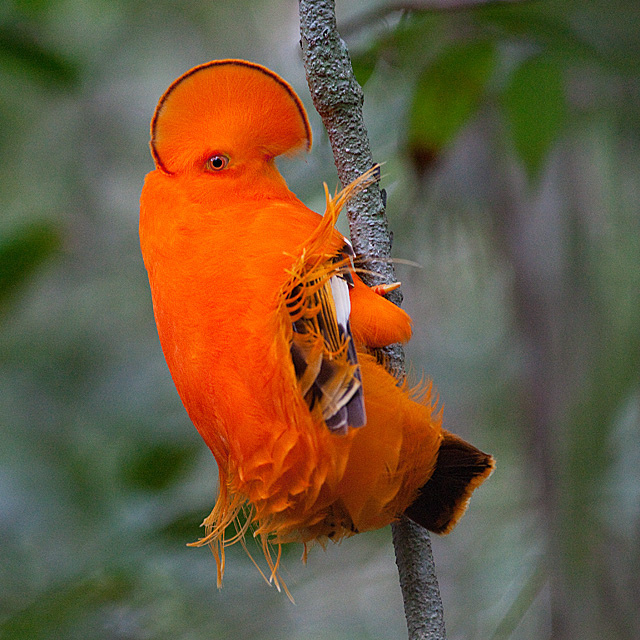 Guianan Cock-of-the-rockRupicola rupicola
-
 Screaming PihaLipaugus vociferans
-
 Bare-throated BellbirdProcnias nudicollis
-
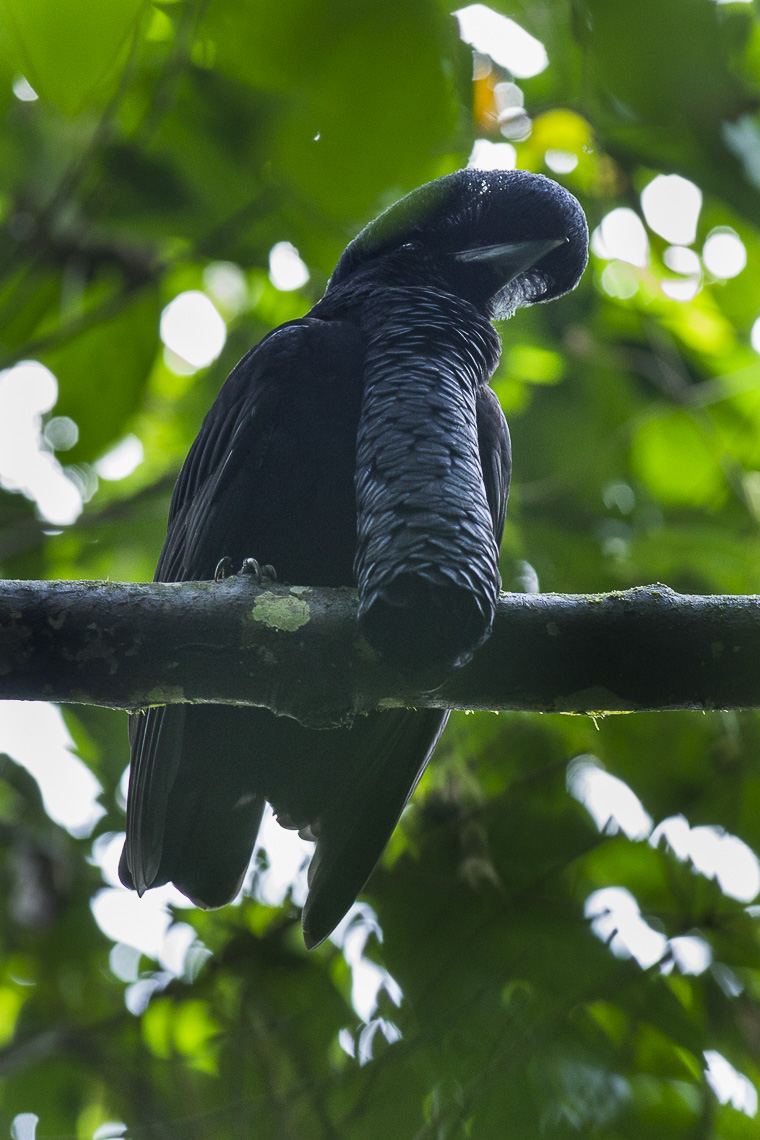 Long-wattled UmbrellabirdCephalopterus penduliger
Compare
Questions and answers
What is the scientific name of the Guianan Red Cotinga?
The scientific name of the Guianan Red Cotinga is Phoenicircus carnifex. Written with its author, the full name is Phoenicircus carnifex (Linnaeus, 1758).
Which family does the Guianan Red Cotinga belong to?
Phoenicircus carnifex belongs to the family Cotingidae, in the order Passeriformes and the class Aves.
Where is the Guianan Red Cotinga found?
Checklists and occurrence records place Phoenicircus carnifex in 5 countries: Brazil, Guyana, French Guiana, Suriname and Venezuela.
What is the conservation status of the Guianan Red Cotinga?
The IUCN Red List category recorded for Phoenicircus carnifex is Least Concern (LC).
What other names does the Guianan Red Cotinga have?
Phoenicircus carnifex is also known in English as Guianan Red-Cotinga and Red Cotinga.
Where does the Guianan Red Cotinga occur?
It occurs in Brazil, French Guiana, Guyana, Suriname, and Venezuela.[44]
What does the Guianan Red Cotinga eat?
It appears to feed exclusively on fruit, with fruits from at least eight botanical families recorded as food sources.[21][22]
How large is the Guianan Red Cotinga?
It measures 22–24 cm in length and weighs approximately 82–95 g. Females are larger than males.[11][12][13]
Sources
Passages the profile rests on
- Adult males have a glossy bright red crown contrasting with an otherwise blackish to maroon-brown head. Source passage: “Adult males have a glossy bright red crown on an otherwise blackish to maroon-brown head.” — English Wikipedia
- Adult males have blackish to maroon-brown upperparts. Source passage: “Their upperparts are also blackish to maroon-brown.” — English Wikipedia
- The wings of adult males are mostly rufescent brown, with darker primary feathers. Source passage: “Their wings are mostly rufescent brown with duskier primaries.” — English Wikipedia
- Adult males have bright red tails with a dark brownish band across the ends. Source passage: “Their tail is bright red with a dark brownish bar across the end.” — English Wikipedia
- Adult males have bright red underparts. Source passage: “Their underparts are bright red.” — English Wikipedia
- Females have dull reddish crowns and ear coverts, olive faces, olive upperparts and olive wings. Source passage: “They have a dull reddish crown and ear coverts on an otherwise olive face; their upperparts and wings are also olive.” — English Wikipedia
- Females have dull reddish tails and rosy red underparts. Source passage: “Their tail is dull reddish. Their underparts are rosy red.” — English Wikipedia
- Both sexes have red-brown irises, horn-colored to brownish orange bills, and pinkish to pale brownish orange legs and feet. Source passage: “Both sexes have a red-brown iris, a horn-colored to brownish orange bill, and pinkish to pale brownish orange legs and feet.” — English Wikipedia
- Adults have forward-projecting forehead feathers that partly conceal the nostrils and prominent bristles around the base of the bill. Source passage: “Adults have distinctive forehead feathers that project forward, partially concealing the nostrils, and prominent bristles around the base of the bill.” — English Wikipedia
- Immature males resemble adult females but have deeper red underparts. Source passage: “Immature males resemble adult females with deeper red underparts.” — English Wikipedia
- The species measures 22–24 cm in length. Source passage: “The Guianan red cotinga is 22 to 24 cm (8.7 to 9.4 in) long” — English Wikipedia
- The species weighs approximately 82–95 g. Source passage: “weighs about 82 to 95 g (2.9 to 3.4 oz).” — English Wikipedia
- Females are larger than males. Source passage: “Females are larger than males.” — English Wikipedia
- The species inhabits humid to wet lowland forests. Source passage: “It inhabits humid to wet lowland forest.” — English Wikipedia
- In Venezuela, the species occurs at elevations up to 250 m. Source passage: “In elevation it reaches 250 m (800 ft) in Venezuela” — English Wikipedia
- In Brazil, the species occurs at elevations up to 600 m. Source passage: “and 600 m (2,000 ft) in Brazil.” — English Wikipedia
- Its range extends from eastern Bolívar state in Venezuela eastward through the Guianas and south into northern Brazil. Source passage: “The Guianan red cotinga is found from eastern Bolívar state in far eastern Venezuela east through the Guianas and south in northern Brazil.” — English Wikipedia
- In Brazil, the western edge of its range reaches eastern Roraima and eastern Amazonas. Source passage: “In Brazil the western edge of its range is eastern Roraima and eastern Amazonas,” — English Wikipedia
- In Brazil, the eastern edge of its range reaches the Atlantic coast in northwestern Maranhão. Source passage: “its eastern edge the Atlantic in northwestern Maranhão,” — English Wikipedia
- The southern edge of its Brazilian range reaches the lower Tapajós River drainage. Source passage: “and its southern edge in the lower Tapajós River drainage.” — English Wikipedia
- The species appears to feed exclusively on fruit. Source passage: “The Guianan red cotinga appears to feed only on fruit;” — English Wikipedia
- Fruits from at least eight botanical families have been recorded as food sources. Source passage: “species in at least eight botanical families have been recorded as its source.” — English Wikipedia
- The species plucks fruit while perched or during short sallies. Source passage: “It plucks the fruits while perched or with a short sally.” — English Wikipedia
- The species is believed to remain in the same general area throughout the year. Source passage: “The Guianan red cotinga is believed to be a year-round resident.” — English Wikipedia
- Males display to females at leks. Source passage: “Male Guianan red cotingas display to females at a lek.” — English Wikipedia
- During lek displays, males swoop between perches approximately 8–12 m above the ground. Source passage: “They swoop between perches that are typically between about 8 and 12 m (25 and 40 ft) above the ground.” — English Wikipedia
- Perched displaying males lean forward and droop their wings and tails while calling noisily. Source passage: “While perched they lean forward, droop their wings and tail, and call noisily.” — English Wikipedia
- The species produces a dawn call transcribed as pee-chew-eet. Source passage: “The dawn call of the Guianan red cotinga is "pee-chew-eet".” — English Wikipedia
- The wings produce a mechanical whirring sound during lek displays. Source passage: “During the lek display its wings make a mechanical whirring sound.” — English Wikipedia
- When alarmed, the species produces a wheep call. Source passage: “When alarmed it makes a "wheep".” — English Wikipedia
- In Suriname, the male display period extends from at least December through May. Source passage: “In Suriname the display period spans at least December to May.” — English Wikipedia
- A recorded nest was a shallow cup constructed from mud and twigs and lined with rootlets and plant fibers. Source passage: “One nest was a shallow cup made from mud and twigs lined with rootlets and plant fibers.” — English Wikipedia
- A recorded nest was built in a tree crevice approximately 2.7 m above the ground. Source passage: “It was built in a crevice in a tree about 2.7 m (9 ft) above the ground.” — English Wikipedia
- A nest discovered in late January contained two nestlings. Source passage: “When discovered in late January it held two nestlings.” — English Wikipedia
- The western part of its range slightly overlaps with the range of the black-necked red cotinga. Source passage: “The western part of its range slightly overlaps that of the black-necked red cotinga.” — English Wikipedia
- The black-necked red cotinga (Phoenicircus nigricollis) is the other species in the genus Phoenicircus, and the two species form a superspecies. Source passage: “The Guianan red cotinga shares genus Phoenicircus with the black-necked red cotinga (P. nigricollis) and the two form a superspecies.” — English Wikipedia
- The IUCN has assessed the species as Least Concern. Source passage: “The IUCN has assessed the Guianan red cotinga as being of Least Concern.” — English Wikipedia
- The species has a large geographic range. Source passage: “It has a large range;” — English Wikipedia
- The population size is unknown and is believed to be decreasing. Source passage: “its population size is not known and is believed to be decreasing.” — English Wikipedia
- No immediate threats to the species have been identified. Source passage: “No immediate threats have been identified.” — English Wikipedia
- The species is considered rare and very local in Venezuela. Source passage: “It is considered rare and very local in Venezuela” — English Wikipedia
- The species is considered uncommon in Brazil. Source passage: “and uncommon in Brazil.” — English Wikipedia
- The species is recorded in two protected areas in Venezuela. Source passage: “It is known in two preserves in Venezuela” — English Wikipedia
- The species occurs in Brazil, French Guiana, Guyana, Suriname, and Venezuela. Source passage: “It is found in Brazil, French Guiana, Guyana, Suriname, and Venezuela.” — English Wikipedia
Data
- Catalogue of Life, 2026-10-16 XR cc by
- Global Biodiversity Information Facility CC BY 4.0
- Wikidata CC0
- GeoNames CC BY 4.0
- Wikimedia Commons per image; credit shown with each image
- Within the Catalogue of Life, this name comes from The Integrated Taxonomic Information System cc0
References
- Gill, Frank, & and Minturn Wright. (2006). Birds of the World: Recommended English Names.
This species in other databases
Page built on 27 November 2026. See how the catalog is made and all sources and licences.
Cite this page
ScientificNames.org. (2026). Phoenicircus carnifex (Guianan Red Cotinga). Retrieved November 27, 2026, from https://scientificnames.org/species/phoenicircus-carnifex
“Phoenicircus carnifex (Guianan Red Cotinga).” ScientificNames.org, 2026, scientificnames.org/species/phoenicircus-carnifex. Accessed 27 Nov. 2026.
ScientificNames.org. “Phoenicircus carnifex (Guianan Red Cotinga).” Accessed November 27, 2026. https://scientificnames.org/species/phoenicircus-carnifex.
@misc{scientificnames_phoenicircus_carnifex_guianan_red_cotinga,
  author = {{ScientificNames.org}},
  title = {Phoenicircus carnifex (Guianan Red Cotinga)},
  year = {2026},
  url = {https://scientificnames.org/species/phoenicircus-carnifex},
  note = {Accessed 2026-11-27}
}