Species · Birds
Sakalava Weaver Ploceus sakalava
The scientific name of the Sakalava Weaver is Ploceus sakalava. It is a species of bird in the family Ploceidae (bishops), order Passeriformes. The name dates from 1861.
- Scientific name
- Ploceus sakalava Hartlaub, 1861
- Common name
- Sakalava Weaver
- Genus
- Ploceus
- Family
- Ploceidae (Bishops)
- Order
- Passeriformes
- Class
- Aves
- Red List category
- LC Least Concern
- Recorded in
- 1 country
- Name status
- accepted in the Catalogue of Life

Overview
Ploceus sakalava is endemic to Madagascar. Breeding males have yellow heads and upper breasts, distinctive red eye-rings and a silver bill extending into the forehead in a V shape.
Written 26 November 2026 from the sources listed below. Each statement was checked against the passage it cites; statements that could not be supported were removed.
Behaviour
The Sakalava Weaver occurs in small flocks.[1]
Reproduction and life cycle
The Sakalava Weaver constructs roofed nests by weaving strips of grass leaves. It also incorporates palm-frond strips and thatching or weaving materials collected in villages.[2][3]
The nest is attached directly around a branch or suspended from a short woven stalk. It has a pear-shaped nesting chamber and a long entrance tunnel hanging from its upper section.[4][5]
The nest fabric is thin but dense, while the entrance tunnel is less dense and may be slightly transparent.[6]
Appearance
During the breeding season, adult males have yellow heads and upper breasts, pale grey bellies, and light and brown wings with white tips. They have distinctive red eye-rings and a silver bill extending into the forehead in a V shape.[7][8]
Non-breeding males have dark brown heads and pale grey breasts bordered by white.[9]
Females resemble house sparrows and have pale, almost white breasts and duller, slightly pink bills. They have red eye-rings and sometimes small red markings around the eyes.[10][11]
Habitat
The Sakalava Weaver inhabits dry lowland forests and scrubland in northern, western and southern Madagascar. Its natural habitats include subtropical or tropical dry forests and dry shrubland.[12][13]
Classification of the Sakalava Weaver
| Kingdom | Animalia |
|---|---|
| Phylum | Chordata |
| Subphylum | Vertebrata |
| Infraphylum | Gnathostomata |
| Parvphylum | Osteichthyes |
| Megaclass | Tetrapoda |
| Class | Aves (Bird) |
| Order | Passeriformes (Passerine) |
| Family | Ploceidae (Bishops) |
| Genus | Ploceus (Typical Weavers) |
| Species | Ploceus sakalava Hartlaub, 1861 |
Where the Sakalava Weaver is found
Checklists and occurrence records place Ploceus sakalava in 1 country. GBIF holds 4,695 georeferenced records of it.
Countries
Regions and cities with the most records
- Toliara, Madagascar 763
- Amboasary, Madagascar 367
- Antsiranana, Madagascar 83
- Morondava, Madagascar 81
- Ambato Boeny, Madagascar 77
- Mahajanga, Madagascar 56
- Marovoay, Madagascar 36
- Moramanga, Madagascar 29
- Sakaraha, Madagascar 28
- Ambohidratrimo, Madagascar 15
- Antananarivo, Madagascar 15
- Ivato, Madagascar 15
- Ambilobe, Madagascar 7
- Tôlanaro, Madagascar 7
- Belo sur Tsiribihina, Madagascar 6
- Antsohihy, Madagascar 4
- Antsohimbondrona, Madagascar 4
- Ambalavao, Madagascar 3
- Morombe, Madagascar 3
A number beside a place is its count of GBIF occurrence records. A place without a number comes from a checklist alone. Records show where a species has been observed or collected, which can include escapes and vagrants.
Common names
English
- Sakalava Weaver
- SAWE
Names in 25 other languages
- Arabic
- حباك ساكالافا
- Catalan
- teixidor sakalava
- Chinese
- 萨卡织雀, 馬達加斯加織布鳥
- Croatian
- sivotrba pletilja
- Czech
- snovač žlutohlavý
- Danish
- Sakalava Væver
- Dutch
- Sakalavawever
- Esperanto
- sakalava teksbirdo
- Finnish
- madagaskarinkeltakutoja
- French
- Nélicourvi sakalave, Tisserin sakalave
- German
- Sakalava-Weber, Sakalavaweber, Sakalavenweber
- Hungarian
- Sakalava szövőmadár
- Italian
- Tessitore di Sakalava, Tessitore sakalava
- Japanese
- ニシマダガスカルハタオリ
- Lithuanian
- madagaskarinis audėjas
- Norwegian
- sakalavavever
- Polish
- wikłacz nizinny
- Portuguese
- tecelão-de-nuca-cinzenta, tecelão-sacalava, tecelão-sakalava
- Russian
- Мадагаскарский ткач
- Serbian
- Sakalava tkalja
- Slovak
- pletiarka sakalavka
- Spanish
- Tejedor sakalava
- Swedish
- sakalavavävare
- Turkish
- Sakalava Dokumacısı
- Ukrainian
- сакалава
Synonyms
4 other scientific names have been used for this species and are now treated as synonyms of Ploceus sakalava.
- Foudia sakalava Hartlaub, KJG, 1861
- Foudia sakalava sakalava Hartlaub, KJG, 1861
- Nelicurvius sakalava Hartlaub, KJG, 1861
- Ploceus nelicourvi sakalava Hartlaub, KJG, 1861
Subspecies and varieties
- Ploceus sakalava minor subspecies
- Ploceus sakalava sakalava subspecies
Related species
-
 Southern Masked WeaverPloceus velatus
-
 Village WeaverPloceus cucullatus
-
 Cape WeaverPloceus capensis
-
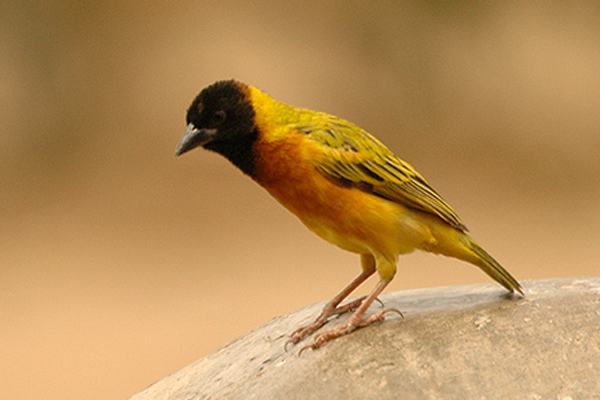 Black-headed WeaverPloceus melanocephalus
-
 Eastern Golden WeaverPloceus subaureus
-
 Asian Golden WeaverPloceus hypoxanthus
-
 Baglafecht WeaverPloceus baglafecht
-
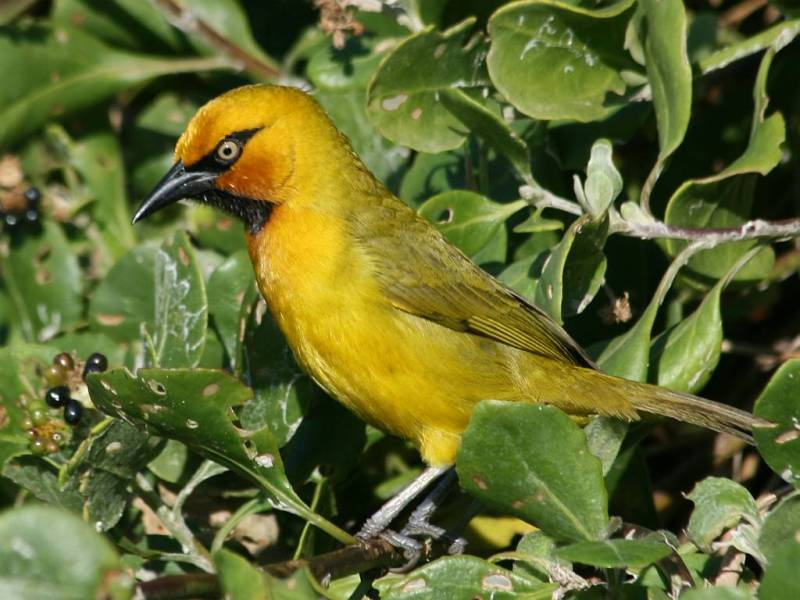 Spectacled WeaverPloceus ocularis
Compare
Questions and answers
What is the scientific name of the Sakalava Weaver?
The scientific name of the Sakalava Weaver is Ploceus sakalava. Written with its author, the full name is Ploceus sakalava Hartlaub, 1861.
Which family does the Sakalava Weaver belong to?
Ploceus sakalava belongs to the family Ploceidae, in the order Passeriformes and the class Aves.
Where is the Sakalava Weaver found?
Checklists and occurrence records place Ploceus sakalava in 1 country: Madagascar.
What is the conservation status of the Sakalava Weaver?
The IUCN Red List category recorded for Ploceus sakalava is Least Concern (LC).
What other names does the Sakalava Weaver have?
Ploceus sakalava is also known in English as SAWE.
What is another name for a weaver bird?
Sakalava Fody is another English name for the Sakalava Weaver.[14]
Sources
Passages the profile rests on
- The Sakalava Weaver occurs in small flocks. Source passage: “It is found in small flocks.” — English Wikipedia
- The Sakalava Weaver constructs roofed nests by weaving strips of grass leaves. Source passage: “the roofed nest is woven from strips of grass leaf” — English Wikipedia
- The species also incorporates palm-frond strips and thatching or weaving materials collected in villages into its nests. Source passage: “but the Sakalava weaver also uses strips of palm frond or thatching and weaving materials collected in villages.” — English Wikipedia
- The nest is attached directly around a branch or suspended from a short woven stalk. Source passage: “The top is woven directly around a branch or attached from a short woven stalk.” — English Wikipedia
- The nest has a pear-shaped nesting chamber and a long entrance tunnel hanging from its upper section. Source passage: “It is shaped like a retort, with a pear-shaped nesting chamber and a long entrance tunnel hanging from the top.” — English Wikipedia
- The nest fabric is thin but dense, while the entrance tunnel is less dense and may be slightly transparent. Source passage: “The fabric is thin but dense, although less so with the tunnel, which may be slightly transparent” — English Wikipedia
- During the breeding season, adult males have yellow heads and upper breasts, pale grey bellies, and light and brown wings with white tips. Source passage: “The adult male has a yellow head and upper breast during the breeding season, with a pale grey belly and light and brown wings with white wing-tips.” — English Wikipedia
- Breeding males have distinctive red eye-rings and a silver bill extending into the forehead in a V shape. Source passage: “The male has distinctive red eye-rings and silver bill extending with a "V" shape into the forehead.” — English Wikipedia
- Non-breeding males have dark brown heads and pale grey breasts bordered by white. Source passage: “The non-breeding male has a dark brown head and pale grey breast, flanked with white.” — English Wikipedia
- Females resemble house sparrows and have pale, almost white breasts and duller, slightly pink bills. Source passage: “The female has the appearance more of a house sparrow with pale almost white breast and duller slightly pink bill.” — English Wikipedia
- Females have red eye-rings and sometimes small red markings around the eyes. Source passage: “The female also has a red eye-ring and sometimes small flashes of red around the eye.” — English Wikipedia
- The species inhabits dry lowland forests and scrubland in northern, western and southern Madagascar. Source passage: “Its natural habitat is the dry lowland forests and scrubland of the north, west and south of Madagascar.” — English Wikipedia
- Its natural habitats include subtropical or tropical dry forests and dry shrubland. Source passage: “Its natural habitats are subtropical or tropical dry forests and subtropical or tropical dry shrubland.” — English Wikipedia
- Sakalava Fody is another English name used for this species. Source passage: “Another English name that is sometimes used is Sakalava Fody.” — English Wikipedia
Data
- Catalogue of Life, 2026-10-16 XR cc by
- Global Biodiversity Information Facility CC BY 4.0
- Wikidata CC0
- GeoNames CC BY 4.0
- Wikimedia Commons per image; credit shown with each image
- Within the Catalogue of Life, this name comes from The Integrated Taxonomic Information System cc0
References
- Gill, Frank, & and Minturn Wright. (2006). Birds of the World: Recommended English Names.
This species in other databases
Page built on 28 November 2026. See how the catalog is made and all sources and licences.
Cite this page
ScientificNames.org. (2026). Ploceus sakalava (Sakalava Weaver). Retrieved November 28, 2026, from https://scientificnames.org/species/ploceus-sakalava
“Ploceus sakalava (Sakalava Weaver).” ScientificNames.org, 2026, scientificnames.org/species/ploceus-sakalava. Accessed 28 Nov. 2026.
ScientificNames.org. “Ploceus sakalava (Sakalava Weaver).” Accessed November 28, 2026. https://scientificnames.org/species/ploceus-sakalava.
@misc{scientificnames_ploceus_sakalava_sakalava_weaver,
  author = {{ScientificNames.org}},
  title = {Ploceus sakalava (Sakalava Weaver)},
  year = {2026},
  url = {https://scientificnames.org/species/ploceus-sakalava},
  note = {Accessed 2026-11-28}
}