Species · Fishes
Phantom Blindcat Prietella lundbergi
The scientific name of the Phantom Blindcat is Prietella lundbergi. It is a species of fish in the family Ictaluridae (bullhead catfishes), order Siluriformes. The name dates from 1995.
- Scientific name
- Prietella lundbergi Walsh & Gilbert, 1995
- Common name
- Phantom Blindcat
- Genus
- Prietella
- Family
- Ictaluridae (Bullhead Catfishes)
- Order
- Siluriformes
- Class
- Teleostei
- Red List category
- VU Vulnerable
- Environment
- freshwater
- Recorded in
- 1 country
- Name status
- accepted in the Catalogue of Life
Overview
Prietella lundbergi inhabits caves and subterranean waters within the Tamesi River drainage. It lacks eyes, has pinkish-white coloration, and possesses a long adipose fin connected to its caudal fin.
Written 26 November 2026 from the sources listed below. Each statement was checked against the passage it cites; statements that could not be supported were removed.
Appearance
The Phantom Blindcat lacks eyes and has pinkish-white coloration. Its dorsal fin does not have a spine, and its snout extends beyond the mouth.[1][2][3]
It has a long adipose fin connected to the caudal fin, with a posterior flap that creates a deep notch between the fins. Its caudal fin is weakly forked and has 17 caudal rays.[4][5][6]
It has 17 rakers on the first gill arch. Its lateral-line canals and head pores are well developed.[7][8]
The species has been reported to reach 4.5 centimetres in standard length and 6.8 centimetres in total length.[9][10]
Habitat
The Phantom Blindcat inhabits caves within the Tamesi River drainage and subterranean waters in the Rio Tamesi drainage. It is presumed to inhabit deep underground aquifers.[11][12][13]
Its known distribution includes the Rio Tamesi drainage in Tamaulipas, Mexico. It is known from only two caves.[14][15]
Conservation
The Phantom Blindcat is considered quite rare at both of its known collection sites. Only five specimens have ever been observed.[16][17]
Similar species
The Mexican Blindcat (Prietella phreatophila) differs from the Phantom Blindcat by having a straight-edged caudal fin. The Mexican Blindcat has between 10 and 14 rakers on its first gill arch.[18][19]
High-resolution CT scans revealed morphological similarities between the Phantom Blindcat and Prietella phreatophila. Researchers also reported several morphological similarities between this species and Satan.[20][21]
Classification of the Phantom Blindcat
| Kingdom | Animalia |
|---|---|
| Phylum | Chordata |
| Subphylum | Vertebrata |
| Infraphylum | Gnathostomata |
| Parvphylum | Osteichthyes |
| Gigaclass | Actinopterygii |
| Superclass | Actinopteri |
| Class | Teleostei (Teleost) |
| Order | Siluriformes (Catfish) |
| Family | Ictaluridae (Bullhead Catfishes) |
| Genus | Prietella |
| Species | Prietella lundbergi Walsh & Gilbert, 1995 |
Where the Phantom Blindcat is found
Checklists and occurrence records place Prietella lundbergi in 1 country. GBIF holds 19 georeferenced records of it.
Countries
Regions and cities with the most records
A number beside a place is its count of GBIF occurrence records. A place without a number comes from a checklist alone. Records show where a species has been observed or collected, which can include escapes and vagrants.
Common names
English
- Phantom Blindcat
Names in 2 other languages
- Czech
- sumeček prameništní
- Spanish
- Bagre Ciego Cuende, bagre ciego duende
Related species
- Mexican BlindcatPrietella phreatophila
-
 Channel CatfishIctalurus punctatus
-
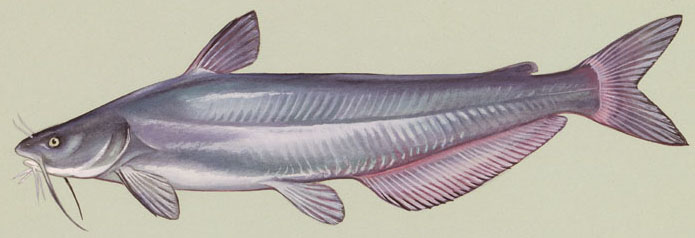 Blue CatfishIctalurus furcatus
-
 Flathead CatfishPylodictis olivaris
-
 Brown BullheadAmeiurus nebulosus
-
 Black BullheadAmeiurus melas
-
 Yellow BullheadAmeiurus natalis
-
 Widemouth BlindcatSatan eurystomus
Compare
Questions and answers
What is the scientific name of the Phantom Blindcat?
The scientific name of the Phantom Blindcat is Prietella lundbergi. Written with its author, the full name is Prietella lundbergi Walsh & Gilbert, 1995.
Which family does the Phantom Blindcat belong to?
Prietella lundbergi belongs to the family Ictaluridae, in the order Siluriformes and the class Teleostei.
Where is the Phantom Blindcat found?
Checklists and occurrence records place Prietella lundbergi in 1 country: Mexico.
What is the conservation status of the Phantom Blindcat?
The IUCN Red List category recorded for Prietella lundbergi is Vulnerable (VU).
Sources
Passages the profile rests on
- The Phantom Blindcat lacks eyes and has pinkish-white coloration. Source passage: “The Phantom Blindcat lacks eyes and is pinkish white.” — floridamuseum.ufl.edu
- The dorsal fin of this species does not have a spine. Source passage: “The dorsal fin lacks a spine.” — floridamuseum.ufl.edu
- Its snout extends beyond the mouth. Source passage: “The snout overhangs the mouth.” — floridamuseum.ufl.edu
- It has a long adipose fin connected to the caudal fin, with a posterior flap that creates a deep notch between the fins. Source passage: “There is a long adipose fin joined to the caudal fin but with a flap posteriorly creating a deep notch between the adipose fin and caudal fin.” — floridamuseum.ufl.edu
- Its caudal fin is weakly forked. Source passage: “The caudal fin is weakly forked.” — floridamuseum.ufl.edu
- It possesses 17 caudal rays. Source passage: “There are 17 caudal rays” — floridamuseum.ufl.edu
- It has 17 rakers on the first gill arch. Source passage: “17 rakers on the first gill arch.” — floridamuseum.ufl.edu
- Its lateral-line canals and head pores are well developed. Source passage: “There are well developed lateral-line canals and pores on the head.” — floridamuseum.ufl.edu
- The species has been reported to reach 4.5 centimetres in standard length. Source passage: “This species grows to a length of 4.5 centimetres (1.8 in) SL.” — English Wikipedia
- The species has been reported to reach 6.8 centimetres in total length. Source passage: “To 2 1/2 in. (6.8 cm) total length.” — floridamuseum.ufl.edu
- This species inhabits caves within the Tamesi River drainage. Source passage: “It is a troglobitic species found in caves of the Tamesi River drainage.” — English Wikipedia
- It inhabits subterranean waters in the Rio Tamesi drainage. Source passage: “The Phantom Blindcat lives in subterranean waters in the Rio Tamesi drainage, Tamaulipas, Mexico.” — floridamuseum.ufl.edu
- The species is presumed to inhabit deep underground aquifers. Source passage: “and presumably lives in deep underground aquifers.” — floridamuseum.ufl.edu
- Its known distribution includes the Rio Tamesi drainage in Tamaulipas, Mexico. Source passage: “The Phantom Blindcat lives in subterranean waters in the Rio Tamesi drainage, Tamaulipas, Mexico.” — floridamuseum.ufl.edu
- The species is known from only two caves. Source passage: “It is known from only two caves” — floridamuseum.ufl.edu
- The species is considered quite rare at both of its known collection sites. Source passage: “though it is quite rare at both” — academia.edu
- Only five specimens of this species have ever been observed. Source passage: “only five specimens have ever been seen” — academia.edu
- The Mexican Blindcat (Prietella phreatophila) differs from the Phantom Blindcat by having a straight-edged caudal fin. Source passage: “The other blind catfish in Mexico, the Mexican Blindcat, P. phreatophila, has a straight-edged caudal fin” — floridamuseum.ufl.edu
- The Mexican Blindcat has between 10 and 14 rakers on its first gill arch. Source passage: “10-14 rakers on the first gill arch.” — floridamuseum.ufl.edu
- High-resolution CT scans revealed morphological similarities between this species and Prietella phreatophila. Source passage: “The morphology revealed in those scans illustrates some synapomorphies with Prietella phreatophila” — sites.utexas.edu
- Researchers reported several morphological similarities between this species and Satan. Source passage: “and a number of similarities to Satan” — sites.utexas.edu
Data
- Catalogue of Life, 2026-10-16 XR cc by
- Global Biodiversity Information Facility CC BY 4.0
- Wikidata CC0
- GeoNames CC BY 4.0
- Within the Catalogue of Life, this name comes from World Register of Marine Species cc by
References
- Walsh, S. J., & Gilbert, C. R. (1995). New species of troglobitic catfish of the genus Prietella (Siluriformes: Ictaluridae) from northeastern México. Copeia, 1995 (no. 4): 850–861. https://doi.org/10.2307/1447033 Link where the name was published
This species in other databases
- Catalogue of Life 4MC5C
- Wikidata Q3232343
- iNaturalist 110354
- WoRMS urn:lsid:marinespecies.org:taxname:1007296
- ITIS 640190
Page built on 27 November 2026. See how the catalog is made and all sources and licences.
Cite this page
ScientificNames.org. (2026). Prietella lundbergi (Phantom Blindcat). Retrieved November 27, 2026, from https://scientificnames.org/species/prietella-lundbergi
“Prietella lundbergi (Phantom Blindcat).” ScientificNames.org, 2026, scientificnames.org/species/prietella-lundbergi. Accessed 27 Nov. 2026.
ScientificNames.org. “Prietella lundbergi (Phantom Blindcat).” Accessed November 27, 2026. https://scientificnames.org/species/prietella-lundbergi.
@misc{scientificnames_prietella_lundbergi_phantom_blindcat,
  author = {{ScientificNames.org}},
  title = {Prietella lundbergi (Phantom Blindcat)},
  year = {2026},
  url = {https://scientificnames.org/species/prietella-lundbergi},
  note = {Accessed 2026-11-27}
}