Species · Reptiles
King Brown Snake Pseudechis australis
The scientific name of the King Brown Snake is Pseudechis australis. It is a species of reptile in the family Elapidae (cobras), order Squamata. The name dates from 1842.
- Scientific name
- Pseudechis australis (Gray, 1842)
- Common name
- King Brown Snake
- Genus
- Pseudechis
- Family
- Elapidae (Cobras)
- Order
- Squamata
- Class
- Reptilia
- Red List category
- LC Least Concern
- Recorded in
- 1 country
- Name status
- accepted in the Catalogue of Life

Overview
The king brown snake (Pseudechis australis) is a species of highly venomous snake of the family Elapidae, native to northern, western, and Central Australia. The king brown snake is the largest terrestrial venomous snake in Australia. Despite its common name, it is a member of the genus Pseudechis (black snakes) and only distantly related to true brown snakes.
Classification of the King Brown Snake
| Kingdom | Animalia |
|---|---|
| Phylum | Chordata |
| Subphylum | Vertebrata |
| Infraphylum | Gnathostomata |
| Parvphylum | Osteichthyes |
| Megaclass | Tetrapoda |
| Class | Reptilia (Reptile) |
| Order | Squamata (Snakes) |
| Suborder | Serpentes (Snakes) |
| Infraorder | Alethinophidia |
| Family | Elapidae (Cobras) |
| Subfamily | Hydrophiinae |
| Genus | Pseudechis (Black Snakes) |
| Species | Pseudechis australis (Gray, 1842) |
Where the King Brown Snake is found
Checklists and occurrence records place Pseudechis australis in 1 country across Oceania. GBIF holds 5,056 georeferenced records of it.
Countries
Regions and cities with the most records
- Western Australia, Australia 1,444
- Northern Territory, Australia 1,345
- Queensland, Australia 858
- South Australia, Australia 729
- New South Wales, Australia 392
- Darwin, Australia 61
- Perth, Australia 25
- Rockhampton, Australia 3
1 more country has a few records outside this range
These countries hold a few records of Pseudechis australis but lie outside the range the checklists give for it. Such records are often zoo or garden specimens, museum material or vagrants, so the species is not counted as occurring there.
Range as the checklists state it
Australia (New South Wales, Northern Territory, Queensland, South Australia, Western Australia)
A number beside a place is its count of GBIF occurrence records. A place without a number comes from a checklist alone. Records show where a species has been observed or collected, which can include escapes and vagrants.
Common names
English
- King Brown Snake
- King Brown
- Pilbara Snake
- Mulga Snake
Names in 11 other languages
- Chinese
- 棕伊澳蛇
- Czech
- pakobra australská
- Danish
- Kongebrunslange
- Dutch
- Mulgaslang
- French
- Serpent de la Mulga, Serpent royal brun
- German
- Mulgaschlange
- Hungarian
- barna ausztrálsikló
- Italian
- Serpente bruno reale, Serpente nero reale
- Russian
- Мулга
- Spanish
- Serpiente de Mulga
- Swedish
- Mulga
Synonyms
10 other scientific names have been used for this species and are now treated as synonyms of Pseudechis australis.
- Cannia australis aplini Hoser, 2001
- Cannia australis burgessi Hoser, 2001
- Cannia australis newmani Hoser, 2001
- Denisonia brunnea Mitchell, 1951
- Naja australis Gray, 1842
- Pseudechis darwiniensis Macleay, 1878
- Pseudechis denisonioides Werner, 1909
- Pseudechis platycephalus Thomson, 1933
- Pailsus rossignolii Hoser, 2000 ambiguous synonym
- Pseudechis cupreus Boulenger, 1896 ambiguous synonym
Related species
-
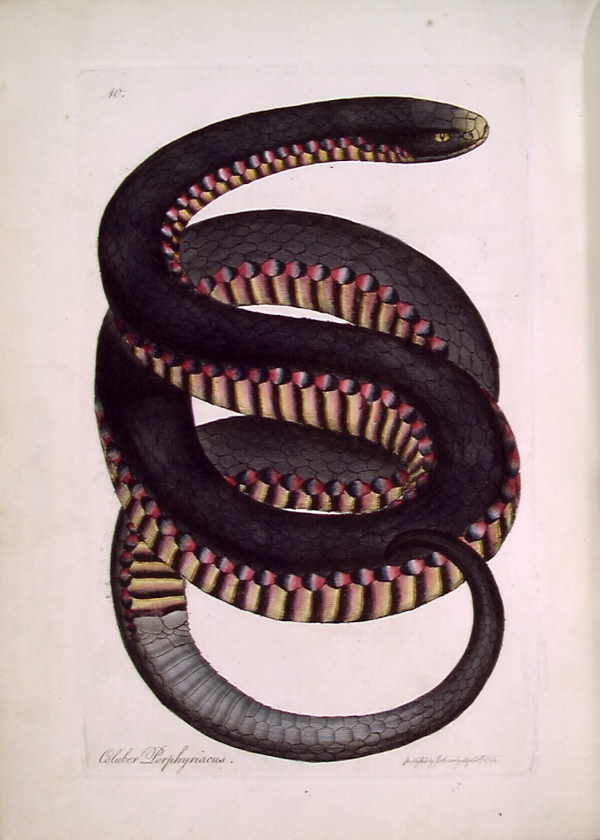 Red-bellied Black SnakePseudechis porphyriacus
-
 Blue-bellied Black SnakePseudechis guttatus
- Papuan Black SnakePseudechis papuanus
- Spotted Mulga SnakePseudechis butleri
- Pygmy Mulga SnakePseudechis weigeli
- Eastern Dwarf Mulga SnakePseudechis pailsei
- Papuan Pygmy Mulga SnakePseudechis rossignolii
- Collett's SnakePseudechis colletti
Compare
Questions and answers
What is the scientific name of the King Brown Snake?
The scientific name of the King Brown Snake is Pseudechis australis. Written with its author, the full name is Pseudechis australis (Gray, 1842).
Which family does the King Brown Snake belong to?
Pseudechis australis belongs to the family Elapidae, in the order Squamata and the class Reptilia.
Where is the King Brown Snake found?
Checklists and occurrence records place Pseudechis australis in 1 country: Australia.
What is the conservation status of the King Brown Snake?
The IUCN Red List category recorded for Pseudechis australis is Least Concern (LC).
What other names does the King Brown Snake have?
Pseudechis australis is also known in English as King Brown, Pilbara Snake and Mulga Snake.
Sources
Data
- Catalogue of Life, 2026-10-16 XR cc by
- Global Biodiversity Information Facility CC BY 4.0
- Wikidata CC0
- English Wikipedia CC BY-SA 4.0
- GeoNames CC BY 4.0
- Wikimedia Commons per image; credit shown with each image
- Within the Catalogue of Life, this name comes from The Reptile Database cc by
References
- Gray, J. E. (1842). Description of some hitherto unrecorded species of Australian reptiles and batrachians. Zoological Miscellany 2: 51—57 (London: Treuttel, Würtz & Co).
- Günther. A. (1863). Third account of new species of snakes in the collection of the British Museum. Ann. Mag. Nat. Hist. (3) 12: 348 - 365.
- Macleay, W. (1878). Notes on a collection of snakes from Port Darwin. Proc. Linn. Soc. New South Wales 2: 219-222.
- Boulenger, G. A. (1896). Catalogue of the snakes in the British Museum, Vol. 3. London (Taylor & Francis), Xiv + 727 Pp.
- Werner, F. (1909). Reptilia exkl. Geckonidae und Scincidae. In: Michaelsen, W., and R. Hartmeyer. Die Fauna Südwest-Australiens. Vol. 2., pp. 263-270. G. Fischer, Wien.
- Lidth DE JEUDE, & VAN, T. W. (1911). Reptilien (Schlangen). Nova Guinea. Résultats de l’expedition scientifique néerlandaise à la Nouvelle Guinée en 1907 sous les auspices de Dr. H.A. Lorenz 9. Leiden (E. J. Brill), Pp. 265-287.
- Fry, D. B. (1914). On a collection of reptiles and batrachians from Western Australia. Rec. West. Austral. Mus. 1:174-210.
- de Rooij, & DE, N. (1917). The Reptiles of the Indo-Australian Archipelago. Il. Ophidia. Leiden (E. J. Brill), Xiv + 334 S.
- Roux, & Jean. (1919). Note sur quelques reptiles provenant de la Nouvelle-Guinée. Revue Suisse de Zoologie 27: 347-351.
- Kinghorn, & Roy, J. (1924). Reptiles and batrachians from south and south-west Australia. Rec. Austral. Mus. 14 (3): 163-183.
- Sternfeld, R. (1925). Beiträge zur Herpetologie Inner-Australiens. Abhandlungen Herausgegeben von Der Senckenbergischen Naturforschenden Gesellschaft, 38: 221—251.
- Werner, F. (1927). Neue oder wenig bekannte Schlangen aus dem Wiener naturhistorischen Staatsmuseum (III. Teil). Sitzungsb. Akad. Wiss. Wien, Math. Naturwiss. Kl. 143 [135?]: 243-257 [1926].
- Thomson, D. F. (1933). Notes on the Australian snakes of the genera Pseudechis and Oxyuranus. Proc. Zool. Soc. London 1933: 855-860. Link
- Mitchell, F. J. (1951). The South Australian Reptile Fauna. Part. 1. Ophidia. Rec. South Austral. Mus. 9: 545—557.
- Mackay, R. D. (1955). A revision of the genus Pseudechis. Proc. R. Zool. Soc. N. S. W. 1953-54: 15-23.
- Simpson, & KNG. (1973). AMPHIBIANS, REPTILES AND MAMMALS OF THE MURRAY RIVER region between Mildura and Renmark, Australia. Mem. Nat. Mus. Vict. 34: 275-279.
- Bush, B. (1981). Reptiles of the Kalgoorlie-Esperance Region. B. Bush, Perth, 46 Pp.
- Smith L A. (1982). Variation in Pseudechis australis (Serpentes: Elapidae) in Western Australia and description of a new species of Pseudechis. Rec. West. Austr. Mus. 10 (1): 35-45.
- Wells R W, & Wellington C R. (1984). A synopsis of the class Reptilia in Australia. Australian Journal of Herpetology 1 (3-4): 73-129 [31 Dec 1983 on Cover].
- Wells, R. W. and Wellington, C. R. (1985). A classification of the Amphibia and Reptilia of Australia. Australian Journal of Herpetology, Supplementary Series (1): 1-61 [Sometimes Cited as 1983].
- O’Shea,M. (1996). A Guide to the Snakes of Papua New Guinea. Independent Publishing, Port Moresby, Xii + 239 Pp.
- Maryan, & Brad. (1997). Is “King Brown Snake” and appropriate common name for Pseudechis australis? Herpetofauna (Sydney) 27 (2): 20-22.
- Cogger, H. G. (2000). Reptiles and Amphibians of Australia, 6th ed. Ralph Curtis Publishing, Sanibel Island, 808 Pp.
- Hoser, & Raymond. (2000). A New Species of Snake (Serpentes: Elapidae) from Irian Jaya. Litteratura Serpentium 20 (6):178-186.
- Hoser, R. (2001). A current assessment of the status of the snakes of the genera Cannia and Pailsus, including descriptions of three new subspecies from the Northern Territory and Western Australia, Australia. Boydii: Journal of the Herpetological Society of Queensland (July 2001): 26-60.
This species in other databases
Page built on 24 November 2026. See how the catalog is made and all sources and licences.
Cite this page
ScientificNames.org. (2026). Pseudechis australis (King Brown Snake). Retrieved November 24, 2026, from https://scientificnames.org/species/pseudechis-australis
“Pseudechis australis (King Brown Snake).” ScientificNames.org, 2026, scientificnames.org/species/pseudechis-australis. Accessed 24 Nov. 2026.
ScientificNames.org. “Pseudechis australis (King Brown Snake).” Accessed November 24, 2026. https://scientificnames.org/species/pseudechis-australis.
@misc{scientificnames_pseudechis_australis_king_brown_snake,
  author = {{ScientificNames.org}},
  title = {Pseudechis australis (King Brown Snake)},
  year = {2026},
  url = {https://scientificnames.org/species/pseudechis-australis},
  note = {Accessed 2026-11-24}
}