Species · Birds
African River Martin Pseudochelidon eurystomina
The scientific name of the African River Martin is Pseudochelidon eurystomina. It is a species of bird in the family Hirundinidae (swallow), order Passeriformes. The name dates from 1861.
- Scientific name
- Pseudochelidon eurystomina Hartlaub, 1861
- Common name
- African River Martin
- Genus
- Pseudochelidon
- Family
- Hirundinidae (Swallow)
- Order
- Passeriformes
- Class
- Aves
- Red List category
- LC Least Concern
- Recorded in
- 3 countries
- Name status
- accepted in the Catalogue of Life

Overview
Pseudochelidon eurystomina breeds in the Democratic Republic of the Congo, southern Gabon and the Republic of the Congo, and the Democratic Republic of the Congo breeding population migrates to coastal savanna in Gabon for the winter. It is distinguished by predominantly black plumage, red eyes, a broad orange-red bill and a black, square-shaped tail.
Written 26 November 2026 from the sources listed below. Each statement was checked against the passage it cites; statements that could not be supported were removed.
Appearance
The adult African River Martin has predominantly black plumage with a silky blue-green gloss on the head and greener coloration on the back and wing coverts. It has red eyes, pink eye-rings, brown legs and a broad orange-red bill.[1][2]
The species has a black, square-shaped tail, a stout bill and robust legs and feet. Its compact, all-dark appearance is marked by red eyes and a bright orange-red bill.[3][4][5]
Juveniles have duller plumage and sooty brown heads compared with adults. The sexes have similar external appearances, with only small differences in head-feather coloration.[6][7]
Habitat
The species breeds along forested rivers containing islands with sandy banks suitable for nesting burrows. Its breeding habitat in the Democratic Republic of the Congo includes tropical forest receiving more than 200 cm of annual rainfall.[8][9]
Its habitat includes dry, seasonally flooded and permanently wet woodland, as well as seasonally flooded savanna. Its coastal breeding habitat in Gabon includes mangroves, swamp forests, wet evergreen woodlands and seasonally wet savanna.[10][11]
Outside the breeding season, the species roosts in reed-beds or riverine vegetation.[12]
Diet
The African River Martin feeds on flying insects, particularly winged ants. Its recorded insect prey also includes flies, small beetles and bugs.[13][14]
Behaviour
The species feeds in flocks throughout the year. Pairs or small groups perform aerial displays by chasing one another while producing jingling calls.[15][16]
The species also performs terrestrial displays with drooped, slightly open wings and a raised head. During the breeding season, it rarely uses perches other than the ground.[17][18]
Wintering individuals use elevated perches such as treetops, wires and roofs. They also dig tunnels in sand for overnight shelter.[19][20]
The species has a strong, fast flight interspersed with gliding.[21]
Reproduction and life cycle
The species nests colonially in river sandbanks between December and April when river levels are low. Breeding colonies may contain as many as 800 individuals.[22][23]
Each breeding pair excavates a nesting tunnel approximately 1–2 metres long. Females lay two to four unspotted white eggs in a nesting pocket lined with a few twigs and leaves.[24][25]
The eggs measure approximately 21.9–26.0 mm by 16.4–18.2 mm. Both parents are believed to care for the nestlings.[26][27]
Conservation
Local populations in the Democratic Republic of the Congo catch and eat African River Martins.[28]
Uses
The species has been harvested for human food in the Democratic Republic of the Congo.[29]
Similar species
The Asian white-eyed river martin is the only other member of the river martin subfamily.[30]
Classification of the African River Martin
| Kingdom | Animalia |
|---|---|
| Phylum | Chordata |
| Subphylum | Vertebrata |
| Infraphylum | Gnathostomata |
| Parvphylum | Osteichthyes |
| Megaclass | Tetrapoda |
| Class | Aves (Bird) |
| Order | Passeriformes (Passerine) |
| Family | Hirundinidae (Swallow) |
| Genus | Pseudochelidon (River Martin) |
| Species | Pseudochelidon eurystomina Hartlaub, 1861 |
Where the African River Martin is found
Checklists and occurrence records place Pseudochelidon eurystomina in 3 countries across Africa. GBIF holds 213 georeferenced records of it.
Countries
Regions and cities with the most records
- Ogooué-Maritime, Gabon 90
- Estuaire, Gabon 36
- Libreville, Gabon 23
- Owendo, Gabon 21
- Ogooué-Ivindo, Gabon 13
- Nyanga, Gabon 9
- Lisala, Democratic Republic of the Congo 6
- Mongala, Democratic Republic of the Congo 6
- Kouilou, Republic of the Congo 5
- Makokou, Gabon 5
- Ogooué-Lolo, Gabon 5
- Haut-Ogooué, Gabon 4
Range as the checklists state it
Africa
A number beside a place is its count of GBIF occurrence records. A place without a number comes from a checklist alone. Records show where a species has been observed or collected, which can include escapes and vagrants.
Common names
English
- African River Martin
- ARMA
- African River-Martin
Names in 26 other languages
- Arabic
- سنونو النهر الإفريقي
- Catalan
- oreneta de ribera africana
- Chinese
- 非洲河燕
- Croatian
- riječna lastavica
- Czech
- břehule rudooká
- Danish
- Afrikansk Flodsvale
- Dutch
- Congozwaluw
- Esperanto
- ruĝokula hirundo
- Estonian
- aafrika jõgipääsuke
- Finnish
- afrikanjokipääsky
- French
- Hirondelle de rivière, Pseudolangrayen d'Afrique, Pseudolangrayen d’Afrique
- German
- Afrikanische Trugschwalbe, Rotaugenschwalbe, Stachelschwanz-Trugschwalbe
- Hungarian
- afrikai nádifecske
- Italian
- Rondine di fiume africana
- Japanese
- アフリカカワツバメ
- Lithuanian
- afrikinė upinė kregždė
- Norwegian
- rødøyesvale
- Polish
- jaskólnik czerwonooki
- Portuguese
- Andorinha-do-rio-africana, andorinha-dos-rios-africana, andorinha-ribeirinha
- Russian
- Африканская речная ласточка, Речная ласточка
- Slovak
- okaňa červenooká
- Spanish
- Avión ribereño africano
- Swedish
- afrikansk flodsvala
- Turkish
- Afrika Nehir Kırlangıcı
- Ukrainian
- попецух червоноокий
- Welsh
- gwennol afon Affrica
Related species
-
 White-eyed River MartinPseudochelidon sirintarae
-
 Barn SwallowHirundo rustica
-
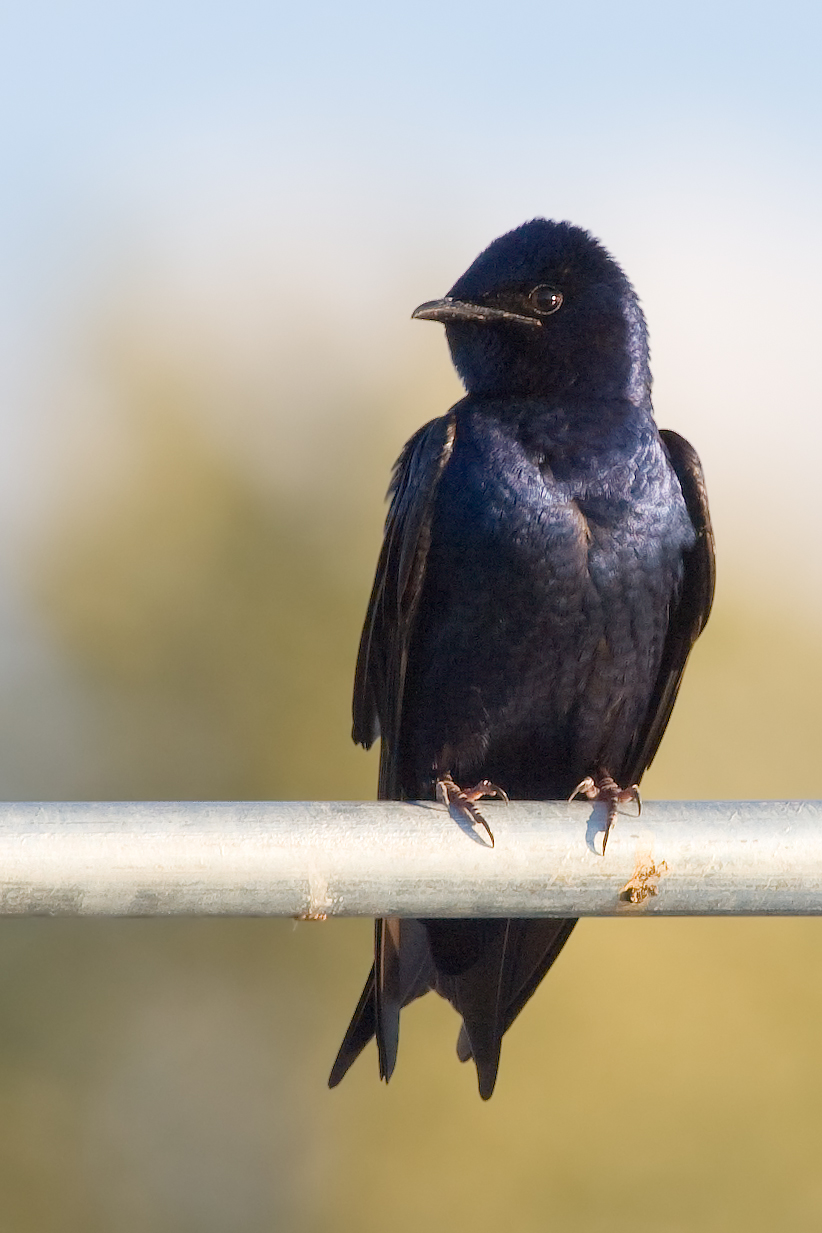 Purple MartinProgne subis
-
 Welcome SwallowHirundo neoxena
-
 Western House MartinDelichon urbicum
-
 Tree SwallowTachycineta bicolor
-
 Sand MartinRiparia riparia
-
 Cliff SwallowPetrochelidon pyrrhonota
Compare
Questions and answers
What is the scientific name of the African River Martin?
The scientific name of the African River Martin is Pseudochelidon eurystomina. Written with its author, the full name is Pseudochelidon eurystomina Hartlaub, 1861.
Which family does the African River Martin belong to?
Pseudochelidon eurystomina belongs to the family Hirundinidae, in the order Passeriformes and the class Aves.
Where is the African River Martin found?
Checklists and occurrence records place Pseudochelidon eurystomina in 3 countries: Gabon, Democratic Republic of the Congo and Republic of the Congo.
What is the conservation status of the African River Martin?
The IUCN Red List category recorded for Pseudochelidon eurystomina is Least Concern (LC).
What other names does the African River Martin have?
Pseudochelidon eurystomina is also known in English as ARMA and African River-Martin.
Sources
Passages the profile rests on
- The adult African River Martin has predominantly black plumage with a silky blue-green gloss on the head and a greener coloration on the back and wing coverts. Source passage: “It is mainly black, with a silky blue-green gloss to the head, becoming distinctly green on the back and wing coverts.” — English Wikipedia
- The species has red eyes, pink eye-rings, brown legs, and a broad orange-red bill. Source passage: “The African river martin has brown legs with a 1.5 cm (0.59 in) long tarsus, red eyes, pink eye-rings, and a broad orange-red bill.” — English Wikipedia
- The African River Martin has a black, square-shaped tail. Source passage: “The black square tail is 4.8 cm (1.9 in) long” — English Wikipedia
- The species has a stout bill and robust legs and feet that distinguish it structurally from most other swallows. Source passage: “including its stout bill and robust legs and feet” — English Wikipedia
- The African River Martin is described as a compact, all-dark martin with striking red eyes and a bright orange-red bill. Source passage: “this compact all-dark martin has striking red eyes and a bright orange-red bill.” — ebird.org
- Juveniles have duller plumage and sooty brown heads compared with adults. Source passage: “Juveniles are duller and have sooty brown heads.” — English Wikipedia
- The sexes have similar external appearances, with only small differences in head-feather coloration. Source passage: “spectroscopic analysis of this martin's head feathers suggests that the colour differences between the sexes are small even to the birds' perception.” — English Wikipedia
- The species breeds along forested rivers containing islands with sandy banks suitable for nesting burrows. Source passage: “This martin's breeding requirement is forested rivers with islands that have sandy banks for nest burrows” — English Wikipedia
- Its breeding habitat in the Democratic Republic of the Congo includes tropical forest receiving more than 200 cm of annual rainfall. Source passage: “its habitat in the DRC is tropical forest with over 200 cm (78.5 in) of rain a year.” — English Wikipedia
- The species occupies dry, seasonally flooded, and permanently wet woodland, as well as seasonally flooded savanna. Source passage: “This area is a patchwork of dry, seasonally flooded and permanently wet woodland, and seasonally flooded savanna” — English Wikipedia
- Its coastal breeding habitat in Gabon includes mangroves, swamp forests, wet evergreen woodlands, and seasonally wet savanna. Source passage: “with mangroves, swamp forests, wet evergreen woodlands and seasonally wet savanna.” — English Wikipedia
- Outside the breeding season, the species roosts in reed-beds or riverine vegetation. Source passage: “Outside of the breeding season, this martin roosts in reed-beds or riverine vegetation.” — English Wikipedia
- The African River Martin feeds on flying insects, particularly winged ants. Source passage: “This martin feeds in flocks throughout the year, catching a variety of insects in the air, especially flying ants.” — English Wikipedia
- Its recorded insect prey includes flies, small beetles, and bugs. Source passage: “The flocks feed on insects including flies, small beetles and bugs, but mainly on winged ants.” — English Wikipedia
- The species feeds in flocks throughout the year. Source passage: “This martin feeds in flocks throughout the year” — English Wikipedia
- Pairs or small groups perform aerial displays by chasing one another while producing jingling calls. Source passage: “pairs or small groups chase each other while making jingling calls.” — English Wikipedia
- The species also performs terrestrial displays with drooped, slightly open wings and a raised head. Source passage: “with the wings drooped and slightly open, and the head raised but held horizontally” — English Wikipedia
- During the breeding season, African River Martins rarely use perches other than the ground. Source passage: “In the breeding areas, this martin rarely uses perches other than the ground” — English Wikipedia
- Wintering individuals use elevated perches such as treetops, wires, and roofs. Source passage: “Wintering birds use elevated perches much more readily, landing on treetops, wires and roofs” — English Wikipedia
- Wintering individuals dig tunnels in sand for overnight shelter. Source passage: “Wintering birds dig tunnels in the sand in which to roost overnight.” — English Wikipedia
- The species has a strong, fast flight interspersed with gliding. Source passage: “The African river martin has a strong, fast flight interspersed with glides.” — English Wikipedia
- The species nests colonially in river sandbanks between December and April when river levels are low. Source passage: “This species nests in colonies in sandbanks along forested rivers from December to April when the river is low.” — English Wikipedia
- Breeding colonies may contain as many as 800 individuals. Source passage: “The colonies, sometimes shared with rosy bee-eaters in Gabon, may contain up to 800 birds” — English Wikipedia
- Each breeding pair excavates a nesting tunnel approximately 1–2 metres long. Source passage: “each pair excavating a 1–2 m (39–79 in) long tunnel in the sandbar.” — English Wikipedia
- Females lay two to four unspotted white eggs in a nesting pocket lined with a few twigs and leaves. Source passage: “Two to four unspotted white eggs are laid onto a few twigs and leaves in the pocket at the end of the tunnel.” — English Wikipedia
- The eggs measure approximately 21.9–26.0 mm by 16.4–18.2 mm. Source passage: “The eggs measure 21.9 mm–26.0 mm × 16.4 mm–18.2 mm” — English Wikipedia
- Both parents are believed to care for the nestlings. Source passage: “although it is believed that both parents care for the nestlings.” — English Wikipedia
- Local populations in the Democratic Republic of the Congo catch and eat African River Martins. Source passage: “In the 1950s, this martin was caught and eaten in large quantities in the DRC by the local population” — English Wikipedia
- The species has been harvested for human food in the Democratic Republic of the Congo. Source passage: “this martin was caught and eaten in large quantities in the DRC by the local population” — English Wikipedia
- The Asian white-eyed river martin is the only other member of the river martin subfamily. Source passage: “The only other member of the subfamily is the white-eyed river martin Pseudochelidon sirintarae” — English Wikipedia
- The principal breeding range includes the Congo River and its Ubangi tributary in the Democratic Republic of the Congo. Source passage: “The African river martin breeds along the Congo River and its tributary, the Ubangi in the Democratic Republic of the Congo (DRC)” — English Wikipedia
- The species also breeds in southern Gabon and the Republic of the Congo. Source passage: “It also breeds in southern Gabon and the Republic of the Congo.” — English Wikipedia
Data
- Catalogue of Life, 2026-10-16 XR cc by
- Global Biodiversity Information Facility CC BY 4.0
- Wikidata CC0
- GeoNames CC BY 4.0
- Wikimedia Commons per image; credit shown with each image
- Within the Catalogue of Life, this name comes from The Integrated Taxonomic Information System cc0
References
- Hartlaub, & Karel Johan Gustav. (1861). Ueber einige neue Vögel Westafrica’s. Journal Für Ornithologie, Vol. 9, No. 49. where the name was published
- Gill, Frank, & and Minturn Wright. (2006). Birds of the World: Recommended English Names.
This species in other databases
Page built on 26 November 2026. See how the catalog is made and all sources and licences.
Cite this page
ScientificNames.org. (2026). Pseudochelidon eurystomina (African River Martin). Retrieved November 26, 2026, from https://scientificnames.org/species/pseudochelidon-eurystomina
“Pseudochelidon eurystomina (African River Martin).” ScientificNames.org, 2026, scientificnames.org/species/pseudochelidon-eurystomina. Accessed 26 Nov. 2026.
ScientificNames.org. “Pseudochelidon eurystomina (African River Martin).” Accessed November 26, 2026. https://scientificnames.org/species/pseudochelidon-eurystomina.
@misc{scientificnames_pseudochelidon_eurystomina_african_river_martin,
  author = {{ScientificNames.org}},
  title = {Pseudochelidon eurystomina (African River Martin)},
  year = {2026},
  url = {https://scientificnames.org/species/pseudochelidon-eurystomina},
  note = {Accessed 2026-11-26}
}