Species · Birds
Pale Crag Martin Ptyonoprogne obsoleta
The scientific name of the Pale Crag Martin is Ptyonoprogne obsoleta. It is a species of bird in the family Hirundinidae (swallow), order Passeriformes. The name dates from 1851.
- Scientific name
- Ptyonoprogne obsoleta (Cabanis, 1851)
- Common name
- Pale Crag Martin
- Genus
- Ptyonoprogne
- Family
- Hirundinidae (Swallow)
- Order
- Passeriformes
- Class
- Aves
- Red List category
- LC Least Concern
- Recorded in
- 25 countries
- Name status
- accepted in the Catalogue of Life

Overview
Ptyonoprogne obsoleta breeds across northern Africa and the Middle East as far east as Afghanistan and Pakistan. It has predominantly light brown upperparts, pale grey throat and upper breast, dirty white remaining underparts and a short tail with white spots.
Written 26 November 2026 from the sources listed below. Each statement was checked against the passage it cites; statements that could not be supported were removed.
Similar species
The Pale Crag Martin is 15% smaller, paler and greyer than the Eurasian crag martin. It is smaller and paler than the rock martin and has a more contrasting throat.[1][2]
It has lighter underparts than the dusky crag martin in the far eastern part of its range. Compared with sand martins, it has a more robust build, white tail spots and no breast band.[3][4]
Appearance
The Pale Crag Martin has predominantly light brown upperparts that become paler on the lower back. Its throat, upper breast and underwing coverts are pale grey, while its remaining underparts are dirty white.[5][6][7]
Males and females have similar plumage. Juveniles have pale edges on their upperparts and flight feathers.[8]
The nominate subspecies measures 12–13 centimetres in length. Its average wing length is 13 centimetres and its average tail length is 4.8 centimetres.[9][10][11]
Habitat
The Pale Crag Martin breeds in hilly and mountainous areas containing cliffs, gorges and caves, at elevations reaching 3,700 metres. It also breeds in lowland areas where rocks or buildings provide suitable nesting sites.[12][13]
The species can occupy habitats far from water. It is scarce in some humid forested and coastal areas.[14][15]
Diet
The Pale Crag Martin feeds mainly on insects caught while flying. Recorded prey includes mosquitoes, flies, Hymenoptera, ants and beetles.[16][17]
It occasionally obtains food from the ground. Groups sometimes gather at grass fires to consume insects fleeing the flames.[18][19]
Outside the breeding season, flocks of up to 300 birds may gather where food is abundant, including agricultural areas, wetlands and sewage works. The species drinks while flying just above the water surface.[20][21]
Behaviour
The Pale Crag Martin hunts flying insects along cliff faces using slow flight and frequent gliding. Its flight combines rapid wing beats with glides on flat wings, and it is more acrobatic in flight than the Eurasian crag martin.[22][23][24]
The species is largely resident but makes local movements and sometimes descends to lower elevations after breeding. It sometimes forms small loose breeding colonies when suitable nesting sites are available.[25][26]
It aggressively defends its nesting territory against members of its own species and other species. Its calls include a muffled twittering song and several other calls.[27][28]
Reproduction and life cycle
Breeding generally occurs from February to April in northwestern Africa and from April to June in Asia. Two broods are common, and some pairs raise three broods in one season.[29][30]
Both adults construct the nest over several weeks using several hundred mud pellets. The lining can contain feathers, grass, hair, sheep's wool or plant down.[31][32]
Nests are reused for subsequent broods and in later years. A typical clutch contains two or three buff-white eggs with sepia or grey-brown blotches.[33][34]
Asian eggs average 19.3 by 12.9 millimetres and weigh 1.7 grams. Both adults incubate the eggs for 16–19 days.[35][36]
Conservation
The Pale Crag Martin has an estimated geographical range of 19.8 million square kilometres and is classified as Least Concern on the IUCN Red List.[37][38]
Its range is expanding and its population is increasing. It is locally common in Algeria but scarce in Morocco and Pakistan.[39][40]
Uses
The genus name derives from the Ancient Greek words for a fan and the mythological figure Procne. The specific name obsoleta means worn in Latin.[41][42]
The species was first formally described in 1851 by Jean Cabanis using a specimen collected near Cairo, Egypt. It was formerly classified as a northern subspecies of the rock martin.[43][44]
The species breeds across northern Africa and the Middle East as far east as Afghanistan and Pakistan. It has been recorded as a vagrant in Bahrain, Qatar and Kuwait.[45][46]
Southern Arabian birds sometimes cross the Red Sea to winter alongside breeding populations in Ethiopia and the Horn of Africa. The species has colonised southern Israel and has bred on houses there since the 1970s.[47][48]
The species first bred in Iraq in 2009.[49]
Classification of the Pale Crag Martin
| Kingdom | Animalia |
|---|---|
| Phylum | Chordata |
| Subphylum | Vertebrata |
| Infraphylum | Gnathostomata |
| Parvphylum | Osteichthyes |
| Megaclass | Tetrapoda |
| Class | Aves (Bird) |
| Order | Passeriformes (Passerine) |
| Family | Hirundinidae (Swallow) |
| Genus | Ptyonoprogne (Crag Martin) |
| Species | Ptyonoprogne obsoleta (Cabanis, 1851) |
Where the Pale Crag Martin is found
Checklists and occurrence records place Ptyonoprogne obsoleta in 25 countries across Africa and Asia. GBIF holds 59,270 georeferenced records of it.
Countries
- Afghanistan 9
- Algeria 226
- Chad 27
- Djibouti 37
- Egypt 3,271
- Eritrea 3
- Ethiopia 175
- Iran 671
- Israel 25,387
- Jordan 2,268
- Kuwait 33
- Mauritania 74
- Morocco 278
- Niger 45
- Oman 5,498
- Pakistan 83
- Palestinian Territory 4,067
- Qatar 8
- Saudi Arabia 2,572
- Somalia 28
- Sudan 26
- Syria 3
- United Arab Emirates 14,288
- Western Sahara 91
- Yemen 102
Regions and cities with the most records
- Southern District, Israel 20,772
- Abu Dhabi, United Arab Emirates 8,617
- Eilat, Israel 8,024
- Aqaba, Jordan 7,734
- Al Ain City, United Arab Emirates 6,916
- Al Buraymī, Oman 6,190
- Ma‘ale Adummim, Palestinian Territory 6,053
- Al ‘Ayzarīyah, Palestinian Territory 5,881
- Mevasseret Tsiyyon, Israel 5,654
- Shu‘fāţ, Palestinian Territory 5,575
- Qiryat HaYovel, Israel 5,536
- Jerusalem, Israel 5,476
- Bayt Ḩanīnā, Palestinian Territory 5,388
- Bayt Jālā, Palestinian Territory 5,346
- Bethlehem, Palestinian Territory 5,332
- Ramallah, Palestinian Territory 5,250
- Ar Rām wa Ḑāḩiyat al Barīd, Palestinian Territory 5,211
- ‘Aţārūt, Palestinian Territory 5,156
- Al Bīrah, Palestinian Territory 4,925
- Battir, Palestinian Territory 4,123
- West Bank, Palestinian Territory 4,122
- Surif City, Palestinian Territory 3,614
- Dhofar, Oman 3,234
- Jerusalem, Israel 2,827
- Bet Shemesh, Israel 2,645
- Jericho, Palestinian Territory 2,502
- Aqaba, Jordan 1,956
- Dubai, United Arab Emirates 1,922
- Aswan, Egypt 1,593
- Fujairah, United Arab Emirates 1,573
- Warīsān, United Arab Emirates 1,171
- Dibba Al-Fujairah, United Arab Emirates 1,163
- Sa‘īr, Palestinian Territory 1,141
- Dibba Al-Hisn, United Arab Emirates 1,114
- Sharjah, United Arab Emirates 1,100
- Ras Al Khaimah, United Arab Emirates 1,093
Range as the checklists state it
Europe & Northern Asia (excluding China)
Southern Asia
Africa
A number beside a place is its count of GBIF occurrence records. A place without a number comes from a checklist alone. Records show where a species has been observed or collected, which can include escapes and vagrants.
Common names
English
- Pale Crag Martin
- Pale Crag-Martin
- Pale Rock Martin
Names in 32 other languages
- Arabic
- سنونو شاحب الزور, عوهق جرفي فاتح
- Basque
- Basamortuko enara
- Bengali
- টিয়ানোপ্রোন অবসোলেটা
- Chinese
- 灰喉燕
- Croatian
- sivosmeđa lastavica
- Czech
- břehule světlehnědá, vlaštovka světlehnědá
- Danish
- Lys Klippesvale
- Dutch
- Vale Rotszwaluw
- Esperanto
- dezerta hirundo
- Estonian
- kõrbe-kivipääsuke
- Finnish
- aavikkopääsky
- French
- Hirondelle du désert
- German
- Wüstenschwalbe
- Hebrew
- סנונית מדבר
- Irish
- Gabhlán fásaigh
- Italian
- Rondine del deserto, Rondine montana pallida, Rondine pallida
- Japanese
- ウスチャイロツバメ
- Latvian
- palsā čurkste
- Lithuanian
- dykuminė kregždė
- Norwegian
- ørkensvale
- Persian
- چلچله بیابانی
- Polish
- jaskółka płowa
- Portuguese
- andorinha-das-rochas-pálida, andorinha-do-deserto
- Russian
- Буланая ласточка, Пустынная скалистая ласточка
- Serbian
- Источна горска ласта
- Slovak
- lastovička púštna
- Spanish
- Avión isabel norteño, Avión pálido, Golondrina pálida
- Swedish
- blek klippsvala
- Ukrainian
- ластівка пустельна
- Welsh
- gwennol glogwyn welw
- azb
- هیروندو اوبسولتا
- glv
- Gollan yn 'aasagh
Synonyms
3 other scientific names have been used for this species and are now treated as synonyms of Ptyonoprogne obsoleta.
- Cotyle obsoleta Cabanis, 1851
- Hirundo obsoleta (Cabanis, 1851)
- Ptyonoprocne obsoleta Cabanis, JL, 1851
Subspecies and varieties
- Ptyonoprogne obsoleta arabica subspecies
- Ptyonoprogne obsoleta buchanani subspecies
- Ptyonoprogne obsoleta obsoleta subspecies
- Ptyonoprogne obsoleta pallida subspecies
- Ptyonoprogne obsoleta perpallida subspecies
- Ptyonoprogne obsoleta presaharica subspecies
- Ptyonoprogne obsoleta spatzi subspecies
Related species
-
 Eurasian Crag MartinPtyonoprogne rupestris
-
 Large Rock MartinPtyonoprogne fuligula
-
 Dusky Crag MartinPtyonoprogne concolor
- Red-throated Rock MartinPtyonoprogne rufigula
-
 Barn SwallowHirundo rustica
-
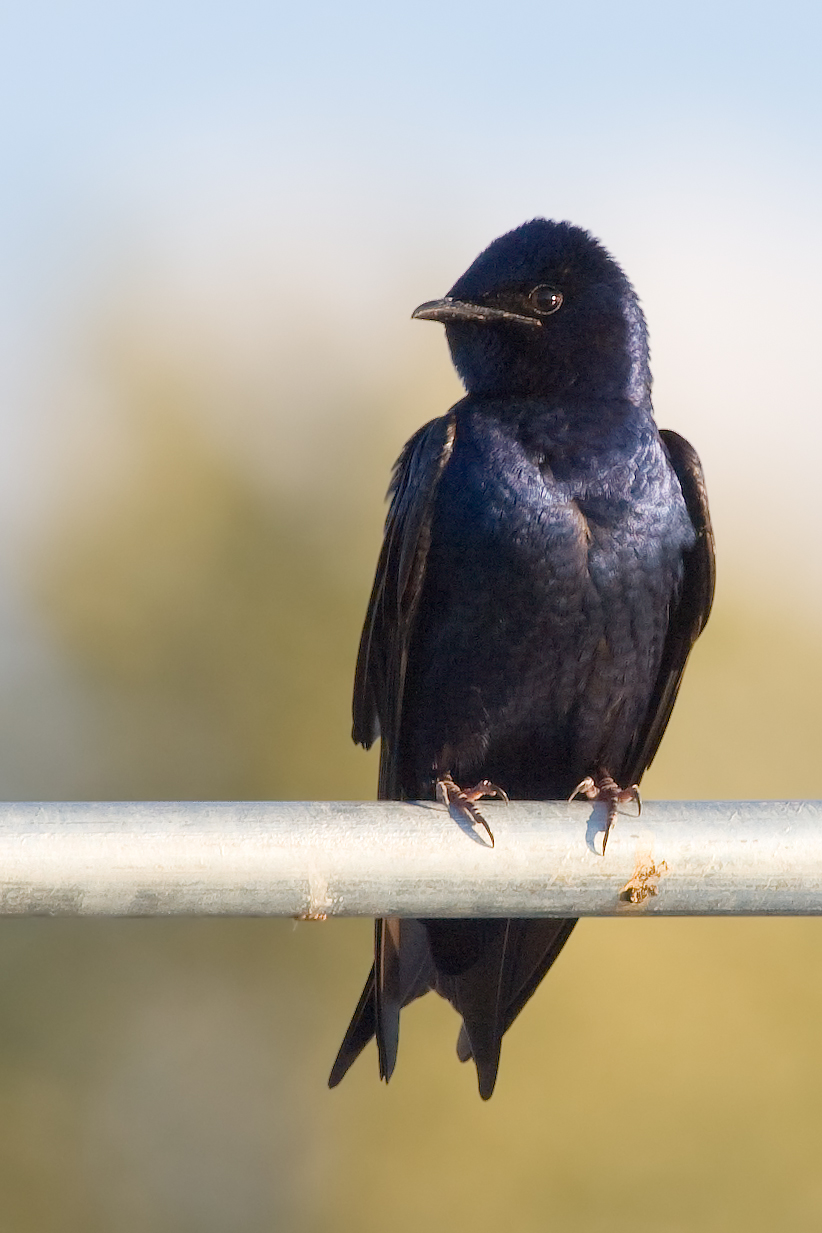 Purple MartinProgne subis
-
 Welcome SwallowHirundo neoxena
-
 Western House MartinDelichon urbicum
Compare
Questions and answers
What is the scientific name of the Pale Crag Martin?
The scientific name of the Pale Crag Martin is Ptyonoprogne obsoleta. Written with its author, the full name is Ptyonoprogne obsoleta (Cabanis, 1851).
Which family does the Pale Crag Martin belong to?
Ptyonoprogne obsoleta belongs to the family Hirundinidae, in the order Passeriformes and the class Aves.
Where is the Pale Crag Martin found?
Checklists and occurrence records place Ptyonoprogne obsoleta in 25 countries, including Israel, United Arab Emirates, Oman, Palestinian Territory, Egypt and Saudi Arabia.
What is the conservation status of the Pale Crag Martin?
The IUCN Red List category recorded for Ptyonoprogne obsoleta is Least Concern (LC).
What other names does the Pale Crag Martin have?
Ptyonoprogne obsoleta is also known in English as Pale Crag-Martin and Pale Rock Martin.
Sources
Passages the profile rests on
- The pale crag martin is 15% smaller, paler and greyer than the Eurasian crag martin. Source passage: “It is 15% smaller, paler and greyer than the Eurasian crag martin” — English Wikipedia
- The species is smaller and paler than the rock martin and has a more contrasting throat. Source passage: “It is smaller, paler, and has a more contrasting throat than the rock martin.” — English Wikipedia
- The pale crag martin has lighter underparts than the dusky crag martin in the far eastern part of its range. Source passage: “In the far east of its range, the pale crag martin always has lighter underparts than the dusky crag martin.” — English Wikipedia
- Compared with sand martins, the pale crag martin has a more robust build, white tail spots and no breast band. Source passage: “the pale crag martin is more robust, has white tail spots, and lacks a breast band.” — English Wikipedia
- The species has predominantly light brown upperparts that become paler on the lower back. Source passage: “light brown upperparts, becoming paler on the lower back” — English Wikipedia
- Its throat, upper breast and underwing coverts are pale grey. Source passage: “It has a pale grey throat, upper breast and underwing coverts” — English Wikipedia
- Its remaining underparts are dirty white. Source passage: “the rest of the underparts are a dirty white.” — English Wikipedia
- Males and females have similar plumage, while juveniles have pale edges on their upperparts and flight feathers. Source passage: “The sexes are similar in appearance, but juveniles have pale edges to the upperparts and flight feathers.” — English Wikipedia
- The nominate subspecies measures 12–13 centimetres in length. Source passage: “The pale crag martin of the nominate subspecies P. o. obsoleta is 12–13 centimetres (4+1⁄2–5 inches) long” — English Wikipedia
- Its average wing length is 13 centimetres. Source passage: “The wing length averages 13 cm (5 in)” — English Wikipedia
- Its average tail length is 4.8 centimetres. Source passage: “the tail averages 4.8 cm (1+7⁄8 in).” — English Wikipedia
- The species breeds in hilly and mountainous areas containing cliffs, gorges and caves at elevations reaching 3,700 metres. Source passage: “The natural breeding habitat is hilly or mountainous country with cliffs, gorges and caves up to 3,700 m (12,100 ft) above sea level” — English Wikipedia
- It also breeds in lowland areas where rocks or buildings provide suitable nesting sites. Source passage: “but this martin also breeds in lowlands, especially if rocks or buildings are available” — English Wikipedia
- The species can occupy habitats far from water. Source passage: “and may be found far from water.” — English Wikipedia
- The species is scarce in some humid forested and coastal areas. Source passage: “This species appears to be scarce in some forested and coastal areas with high humidity” — English Wikipedia
- The species feeds mainly on insects caught while flying. Source passage: “The pale crag martin feeds mainly on insects caught in flight” — English Wikipedia
- Its recorded insect prey includes mosquitoes, flies, Hymenoptera, ants and beetles. Source passage: “may include mosquitoes, flies, Hymenoptera, ants and beetles.” — English Wikipedia
- The species occasionally obtains food from the ground. Source passage: “but will occasionally feed on the ground.” — English Wikipedia
- Groups sometimes gather at grass fires to consume insects fleeing the flames. Source passage: “sizeable groups may gather at grass fires to feast on the fleeing insects” — English Wikipedia
- Outside the breeding season, flocks of up to 300 birds may gather where food is abundant, including agricultural areas, wetlands and sewage works. Source passage: “flocks of up to 300 may form where food is abundant, such as agricultural areas, wetlands and sewage works.” — English Wikipedia
- The species drinks while flying just above the water surface. Source passage: “The pale crag martin drinks in flight as it skims the water surface” — English Wikipedia
- The species hunts flying insects along cliff faces using slow flight and frequent gliding. Source passage: “The pale crag martin hunts along cliff faces for flying insects using a slow flight with much gliding.” — English Wikipedia
- Its flight combines rapid wing beats with glides on flat wings. Source passage: “The pale crag martin's flight is slow, with rapid wing beats interspersed with flat-winged glides” — English Wikipedia
- The species is more acrobatic in flight than the Eurasian crag martin. Source passage: “and it is more acrobatic than the larger Eurasian crag martin.” — English Wikipedia
- The species is largely resident but makes local movements and sometimes descends to lower elevations after breeding. Source passage: “It is largely resident apart from local movements or a descent to lower altitudes after breeding.” — English Wikipedia
- The species sometimes forms small loose breeding colonies when suitable nesting sites are available. Source passage: “although where suitable sites are available small loose colonies may form.” — English Wikipedia
- It aggressively defends its nesting territory against members of its own species and other species. Source passage: “This martin aggressively defends its nesting territory against conspecifics and other species.” — English Wikipedia
- The species has a muffled twittering song and several other calls. Source passage: “the song is a muffled twitter, and other calls include a trrt resembling the call of the common house martin, a nasal vick, and a high-pitched twee contact call.” — English Wikipedia
- Breeding generally occurs from February to April in northwestern Africa and from April to June in Asia. Source passage: “in northwest Africa February to April is normal, and in Asia nesting is from April to June.” — English Wikipedia
- Two broods are common, and some pairs raise three broods in one season. Source passage: “Two broods are common, and three have been raised in a season.” — English Wikipedia
- Both adults construct the nest over several weeks using several hundred mud pellets. Source passage: “The nest, built by both adults over several weeks, is made from several hundred mud pellets” — English Wikipedia
- The nest lining can contain feathers, grass, hair, sheep's wool or plant down. Source passage: “lined with feathers and soft, dry grass, hair, sheep's wool or plant down.” — English Wikipedia
- Nests are reused for subsequent broods and in later years. Source passage: “The nest may be built on a rock cliff face, in a crevice or on a man-made structure, and is re-used for the second brood and in subsequent years.” — English Wikipedia
- A typical clutch contains two or three eggs that are buff-white with sepia or grey-brown blotches. Source passage: “The clutch is usually two or three buff-white eggs blotched with sepia or grey-brown” — English Wikipedia
- Asian eggs average 19.3 by 12.9 millimetres and weigh 1.7 grams. Source passage: “The average egg size for Asian birds was 19.3 mm × 12.9 mm (3⁄4 in × 1⁄2 in) with a weight of 1.7 g (26 gr).” — English Wikipedia
- Both adults incubate the eggs for 16–19 days. Source passage: “Both adults incubate the eggs for 16–19 days prior to hatching” — English Wikipedia
- The species has an estimated geographical range of 19.8 million square kilometres. Source passage: “The pale crag martin has a very large range of 19.8 million square kilometres (7.6 million square miles).” — English Wikipedia
- The species is classified as Least Concern on the IUCN Red List. Source passage: “it is classed as Least Concern on the IUCN Red List.” — English Wikipedia
- The species has an expanding range and increasing population. Source passage: “It has an expanding range and increasing population.” — English Wikipedia
- The species is locally common in Algeria but scarce in Morocco and Pakistan. Source passage: “This species is locally common in Algeria, scarce in Morocco, and scarce in Pakistan.” — English Wikipedia
- The genus name derives from the Ancient Greek words for a fan and the mythological figure Procne. Source passage: “The genus name is derived from the Ancient Greek ptuon (πτύον), "a fan", referring to the shape of the opened tail, and Procne (Πρόκνη), a mythological girl who was turned into a swallow.” — English Wikipedia
- The specific name obsoleta means worn in Latin. Source passage: “The specific name obsoleta means "worn" in Latin.” — English Wikipedia
- The species was first formally described in 1851 by Jean Cabanis using a specimen collected near Cairo, Egypt. Source passage: “The pale crag martin was first formally described in 1851 by German ornithologist Jean Cabanis as Cotyle obsoleta, using a specimen collected from near Cairo, Egypt.” — English Wikipedia
- The species was formerly classified as a northern subspecies of the rock martin. Source passage: “The pale crag martin was formerly often treated as the small, pale northern subspecies of the rock martin” — English Wikipedia
- The species breeds across northern Africa and the Middle East as far east as Afghanistan and Pakistan. Source passage: “The pale crag martin breeds in suitable habitats throughout northern Africa and through the Middle East as far as Afghanistan and Pakistan.” — English Wikipedia
- The species has been recorded as a vagrant in Bahrain, Qatar and Kuwait. Source passage: “The pale crag martin has been recorded as a vagrant in Bahrain, Qatar, Kuwait” — English Wikipedia
- Southern Arabian birds sometimes cross the Red Sea to winter alongside breeding populations in Ethiopia and the Horn of Africa. Source passage: “including martins from southern Arabia crossing the Red Sea and wintering alongside the local breeding birds in Ethiopia and the Horn of Africa” — English Wikipedia
- The species has colonised southern Israel and has bred on houses there since the 1970s. Source passage: “It has colonised southern Israel, where it breeds on houses, since the 1970s” — English Wikipedia
- The species first bred in Iraq in 2009. Source passage: “The pale crag martin first bred in Iraq in 2009.” — English Wikipedia
Data
- Catalogue of Life, 2026-10-16 XR cc by
- Global Biodiversity Information Facility CC BY 4.0
- Wikidata CC0
- GeoNames CC BY 4.0
- Wikimedia Commons per image; credit shown with each image
- Within the Catalogue of Life, this name comes from The Integrated Taxonomic Information System cc0
This species in other databases
Page built on 27 November 2026. See how the catalog is made and all sources and licences.
Cite this page
ScientificNames.org. (2026). Ptyonoprogne obsoleta (Pale Crag Martin). Retrieved November 27, 2026, from https://scientificnames.org/species/ptyonoprogne-obsoleta
“Ptyonoprogne obsoleta (Pale Crag Martin).” ScientificNames.org, 2026, scientificnames.org/species/ptyonoprogne-obsoleta. Accessed 27 Nov. 2026.
ScientificNames.org. “Ptyonoprogne obsoleta (Pale Crag Martin).” Accessed November 27, 2026. https://scientificnames.org/species/ptyonoprogne-obsoleta.
@misc{scientificnames_ptyonoprogne_obsoleta_pale_crag_martin,
  author = {{ScientificNames.org}},
  title = {Ptyonoprogne obsoleta (Pale Crag Martin)},
  year = {2026},
  url = {https://scientificnames.org/species/ptyonoprogne-obsoleta},
  note = {Accessed 2026-11-27}
}