Species · Birds
Eurasian Crag Martin Ptyonoprogne rupestris
The scientific name of the Eurasian Crag Martin is Ptyonoprogne rupestris. It is a species of bird in the family Hirundinidae (swallow), order Passeriformes. The name dates from 1769.
- Scientific name
- Ptyonoprogne rupestris (Scopoli, 1769)
- Common name
- Eurasian Crag Martin
- Genus
- Ptyonoprogne
- Family
- Hirundinidae (Swallow)
- Order
- Passeriformes
- Class
- Aves
- Red List category
- LC Least Concern
- Environment
- terrestrial
- Recorded in
- 79 countries
- Name status
- accepted in the Catalogue of Life

Overview
Ptyonoprogne rupestris breeds from Iberia and northwestern Africa through southern Europe and the Persian Gulf to the Himalayas and southwestern and northeastern China. It has ash-brown upperparts, paler underparts, and a short, square tail with white patches near the tips of most feathers.
Written 26 November 2026 from the sources listed below. Each statement was checked against the passage it cites; statements that could not be supported were removed.
Appearance
The Eurasian Crag Martin has ash-brown upperparts and paler underparts. Its short, square tail has white patches near the tips of most feathers.[1][2]
It has brown eyes, a mainly black bill, and brownish-pink legs. Juveniles have buff-brown tips on the plumage of their heads, upperparts, and wing coverts.[3][4]
The species measures 13–15 cm in length, has a wingspan of 32 to 34.5 cm, and weighs an average of 23 g.[5][6][7]
Habitat
The species breeds on dry, warm, sheltered cliffs in mountainous areas containing crags and gorges. Its typical breeding altitude is between 2,000 and 2,700 m.[8][9]
In Central Asia, it breeds at elevations reaching 5,000 m. It also nests in crevices, caves, and man-made structures.[10][11]
Diet
The Eurasian Crag Martin feeds mainly on insects caught in flight. Recorded prey includes flies, ants, aerial spiders, and beetles.[12][13]
Aquatic insects such as stoneflies, caddisflies, and pond skaters are important prey in at least Spain and Italy. The species occasionally takes prey from rocks, the ground, or water surfaces.[14][15]
Behaviour
The Eurasian Crag Martin is gregarious outside the breeding season and may form sizeable flocks when food is abundant.[16][17]
Its flight consists of rapid wing beats alternating with glides on flat wings. It has considerable manoeuvrability near cliff faces.[18][19]
Its average measured migration flight speed is 9.9 m/s. Its short, high-pitched calls are described as pli, piieh, and tshir.[20][21]
Reproduction and life cycle
Breeding generally takes place between May and August. Pairs usually raise two broods per breeding season.[22][23]
Both adults construct the open half-cup nest from mud and line it with soft materials. Nest construction takes between one and three weeks.[24][25]
Clutches contain between two and five eggs, averaging three. The eggs are white with brownish blotches concentrated particularly at the wider end.[26][27]
The female performs most of the incubation, which lasts 13–17 days. Chicks take between 24 and 27 days to fledge.[28][29]
Both parents feed the chicks every two to five minutes. Young birds continue receiving food for 14–21 days after fledging.[30][31]
Similar species
The Eurasian Crag Martin is larger than the other European swallows. It can be distinguished from the Sand Martin by its larger size, white tail patches, and absence of a brown breast band.[32][33]
It is approximately 15% larger and darker than the Rock Martin. It is larger and paler, particularly underneath, than the Dusky Crag Martin.[34][35]
Conservation
The worldwide population is roughly estimated at 500,000–5,000,000 individuals. The species is classified as Least Concern on the IUCN Red List.[36][37]
The population is estimated to be increasing following a northward expansion. Its habitat and ecology systems are identified as terrestrial and freshwater.[38][39]
Classification of the Eurasian Crag Martin
| Kingdom | Animalia |
|---|---|
| Phylum | Chordata |
| Subphylum | Vertebrata |
| Infraphylum | Gnathostomata |
| Parvphylum | Osteichthyes |
| Megaclass | Tetrapoda |
| Class | Aves (Bird) |
| Order | Passeriformes (Passerine) |
| Family | Hirundinidae (Swallow) |
| Genus | Ptyonoprogne (Crag Martin) |
| Species | Ptyonoprogne rupestris (Scopoli, 1769) |
Where the Eurasian Crag Martin is found
Checklists and occurrence records place Ptyonoprogne rupestris in 79 countries across Africa and Asia. GBIF holds 481,321 georeferenced records of it.
Countries
- Afghanistan 71
- Aland Islands 3
- Albania 311
- Algeria 267
- Andorra 1,410
- Armenia 2,713
- Austria 5,843
- Azerbaijan 209
- Bahrain 6
- Belgium 110
- Bhutan 90
- Bosnia and Herzegovina 198
- Bulgaria 4,010
- China 2,695
- Croatia 578
- Cyprus 356
- Czechia 3
- Denmark 14
- Egypt 33
- Estonia 12
- Ethiopia 132
- Finland 5
- France 92,973
- Georgia 1,633
- Germany 865
- Gibraltar 376
- Greece 5,875
- India 3,632
- Iran 1,149
- Iraq 29
- Israel 1,131
- Italy 20,353
- Jordan 224
- Kazakhstan 268
- Kosovo 5
- Kuwait 55
- Kyrgyzstan 296
- Lebanon 34
- Libya 5
- Liechtenstein 99
- Malta 7
- Mauritania 10
- Monaco 155
- Mongolia 923
- Montenegro 381
- Morocco 3,002
- Nepal 460
- North Macedonia 213
- Norway 15
- Oman 132
- Pakistan 131
- Palestinian Territory 382
- Portugal 59,379
- Qatar 16
- Romania 375
- Russia 570
- San Marino 39
- Saudi Arabia 352
- Senegal 16
- Serbia 180
- Slovakia 5
- Slovenia 585
- South Korea 8
- Spain 201,037
- Sudan 9
- Sweden 570
- Switzerland 57,686
- Syria 9
- Tajikistan 134
- The Netherlands 899
- Tunisia 134
- Turkey 4,996
- Turkmenistan 19
- Ukraine 6
- United Arab Emirates 178
- United Kingdom 154
- Uzbekistan 73
- Western Sahara 3
- Yemen 7
Regions and cities with the most records
- Provence-Alpes-Côte d'Azur, France 37,070
- Extremadura, Spain 29,686
- Occitanie, France 28,429
- Catalonia, Spain 20,882
- Valais, Switzerland 17,302
- Aragon, Spain 16,453
- Faro, Portugal 15,166
- Valencia, Spain 15,040
- Auvergne-Rhône-Alpes, France 14,343
- Nice, France 8,136
- Saint-Laurent-du-Var, France 7,813
- Cagnes-sur-Mer, France 7,568
- Vence, France 7,567
- Madrid, Spain 7,151
- Ticino, Switzerland 6,468
- Málaga, Spain 6,329
- Rincón de la Victoria, Spain 6,243
- Lagos, Portugal 6,173
- Porto de Mós, Portugal 6,015
- Monaco, Monaco 5,879
- Sierre, Switzerland 5,826
- Antibes, France 5,745
- Sant Feliu de Llobregat, Spain 5,516
- Balearic Islands, Spain 5,491
- Sant Vicenç dels Horts, Spain 5,491
- Galicia, Spain 5,467
- Sant Joan Despí, Spain 5,464
- Molins de Rei, Spain 5,450
- Cornellà de Llobregat, Spain 5,420
- Sant Just Desvern, Spain 5,386
- Juan-les-Pins, France 5,375
- Esplugues de Llobregat, Spain 5,351
- Sant Boi de Llobregat, Spain 5,348
- Barcelona, Spain 5,316
- L'Hospitalet de Llobregat, Spain 5,316
- Sitten, Switzerland 5,291
Range as the checklists state it
Europe & Northern Asia (excluding China)
Southern Asia
Africa
A number beside a place is its count of GBIF occurrence records. A place without a number comes from a checklist alone. Records show where a species has been observed or collected, which can include escapes and vagrants.
Common names
English
- Eurasian Crag Martin
- Crag Martin
- Eurasian Crag-Martin
- European Crag Martin
Names in 43 other languages
- Arabic
- خطاف الجرف الأوراسي
- Asturian
- andarina montés
- Breton
- Gwennili-garreg
- Bulgarian
- Скална лястовица
- Catalan
- roquerol eurasiàtic
- Chinese
- 岩燕
- Croatian
- hridna lastavica
- Czech
- břehule skalní
- Danish
- Klippesvale
- Dutch
- Rotszwaluw
- Esperanto
- roka hirundo
- Estonian
- kivipääsuke
- Finnish
- kalliopääsky
- French
- Hirondelle de rochers
- German
- Felsenschwalbe
- Greek
- Βραχοχελίδονο
- Hebrew
- סנונית סלעים
- Hungarian
- szirtifecske
- Icelandic
- Bjargsvala
- Irish
- Gabhlán creige
- Italian
- Rondine montana
- Japanese
- チャイロツバメ
- Korean
- 바위산제비
- Latvian
- klinšu čurkste
- Lithuanian
- paprastoji uolinė kregždė
- Macedonian
- карпеста ластовичка
- Malayalam
- പാറക്കത്രിക
- Northern Sami
- Báktespálfu
- Norwegian Bokmål
- Klippesvale Bergsvale
- Persian
- چلچله کوهی
- Polish
- jaskółka skalna
- Portuguese
- andorinha-das-rochas, andorinha-das-rochas-comum
- Romanian
- Lăstun de stâncă
- Russian
- Скальная ласточка
- Serbian
- Gorska lasta
- Slovak
- lastovička skalná
- Slovenian
- skalna lastovka
- Spanish
- Avión roquero
- Swedish
- klippsvala
- Turkish
- Kaya Kırlangıcı
- Ukrainian
- ластівка скельна
- Welsh
- Gwennol y Clogwyn, Gwenoliaid y Clogwyn
- glv
- Gollan ny greg
Synonyms
14 other scientific names have been used for this species and are now treated as synonyms of Ptyonoprogne rupestris.
- Chelidonia rupestris (Scopoli, 1769)
- Hirundo rupestris Scopoli, 1769
- Hirundo rupestris theresae Meinertzhagen, R, 1939
- Ptonoprogne rupestris Scopoli, GA, 1769
- Ptyonoprocne rupestris Scopoli, GA, 1769
- Ptyonoprogne rupestris — AERC TAC (2003)
- Ptyonoprogne rupestris rupestris Scopoli, GA, 1769
- Ptyonoprogne rupestris rupestris Cramp & Simmons, 1977
- Ptyonoprogne rupestris theresae Meinertzhagen, R, 1939
- Pytonoprogne rupestris Scopoli, GA, 1769
- Riparia rupestris centralasica Stachanov, 1933
- Riparia rupestris centralasica Stanchanow
- Riparia rupestris rupestris (Scopoli, 1769)
- Riparia rupestris theresae Meinertzhagen, R, 1939
Related species
-
 Large Rock MartinPtyonoprogne fuligula
-
 Dusky Crag MartinPtyonoprogne concolor
-
 Pale Crag MartinPtyonoprogne obsoleta
- Red-throated Rock MartinPtyonoprogne rufigula
-
 Barn SwallowHirundo rustica
-
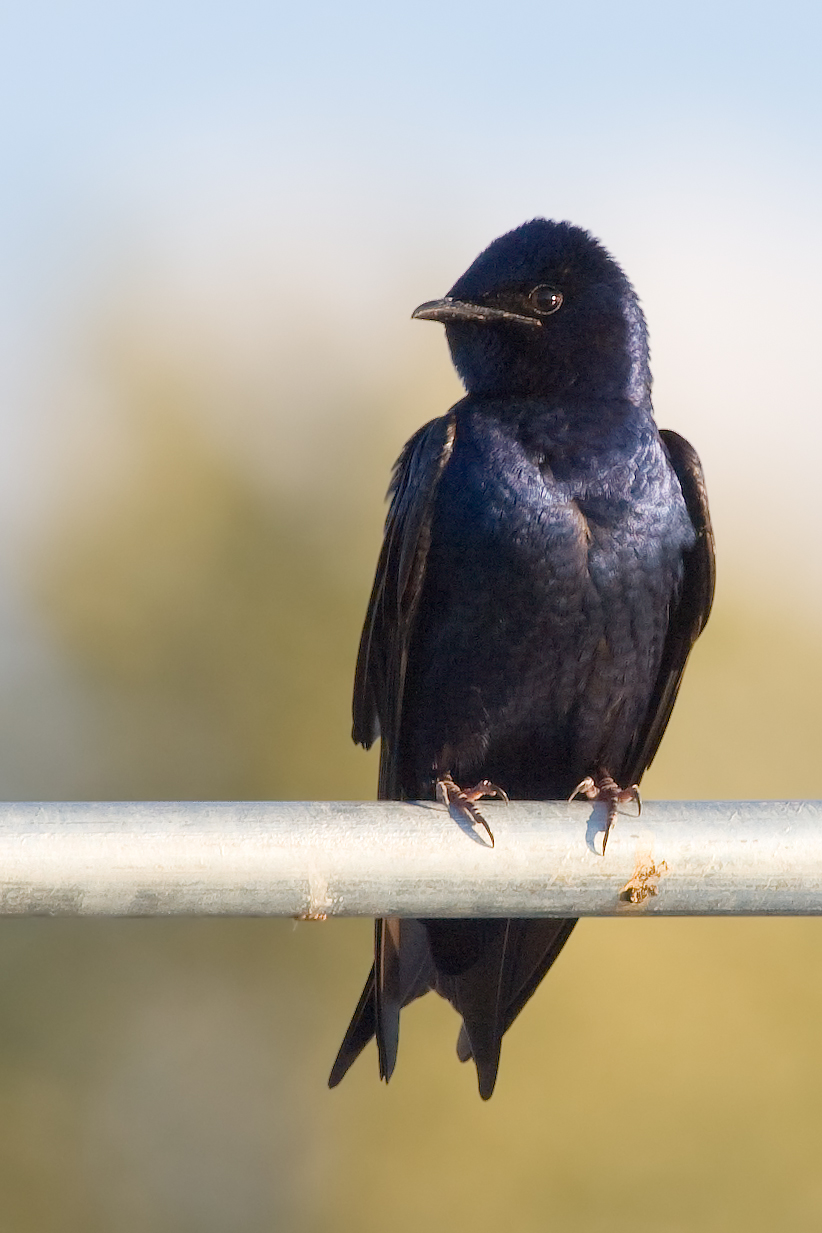 Purple MartinProgne subis
-
 Welcome SwallowHirundo neoxena
-
 Western House MartinDelichon urbicum
Compare
Questions and answers
What is the scientific name of the Eurasian Crag Martin?
The scientific name of the Eurasian Crag Martin is Ptyonoprogne rupestris. Written with its author, the full name is Ptyonoprogne rupestris (Scopoli, 1769).
Which family does the Eurasian Crag Martin belong to?
Ptyonoprogne rupestris belongs to the family Hirundinidae, in the order Passeriformes and the class Aves.
Where is the Eurasian Crag Martin found?
Checklists and occurrence records place Ptyonoprogne rupestris in 79 countries, including Spain, France, Portugal, Switzerland, Italy and Greece.
What is the conservation status of the Eurasian Crag Martin?
The IUCN Red List category recorded for Ptyonoprogne rupestris is Least Concern (LC).
What other names does the Eurasian Crag Martin have?
Ptyonoprogne rupestris is also known in English as Crag Martin, Eurasian Crag-Martin and European Crag Martin.
Sources
Passages the profile rests on
- The Eurasian Crag Martin has ash-brown upperparts and paler underparts. Source passage: “It has ash-brown upperparts and paler underparts” — English Wikipedia
- The species has a short, square tail with white patches near the tips of most feathers. Source passage: “The tail is short and square, with white patches near the tips of all but the central and outermost pairs of feathers.” — English Wikipedia
- The Eurasian Crag Martin has brown eyes, a mainly black bill, and brownish-pink legs. Source passage: “The eyes are brown, the small bill is mainly black, and the legs are brownish-pink.” — English Wikipedia
- Juveniles have buff-brown tips on the plumage of their heads, upperparts, and wing coverts. Source passage: “juveniles have buff-brown tips to the plumage of the head, upperparts and wing coverts.” — English Wikipedia
- The Eurasian Crag Martin measures 13–15 cm in length. Source passage: “The Eurasian crag martin is 13–15 cm (5.1–5.9 in) long” — English Wikipedia
- Its wingspan ranges from 32 to 34.5 cm. Source passage: “with a 32–34.5 cm (12.6–13.6 in) wingspan” — English Wikipedia
- The species weighs an average of 23 g. Source passage: “and weighs an average 23 g (0.81 oz).” — English Wikipedia
- The species breeds on dry, warm, sheltered cliffs in mountainous areas containing crags and gorges. Source passage: “Crag martins breed on dry, warm and sheltered cliffs in mountainous areas with crags and gorges.” — English Wikipedia
- Its typical breeding altitude is between 2,000 and 2,700 m. Source passage: “The typical altitude is 2,000–2,700 m (6,600–8,900 ft)” — English Wikipedia
- In Central Asia, the species breeds at elevations reaching 5,000 m. Source passage: “but breeding occurs up to 5,000 m (16,000 ft) in Central Asia.” — English Wikipedia
- The species also nests in crevices, caves, and man-made structures. Source passage: “in a crevice or cave, or on a man-made structure.” — English Wikipedia
- The Eurasian Crag Martin feeds mainly on insects caught in flight. Source passage: “The Eurasian crag martin feeds mainly on insects caught in its beak in flight” — English Wikipedia
- Its recorded insect prey includes flies, ants, aerial spiders, and beetles. Source passage: “may include flies, ants, aerial spiders, and beetles.” — English Wikipedia
- Aquatic insects such as stoneflies, caddisflies, and pond skaters are important prey in at least Spain and Italy. Source passage: “Aquatic species such as stoneflies, caddisflies and pond skaters appear to be important in at least Spain and Italy.” — English Wikipedia
- The species occasionally takes prey from rocks, the ground, or water surfaces. Source passage: “although it will occasionally take prey items off rocks, the ground, or a water surface.” — English Wikipedia
- The Eurasian Crag Martin is gregarious outside the breeding season. Source passage: “This martin is gregarious outside the breeding season” — English Wikipedia
- The species may form sizeable flocks when food is abundant. Source passage: “may form sizeable flocks where food is abundant.” — English Wikipedia
- Its flight consists of rapid wing beats alternating with glides on flat wings. Source passage: “Rapid wing beats are interspersed with flat-winged glides” — English Wikipedia
- The species has considerable manoeuvrability near cliff faces. Source passage: “its long flexible primaries give it the agility to manoeuvre near cliff faces.” — English Wikipedia
- Its average measured migration flight speed is 9.9 m/s. Source passage: “The average migration flight speed has been measured at 9.9 m/s (32.5 ft/s)” — English Wikipedia
- The species has short, high-pitched calls described as pli, piieh, and tshir. Source passage: “The vocalisations include short high pli, and piieh and tshir calls” — English Wikipedia
- Breeding generally takes place between May and August. Source passage: “Nesting takes place from May to August” — English Wikipedia
- Pairs usually raise two broods per breeding season. Source passage: “and usually two broods are raised.” — English Wikipedia
- Both adults construct the open half-cup nest from mud and line it with soft materials. Source passage: “The nest, built by both adults, is an open half cup made of mud and lined with soft material such as feathers or dry grass.” — English Wikipedia
- Nest construction takes between one and three weeks. Source passage: “It takes one to three weeks to build” — English Wikipedia
- Clutches contain between two and five eggs, averaging three. Source passage: “The clutch is two to five eggs with an average of three.” — English Wikipedia
- The eggs are white with brownish blotches concentrated particularly at the wider end. Source passage: “The eggs are white with brownish blotches particularly at the wide end” — English Wikipedia
- The female performs most of the incubation, which lasts 13–17 days. Source passage: “The eggs are incubated mainly by the female for 13–17 days to hatching” — English Wikipedia
- Chicks take between 24 and 27 days to fledge. Source passage: “and the chicks take another 24–27 days to fledge.” — English Wikipedia
- Both parents feed the chicks every two to five minutes. Source passage: “Both parents feed the chicks bringing food every two to five minutes” — English Wikipedia
- Young birds continue receiving food for 14–21 days after fledging. Source passage: “the young are fed for 14–21 days after fledging.” — English Wikipedia
- The Eurasian Crag Martin is larger than the other European swallows. Source passage: “has a broader body, wings and tail than any other European swallow.” — English Wikipedia
- The species can be distinguished from the Sand Martin by its larger size, white tail patches, and absence of a brown breast band. Source passage: “This species can be distinguished from the sand martin by its larger size, the white patches on the tail, and its lack of a brown breast band.” — English Wikipedia
- The Eurasian Crag Martin is approximately 15% larger and darker than the Rock Martin. Source passage: “the Eurasian crag martin is darker, browner and 15% larger than the rock martin” — English Wikipedia
- The Eurasian Crag Martin is larger and paler, particularly underneath, than the Dusky Crag Martin. Source passage: “and larger and paler, particularly on its underparts than the dusky crag martin.” — English Wikipedia
- The worldwide population is roughly estimated at 500,000–5,000,000 individuals. Source passage: “A rough estimate of the worldwide population is 500,000–5,000,000 individuals” — English Wikipedia
- The species is classified as Least Concern on the IUCN Red List. Source passage: “it is classed as Least Concern on the IUCN Red List.” — English Wikipedia
- The population is estimated to be increasing following a northward expansion. Source passage: “The population is estimated to be increasing following a northward expansion” — English Wikipedia
- The IUCN assessment identifies the species' habitat and ecology systems as terrestrial and freshwater. Source passage: “System. Terrestrial, Freshwater (=Inland waters)” — iucnredlist.org
Data
- Catalogue of Life, 2026-10-16 XR cc by
- Global Biodiversity Information Facility CC BY 4.0
- Wikidata CC0
- GeoNames CC BY 4.0
- Wikimedia Commons per image; credit shown with each image
- Within the Catalogue of Life, this name comes from The Integrated Taxonomic Information System cc0
References
- del Hoyo, Josep, Andrew Elliot, and David Christie, eds. (2004). Handbook of the Birds of the World. Vol. 9. Cotingas to Pipits and Wagtails.
This species in other databases
- Catalogue of Life 4QBMM
- Wikidata Q213216
- WoRMS urn:lsid:marinespecies.org:taxname:1534870
- Avibase eurcrm1
Page built on 28 November 2026. See how the catalog is made and all sources and licences.
Cite this page
ScientificNames.org. (2026). Ptyonoprogne rupestris (Eurasian Crag Martin). Retrieved November 28, 2026, from https://scientificnames.org/species/ptyonoprogne-rupestris
“Ptyonoprogne rupestris (Eurasian Crag Martin).” ScientificNames.org, 2026, scientificnames.org/species/ptyonoprogne-rupestris. Accessed 28 Nov. 2026.
ScientificNames.org. “Ptyonoprogne rupestris (Eurasian Crag Martin).” Accessed November 28, 2026. https://scientificnames.org/species/ptyonoprogne-rupestris.
@misc{scientificnames_ptyonoprogne_rupestris_eurasian_crag_martin,
  author = {{ScientificNames.org}},
  title = {Ptyonoprogne rupestris (Eurasian Crag Martin)},
  year = {2026},
  url = {https://scientificnames.org/species/ptyonoprogne-rupestris},
  note = {Accessed 2026-11-28}
}