Species · Mammals
Ricefield Rat Rattus argentiventer
The scientific name of the Ricefield Rat is Rattus argentiventer. It is a species of mammal in the family Muridae (mice), order Rodentia. The name dates from 1916.
- Scientific name
- Rattus argentiventer (Robinson & Kloss, 1916)
- Common name
- Ricefield Rat
- Genus
- Rattus
- Family
- Muridae (Mice)
- Order
- Rodentia
- Class
- Mammalia
- Red List category
- LC Least Concern
- Recorded in
- 8 countries
- Name status
- accepted in the Catalogue of Life

Overview
Rattus argentiventer occurs throughout Southeast Asia and primarily inhabits cultivated areas, including rice paddies and grasslands. It is omnivorous and considered a major rodent pest in rice fields.
Written 26 November 2026 from the sources listed below. Each statement was checked against the passage it cites; statements that could not be supported were removed.
Appearance
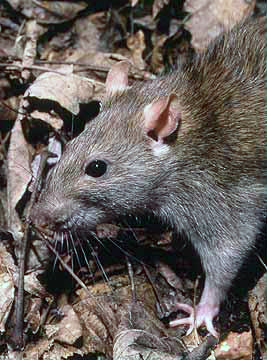
The Ricefield Rat has grizzled yellow-brown and black fur, a gray belly with whiter flanks, and a uniformly medium-brown tail. Young individuals have an orange-colored tuft in front of each ear, and the species has chisel-like incisors.[1][2][3][4][5]
Its total length ranges from 304 to 400 mm, and its tail measures between 140 and 200 mm. Its skull measures between 37 and 41 mm in length, and its average weight ranges from approximately 97 to 219 g.[6][7][8][9]
Females have 12 mammary glands.[10]
Habitat
The Ricefield Rat inhabits grasslands throughout Southeast Asia and primarily occupies cultivated areas such as rice paddies and grasslands. It depends substantially on human-managed rice fields and plantations.[11][12][13][14]
Individuals shelter in burrows in soil, beneath rocks, and in logs. They construct nests from hollowed-out heaps of material, often inside burrows.[15][16]
Diet
The Ricefield Rat is omnivorous. Its diet includes termites, insects, grasshoppers, snails, seeds, nuts, rice, vegetables, and fruits.[17][18]
Behaviour
The Ricefield Rat lives in large social groups containing dominant males and females. Its social hierarchy consists of dominant males and several high-ranking females, and social groups have territorial boundaries.[19][20][21]
The species feeds at night and is active at dusk and dawn. During daylight, individuals can be found among vegetation, weeds, and maturing fields.[22][23]
Its vocalizations consist mainly of squeals and whistles used during aggressive encounters. Individuals also produce squeals and whistles when attacked or disturbed.[24][25]
Reproduction and life cycle
The Ricefield Rat has a gestation period of approximately three weeks. It is polyestrous, with an estrous cycle lasting four to five days, and has a continuous breeding season.[26][27][28]
Litters contain between three and eight young, and females may produce between one and twelve litters annually. One documented account reports litter sizes of between five and ten young.[29][30][31]
Females construct a nest three to five days before giving birth. Young individuals open their eyes after approximately 15 days and are weaned and leave the nest after approximately three weeks.[32][33][34]
Young individuals reach sexual maturity at approximately three months. All young receive maternal care and are raised with their littermates, while males contribute little to offspring care.[35][36][37]
Conservation
The species has no special conservation status according to Animal Diversity Web.[38]
Classification of the Ricefield Rat
| Kingdom | Animalia |
|---|---|
| Phylum | Chordata |
| Subphylum | Vertebrata |
| Infraphylum | Gnathostomata |
| Parvphylum | Osteichthyes |
| Megaclass | Tetrapoda |
| Class | Mammalia (Mammal) |
| Subclass | Theria |
| Infraclass | Eutheria |
| Order | Rodentia (Rodent) |
| Suborder | Myomorpha (Mice) |
| Superfamily | Muroidea |
| Family | Muridae (Mice) |
| Subfamily | Murinae (Old World Mice) |
| Genus | Rattus (Old World Rats) |
| Species | Rattus argentiventer (Robinson & Kloss, 1916) |
Where the Ricefield Rat is found
Checklists and occurrence records place Rattus argentiventer in 8 countries across Asia and Oceania. GBIF holds 1,851 georeferenced records of it.
Countries
Regions and cities with the most records
- Banten, Indonesia 111
- Cikupa, Indonesia 67
- Kresek, Indonesia 67
- Pasarkemis, Indonesia 67
- Kampong Thom, Cambodia 53
- Kampong Thom, Cambodia 53
- Vinh Long, Vietnam 20
- Vĩnh Long, Vietnam 20
- Deli Tua, Indonesia 17
- Medan, Indonesia 17
- Sunggal, Indonesia 17
- Binjai, Indonesia 15
- Sepatan, Indonesia 15
- Tangerang, Indonesia 15
- Teluknaga, Indonesia 15
- Curug, Indonesia 12
- Wongsorejo, Indonesia 12
- Lam Dong, Vietnam 10
- San Jose, Philippines 8
- Cibinong, Indonesia 6
- Cileungsir, Indonesia 6
- Citeureup, Indonesia 6
- Colomadu, Indonesia 6
- Delanggu, Indonesia 6
- Depok, Indonesia 6
- Gatak, Indonesia 6
- Kartasura, Indonesia 6
- Ngemplak, Indonesia 6
- Pamulang, Indonesia 6
- Parung, Indonesia 6
- Sawangan, Indonesia 6
- Serpong, Indonesia 6
- South Tangerang, Indonesia 6
- Đinh Văn, Vietnam 6
- Đưc Trọng, Vietnam 6
- Boyolali, Indonesia 5
1 more country has a few records outside this range
These countries hold a few records of Rattus argentiventer but lie outside the range the checklists give for it. Such records are often zoo or garden specimens, museum material or vagrants, so the species is not counted as occurring there.
Range as the checklists state it
Southern Asia
Australia
A number beside a place is its count of GBIF occurrence records. A place without a number comes from a checklist alone. Records show where a species has been observed or collected, which can include escapes and vagrants.
Common names
English
- Ricefield Rat
- Greater Ricefield Rat
- Rice-field Rat
Names in 10 other languages
- Arabic
- جرذ حقل الأرز, جرذ حقل الأرز الكبير
- Finnish
- riisivainiorotta
- Indonesian
- Tikus Sawah
- Italian
- Ratto delle risaie
- Japanese
- コメクマネズミ
- Norwegian Bokmål
- Rismarksrotte
- Polish
- szczur ryżowiskowy
- Russian
- Серебристобрюхая крыса
- Spanish
- Rata de los Arrozales
- Thai
- หนูนาใหญ่
Synonyms
8 other scientific names have been used for this species and are now treated as synonyms of Rattus argentiventer.
- Epimys rattus argentiventer H. C. Robinson & Kloss, 1916
- Rattus hoxaensis Dao, 1960
- Rattus pesticulus Thomas, 1921
- Rattus rattus bali Kloss, 1921
- Rattus rattus brevicaudatus Horst & Raadt, 1918
- Rattus rattus chaseni Sody, 1941
- Rattus rattus saturnus Sody, 1941
- Rattus rattus umbriventer Kellogg, 1945
Related species
-
 Brown RatRattus norvegicus
-
 Black RatRattus rattus
-
 Polynesian RatRattus exulans
-
 Bush RatRattus fuscipes
-
 Maclear's RatRattus macleari
-
 Bulldog RatRattus nativitatis
-
 Australian Swamp RatRattus lutreolus
- Long-haired RatRattus villosissimus
Compare
Questions and answers
What is the scientific name of the Ricefield Rat?
The scientific name of the Ricefield Rat is Rattus argentiventer. Written with its author, the full name is Rattus argentiventer (Robinson & Kloss, 1916).
Which family does the Ricefield Rat belong to?
Rattus argentiventer belongs to the family Muridae, in the order Rodentia and the class Mammalia.
Where is the Ricefield Rat found?
Checklists and occurrence records place Rattus argentiventer in 8 countries, including Indonesia, Thailand, Philippines, Malaysia, Cambodia and Vietnam.
What is the conservation status of the Ricefield Rat?
The IUCN Red List category recorded for Rattus argentiventer is Least Concern (LC).
What other names does the Ricefield Rat have?
Rattus argentiventer is also known in English as Greater Ricefield Rat and Rice-field Rat.
What are rice field rats?
The Ricefield Rat (Rattus argentiventer) is a mammal in the family Muridae. It occurs throughout Southeast Asia, primarily inhabits cultivated areas such as rice paddies and grasslands, and is considered a major rodent pest in rice fields.[11][12][14][39]
What do rice rats eat?
The Ricefield Rat is omnivorous. It eats termites, insects, grasshoppers, snails, seeds, nuts, rice, vegetables, and fruits.[17][18]
What do Rattus eat?
The Ricefield Rat eats termites, insects, grasshoppers, snails, seeds, nuts, rice, vegetables, and fruits.[17]
Sources
Passages the profile rests on
- The species has grizzled yellow-brown and black fur. Source passage: “It has a grizzled yellow-brown and black pelage” — English Wikipedia
- Its belly is gray with whiter flanks. Source passage: “a gray belly with whiter flanks” — English Wikipedia
- Its tail is uniformly medium brown. Source passage: “a tail that is uniformly medium brown.” — English Wikipedia
- Young individuals have an orange-colored tuft in front of each ear. Source passage: “Young rats have an orange-colored tuft in front of each ear.” — English Wikipedia
- The species has chisel-like incisors. Source passage: “It has chisel-like incisors.” — English Wikipedia
- Its total length ranges from 304 to 400 mm. Source passage: “The ricefield rat is between 304–400 mm (12.0–15.7 in) long” — English Wikipedia
- Its tail measures between 140 and 200 mm. Source passage: “with a tail length of 140–200 mm (5.5–7.9 in)” — English Wikipedia
- Its skull measures between 37 and 41 mm in length. Source passage: “a skull length of 37–41 mm (1.5–1.6 in).” — English Wikipedia
- Its average weight ranges from approximately 97 to 219 g. Source passage: “The average weight of Rattus argentiventer is around 97 to 219 g (3.4 to 7.7 oz).” — English Wikipedia
- Females have 12 mammary glands. Source passage: “Females have 12 mammae.” — English Wikipedia
- The species inhabits grasslands throughout Southeast Asia. Source passage: “The ricefield rat can be found in grassland habitats throughout Southeast Asia.” — English Wikipedia
- The species primarily occupies cultivated areas such as rice paddies and grasslands. Source passage: “Rice field rats primarily reside in cultivated areas such as rice paddies and grasslands.” — animaldiversity.org
- The species depends substantially on human-managed rice fields and plantations. Source passage: “It is largely dependent on human rice fields and plantations.” — animaldiversity.org
- The species occurs throughout Southeast Asia. Source passage: “The ricefield rat (Rattus argentiventer) is a species of rat found throughout Southeast Asia.” — English Wikipedia
- Individuals shelter in burrows in soil, beneath rocks, and in logs. Source passage: “Rice field rats shelter in burrows in soil, under rocks, and in logs.” — animaldiversity.org
- The species constructs nests from hollowed-out heaps of material, often inside burrows. Source passage: “They make nests from hollowed-out heaps of material, often in a burrow.” — animaldiversity.org
- The species eats termites, insects, grasshoppers, snails, seeds, nuts, rice, vegetables, and fruits. Source passage: “Rattus argentiventer's main diet includes termites, insects, grasshoppers, snails, seeds, nuts, rice, vegetables, and fruits.” — English Wikipedia
- The species is omnivorous. Source passage: “Rattus argentiventer is omnivorous” — animaldiversity.org
- The species lives in large social groups containing dominant males and females. Source passage: “The ricefield rat lives in large groups with a dominant male and female.” — English Wikipedia
- Social groups have territorial boundaries. Source passage: “Groups are territorial.” — animaldiversity.org
- The species has a social hierarchy consisting of dominant males and several high-ranking females. Source passage: “Rattus argentiventer lives in large groups with a social hierarchy of dominant males and a few high ranking females.” — animaldiversity.org
- The species feeds at night and is active at dusk and dawn. Source passage: “Ricefield rats feed at night and move actively at dusk and dawn.” — English Wikipedia
- During daylight, individuals can be found among vegetation, weeds, and maturing fields. Source passage: “During daytime, they can be seen among vegetation, weeds, or maturing fields.” — English Wikipedia
- Individuals produce squeals and whistles when attacked or disturbed. Source passage: “When attacked or disturbed, they will produce squeals and whistle sounds.” — English Wikipedia
- Its vocalizations consist mainly of squeals and whistles used during aggressive encounters. Source passage: “Rattus argentiventer has a vocal repertoire consisting mainly of squeals and whistles used in aggressive encounters.” — animaldiversity.org
- The species has a gestation period of approximately three weeks. Source passage: “Ricefield rat mothers undergo a 3-week gestation period” — English Wikipedia
- The species is polyestrous, with an estrous cycle lasting four to five days. Source passage: “Rattus argentiventer is polyestrous with a 4 to 5 day estrus” — animaldiversity.org
- The species has a continuous breeding season. Source passage: “and a continuous breeding season.” — animaldiversity.org
- Litters contain between five and ten young according to one documented account. Source passage: “before giving birth to a litter of 5 to 10 young.” — English Wikipedia
- Litters contain between three and eight young. Source passage: “with 3 to 8 young per litter” — animaldiversity.org
- Females may produce between one and twelve litters annually. Source passage: “and 1 to 12 litters a year.” — animaldiversity.org
- Females construct a nest three to five days before giving birth. Source passage: “Female rats build a nest 3 to 5 days before parturition” — animaldiversity.org
- Young individuals open their eyes after approximately 15 days. Source passage: “After 15 days, their eyes open.” — animaldiversity.org
- Young individuals are weaned and leave the nest after approximately three weeks. Source passage: “Weaning occurs and the young leave the nest after 3 weeks.” — animaldiversity.org
- Young individuals reach sexual maturity at approximately three months. Source passage: “Young Rattus argentiventer reach sexual maturity at 3 months.” — animaldiversity.org
- All young receive maternal care and are raised with their littermates. Source passage: “All young experience maternal care and are reared with their litter mates.” — animaldiversity.org
- Males contribute little to the care of offspring. Source passage: “The male rat plays little part in the care of the young.” — animaldiversity.org
- The species has no special conservation status according to Animal Diversity Web. Source passage: “Rattus argentiventer has no special conservation status.” — animaldiversity.org
- The species is considered a major rodent pest in rice fields. Source passage: “It is a major rodent pest in rice fields.” — English Wikipedia
Data
- Catalogue of Life, 2026-10-16 XR cc by
- Global Biodiversity Information Facility CC BY 4.0
- Wikidata CC0
- GeoNames CC BY 4.0
- Wikimedia Commons per image; credit shown with each image
- Within the Catalogue of Life, this name comes from The Integrated Taxonomic Information System cc0
References
- J. Strs. Br. Roy. Asiat. Soc. vol.73 p.274 where the name was published
- Wilson, Don E., and DeeAnn M. Reeder, eds. (1993). Mammal Species of the World: A Taxonomic and Geographic Reference, 2nd Ed., 3rd Printing.
- Musser, Guy G., and Michael D. Carleton / Wilson, Don E., and DeeAnn M. Reeder, eds. (2005). Superfamily Muroidea. Mammal Species of the World: A Taxonomic and Geographic Reference, 3rd Ed., Vol. 2.
This species in other databases
Page built on 26 November 2026. See how the catalog is made and all sources and licences.
Cite this page
ScientificNames.org. (2026). Rattus argentiventer (Ricefield Rat). Retrieved November 26, 2026, from https://scientificnames.org/species/rattus-argentiventer
“Rattus argentiventer (Ricefield Rat).” ScientificNames.org, 2026, scientificnames.org/species/rattus-argentiventer. Accessed 26 Nov. 2026.
ScientificNames.org. “Rattus argentiventer (Ricefield Rat).” Accessed November 26, 2026. https://scientificnames.org/species/rattus-argentiventer.
@misc{scientificnames_rattus_argentiventer_ricefield_rat,
  author = {{ScientificNames.org}},
  title = {Rattus argentiventer (Ricefield Rat)},
  year = {2026},
  url = {https://scientificnames.org/species/rattus-argentiventer},
  note = {Accessed 2026-11-26}
}