Species · Flowering plants
Evergreen Currant Ribes viburnifolium
The scientific name of the Evergreen Currant is Ribes viburnifolium. It is a species of flowering plant in the family Grossulariaceae (currant family), order Saxifragales.
- Scientific name
- Ribes viburnifolium A.Gray
- Common name
- Evergreen Currant
- Genus
- Ribes
- Family
- Grossulariaceae (Currant Family)
- Order
- Saxifragales
- Class
- Magnoliopsida
- Recorded in
- 2 countries
- Name status
- accepted in the Catalogue of Life

Overview
Evergreen Currant is a perennial shrub that grows close to the ground with long reddish stems extending horizontally. It is native to coastal Baja California and Southern California. Its glossy, leathery evergreen leaves contain glands that release sticky sap with a citrus scent.
Written 26 November 2026 from the sources listed below. Each statement was checked against the passage it cites; statements that could not be supported were removed.
Appearance
Evergreen Currant is a low-growing perennial shrub with long reddish stems that extend horizontally. Its leaves have dark green, shiny upper surfaces and lighter green or yellowish, leathery undersides.[1][2]
The evergreen leaves are leathery, glossy, and spicy-fragrant. Glands in the leaves release sticky sap with a citrus scent.[3][4]
The plant produces clusters of deep red flowers and small red fruits.[5][6]
Habitat
Evergreen Currant occurs in chaparral on the Channel Islands. On the mainland, it grows in coastal sage scrub and coastal succulent scrub.[7][8]
Mainland populations grow in canyons and arroyos with partial shade near the coast.[9]
At Punta Banda, the species occurs in moist, windy, foggy sage scrub and chaparral. On Cedros Island, it grows in pine groves north of the Gran Cañón.[10][11]
Behaviour
The flowers attract hummingbirds, insects, and bees. The red fruits attract birds.[12][13][14]
Birds frequently use the plant as cover.[15]
Reproduction and life cycle
Evergreen Currant flowers from late winter into early spring. It produces small red fruits later in spring.[16][17]
Uses
Evergreen Currant has become popular for cultivation in drought-tolerant gardens and is considered suitable for dry shade.[18][19]
A decoction of the leaves was traditionally drunk in moderation or used as a bath for pulmonary ailments and rheumatism.[20]
Children sometimes played a game involving eating unripe fruits and seeing who could eat the most without making faces.[21]
Classification of the Evergreen Currant
| Kingdom | Plantae |
|---|---|
| Subkingdom | Pteridobiotina |
| Phylum | Tracheophyta |
| Class | Magnoliopsida |
| Order | Saxifragales |
| Family | Grossulariaceae (Currant Family) |
| Genus | Ribes (Currant) |
| Species | Ribes viburnifolium A.Gray |
Where the Evergreen Currant is found
Checklists and occurrence records place Ribes viburnifolium in 2 countries across North America. GBIF holds 975 georeferenced records of it.
Countries
Regions and cities with the most records
- Baja California, Mexico 422
- California, United States 241
- Ensenada, Mexico 185
- Rodolfo Sánchez Taboada, Mexico 93
- La Joya, Mexico 44
- Pórticos de San Antonio, Mexico 44
- Villa del Prado 2da Sección, Mexico 44
- Tijuana, Mexico 43
- Chula Vista, United States 34
- Imperial Beach, United States 34
- Coronado, United States 28
- Rosarito, Mexico 27
- Las Delicias, Mexico 26
- National City, United States 23
- San Diego, United States 18
- La Mesa, United States 15
- Lemon Grove, United States 15
- Poway, United States 15
- Los Angeles, United States 13
- Burbank, United States 12
- Glendale, United States 12
- Alhambra, United States 11
- Altadena, United States 11
- La Cañada Flintridge, United States 11
- La Crescenta-Montrose, United States 11
- Pasadena, United States 11
- South Pasadena, United States 11
- Bell Gardens, United States 10
- Cudahy, United States 10
- Terrazas del Valle, Mexico 10
- Florence-Graham, United States 9
- Bell, United States 8
- East Los Angeles, United States 8
- Huntington Park, United States 8
- Inglewood, United States 8
- Maywood, United States 8
1 more country has a few records outside this range
These countries hold a few records of Ribes viburnifolium but lie outside the range the checklists give for it. Such records are often zoo or garden specimens, museum material or vagrants, so the species is not counted as occurring there.
Range as the checklists state it
USA (California); Mexico (Baja California Norte)
A number beside a place is its count of GBIF occurrence records. A place without a number comes from a checklist alone. Records show where a species has been observed or collected, which can include escapes and vagrants.
Common names
English
- Evergreen Currant
- Catalina Perfume
- Santa Catalina Island Currant
Related species
-
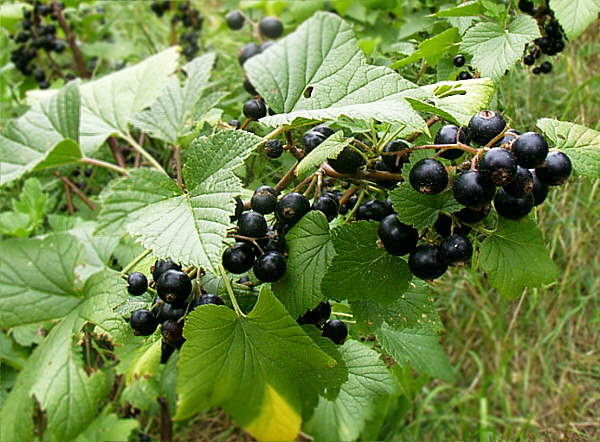 BlackcurrantRibes nigrum
-
 RedcurrantRibes rubrum
-
 GooseberryRibes uva-crispa
-
 Red-flowering CurrantRibes sanguineum
-
 Golden CurrantRibes aureum
-
 Mountain CurrantRibes alpinum
-
 Coast Black GooseberryRibes divaricatum
-
 American GooseberryRibes hirtellum
Compare
Questions and answers
What is the scientific name of the Evergreen Currant?
The scientific name of the Evergreen Currant is Ribes viburnifolium. Written with its author, the full name is Ribes viburnifolium A.Gray.
Which family does the Evergreen Currant belong to?
Ribes viburnifolium belongs to the family Grossulariaceae, in the order Saxifragales and the class Magnoliopsida.
Where is the Evergreen Currant found?
Checklists and occurrence records place Ribes viburnifolium in 2 countries: Mexico and United States.
What other names does the Evergreen Currant have?
Ribes viburnifolium is also known in English as Catalina Perfume and Santa Catalina Island Currant.
Sources
Passages the profile rests on
- The species is a perennial shrub that grows close to the ground with long reddish stems extending horizontally. Source passage: “Ribes viburnifolium is a perennial shrub which grows low to the ground, extending long reddish stems horizontally.” — English Wikipedia
- Its leaves have dark green, shiny upper surfaces and lighter green or yellowish, leathery undersides. Source passage: “The leaves are dark green and shiny on their top surfaces, and lighter green or yellowish and leathery on the undersides.” — English Wikipedia
- The leaves contain glands that release sticky sap with a citrus scent. Source passage: “The leaves have glands which exude a sticky, citrus-scented sap.” — English Wikipedia
- Its evergreen leaves are leathery, glossy, and spicy-fragrant. Source passage: “This plant has leathery, glossy evergreen leaves that has a spicy fragrance as do them stems.” — cpp.edu
- The plant produces clusters of deep red flowers. Source passage: “Clusters of deep red flowers bloom in late winter and into early spring.” — English Wikipedia
- The species produces small red fruits. Source passage: “The plant yields small red fruits later in the spring.” — English Wikipedia
- The species occurs in chaparral on the Channel Islands. Source passage: “Channel Islands: chaparral.” — cpp.edu
- On the mainland, the species grows in coastal sage scrub and coastal succulent scrub. Source passage: “The mainland habitat of Ribes viburnifolium along the southern San Diego and northern Baja California coast consists of coastal sage scrub and coastal succulent scrub” — English Wikipedia
- Mainland populations grow in canyons and arroyos with partial shade near the coast. Source passage: “with plants growing in canyons and arroyos with partial shade near the coast.” — English Wikipedia
- At Punta Banda, the species occurs in moist, windy, foggy sage scrub and chaparral. Source passage: “On the Punta Banda, R. viburnifolium is found growing in moist, wind-swept, and foggy sage scrub and chaparral.” — English Wikipedia
- On Cedros Island, the species grows in pine groves north of the Gran Cañón. Source passage: “On Cedros Island, this species is found in the pine groves north of the Gran Cañón.” — English Wikipedia
- The red fruits attract birds. Source passage: “The red fruit attracts birds.” — English Wikipedia
- The flowers attract hummingbirds and insects. Source passage: “The flowers attract hummingbirds and insects.” — English Wikipedia
- Hummingbirds and bees are attracted to the flowers. Source passage: “Hummingbirds and bees love the flowers” — cpp.edu
- Birds frequently use the plant as cover. Source passage: “birds will often use it as cover.” — cpp.edu
- The species flowers from late winter into early spring. Source passage: “Clusters of deep red flowers bloom in late winter and into early spring.” — English Wikipedia
- The species produces small red fruits later in spring. Source passage: “The plant yields small red fruits later in the spring.” — English Wikipedia
- The species has become popular for cultivation in drought-tolerant gardens. Source passage: “'Evergreen currant' has become a popular plant in drought-tolerant gardens.” — English Wikipedia
- The plant is considered suitable for dry shade. Source passage: “One plant suitable for dry shade is Catalina perfume or evergreen currant (scientific name Ribes viburnifolium).” — ucanr.edu
- A decoction of the leaves was traditionally drunk in moderation or used as a bath for pulmonary ailments and rheumatism. Source passage: “A decoction of leaves, used in moderation was drunk or used as a bath for pulmonary ailments and rheumatism.” — cpp.edu
- Children sometimes played a game involving eating unripe fruits and seeing who could eat the most without making faces. Source passage: “Children sometimes played a game where they would eat the unripe fruit and see who could eat the most berries without making faces.” — cpp.edu
Data
- Catalogue of Life, 2026-10-16 XR cc by
- Global Biodiversity Information Facility CC BY 4.0
- Wikidata CC0
- GeoNames CC BY 4.0
- Wikimedia Commons per image; credit shown with each image
- Within the Catalogue of Life, this name comes from Synonymic Checklists of the Vascular Plants of the World cc by
References
- Gray, A. (1881). Proc. Amer. Acad. Arts 17: 202 (1881 publ. 1882). where the name was published
This species in other databases
- Catalogue of Life 4SYLZ
- Wikidata Q7322363
- iNaturalist 78869
- World Flora Online wfo-0001135636
- GRIN 31877
Page built on 27 November 2026. See how the catalog is made and all sources and licences.
Cite this page
ScientificNames.org. (2026). Ribes viburnifolium (Evergreen Currant). Retrieved November 27, 2026, from https://scientificnames.org/species/ribes-viburnifolium
“Ribes viburnifolium (Evergreen Currant).” ScientificNames.org, 2026, scientificnames.org/species/ribes-viburnifolium. Accessed 27 Nov. 2026.
ScientificNames.org. “Ribes viburnifolium (Evergreen Currant).” Accessed November 27, 2026. https://scientificnames.org/species/ribes-viburnifolium.
@misc{scientificnames_ribes_viburnifolium_evergreen_currant,
  author = {{ScientificNames.org}},
  title = {Ribes viburnifolium (Evergreen Currant)},
  year = {2026},
  url = {https://scientificnames.org/species/ribes-viburnifolium},
  note = {Accessed 2026-11-27}
}