Species · Ferns and allies
Selaginella asperula
Selaginella asperula has no English name on record in the checklists used here. It is a species of fern or lycophyte in the family Selaginellaceae (spikemoss family), order Selaginellales.
- Scientific name
- Selaginella asperula Mart. ex Spring
- Genus
- Selaginella
- Family
- Selaginellaceae (Spikemoss Family)
- Order
- Selaginellales
- Class
- Lycopodiopsida
- Recorded in
- 6 countries
- Name status
- accepted in the Catalogue of Life
Classification of Selaginella asperula
| Kingdom | Plantae |
|---|---|
| Subkingdom | Pteridobiotina |
| Phylum | Tracheophyta |
| Class | Lycopodiopsida |
| Order | Selaginellales |
| Family | Selaginellaceae (Spikemoss Family) |
| Genus | Selaginella (Spikemoss) |
| Species | Selaginella asperula Mart. ex Spring |
Where Selaginella asperula is found
Checklists and occurrence records place Selaginella asperula in 6 countries across South America. GBIF holds 1,292 georeferenced records of it.
Countries
Regions and cities with the most records
- Meta Department, Colombia 130
- Amazonas, Brazil 123
- Amazonas, Venezuela 95
- Rondônia, Brazil 95
- Caquetá, Colombia 70
- Mato Grosso, Brazil 58
- Morona-Santiago Province, Ecuador 32
- Vaupés, Colombia 30
- Manaus, Brazil 20
- Acre, Brazil 19
- Guaviare Department, Colombia 19
- La Paz Department, Bolivia 14
- Roraima, Brazil 14
- Amazonas Department, Colombia 12
- Guainía Department, Colombia 11
- Pau dos Ferros, Brazil 11
- Rio Grande do Norte, Brazil 11
- Junin, Peru 10
- Pará, Brazil 10
- San José del Guaviare, Colombia 10
- Aguazul, Colombia 9
- Casanare Department, Colombia 9
- Macas, Ecuador 9
- Pasco, Peru 9
- Guayaramerín, Bolivia 8
- San Martín Department, Peru 8
- Guajará Mirim, Brazil 7
- Tocantins, Brazil 7
- Zamora Chinchipe, Ecuador 7
- Cruzeiro do Sul, Brazil 6
- Guajará, Brazil 6
- Loreto, Peru 6
- Vichada Department, Colombia 6
- Borba, Brazil 5
- Mitú, Colombia 5
- Pando, Bolivia 5
1 more country has a few records outside this range
These countries hold a few records of Selaginella asperula but lie outside the range the checklists give for it. Such records are often zoo or garden specimens, museum material or vagrants, so the species is not counted as occurring there.
Range as the checklists state it
Colombia (Amazonas, Caquetá, Cauca, Guainía, Guaviare, Meta, Nariño, Vaupés, Vichada); Venezuela (Amazonas); Ecuador; Peru; Bolivia (La Paz, Beni, Pando); Brazil (Pará, Rondônia, Amazonas, Acre)
A number beside a place is its count of GBIF occurrence records. A place without a number comes from a checklist alone. Records show where a species has been observed or collected, which can include escapes and vagrants.
Synonyms
5 other scientific names have been used for this species and are now treated as synonyms of Selaginella asperula.
- Gymnogynum asperulum (Mart. ex Spring) Li Bing Zhang & X.M.Zhou
- Lycopodioides asperula (Mart. ex Spring) Kuntze
- Lycopodioides ovalis (Baker) Kuntze
- Lycopodium asperulum Mart.
- Selaginella ovalis Baker
Related species
-
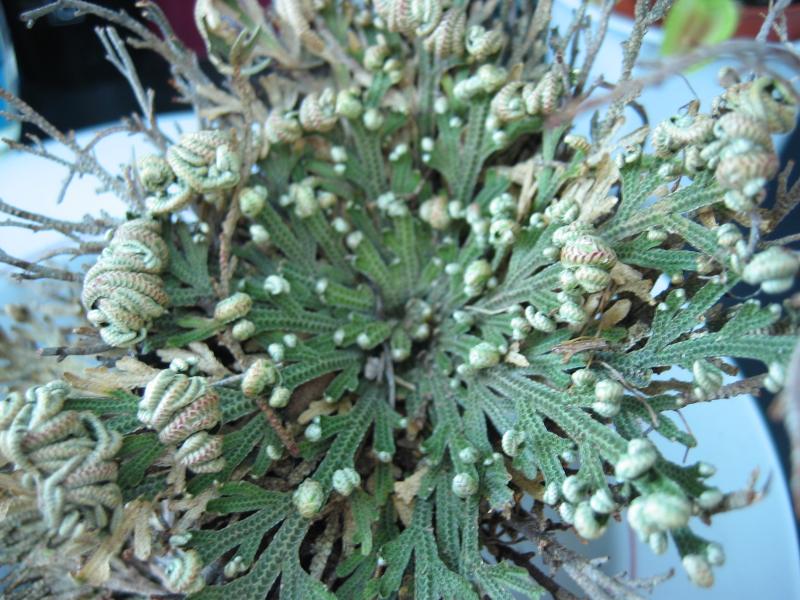 Rose-of-JerichoSelaginella lepidophylla
-
 African ClubmossSelaginella kraussiana
-
 Peacock FernSelaginella uncinata
-
 Willdenow's SpikemossSelaginella willdenowii
-
 Little-club-mossSelaginella tamariscina
-
 Lesser ClubmossSelaginella selaginoides
-
 Gemmiferous SpikemossSelaginella moellendorffii
-
 Mediterranean ClubmossSelaginella denticulata
Compare
Sources
Data
- Catalogue of Life, 2026-10-16 XR cc by
- Global Biodiversity Information Facility CC BY 4.0
- GeoNames CC BY 4.0
- Within the Catalogue of Life, this name comes from Checklist of Ferns and Lycophytes of the World cc by
References
- Mart. ex Spring. (1840). Fl. Bras. [Martius] 1(2): 127 (1840). where the name was published
This species in other databases
Page built on 27 November 2026. See how the catalog is made and all sources and licences.
Cite this page
ScientificNames.org. (2026). Selaginella asperula. Retrieved November 27, 2026, from https://scientificnames.org/species/selaginella-asperula
“Selaginella asperula.” ScientificNames.org, 2026, scientificnames.org/species/selaginella-asperula. Accessed 27 Nov. 2026.
ScientificNames.org. “Selaginella asperula.” Accessed November 27, 2026. https://scientificnames.org/species/selaginella-asperula.
@misc{scientificnames_selaginella_asperula,
  author = {{ScientificNames.org}},
  title = {Selaginella asperula},
  year = {2026},
  url = {https://scientificnames.org/species/selaginella-asperula},
  note = {Accessed 2026-11-27}
}