Species · Conifers and allies
Giant Sequoia Sequoiadendron giganteum
The scientific name of the Giant Sequoia is Sequoiadendron giganteum. It is a species of gymnosperm in the family Cupressaceae (cypress), order Cupressales.
- Scientific name
- Sequoiadendron giganteum (Lindl.) J.Buchholz
- Common name
- Giant Sequoia
- Genus
- Sequoiadendron
- Family
- Cupressaceae (Cypress)
- Order
- Cupressales
- Class
- Pinopsida
- Red List category
- EN Endangered
- Recorded in
- 28 countries
- Name status
- accepted in the Catalogue of Life

Overview
Sequoiadendron giganteum naturally inhabits groves on the western slopes of California's Sierra Nevada. It is the world's largest living organism by volume.
Written 24 November 2026 from the sources listed below. Each statement was checked against the passage it cites; statements that could not be supported were removed.
Appearance
The Giant Sequoia has fibrous, furrowed bark that can reach 90 cm in thickness at the base of the trunk. Its evergreen leaves are awl-shaped, 3–6 mm long, and spirally arranged on the shoots.[1][2][3]
Mature trees in groves generally have branch-free trunks up to heights of 20–50 m.[4]
Habitat
Giant Sequoia groves generally occur at elevations of 1,400–2,000 m in the northern part of their range and 1,700–2,150 m in the southern part. They occur in humid climates with dry summers and snowy winters.[5][6]
Most groves grow on granitic-based residual and alluvial soils. Giant Sequoias generally grow on south-facing northern mountain slopes and north-facing more southerly slopes.[7][8]
Giant Sequoias require substantial water and are frequently concentrated near streams.[9]
Diet
Squirrels, chipmunks, finches, and sparrows consume newly sprouted Giant Sequoia seedlings.[10]
Behaviour
Giant Sequoias can produce sprouts from injured stumps until approximately 20 years of age. Trees of all ages can produce sprouts from their trunks after losing branches to fire or breakage.[11][12]
Their cones may remain green and closed for up to 20 years. Most seeds are released when insects damage cones or heat from fire dries them.[13][14]
Reproduction and life cycle
Giant Sequoias reproduce through seeds and begin producing cones at approximately 12 years of age. Their seed cones measure 4–7 cm in length and mature within 18–20 months.[15][16][17]
Each cone contains 30–50 scales arranged spirally and produces an average of 230 seeds. A mature tree disperses approximately 300,000–400,000 seeds annually.[18][19][20]
Seeds can travel up to 180 m from their parent tree. They germinate successfully in full sunlight and mineral-rich soils without competing vegetation.[21][22]
Giant Sequoias benefit from periodic wildfires that clear competing vegetation and soil humus for successful regeneration. Seeds, germination, and seedling establishment are most successful where intense fires create small gaps in the forest canopy.[23][24]
Conservation
The IUCN lists the Giant Sequoia as an endangered species. Fewer than 80,000 trees remain in their native California range.[25][26]
Many natural groves are protected within Sequoia and Kings Canyon National Parks and Giant Sequoia National Monument.[27]
Uses
Giant Sequoia wood is used for fence posts and match sticks rather than construction. Giant Sequoias are widely planted as ornamental trees.[28][29]
Similar species
The coast redwood (Sequoia sempervirens) is a close relative of the Giant Sequoia.[30]
Classification of the Giant Sequoia
| Kingdom | Plantae |
|---|---|
| Subkingdom | Pteridobiotina |
| Phylum | Tracheophyta |
| Class | Pinopsida (Conifer) |
| Subclass | Cupressidae |
| Order | Cupressales |
| Family | Cupressaceae (Cypress) |
| Genus | Sequoiadendron (Giant Sequoia) |
| Species | Sequoiadendron giganteum (Lindl.) J.Buchholz |
Where the Giant Sequoia is found
Checklists and occurrence records place Sequoiadendron giganteum in 28 countries. GBIF holds 20,369 georeferenced records of it.
Countries
- Austria 257
- Belgium 113
- Bulgaria 7
- Canada 10
- Cyprus 4
- Czechia 11
- Denmark 6
- France 4,000
- Germany 730
- Greece 21
- Hungary 25
- Ireland 21
- Isle of Man 3
- Italy 21
- Liechtenstein 5
- Luxembourg 25
- Mexico 3
- Poland 15
- Russia 4
- Slovakia 11
- Slovenia 4
- Spain 113
- Sweden 8
- Switzerland 400
- The Netherlands 339
- Ukraine 19
- United Kingdom 7,124
- United States 7,070
Regions and cities with the most records
- California, United States 6,386
- England, United Kingdom 5,519
- Scotland, United Kingdom 1,044
- Île-de-France, France 838
- Auvergne-Rhône-Alpes, France 690
- Meudon, France 497
- Maison Blanche, France 496
- Clamart, France 495
- Paris 13 Gobelins, France 494
- Paris 05 Panthéon, France 493
- Antony, France 490
- Issy-les-Moulineaux, France 489
- Villejuif, France 489
- Paris, France 487
- Paris 14 Observatoire, France 484
- Boulogne-Billancourt, France 482
- Paris 09 Opéra, France 480
- Paris 15 Vaugirard, France 479
- Paris 16 Passy, France 479
- Paris 10 Entrepôt, France 478
- Grand Est, France 477
- Gare, France 475
- Paris 07 Palais-Bourbon, France 475
- Maisons-Alfort, France 474
- Paris 18 Buttes-Montmartre, France 469
- Paris 20 Ménilmontant, France 469
- Suresnes, France 466
- Neuilly-sur-Seine, France 465
- Levallois-Perret, France 464
- Paris 17 Batignolles-Monceau, France 463
- Clichy, France 461
- Créteil, France 461
- Ivry-sur-Seine, France 461
- Fontenay-sous-Bois, France 459
- Vincennes, France 459
- Paris 12 Reuilly, France 457
7 more countries have a few records outside this range
These countries hold a few records of Sequoiadendron giganteum but lie outside the range the checklists give for it. Such records are often zoo or garden specimens, museum material or vagrants, so the species is not counted as occurring there.
A number beside a place is its count of GBIF occurrence records. A place without a number comes from a checklist alone. Records show where a species has been observed or collected, which can include escapes and vagrants.
Common names
English
- Giant Sequoia
- Bigtree
- Sequoia
- Sierra Redwood
- Wellingtonia
- Giant Redwood
- Giant-sequoia
Names in 36 other languages
- Arabic
- سكويا عملاقة
- Basque
- Sekuoia erraldoi, Sekuoia erraldoia
- Belarusian
- Секвоядэндран
- Bulgarian
- Гигантска секвоя
- Catalan
- Sequoia vermella
- Chinese
- ju shan, 世界爺, 巨杉
- Czech
- sekvojovec obrovský
- Danish
- mammuttræ
- Dutch
- Mammoetboom
- Esperanto
- Sekvojadendro
- Estonian
- hiidsekvoia, mammutipuu
- Finnish
- mammuttipetäjä
- French
- séquoia géant
- German
- Bergmammutbaum, Riesen-Mammutbaum, Riesenmammutbaum, Wellingtonie
- Greek
- Σεκοϊάδενδρο το γιγαντιαίο
- Hebrew
- סקוויה ענקית
- Hungarian
- hegyi mamutfenyő
- Italian
- sequoia gigante
- Japanese
- セコイアオスギ, セコイアデンドロン
- Korean
- 세쿼이아덴드론
- Lithuanian
- Didysis mamutmedis
- Macedonian
- Џиновска секвоја
- Norwegian Bokmål
- mammuttre
- Persian
- درخت غول
- Polish
- Mamutowiec olbrzymi
- Portuguese
- Sequoia-gigante, sequóia-gigante
- Russian
- Секвойядендрон, Секвойядендрон гигантский
- Slovak
- sekvojovec mamutí
- Slovenian
- mamutovec
- Spanish
- secuoya gigante
- Swedish
- mammutträd
- Turkish
- mamut ağacı
- Ukrainian
- Мамонтове дерево, Секвоя велетенська, Секвоя гігантська, Секвоядендрон, Секвоядендрон велетенський
- Welsh
- Cochwydden Sierra, Welingtonia, Welingtoniâu
- arg
- Sequoya chiganta
- vls
- Mammoetbôom
Synonyms
25 other scientific names have been used for this species and are now treated as synonyms of Sequoiadendron giganteum.
- Americus gigantea (Lindl.) Hanford
- Americus giganteus Hanford, William H.
- Gigantabies wellingtoniana (Seem.) J.Nelson
- Sequoia gigantea f. pendula (Briolay-Goiffon ex Carrière) Beissn.
- Sequoia gigantea var. pendula (Briolay-Goiffon ex Carrière) Lavallée
- Sequoia washingtoniana (Winslow) Sudw.
- Sequoia wellingtonia Seem.
- Sequoia wellingtonia var. pendula (Briolay-Goiffon ex Carrière) A.H.Kent
- Sequoiadendron giganteum f. giganteum
- Sequoiadendron giganteum f. pendulum (Briolay-Goiffon ex Carrière) Rehder
- Steinhauera gigantea (Lindl.) Kuntze ex Voss
- Taxodium giganteum (Lindl.) Kellogg & Behr
- Taxodium washingtonianum Winslow
- Taxodium washingtonium Winsl.
- Washingtonia ambigua (A.Gray) J.M.Coult. & Rose
- Washingtonia americana Gordon
- Washingtonia bolanderi J.M.Coult. & Rose
- Washingtonia brachypoda (Torr. ex Durand) A.Heller
- Washingtonia californica (Lindl.) Winslow
- Washingtonia gigantea (Lindl.) Carrière
- Wellingtonia californica Sarg.
- Wellingtonia gigantea Lindl.
- Wellingtonia gigantea var. pendula Carrière
- Wellingtonia pendula Briolay-Goiffon ex Carrière
- Sequoia gigantea (Lindl.) Decne. ambiguous synonym
Related species
-
 Coast RedwoodSequoia sempervirens
-
 Bald CypressTaxodium distichum
-
 Eastern Red CedarJuniperus virginiana
-
 Northern White CedarThuja occidentalis
-
 Western Red CedarThuja plicata
-
 Dawn RedwoodMetasequoia glyptostroboides
-
 Mediterranean CypressCupressus sempervirens
-
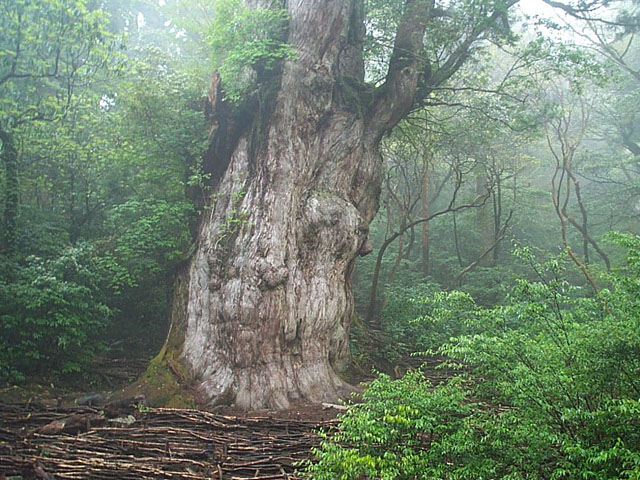 Japanese CedarCryptomeria japonica
Compare
Questions and answers
What is the scientific name of the Giant Sequoia?
The scientific name of the Giant Sequoia is Sequoiadendron giganteum. Written with its author, the full name is Sequoiadendron giganteum (Lindl.) J.Buchholz.
Which family does the Giant Sequoia belong to?
Sequoiadendron giganteum belongs to the family Cupressaceae, in the order Cupressales and the class Pinopsida.
Where is the Giant Sequoia found?
Checklists and occurrence records place Sequoiadendron giganteum in 28 countries, including United Kingdom, United States, France, Germany, Switzerland and The Netherlands.
What is the conservation status of the Giant Sequoia?
The IUCN Red List category recorded for Sequoiadendron giganteum is Endangered (EN).
What other names does the Giant Sequoia have?
Sequoiadendron giganteum is also known in English as Bigtree, Sequoia, Sierra Redwood, Wellingtonia, Giant Redwood and Giant-sequoia.
What is a very big tree called?
The Giant Sequoia is a very large tree.[31]
What is the name of the big tree?
Giant Sequoia.[31]
Sources
Passages the profile rests on
- The giant sequoia has fibrous, furrowed bark. Source passage: “Giant sequoia bark is fibrous, furrowed” — English Wikipedia
- The bark can reach 90 cm in thickness at the base of the trunk. Source passage: “may be 90 cm (3 ft) thick at the base of the columnar trunk.” — English Wikipedia
- Its evergreen leaves are awl-shaped, 3–6 mm long, and spirally arranged on the shoots. Source passage: “The leaves are evergreen, awl-shaped, 3–6 mm (1⁄8–1⁄4 in) long, and arranged spirally on the shoots.” — English Wikipedia
- Mature giant sequoias in groves generally have branch-free trunks up to heights of 20–50 m. Source passage: “Trunks of mature trees in groves are generally free of branches to a height of 20–50 m (70–160 ft)” — English Wikipedia
- Giant sequoia groves generally occur at elevations of 1,400–2,000 m in the northern part of their range and 1,700–2,150 m in the southern part. Source passage: “The elevation of the giant sequoia groves generally ranges from 1,400–2,000 m (4,600–6,600 ft) in the north, to 1,700–2,150 metres (5,580–7,050 ft) to the south.” — English Wikipedia
- Giant sequoias occur in humid climates with dry summers and snowy winters. Source passage: “The giant sequoia is usually found in a humid climate characterized by dry summers and snowy winters.” — English Wikipedia
- Most giant sequoia groves grow on granitic-based residual and alluvial soils. Source passage: “Most giant sequoia groves are on granitic-based residual and alluvial soils.” — English Wikipedia
- Giant sequoias generally grow on south-facing northern mountain slopes and north-facing more southerly slopes. Source passage: “Giant sequoias generally occur on the south-facing sides of northern mountains, and on the northern faces of more southerly slopes.” — English Wikipedia
- Giant sequoias require substantial water and are frequently concentrated near streams. Source passage: “These trees require large amounts of water and are often concentrated near streams.” — English Wikipedia
- Squirrels, chipmunks, finches, and sparrows consume newly sprouted giant sequoia seedlings. Source passage: “Squirrels, chipmunks, finches and sparrows consume the freshly sprouted seedlings” — English Wikipedia
- Giant sequoias can produce sprouts from injured stumps until approximately 20 years of age. Source passage: “Trees may produce sprouts from their stumps subsequent to injury, until about 20 years old;” — English Wikipedia
- Giant sequoias of all ages can produce sprouts from their trunks after losing branches to fire or breakage. Source passage: “Giant sequoias of all ages may sprout from their boles when branches are lost to fire or breakage.” — English Wikipedia
- Giant sequoia cones may remain green and closed for up to 20 years. Source passage: “they typically remain green and closed for as long as 20 years.” — English Wikipedia
- Most giant sequoia seeds are released when insects damage cones or heat from fire dries them. Source passage: “most are liberated by insect damage or when the cone dries from the heat of fire.” — English Wikipedia
- Giant sequoias reproduce through seeds. Source passage: “The giant sequoia regenerates by seed.” — English Wikipedia
- Their seed cones measure 4–7 cm in length and mature within 18–20 months. Source passage: “The seed cones are 4–7 cm (1+1⁄2–3 in) long and mature in 18–20 months” — English Wikipedia
- Giant sequoias begin producing cones at approximately 12 years of age. Source passage: “The trees do not begin to bear cones until they are 12 years old.” — English Wikipedia
- Each cone contains 30–50 scales arranged spirally. Source passage: “Each cone has 30–50 spirally arranged scales” — English Wikipedia
- Each cone produces an average of 230 seeds. Source passage: “giving an average of 230 seeds per cone.” — English Wikipedia
- A mature giant sequoia disperses approximately 300,000–400,000 seeds annually. Source passage: “A mature giant sequoia disperses an estimated 300,000–400,000 seeds annually.” — English Wikipedia
- Giant sequoia seeds can travel up to 180 m from their parent tree. Source passage: “The winged seeds may fly as far as 180 m (590 ft) from the parent tree.” — English Wikipedia
- Giant sequoia seeds germinate successfully in full sunlight and mineral-rich soils without competing vegetation. Source passage: “the seeds only being able to grow successfully in full sun and in mineral-rich soils, free from competing vegetation.” — English Wikipedia
- Giant sequoias benefit from periodic wildfires that clear competing vegetation and soil humus for successful regeneration. Source passage: “they therefore require periodic wildfire to clear competing vegetation and soil humus before successful regeneration can occur.” — English Wikipedia
- Giant sequoia seeds, germination, and seedling establishment are most successful where intense fires create small gaps in the forest canopy. Source passage: “Seed dispersal, germination, seedling establishment, growth, and survival are highest where locally intense fire has burned small areas forming gaps in the forest canopy.” — research.fs.usda.gov
- The IUCN lists the giant sequoia as an endangered species. Source passage: “The giant sequoia is listed as an endangered species by the IUCN” — English Wikipedia
- Fewer than 80,000 giant sequoias remain in their native California range. Source passage: “with fewer than 80,000 remaining in its native California.” — English Wikipedia
- Many natural giant sequoia groves are protected within Sequoia and Kings Canyon National Parks and Giant Sequoia National Monument. Source passage: “Many are protected in Sequoia and Kings Canyon National Parks and Giant Sequoia National Monument.” — English Wikipedia
- Giant sequoia wood is used for fence posts and match sticks rather than construction. Source passage: “The wood is unsuitable for construction and instead is used for fence posts or match sticks.” — English Wikipedia
- Giant sequoias are widely planted as ornamental trees. Source passage: “The giant sequoia is a very popular ornamental tree in many parts of the world.” — English Wikipedia
- The coast redwood (Sequoia sempervirens) is a close relative of the giant sequoia. Source passage: “A close relative to the giganteum is the Sequoia sempervirens” — English Wikipedia
- Giant sequoias are the world's largest living organisms by volume. Source passage: “Giant sequoias are the world's largest living organisms by volume” — research.fs.usda.gov
Data
- Catalogue of Life, 2026-10-16 XR cc by
- Global Biodiversity Information Facility CC BY 4.0
- Wikidata CC0
- GeoNames CC BY 4.0
- Wikimedia Commons per image; credit shown with each image
- Within the Catalogue of Life, this name comes from Pinopsida from WFO cc0
References
- Buchholz, J. T. (1939). THE GENERIC SEGREGATION OF THE SEQUOIAS. American Journal of Botany, 26(7), 535–538. Portico. https://doi.org/10.1002/j.1537-2197.1939.tb09314.x Link where the name was published
- Conifer TEN record for Sequoiadendron giganteum (Lindl.) J.Buchholz Link
This species in other databases
- Catalogue of Life 4WSQK
- Wikidata Q149851
- iNaturalist 59567
- World Flora Online wfo-0000496705-2026-06
- GRIN 33713
Page built on 24 November 2026. See how the catalog is made and all sources and licences.
Cite this page
ScientificNames.org. (2026). Sequoiadendron giganteum (Giant Sequoia). Retrieved November 24, 2026, from https://scientificnames.org/species/sequoiadendron-giganteum
“Sequoiadendron giganteum (Giant Sequoia).” ScientificNames.org, 2026, scientificnames.org/species/sequoiadendron-giganteum. Accessed 24 Nov. 2026.
ScientificNames.org. “Sequoiadendron giganteum (Giant Sequoia).” Accessed November 24, 2026. https://scientificnames.org/species/sequoiadendron-giganteum.
@misc{scientificnames_sequoiadendron_giganteum_giant_sequoia,
  author = {{ScientificNames.org}},
  title = {Sequoiadendron giganteum (Giant Sequoia)},
  year = {2026},
  url = {https://scientificnames.org/species/sequoiadendron-giganteum},
  note = {Accessed 2026-11-24}
}