Species · Birds
Olivaceous Piha Snowornis cryptolophus
The scientific name of the Olivaceous Piha is Snowornis cryptolophus. It is a species of bird in the family Cotingidae (contingas), order Passeriformes. The name dates from 1877.
- Scientific name
- Snowornis cryptolophus (P. L. Sclater & Salvin, 1877)
- Common name
- Olivaceous Piha
- Genus
- Snowornis
- Family
- Cotingidae (Contingas)
- Order
- Passeriformes
- Class
- Aves
- Red List category
- LC Least Concern
- Recorded in
- 3 countries
- Name status
- accepted in the Catalogue of Life

Overview
Snowornis cryptolophus occurs in Colombia, Ecuador, and Peru. It is an olive-colored bird with faint underpart streaking and a partially concealed black crown crest in adult males of the nominate subspecies.
Written 27 November 2026 from the sources listed below. Each statement was checked against the passage it cites; statements that could not be supported were removed.
Appearance
The Olivaceous Piha measures 23–24 cm in length. Three male specimens weighed approximately 72–76 g.[1][2]
Male and female Olivaceous Pihas have similar plumage patterns. Adult males of the nominate subspecies have predominantly olive heads, brighter olive ear coverts, and a partially concealed black crown crest.[3][4]
The upperparts of adult males are olive green, with the brightest coloration on the rump. The tail is browner to grayer olive than the upperparts and has thin olive feather edges.[5][6]
The wings are predominantly brown with narrow olive edges on the flight feathers. The underparts are mostly olive, with thin white streaks extending from the lower throat to the belly and some lemon-yellow undertail coverts.[7][8]
Adult females are browner than males and have a reduced or absent crown crest. The S. c. mindoensis subspecies is smaller than the nominate subspecies and has concealed creamy-white crest feather bases.[9][10]
Both sexes of both subspecies have dark brown irises, dark horn-colored to black bills with paler mandible bases, and bluish-gray to gray legs and feet.[11][12][13]
The Olivaceous Piha is described as a rather dull, olive-colored bird with a yellow or whitish eye ring and faint underpart streaking. The species may show yellow coloration on its underparts.[14][15]
Habitat
The Olivaceous Piha inhabits humid montane forests in the subtropical zone, mainly in the understory and mid-story.[16][17]
In Colombia, the species occurs at elevations of 1,000–2,300 m. In Ecuador, it occurs at 1,000–1,800 m, and in Peru at 1,350–2,300 m.[18][19][20]
Diet
The Olivaceous Piha feeds on fruit and large arthropods.[21]
Behaviour
The Olivaceous Piha is a year-round resident. It usually forages alone and occasionally joins mixed-species feeding flocks.[22][23]
The species perches and moves quietly and inconspicuously while foraging. It captures prey and plucks fruit while perched or briefly hovering after short flights, and also captures prey in mid-air.[24][25][26]
A short rattle has been attributed to the Olivaceous Piha by some recordists.[27]
Reproduction and life cycle
The overall breeding season of the Olivaceous Piha is unknown. In northwestern Ecuador, breeding occurs across at least September through November.[28]
The species builds a shallow cup-shaped nest from twigs and plant tendrils. The nest is placed in the fork of a tree branch.[29][30]
Two recorded nests were located 4.5 m and 9 m above the ground.[31]
Conservation
The Olivaceous Piha is classified as Least Concern by the IUCN. It was most recently assessed for the IUCN Red List in 2024.[32][33]
The species has a large geographic range, although its population size is unknown and believed to be decreasing. No immediate threats to the Olivaceous Piha have been identified.[34][35]
The species is considered fairly common in Colombia, scarce and local in Ecuador, and uncommon in Peru.[36][37][38]
The Olivaceous Piha is vulnerable to habitat loss, degradation, and fragmentation.[39]
Classification of the Olivaceous Piha
| Kingdom | Animalia |
|---|---|
| Phylum | Chordata |
| Subphylum | Vertebrata |
| Infraphylum | Gnathostomata |
| Parvphylum | Osteichthyes |
| Megaclass | Tetrapoda |
| Class | Aves (Bird) |
| Order | Passeriformes (Passerine) |
| Family | Cotingidae (Contingas) |
| Genus | Snowornis (Green Pihas) |
| Species | Snowornis cryptolophus (P. L. Sclater & Salvin, 1877) |
Where the Olivaceous Piha is found
Checklists and occurrence records place Snowornis cryptolophus in 3 countries across South America. GBIF holds 3,601 georeferenced records of it.
Countries
Regions and cities with the most records
- Pichincha, Ecuador 1,161
- Risaralda Department, Colombia 764
- Chocó, Colombia 689
- Ciudad Bolívar, Colombia 651
- Napo, Ecuador 263
- Nariño, Colombia 209
- Valle del Cauca Department, Colombia 75
- San Martín Department, Peru 59
- Belén de Umbría, Colombia 55
- Antioquia, Colombia 49
- Anserma, Colombia 48
- Imbabura, Ecuador 47
- Amazonas, Peru 44
- Huila Department, Colombia 44
- Quinchía, Colombia 37
- Caquetá, Colombia 35
- Cauca Department, Colombia 25
- Garzón, Colombia 22
- Huánuco Department, Peru 20
- Villa Rica, Colombia 19
- Carchi, Ecuador 18
- Ucayali, Peru 18
- Zamora Chinchipe, Ecuador 16
- Tungurahua Province, Ecuador 11
- Buenaventura, Colombia 10
- Loreto, Peru 9
- Andes, Colombia 8
- Cajamarca Department, Peru 8
- Guadalupe, Colombia 8
- Frontino, Colombia 7
- Isnos, Colombia 6
- La Peca, Peru 6
- La Banda, Peru 5
- Santo Domingo de los Tsáchilas, Ecuador 5
- La Libertad, Peru 4
- Pastaza Province, Ecuador 3
Range as the checklists state it
South America
A number beside a place is its count of GBIF occurrence records. A place without a number comes from a checklist alone. Records show where a species has been observed or collected, which can include escapes and vagrants.
Common names
English
- Olivaceous Piha
Names in 22 other languages
- Arabic
- بيها زيتوني
- Catalan
- cotinga olivaci
- Chinese
- 橄榄绿伞鸟, 橄欖色皮哈鳥
- Croatian
- maslinasta kotinga
- Czech
- kotinga olivová
- Danish
- Olivenpiha
- Dutch
- Geelbuikpiha
- Esperanto
- oliveca kotingo
- Finnish
- rastaskotinga
- French
- Cotinga olivâtre
- German
- Gelbbauchpiha, Schwarzscheitelkotinga
- Italian
- Piha olivacea
- Japanese
- オリーブカザリドリ
- Lithuanian
- alyvinė piha
- Polish
- andobławatnik oliwkowy
- Portuguese
- guarda-bosques-oliváceo, tropeiro-oliváceo
- Russian
- Желтобрюхая сорокопутовая пиха, Оливковая пиха
- Slovak
- kotinga žltobruchá, piha žltobruchá
- Spanish
- Guardabosques oliváceo
- Swedish
- olivkotinga, olivpiha
- Turkish
- Zeytuni Kotinga
- Ukrainian
- пига оливкова
Synonyms
5 other scientific names have been used for this species and are now treated as synonyms of Snowornis cryptolophus.
- Lathria cryptolopha P. L. Sclater & Salvin, 1877
- Lipaugus cryptolophus (P. L. Sclater & Salvin, 1877)
- Lipaugus cryptolophus BirdLife International (2004)
- Lipaugus cryptolophus Sibley & Monroe (1990, 1993)
- Lipaugus cryptolophus Stotz et al. (1996)
Subspecies and varieties
- Snowornis cryptolophus cryptolophus subspecies
- Snowornis cryptolophus mindoensis subspecies
Related species
-
 Grey-tailed PihaSnowornis subalaris
-
 CapuchinbirdPerissocephalus tricolor
-
 Andean Cock-of-the-rockRupicola peruvianus
-
 White BellbirdProcnias albus
-
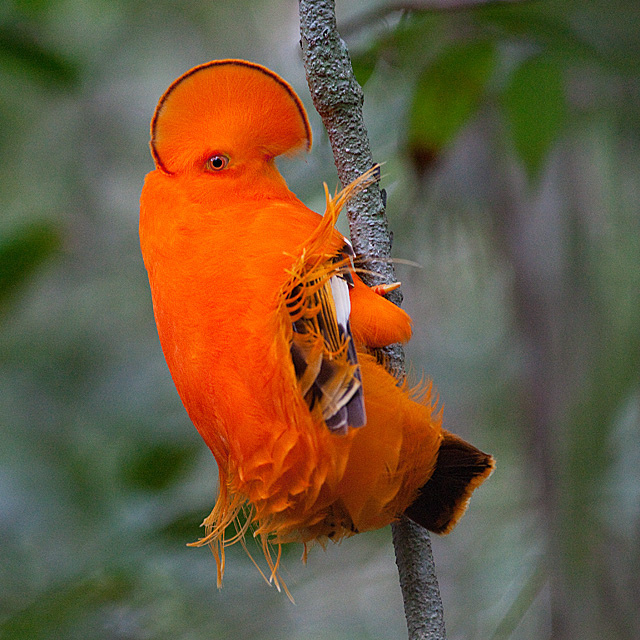 Guianan Cock-of-the-rockRupicola rupicola
-
 Screaming PihaLipaugus vociferans
-
 Bare-throated BellbirdProcnias nudicollis
-
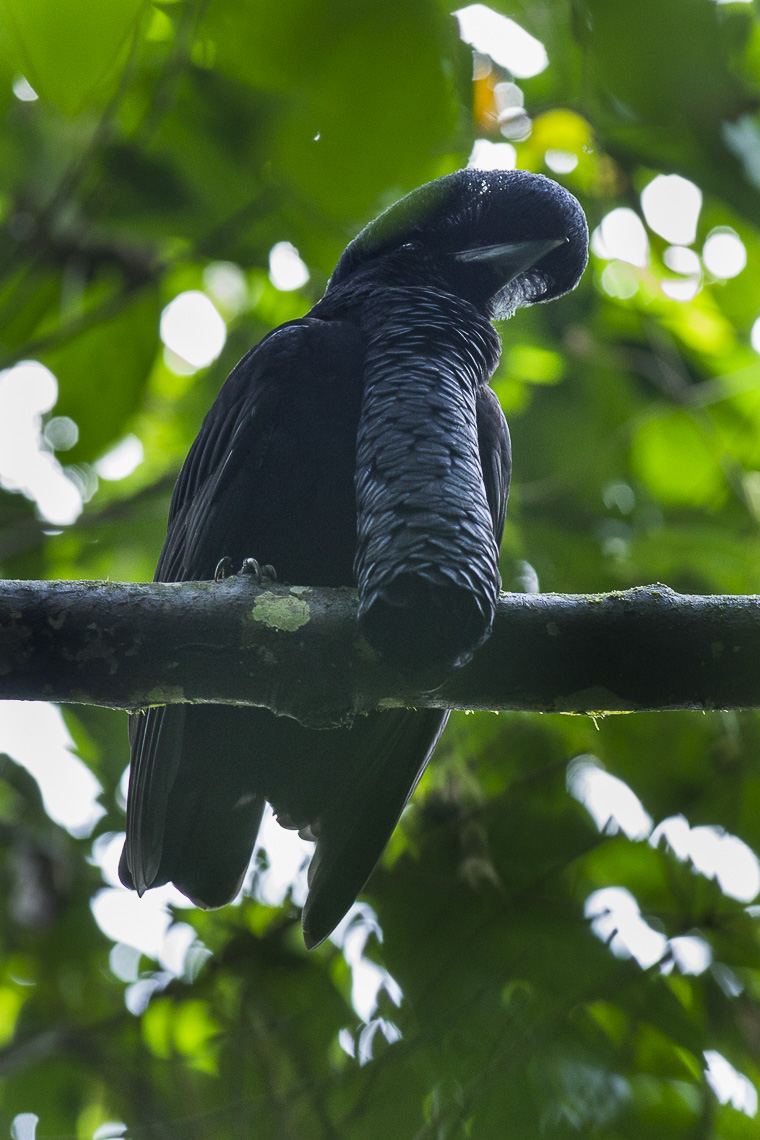 Long-wattled UmbrellabirdCephalopterus penduliger
Compare
Questions and answers
What is the scientific name of the Olivaceous Piha?
The scientific name of the Olivaceous Piha is Snowornis cryptolophus. Written with its author, the full name is Snowornis cryptolophus (P. L. Sclater & Salvin, 1877).
Which family does the Olivaceous Piha belong to?
Snowornis cryptolophus belongs to the family Cotingidae, in the order Passeriformes and the class Aves.
Where is the Olivaceous Piha found?
Checklists and occurrence records place Snowornis cryptolophus in 3 countries: Colombia, Ecuador and Peru.
What is the conservation status of the Olivaceous Piha?
The IUCN Red List category recorded for Snowornis cryptolophus is Least Concern (LC).
What was the original scientific name of the Olivaceous Piha?
The species was originally described under the scientific name Lathria cryptolophia.[40]
When was the genus Snowornis established?
The genus Snowornis was established in 2001 for the Olivaceous Piha and the Grey-tailed Piha.[41]
What does the genus name Snowornis honor?
The genus name honors Dr. David W. Snow for his contributions to knowledge of cotingas.[42]
Where do the two subspecies occur?
The S. c. mindoensis subspecies occupies the more northerly and smaller geographic range, occurring on the western slope of Colombia's Western Andes from Antioquia Department south into Pichincha Province in northwestern Ecuador. The nominate subspecies occurs from the upper Magdalena River valley in far southern Colombia south along the eastern Andean slope through Ecuador and slightly into Peru. A separate Peruvian population extends from central Amazonas Department south to Huánuco Department.[43][44][45][46][47]
Sources
Passages the profile rests on
- The Olivaceous Piha measures 23–24 cm in length. Source passage: “The olivaceous piha is 23 to 24 cm (9.1 to 9.4 in) long;” — English Wikipedia
- Three male specimens weighed approximately 72–76 g. Source passage: “three males weighed about 72 to 76 g (2.5 to 2.7 oz).” — English Wikipedia
- Male and female Olivaceous Pihas have similar plumage patterns. Source passage: “The sexes have similar plumage.” — English Wikipedia
- Adult males of the nominate subspecies have predominantly olive heads, brighter olive ear coverts, and a partially concealed black crown crest. Source passage: “Adult males of the nominate subspecies have a mostly olive head with brighter olive ear coverts and a partially hidden black crest in the middle of the crown.” — English Wikipedia
- The upperparts of adult males are olive green, with the brightest coloration on the rump. Source passage: “Their upperparts are olive green that is brightest on the rump.” — English Wikipedia
- The tail is browner to grayer olive than the upperparts and has thin olive feather edges. Source passage: “Their tail is a browner to grayer olive than their upperparts with thin olive edges on the feathers.” — English Wikipedia
- The wings are predominantly brown with narrow olive edges on the flight feathers. Source passage: “Their wings are mostly brown with thin olive edges on the flight feathers.” — English Wikipedia
- The underparts are mostly olive, with thin white streaks extending from the lower throat to the belly and some lemon-yellow undertail coverts. Source passage: “Their underparts are mostly olive with thin white streaks from the lower throat to the belly and some lemon yellow undertail coverts.” — English Wikipedia
- Adult females are browner than males and have a reduced or absent crown crest. Source passage: “Adult females are much more brownish than males and have little or no crest on the crown.” — English Wikipedia
- The S. c. mindoensis subspecies is smaller than the nominate subspecies and has concealed creamy-white crest feather bases. Source passage: “Subspecies S. c. mindoensis is smaller than the nominate with hidden creamy white bases to the crest feathers.” — English Wikipedia
- Both sexes of both subspecies have dark brown irises. Source passage: “Both sexes of both subspecies have a dark brown iris,” — English Wikipedia
- Both sexes have dark horn-colored to black bills with paler mandible bases. Source passage: “a dark horn to black bill with a paler base to the mandible,” — English Wikipedia
- Both sexes have bluish-gray to gray legs and feet. Source passage: “and bluish gray to gray legs and feet.” — English Wikipedia
- The Olivaceous Piha is described as a rather dull, olive-colored bird with a yellow or whitish eye ring and faint underpart streaking. Source passage: “A rather dull, olive-colored bird of Andean cloud forest. It has a yellow or whitish eyering, faint streaking on the underparts,” — ebird.org
- The species may show yellow coloration on its underparts. Source passage: “and may show some yellow on ...” — ebird.org
- The Olivaceous Piha inhabits humid montane forests in the subtropical zone. Source passage: “It inhabits humid montane forest in the subtropical zone,” — English Wikipedia
- The species occurs mainly in the understory and mid-story of humid montane forests. Source passage: “where it mostly occurs from the forest's understory to its mid-story.” — English Wikipedia
- In Colombia, the species occurs at elevations of 1,000–2,300 m. Source passage: “In elevation it ranges between 1,000 and 2,300 m (3,300 and 7,500 ft) in Colombia,” — English Wikipedia
- In Ecuador, the species occurs at elevations of 1,000–1,800 m. Source passage: “between 1,000 and 1,800 m (3,300 and 5,900 ft) in Ecuador,” — English Wikipedia
- In Peru, the species occurs at elevations of 1,350–2,300 m. Source passage: “and between 1,350 and 2,300 m (4,400 and 7,500 ft) in Peru.” — English Wikipedia
- The Olivaceous Piha feeds on fruit and large arthropods. Source passage: “The olivaceous piha feeds on fruit and large arthropods but details are lacking.” — English Wikipedia
- The Olivaceous Piha is a year-round resident. Source passage: “The olivaceous piha is a year-round resident.” — English Wikipedia
- The species usually forages alone and occasionally joins mixed-species feeding flocks. Source passage: “It usually forages singly and occasionally joins mixed-species feeding flocks.” — English Wikipedia
- The Olivaceous Piha perches and moves quietly and inconspicuously while foraging. Source passage: “It perches and moves quietly and inconspicuously,” — English Wikipedia
- The species captures prey and plucks fruit while perched or briefly hovering after short flights. Source passage: “taking prey and plucking fruit while perched or while briefly hovering after a short flight.” — English Wikipedia
- The Olivaceous Piha also captures prey in mid-air. Source passage: “It also takes prey in mid-air.” — English Wikipedia
- A short rattle has been attributed to the Olivaceous Piha by some recordists. Source passage: “A "short rattle" has been attributed to the species by some recordists.” — English Wikipedia
- The overall breeding season of the Olivaceous Piha is unknown, but breeding in northwestern Ecuador occurs across at least September through November. Source passage: “The olivaceous piha's breeding season is not known but in northwestern Ecuador spans at least September to November.” — English Wikipedia
- The species builds a shallow cup-shaped nest from twigs and plant tendrils. Source passage: “Its nest is a shallow cup made from twigs and plant tendrils” — English Wikipedia
- The nest is placed in the fork of a tree branch. Source passage: “placed in the fork of a tree branch.” — English Wikipedia
- Two recorded nests were located 4.5 m and 9 m above the ground. Source passage: “Two were respectively 4.5 and 9 m (15 and 30 ft) above the ground.” — English Wikipedia
- The Olivaceous Piha is classified as Least Concern by the IUCN. Source passage: “The IUCN has assessed the olivaceous piha as being of Least Concern.” — English Wikipedia
- The Olivaceous Piha was most recently assessed for the IUCN Red List in 2024. Source passage: “Olivaceous Piha Snowornis cryptolophus has most recently been assessed for The IUCN Red List of Threatened Species in 2024.” — iucnredlist.org
- The species has a large geographic range, although its population size is unknown and believed to be decreasing. Source passage: “It has a large range; its population size is not known and is believed to be decreasing.” — English Wikipedia
- No immediate threats to the Olivaceous Piha have been identified. Source passage: “No immediate threats have been identified.” — English Wikipedia
- The species is considered fairly common in Colombia. Source passage: “It is considered fairly common in Colombia,” — English Wikipedia
- The species is considered scarce and local in Ecuador. Source passage: “"scarce and local" in Ecuador,” — English Wikipedia
- The Olivaceous Piha is considered uncommon in Peru. Source passage: “and uncommon in Peru.” — English Wikipedia
- The species is vulnerable to habitat loss, degradation, and fragmentation. Source passage: “Olivaceous Piha is vulnerable to habitat loss, degradation, and fragmentation.” — English Wikipedia
- The species was originally described under the scientific name Lathria cryptolophia. Source passage: “The olivaceous piha was originally described as Lathria cryptolophia.” — English Wikipedia
- The genus Snowornis was established in 2001 for the Olivaceous Piha and the Grey-tailed Piha. Source passage: “its current genus Snowornis was erected in 2001 for it and the similar grey-tailed piha (S. subalaris).” — English Wikipedia
- The genus name Snowornis honors Dr. David W. Snow for his contributions to knowledge of cotingas. Source passage: “The genus honors Dr. David W. Snow for his many contributions to the knowledge of the cotingas.” — English Wikipedia
- The species has a geographically disjunct distribution. Source passage: “The olivaceous piha has a disjunct distribution.” — English Wikipedia
- The S. c. mindoensis subspecies occupies the more northerly and smaller geographic range. Source passage: “Subspecies S. c. mindoensis has the smaller and more northerly range of the two.” — English Wikipedia
- The S. c. mindoensis subspecies occurs on the western slope of Colombia's Western Andes from Antioquia Department south into Pichincha Province in northwestern Ecuador. Source passage: “It is found on the western slope of Colombia's Western Andes from Antioquia Department south into northwestern Ecuador's Pichincha Province.” — English Wikipedia
- The nominate subspecies occurs from the upper Magdalena River valley in far southern Colombia south along the eastern Andean slope through Ecuador and slightly into Peru. Source passage: “The nominate subspecies is found from the upper valley of the Magdalena River in far southern Colombia south on the eastern slope of the Andes through Ecuador slightly into Peru” — English Wikipedia
- A separate Peruvian population of the nominate subspecies extends from central Amazonas Department south to Huánuco Department. Source passage: “and separately in Peru from central Amazonas Department south to Huánuco Department.” — English Wikipedia
Data
- Catalogue of Life, 2026-10-16 XR cc by
- Global Biodiversity Information Facility CC BY 4.0
- Wikidata CC0
- GeoNames CC BY 4.0
- Wikimedia Commons per image; credit shown with each image
- Within the Catalogue of Life, this name comes from The Integrated Taxonomic Information System cc0
References
- Gill, Frank, & and Minturn Wright. (2006). Birds of the World: Recommended English Names.
This species in other databases
Page built on 28 November 2026. See how the catalog is made and all sources and licences.
Cite this page
ScientificNames.org. (2026). Snowornis cryptolophus (Olivaceous Piha). Retrieved November 28, 2026, from https://scientificnames.org/species/snowornis-cryptolophus
“Snowornis cryptolophus (Olivaceous Piha).” ScientificNames.org, 2026, scientificnames.org/species/snowornis-cryptolophus. Accessed 28 Nov. 2026.
ScientificNames.org. “Snowornis cryptolophus (Olivaceous Piha).” Accessed November 28, 2026. https://scientificnames.org/species/snowornis-cryptolophus.
@misc{scientificnames_snowornis_cryptolophus_olivaceous_piha,
  author = {{ScientificNames.org}},
  title = {Snowornis cryptolophus (Olivaceous Piha)},
  year = {2026},
  url = {https://scientificnames.org/species/snowornis-cryptolophus},
  note = {Accessed 2026-11-28}
}