Species · Mammals
Kalinga Shrew Mouse Soricomys kalinga
The scientific name of the Kalinga Shrew Mouse is Soricomys kalinga. It is a species of mammal in the family Muridae (mice), order Rodentia. The name dates from 2006.

Overview
The Kalinga Shrew Mouse is a species in the genus Soricomys. It occurs in the northern Philippine province of Kalinga on the island of Luzon. It is a small, ground-dwelling shrew rat with a pointed snout.
Written 27 November 2026 from the sources listed below. Each statement was checked against the passage it cites; statements that could not be supported were removed.
Appearance
The Kalinga Shrew Mouse has small ears, slender feet, and thick but relatively short fur. Its tail is relatively long, entirely black, and slightly shorter than the head-body length.[1][2][3][4]
The upper body is orange-brown and gradually transitions into a lighter underside. Upper-body hairs have dark gray basal portions, black sections, and orange tips, while the underside has shorter and paler hairs.[5][6][7]
The ears are small, round, and black, and the exposed skin around the lips and nose is dark gray. The whiskers are short and light gray, and are longer than those of the other species mentioned.[8][9][10]
The upper and lower surfaces of the front feet are dark gray, black, and naked, with five cusps on the underside of each foot. The fingers are dark and have long, narrow claws and a short thumbnail, while the upper surfaces of the hind feet are brownish gray and covered with sparse, short hairs.[11][12][13][14]
Habitat
The Kalinga Shrew Mouse inhabits montane forests and mossy forests. It has been recorded in both primary forests and secondary forest growth.[15][16]
Diet
The Kalinga Shrew Mouse feeds primarily on invertebrate animals. Its food items include earthworms and insects.[17][18][19]
Behaviour
The Kalinga Shrew Mouse is active during daylight hours.[20]
Classification of the Kalinga Shrew Mouse
| Kingdom | Animalia |
|---|---|
| Phylum | Chordata |
| Subphylum | Vertebrata |
| Infraphylum | Gnathostomata |
| Parvphylum | Osteichthyes |
| Megaclass | Tetrapoda |
| Class | Mammalia (Mammal) |
| Subclass | Theria |
| Infraclass | Eutheria |
| Order | Rodentia (Rodent) |
| Suborder | Myomorpha (Mice) |
| Superfamily | Muroidea |
| Family | Muridae (Mice) |
| Subfamily | Murinae (Old World Mice) |
| Genus | Soricomys |
| Species | Soricomys kalinga (Balete, Rickart & Heaney, 2006) |
Where the Kalinga Shrew Mouse is found
Checklists and occurrence records place Soricomys kalinga in 1 country across Asia. GBIF holds 30 georeferenced records of it.
Countries
Range as the checklists state it
Southern Asia
A number beside a place is its count of GBIF occurrence records. A place without a number comes from a checklist alone. Records show where a species has been observed or collected, which can include escapes and vagrants.
Common names
English
- Kalinga Shrew Mouse
- Cordillera Shrew-mouse
Names in 1 other language
- Polish
- sorkomyszak stokowy
Synonyms
One other scientific name has been used for this species and is now treated as a synonym of Soricomys kalinga.
- Archboldomys kalinga Balete, Rickart & Heaney, 2006
Related species
- Co's Shrew MouseSoricomys leonardocoi
- Sierra Madre Shrew MouseSoricomys musseri
- Southern Cordillera Shrew MouseSoricomys montanus
-
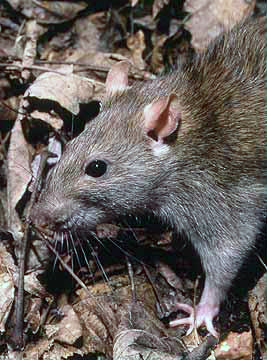 Brown RatRattus norvegicus
-
 Black RatRattus rattus
-
 Polynesian RatRattus exulans
-
 RakaliHydromys chrysogaster
-
 Wood MouseApodemus sylvaticus
Compare
Questions and answers
What is the scientific name of the Kalinga Shrew Mouse?
The scientific name of the Kalinga Shrew Mouse is Soricomys kalinga. Written with its author, the full name is Soricomys kalinga (Balete, Rickart & Heaney, 2006).
Which family does the Kalinga Shrew Mouse belong to?
Soricomys kalinga belongs to the family Muridae, in the order Rodentia and the class Mammalia.
Where is the Kalinga Shrew Mouse found?
Checklists and occurrence records place Soricomys kalinga in 1 country: Philippines.
What is the conservation status of the Kalinga Shrew Mouse?
The IUCN Red List category recorded for Soricomys kalinga is Least Concern (LC).
What other names does the Kalinga Shrew Mouse have?
Soricomys kalinga is also known in English as Cordillera Shrew-mouse.
What is the scientific name of a shrew?
The scientific name of the Kalinga Shrew Mouse is Soricomys kalinga.[21]
Sources
Passages the profile rests on
- The species has small ears and slender feet. Source passage: “with small ears and slender feet.” — English Wikipedia
- The tail is slightly shorter than the head-body length. Source passage: “The tail length is slightly smaller than the head-body length.” — English Wikipedia
- The species has thick but relatively short fur. Source passage: “The fur is as thick as the other two types, but shorter.” — English Wikipedia
- The species has a relatively long, entirely black tail. Source passage: “The relatively long tail is completely black.” — English Wikipedia
- The upper body is orange-brown and gradually transitions into a lighter underside. Source passage: “The top side of the body is orange-brown and continues gradually into the lighter underside.” — English Wikipedia
- The upper-body hairs have dark gray basal portions, black sections, and orange tips. Source passage: “The hairs on the top of the body are tricolor: three quarters are dark gray, then there comes a black piece, and the point is orange.” — English Wikipedia
- The underside has shorter and paler hairs than the upper body. Source passage: “On the underside of the body, the hair is shorter and all areas are paler.” — English Wikipedia
- The species has small, round, black ears. Source passage: “The small ears are round and black.” — English Wikipedia
- The exposed skin around the lips and nose is dark gray. Source passage: “The naked skin of the lips and the nose are dark gray.” — English Wikipedia
- The species has short, light-gray whiskers that are longer than those of the other species mentioned. Source passage: “The light gray whiskers are quite short, though they are longer than the other species.” — English Wikipedia
- The upper and lower surfaces of the front feet are dark gray, black, and naked. Source passage: “The front feet are dark gray and black and nude from the top and the lower side.” — English Wikipedia
- The underside of each front foot has five cusps. Source passage: “On the underside of the feet are five cusps.” — English Wikipedia
- The species has dark fingers with long, narrow claws and a short thumbnail. Source passage: “The dark fingers have long narrow claws following a short nail on the thumb.” — English Wikipedia
- The upper surfaces of the hind feet are brownish gray and covered with sparse, short hairs. Source passage: “The top of hind feet are brownish gray and covered with sparse short hairs” — English Wikipedia
- The species inhabits montane forests and mossy forests. Source passage: “Habitats where it was found include montane forest and mossy forest” — English Wikipedia
- The species has been recorded in both primary forests and secondary forest growth. Source passage: “both primary forests and secondary growth.” — English Wikipedia
- The species feeds primarily on invertebrate animals. Source passage: “Its diet consists primarily of invertebrate animals” — English Wikipedia
- Earthworms are included among the species' food items. Source passage: “including earthworms and insects.” — English Wikipedia
- Insects are included among the species' food items. Source passage: “including earthworms and insects.” — English Wikipedia
- The species is active during daylight hours. Source passage: “The species is active during daylight hours.” — English Wikipedia
- The species belongs to the genus Soricomys. Source passage: “The Kalinga shrew mouse (Soricomys kalinga) is a rodent of the genus Soricomys” — English Wikipedia
Data
- Catalogue of Life, 2026-10-16 XR cc by
- Global Biodiversity Information Facility CC BY 4.0
- Wikidata CC0
- GeoNames CC BY 4.0
- Wikimedia Commons per image; credit shown with each image
- Within the Catalogue of Life, this name comes from The Integrated Taxonomic Information System cc0
References
- Balete, Danilo S., Eric A. Rickart, Lawrence R. Heaney, Phillip A. Alviola, Melizar V. Duya, et al. (2012). Archboldomys (Muridae: Murinae) Reconsidered: A New Genus and Three New Species of Shrew Mice from Luzon Island, Philippines. American Museum Novitates, No. 3754. Link
This species in other databases
Page built on 28 November 2026. See how the catalog is made and all sources and licences.
Cite this page
ScientificNames.org. (2026). Soricomys kalinga (Kalinga Shrew Mouse). Retrieved November 28, 2026, from https://scientificnames.org/species/soricomys-kalinga
“Soricomys kalinga (Kalinga Shrew Mouse).” ScientificNames.org, 2026, scientificnames.org/species/soricomys-kalinga. Accessed 28 Nov. 2026.
ScientificNames.org. “Soricomys kalinga (Kalinga Shrew Mouse).” Accessed November 28, 2026. https://scientificnames.org/species/soricomys-kalinga.
@misc{scientificnames_soricomys_kalinga_kalinga_shrew_mouse,
  author = {{ScientificNames.org}},
  title = {Soricomys kalinga (Kalinga Shrew Mouse)},
  year = {2026},
  url = {https://scientificnames.org/species/soricomys-kalinga},
  note = {Accessed 2026-11-28}
}