Species · Mammals
Indo-Pacific Humpback Dolphin Sousa chinensis
The scientific name of the Indo-Pacific Humpback Dolphin is Sousa chinensis. It is a species of mammal in the family Delphinidae (oceanic dolphin), order Cetacea. The name dates from 1765.
- Scientific name
- Sousa chinensis (Osbeck, 1765)
- Common name
- Indo-Pacific Humpback Dolphin
- Genus
- Sousa
- Family
- Delphinidae (Oceanic Dolphin)
- Order
- Cetacea
- Class
- Mammalia
- Red List category
- VU Vulnerable
- Environment
- marine
- Recorded in
- 13 countries
- Name status
- accepted in the Catalogue of Life

Overview
Sousa chinensis inhabits coastal waters of the eastern Indian Ocean and western Pacific Ocean. Adult individuals can have grey, white, or pink coloration, with pink coloration resulting from overdeveloped blood vessels rather than pigmentation.
Written 26 November 2026 from the sources listed below. Each statement was checked against the passage it cites; statements that could not be supported were removed.
Appearance
Adult Indo-Pacific Humpback Dolphins can have grey, white, or pink coloration. Pink coloration results from overdeveloped blood vessels rather than pigmentation.[1][2]
Individuals in southern African waters are typically dark grey with a lighter underside. Individuals in Chinese and other Southeast Asian waters are often white with a pinkish tint and dark flecks.[3][4]
Adult individuals measure between 2 and 3.5 metres in body length and weigh between 150 and 230 kilograms. Newborn calves measure approximately one metre in length.[5][6][7]
Habitat
The species commonly inhabits bays, estuaries, mangrove forests, sandbanks, rocky reefs, coral reefs, and large river mouths. Individuals generally remain close to shore but sometimes enter farther offshore waters where depths remain shallow.[8][9]
Diet
Indo-Pacific Humpback Dolphins primarily consume abundant estuarine fish and fish associated with reef environments. They generally feed close to the ocean floor.[10][11]
Some groups feed with the rising tide. The species sometimes follows fishing trawlers and consumes discarded organisms.[12][13]
Behaviour
Indo-Pacific Humpback Dolphins generally live in groups containing fewer than ten individuals, although groups can contain as many as 25 individuals. They hunt cooperatively using echolocation.[14][15][16]
The species communicates through clicks, whistles, and screams. It typically avoids boats and does not ride their bow waves.[17][18]
Individuals sometimes breach the water surface and lift their heads above the water. Adults typically surface to breathe for 20 to 30 seconds before diving again.[19][20]
The Xiamen Bay population consists of two geographically separated but socially associated communities in western and eastern subregions. Clicks produced by dolphins in the western community had higher mean peak frequencies, broader bandwidths, and shorter durations than those produced in the eastern community.[21][22]
Reproduction and life cycle
Females generally reach sexual maturity at approximately ten years of age, while males generally reach sexual maturity at approximately 13 years of age. The gestation period lasts approximately eleven months.[23][24][25]
Females generally give birth to one offspring per pregnancy and breed once per year, with births typically occurring during spring and summer. Newborn offspring measure approximately 100 centimetres in length.[26][27][28]
Calves can consume solid food from approximately six months of age and are generally weaned at approximately two years of age. They remain associated with their mothers for approximately three to four years.[29][30][31]
Non-maternal infant care has been observed in populations off South Africa and Hong Kong.[32]
Conservation
The Indo-Pacific Humpback Dolphin was classified as Vulnerable on the IUCN Red List in 2015. It is listed in Appendix II of the Convention on the Conservation of Migratory Species of Wild Animals.[33][34]
Habitat loss, water pollution, coastal development, overfishing, and increasing marine traffic threaten the species. It is particularly vulnerable to organic pollutants because it inhabits shallow coastal waters affected by human activities.[35][36]
The Xiamen Bay population experienced marked declines over the two decades preceding the study. Coastal development and severe pollution have contributed to habitat degradation affecting this population.[37][38]
The Xiamen Bay population faces a potential risk of subdivision into separate populations.[39]
Classification of the Indo-Pacific Humpback Dolphin
| Kingdom | Animalia |
|---|---|
| Phylum | Chordata |
| Subphylum | Vertebrata |
| Infraphylum | Gnathostomata |
| Parvphylum | Osteichthyes |
| Megaclass | Tetrapoda |
| Class | Mammalia (Mammal) |
| Subclass | Theria |
| Infraclass | Eutheria |
| Order | Cetacea (Cetacean) |
| Suborder | Odontoceti (Toothed Whales) |
| Family | Delphinidae (Oceanic Dolphin) |
| Genus | Sousa (Humpbacked Dolphins) |
| Species | Sousa chinensis (Osbeck, 1765) |
Where the Indo-Pacific Humpback Dolphin is found
Checklists and occurrence records place Sousa chinensis in 13 countries across Asia. GBIF holds 508 georeferenced records of it.
Countries
- China 203
- Hong Kong 116
- India 24
- Israel 4
- Macao 8
- Malaysia 18
- Oman 14
- Saudi Arabia 4
- Singapore 3
- Sri Lanka 3
- Taiwan 11
- Thailand 37
- Vietnam 63
Regions and cities with the most records
- San Tung Chung Hang, Hong Kong 91
- Tung Chung, Hong Kong 90
- Butterfly, Hong Kong 81
- Discovery Bay, Hong Kong 78
- Sam Shing, Hong Kong 75
- Tuen Mun, Hong Kong 71
- Tuen Mun San Hui, Hong Kong 70
- Cheung Chau, Hong Kong 58
- Sham Tseng, Hong Kong 52
- Guangxi, China 48
- Ha Tsuen, Hong Kong 44
- Ping Shan, Hong Kong 44
- Shap Pat Heung, Hong Kong 43
- Ting Kau, Hong Kong 39
- Yuen Long San Hui, Hong Kong 39
- Tin Shui Wai, Hong Kong 38
- Shenzhenwan, China 37
- Yeung Uk Tsuen, Hong Kong 37
- Shekou, China 36
- Yuen Long, Hong Kong 36
- Yuen Long Kau Hui, Hong Kong 34
- Mount Davis, Hong Kong 30
- Tsing Yi Town, Hong Kong 30
- Xichang, China 30
- Kam Tin, Hong Kong 28
- Houhai, China 27
- Wushipai, China 26
- Discovery Park, Hong Kong 25
- Kennedy Town, Hong Kong 25
- Pok Fu Lam, Hong Kong 25
- Tsuen Wan, Hong Kong 25
- Fairview Park, Hong Kong 22
- Tai Wo Hau, Hong Kong 22
- Mid Levels, Hong Kong 21
- Victoria, Hong Kong 21
- Mei Foo, Hong Kong 20
5 more countries have a few records outside this range
These countries hold a few records of Sousa chinensis but lie outside the range the checklists give for it. Such records are often zoo or garden specimens, museum material or vagrants, so the species is not counted as occurring there.
Range as the checklists state it
Indo-West Pacific
Southern Asia
A number beside a place is its count of GBIF occurrence records. A place without a number comes from a checklist alone. Records show where a species has been observed or collected, which can include escapes and vagrants.
Common names
English
- Indo-Pacific Humpback Dolphin
- Bornean Dolphin
- Borneo White Dolphin
- Chinese White Dolphin
- Indo-Pacific Humpbacked Dolphin
- Indo-Pacific Hump-backed Dolphin
- Pacific Humpback Dolphin
- Zhonghua White Dolphin
- Lead-colored Dolphin
- Plumbeous Dolphin
- Ridge-backed Dolphin
- Speckled Dolphin
- White Dolphin
Names in 33 other languages
- Afrikaans
- boggelrugdolfyn
- Arabic
- darfeel, دلفين أبيض صيني, دلفين الهندو باسيفيكي الأحدب
- Burmese
- la-maing
- Chinese
- Jung wat bat hoi tun, Zhonghua bai haitun, 中华白海豚, 中華白海豚, 印度太平洋駝背豚
- Czech
- delfín indočínský
- Danish
- Indopacifisk pukkeldelfin
- Dutch
- Chinese Witte Dolfijn
- Finnish
- Intiankyttyrädelfiini, kyttyrädelfiini
- French
- Dauphin à bosse, Dauphin à bosse de I'Indo-Pacifique, Dauphin à bosse de Indo-Pacifique, Dauphin à bosse du Pacifique, dauphin à bosse de l'Indo-Pacifique
- Galician
- golfiño xiboso do Indo-Pacífico
- German
- Chinesischer Weißer Delfin, Chinesischer Weißer Delphin
- Hungarian
- keleti delfin
- Icelandic
- Kryppuhöfrungur
- Indonesian
- Lumba lumba putih Cina, lumba-lumba putih, lumba-lumba timah, lumba-lumba totol
- Italian
- Susa indopacifica
- Japanese
- usuiro-iruka, シナウスイロイルカ
- Korean
- 인도태평양혹등돌고래
- Malagasy
- lambondriaka aman-trafo
- Malay
- Lumba balaq, Parampaun laut
- Malayalam
- poonan aedi
- Norwegian Bokmål
- Kinahvitdelfin, Kinapukkeldelfin
- Polish
- garbogrzbiet chiński
- Portuguese
- Golfinho-corcunda-indopacífico, golfinho-corcunda-do--Indo-pacifico
- Russian
- Китайский дельфин
- Sinhala
- kabara mulla
- Spanish
- Bufeo Asi, Delfin jorobado del Indo-Pacifico, Delfín jorobado del del Pacífico, delfín jorobado del Pacífico, delfín rosado de Hong Kong
- Swedish
- Puckeldelfin
- Tamil
- ongil (dolphin in general)
- Telugu
- bolla gadimi
- Thai
- plaloma khaothalenoea, plaloma khaothaletoi, plaloma khaothao, plaloma langnok, plaloma phuak, โลมาหลังโหนก
- Turkish
- Pasifik kambur yunusu
- bcc
- goco
- snd
- malhar
Synonyms
16 other scientific names have been used for this species and are now treated as synonyms of Sousa chinensis.
- Delphinis chinensis Osbeck, 1765
- Delphinus chinensis Osbeck, 1765
- Delphinus sinensis Desmarest, 1822
- Sotalia borneensis Lydekker, 1901
- Sotalia chinensis True, 1889
- Sotalia plumbeus Flower, 1883
- Sotalia sinensis Flower, 1883
- Sousa borneensis (Lydekker, 1901)
- Sousa borneensis Fraser & Purves, 1960
- Sousa huangi Wang Peilie, 1999
- Sousa huangi Wang, 1999
- Sousa lentiginosa Iredale & Troughton, 1934
- Sousa queenslandensis Gaskin, 1972
- Steno chinensis (Osbeck, 1765)
- Steno chinensis Gray, 1871
- Steno lentiginosus Blanford, 1891
Subspecies and varieties
- Sousa chinensis chinensis (Chinese Humpback Dolphin) subspecies
- Sousa chinensis taiwanensis (Taiwanese Humpback Dolphin) subspecies
Related species
-
 Indian Ocean Humpback DolphinSousa plumbea
-
 Atlantic Humpback DolphinSousa teuszii
-
 Australian Humpback DolphinSousa sahulensis
-
 Killer WhaleOrcinus orca
-
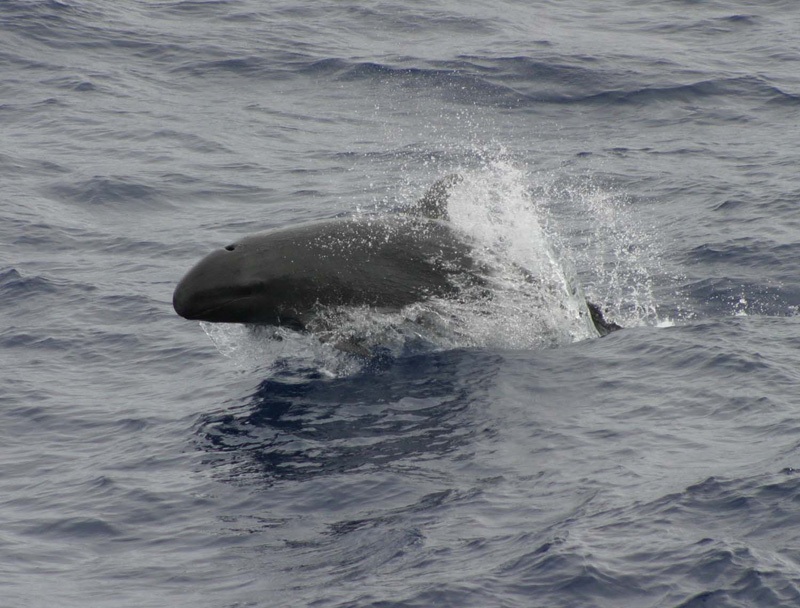 False Killer WhalePseudorca crassidens
-
 Common Bottlenose DolphinTursiops truncatus
-
 Irrawaddy DolphinOrcaella brevirostris
-
 Risso's DolphinGrampus griseus
Compare
Questions and answers
What is the scientific name of the Indo-Pacific Humpback Dolphin?
The scientific name of the Indo-Pacific Humpback Dolphin is Sousa chinensis. Written with its author, the full name is Sousa chinensis (Osbeck, 1765).
Which family does the Indo-Pacific Humpback Dolphin belong to?
Sousa chinensis belongs to the family Delphinidae, in the order Cetacea and the class Mammalia.
Where is the Indo-Pacific Humpback Dolphin found?
Checklists and occurrence records place Sousa chinensis in 13 countries, including China, Hong Kong, Vietnam, Thailand, India and Malaysia.
What is the conservation status of the Indo-Pacific Humpback Dolphin?
The IUCN Red List category recorded for Sousa chinensis is Vulnerable (VU).
What other names does the Indo-Pacific Humpback Dolphin have?
Sousa chinensis is also known in English as Bornean Dolphin, Borneo White Dolphin, Chinese White Dolphin, Indo-Pacific Humpbacked Dolphin, Indo-Pacific Hump-backed Dolphin and Pacific Humpback Dolphin.
Do humpback dolphins exist?
Yes. The Indo-Pacific Humpback Dolphin is a species of dolphin.[40]
What is a dolphin's main diet?
Indo-Pacific Humpback Dolphins primarily consume abundant estuarine fish and fish associated with reef environments.[10]
Sources
Passages the profile rests on
- Adult Indo-Pacific humpback dolphins can have grey, white, or pink coloration. Source passage: “An adult Indo-Pacific humpback dolphin is grey, white or pink and may appear as an albino dolphin to some.” — English Wikipedia
- Pink coloration in this species results from overdeveloped blood vessels rather than pigmentation. Source passage: “The pink colour originates not from a pigment, but from blood vessels which were overdeveloped for thermoregulation.” — English Wikipedia
- Individuals in southern African waters are typically dark grey with a lighter underside. Source passage: “Individuals found in southern African waters are typically dark gray with a lighter ventral surface.” — animaldiversity.org
- Individuals in Chinese and other Southeast Asian waters are often white with a pinkish tint and dark flecks. Source passage: “In waters around China and other areas of southeast Asia, individuals are pure white, often with a pinkish tint.” — animaldiversity.org
- Adult individuals measure between 2 and 3.5 metres in body length. Source passage: “The body length is 2 to 3.5 m (6 ft 7 in to 11 ft 6 in) for adults, 1 m (3 ft 3 in) for infants.” — English Wikipedia
- Adult individuals weigh between 150 and 230 kilograms. Source passage: “An adult weighs 150 to 230 kg (330 to 510 lb).” — English Wikipedia
- Newborn calves measure approximately one metre in length. Source passage: “Calves are dark grey or black at birth and measure around 1 m (3.3 ft) in length.” — English Wikipedia
- The species commonly inhabits bays, estuaries, mangrove forests, sandbanks, rocky reefs, coral reefs, and large river mouths. Source passage: “They are often found in or near bays, estuaries, mangrove forests, sandbanks, rocky and coral reefs and large river mouths.” — animaldiversity.org
- Indo-Pacific humpback dolphins generally remain close to shore but sometimes enter farther offshore waters where depths remain shallow. Source passage: “They generally remain close to the shore, but occasionally venture further if water depth remains shallow.” — animaldiversity.org
- Indo-Pacific humpback dolphins primarily consume abundant estuarine fish and fish associated with reef environments. Source passage: “Indo-Pacific humpback dolphins primarily feed on abundant estuarine fish and fish associated with reef environments.” — animaldiversity.org
- The species generally feeds close to the ocean floor. Source passage: “They generally feed close to the ocean floor.” — animaldiversity.org
- Some groups feed with the rising tide. Source passage: “Some groups feed with the rising tide.” — animaldiversity.org
- Indo-Pacific humpback dolphins sometimes follow fishing trawlers and consume discarded organisms. Source passage: “Indo-Pacific humpback dolphins are also known to follow trawlers, feeding on discarded organisms.” — animaldiversity.org
- Indo-Pacific humpback dolphins generally live in groups containing fewer than ten individuals. Source passage: “Indo-Pacific humpback dolphins live in small groups, generally with fewer than ten individuals.” — English Wikipedia
- Groups of this species can contain as many as 25 individuals. Source passage: “Groups tend to be small, consisting of less than 10 individuals but can consist of up to 25 individuals.” — animaldiversity.org
- The species hunts cooperatively using echolocation. Source passage: “They hunt as a group using echolocation.” — English Wikipedia
- Indo-Pacific humpback dolphins communicate through clicks, whistles, and screams. Source passage: “Indo-Pacific humpback dolphins communicate with each other through clicks, whistles, and screams.” — animaldiversity.org
- The species typically avoids boats and does not ride their bow waves. Source passage: “They typically avoid boats and do not bow ride.” — animaldiversity.org
- Indo-Pacific humpback dolphins sometimes breach the water surface and lift their heads above the water. Source passage: “Indo-Pacific humpback dolphins, however, can lift their head above the water's surface and have been observed flapping the water with their flippers and breaching the surface.” — animaldiversity.org
- Adult dolphins typically surface to breathe for 20 to 30 seconds before diving again. Source passage: “Adult dolphins come to the water surface to breathe for 20 to 30 seconds before diving deep again” — English Wikipedia
- The Xiamen Bay population consists of two geographically separated but socially associated communities in western and eastern subregions. Source passage: “The Indo‐Pacific humpback dolphin population in Xiamen Bay was divided into two geographically separated but socially associated communities inhabiting the West and East sub‐regions.” — pmc.ncbi.nlm.nih.gov
- Clicks produced by dolphins in the western Xiamen Bay community had higher mean peak frequencies, broader bandwidths, and shorter durations than those produced in the eastern community. Source passage: “Statistically, clicks from dolphins in the West sub‐region had a higher mean peak frequency, broader −3 dB bandwidth, and shorter duration than those from the East sub‐region” — pmc.ncbi.nlm.nih.gov
- Females generally reach sexual maturity at approximately ten years of age. Source passage: “Female dolphins reach sexual maturity at around ten years old” — English Wikipedia
- Males generally reach sexual maturity at approximately 13 years of age. Source passage: “while males mature at around 13 years old.” — English Wikipedia
- The gestation period lasts approximately eleven months. Source passage: “calves are born after a gestation period of eleven months.” — English Wikipedia
- Females generally give birth to one offspring per pregnancy. Source passage: “females usually give birth to 1 offspring” — animaldiversity.org
- Newborn offspring measure approximately 100 centimetres in length. Source passage: “that measures approximately 100 cm in length.” — animaldiversity.org
- Females generally breed once per year, with births typically occurring during spring and summer. Source passage: “Indo-Pacific humpback dolphins breed once yearly, though births typically occur in the spring and summer.” — animaldiversity.org
- Calves are generally weaned at approximately two years of age. Source passage: “Young are weaned around 2 years of age” — animaldiversity.org
- Calves remain associated with their mothers for approximately three to four years. Source passage: “Calves are weaned around 2 years of age and remain in association with their mother for 3 to 4 years.” — animaldiversity.org
- Calves can consume solid food from approximately six months of age. Source passage: “although they are capable of eating solid foods after 6 months.” — animaldiversity.org
- Non-maternal infant care has been observed in populations off South Africa and Hong Kong. Source passage: “Allomothering, or non-maternal infant care, has been observed off the coasts of South Africa and Hong Kong.” — animaldiversity.org
- The Indo-Pacific humpback dolphin was classified as Vulnerable on the IUCN Red List in 2015. Source passage: “In 2015, the Indo-Pacific humpback dolphin was classed as "vulnerable" on the IUCN Red List of Threatened Species.” — English Wikipedia
- The species is listed in Appendix II of the Convention on the Conservation of Migratory Species of Wild Animals. Source passage: “The Indo-Pacific humpback dolphin is listed on Appendix II of the convention on the Conservation of Migratory Species of Wild Animals (CMS).” — English Wikipedia
- Habitat loss, water pollution, coastal development, overfishing, and increasing marine traffic threaten the species. Source passage: “The Indo-Pacific humpback dolphin is threatened by habitat loss, water pollution, coastal development, overfishing and an increase in marine traffic within its range.” — English Wikipedia
- The species is particularly vulnerable to organic pollutants because it inhabits shallow coastal waters affected by human activities. Source passage: “Indo-Pacific humpback dolphins are at particular risk of exposure to organic pollutants because they inhabit shallow coastal waters, which are often impacted by human activities.” — English Wikipedia
- The Xiamen Bay population experienced marked declines over the two decades preceding the study. Source passage: “the Xiamen Bay population is of particular concern, as it has experienced marked declines over the past two decades due to intense anthropogenic pressures” — pmc.ncbi.nlm.nih.gov
- Coastal development and severe pollution have contributed to habitat degradation affecting the Xiamen Bay population. Source passage: “Habitat degradation caused by coastal development and severe pollution has left this population critically endangered” — pmc.ncbi.nlm.nih.gov
- The Xiamen Bay population faces a potential risk of subdivision into separate populations. Source passage: “These findings indicated a potential risk of population subdivision for the Xiamen Bay population” — pmc.ncbi.nlm.nih.gov
- The Indo-Pacific humpback dolphin inhabits coastal waters of the eastern Indian Ocean and western Pacific Ocean. Source passage: “The Indo-Pacific humpback dolphin (Sousa chinensis) is a species of humpback dolphin inhabiting coastal waters of the eastern Indian and western Pacific Oceans.” — English Wikipedia
- Indo-Pacific humpback dolphins occur along the coasts of Africa, China, and Australia. Source passage: “Indo-Pacific humpbacked dolphins, Sousa chinensis , are found the Indian and Pacific Ocean, from the coast of Africa to the coast of China and Australia.” — animaldiversity.org
Data
- Catalogue of Life, 2026-10-16 XR cc by
- Global Biodiversity Information Facility CC BY 4.0
- Wikidata CC0
- GeoNames CC BY 4.0
- Wikimedia Commons per image; credit shown with each image
- Within the Catalogue of Life, this name comes from The Integrated Taxonomic Information System cc0
References
- Reise nach Ostind. China Rostock vol.1 p.7 where the name was published
- Wilson, Don E., and DeeAnn M. Reeder, eds. (1993). Mammal Species of the World: A Taxonomic and Geographic Reference, 2nd Ed., 3rd Printing.
- Rice, Dale W. (1998). Marine Mammals of the World: Systematics and Distribution. Special Publications of the Society for Marine Mammals, No. 4.
- Wilson, Don E., and F. Russell Cole. (2000). Common Names of Mammals of the World.
- Jefferson, Thomas A., and Leszek Karczmarski. (2001). Sousa chinensis. Mammalian Species, No. 655.
- Mead, James G., and Robert L. Brownell, Jr. / Wilson, Don E., and DeeAnn M. Reeder, eds. (2005). Order Cetacea. Mammal Species of the World: A Taxonomic and Geographic Reference, 3rd Ed., Vol. 1.
- Frère, Céline H., Peter T. Hale, Lindsay Porter, Victor C. Cockcroft, and Merel L. Dalebout. (2008). Phylogenetic analysis of mtDNA sequences suggests revision of humpback dolphin (Sousa spp.) taxonomy is needed. Marine & Freshwater Research, Vol. 59, No. 3.
- Wang, John Y., Shih Chu Yang, and Samuel K. Hung. (2015). Diagnosability and description of a new subspecies of Indo-Pacific humpback dolphin, Sousa chinensis (Osbeck, 1765), from the Taiwan Strait. Zoological Studies, Vol. 54. Link
- Würsig, Bernd, J. G. M. Thewissen, and Kit M. Kovacs, eds. (2018). Encyclopedia of Marine Mammals, 3rd Edition.
This species in other databases
- Catalogue of Life 4YDGF
- Wikidata Q713853
- iNaturalist 41488
- WoRMS urn:lsid:marinespecies.org:taxname:220226
Page built on 27 November 2026. See how the catalog is made and all sources and licences.
Cite this page
ScientificNames.org. (2026). Sousa chinensis (Indo-Pacific Humpback Dolphin). Retrieved November 27, 2026, from https://scientificnames.org/species/sousa-chinensis
“Sousa chinensis (Indo-Pacific Humpback Dolphin).” ScientificNames.org, 2026, scientificnames.org/species/sousa-chinensis. Accessed 27 Nov. 2026.
ScientificNames.org. “Sousa chinensis (Indo-Pacific Humpback Dolphin).” Accessed November 27, 2026. https://scientificnames.org/species/sousa-chinensis.
@misc{scientificnames_sousa_chinensis_indo_pacific_humpback_dolphin,
  author = {{ScientificNames.org}},
  title = {Sousa chinensis (Indo-Pacific Humpback Dolphin)},
  year = {2026},
  url = {https://scientificnames.org/species/sousa-chinensis},
  note = {Accessed 2026-11-27}
}