Species · Mammals
Australian Humpback Dolphin Sousa sahulensis
The scientific name of the Australian Humpback Dolphin is Sousa sahulensis. It is a species of mammal in the family Delphinidae (oceanic dolphin), order Cetacea. The name dates from 2014.
- Scientific name
- Sousa sahulensis Jefferson & Rosenbaum, 2014
- Common name
- Australian Humpback Dolphin
- Genus
- Sousa
- Family
- Delphinidae (Oceanic Dolphin)
- Order
- Cetacea
- Class
- Mammalia
- Red List category
- VU Vulnerable
- Environment
- marine
- Recorded in
- 1 country
- Name status
- accepted in the Catalogue of Life

Overview
Sousa sahulensis is one of four humpback dolphin species in the genus Sousa. The Australian Humpback Dolphin occurs around the Sahul Shelf between northern Australia and southern New Guinea. It has a distinctive dark cape-like dorsal marking and a short, triangular dorsal fin that lacks the characteristic hump found in Atlantic and Indian Ocean humpback dolphins.
Written 26 November 2026 from the sources listed below. Each statement was checked against the passage it cites; statements that could not be supported were removed.
Appearance
The Australian Humpback Dolphin has a dark gray body with flanks that gradually become light gray. A diagonal cape marking extends from above the eye and neck to the urogenital area, separating the dark back from the lighter belly.[1][2][3]
Its dorsal fin is short and triangular, without the characteristic hump found in Atlantic and Indian Ocean humpback dolphins. The fin is lower and broader at the base than those of Atlantic and Indian Ocean humpback dolphins.[4][5]
Adult individuals commonly have white scarring and dark flecking on the head, back, dorsal fin and tail stock. Recorded body lengths range from approximately 1 to 2.7 metres.[6][7]
Newborn individuals weigh approximately 40–50 kilograms, while adults weigh approximately 230–250 kilograms.[8][9]
Diet
The Australian Humpback Dolphin is an opportunistic generalist feeder. It feeds on a wide variety of coastal-estuarine and inshore reef fish.[10][11]
Behaviour
Individuals sometimes chase fish into shallow water and beach themselves to capture prey. The species has also been observed feeding by stranding itself on shore.[12][13]
Australian Humpback Dolphins are generally shy and elusive and tend to avoid boats. The species has been observed displaying mating courtship with Australian snubfin dolphins.[14][15]
Reproduction and life cycle
Mating and calving occur throughout the year. The gestation period lasts approximately 10–12 months.[16][17]
Lactation may continue for more than two years. The likely interval between successive calvings is approximately three years.[18][19]
Individuals may live for at least 30 years.[20]
Conservation
The species was classified as vulnerable. Its estimated population in 2015 was fewer than 10,000 mature individuals, and reported subpopulation estimates are in the low hundreds.[21][22][23]
The population was declining because of habitat destruction. Habitat loss and degradation, pollution and climate change are identified threats.[24][25][26]
The species faces incidental capture in gill nets and shark nets used for bather protection.[27]
Classification of the Australian Humpback Dolphin
| Kingdom | Animalia |
|---|---|
| Phylum | Chordata |
| Subphylum | Vertebrata |
| Infraphylum | Gnathostomata |
| Parvphylum | Osteichthyes |
| Megaclass | Tetrapoda |
| Class | Mammalia (Mammal) |
| Subclass | Theria |
| Infraclass | Eutheria |
| Order | Cetacea (Cetacean) |
| Suborder | Odontoceti (Toothed Whales) |
| Family | Delphinidae (Oceanic Dolphin) |
| Genus | Sousa (Humpbacked Dolphins) |
| Species | Sousa sahulensis Jefferson & Rosenbaum, 2014 |
Where the Australian Humpback Dolphin is found
Checklists and occurrence records place Sousa sahulensis in 1 country across Oceania. GBIF holds 7,288 georeferenced records of it.
Countries
Regions and cities with the most records
- Palmerston, Australia 1,850
- Darwin, Australia 1,636
- Northern Territory, Australia 476
- Queensland, Australia 155
- Capalaba, Australia 43
- Townsville, Australia 40
- Gladstone, Australia 24
- Western Australia, Australia 23
- Hervey Bay, Australia 19
- Brisbane, Australia 16
- Karratha, Australia 16
- Narangba, Australia 13
- Gold Coast, Australia 10
- Caloundra, Australia 9
- Cairns, Australia 7
- Bundaberg, Australia 5
- New South Wales, Australia 5
- Mackay, Australia 4
- Port Macquarie, Australia 3
1 more country has a few records outside this range
These countries hold a few records of Sousa sahulensis but lie outside the range the checklists give for it. Such records are often zoo or garden specimens, museum material or vagrants, so the species is not counted as occurring there.
Range as the checklists state it
Indo-West Pacific
Australia
A number beside a place is its count of GBIF occurrence records. A place without a number comes from a checklist alone. Records show where a species has been observed or collected, which can include escapes and vagrants.
Common names
English
- Australian Humpback Dolphin
- Sahul Dolphin
Names in 10 other languages
- Arabic
- دلفين سنامي أسترالي
- Dutch
- Australische Bultrugdolfijn
- French
- Dauphin à bosse de Sahul, Dauphin à bosse de l'Australie
- German
- Australischer Buckeldelfin
- Italian
- Susa australiana
- Japanese
- オーストラリアウスイロイルカ
- Norwegian Bokmål
- Australpukkeldelfin
- Portuguese
- Golfinho-corcunda-de-Sahul
- Russian
- Австралийский горбатый дельфин
- Spanish
- Bufeo Sahuliano, Delfin Jorobado de Australia
Related species
-
 Indo-Pacific Humpback DolphinSousa chinensis
-
 Indian Ocean Humpback DolphinSousa plumbea
-
 Atlantic Humpback DolphinSousa teuszii
-
 Killer WhaleOrcinus orca
-
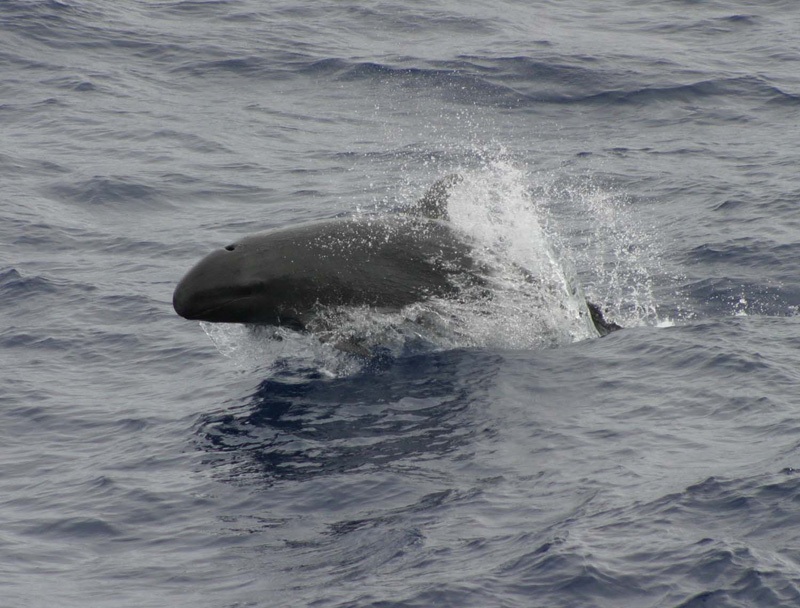 False Killer WhalePseudorca crassidens
-
 Common Bottlenose DolphinTursiops truncatus
-
 Irrawaddy DolphinOrcaella brevirostris
-
 Risso's DolphinGrampus griseus
Compare
Questions and answers
What is the scientific name of the Australian Humpback Dolphin?
The scientific name of the Australian Humpback Dolphin is Sousa sahulensis. Written with its author, the full name is Sousa sahulensis Jefferson & Rosenbaum, 2014.
Which family does the Australian Humpback Dolphin belong to?
Sousa sahulensis belongs to the family Delphinidae, in the order Cetacea and the class Mammalia.
Where is the Australian Humpback Dolphin found?
Checklists and occurrence records place Sousa sahulensis in 1 country: Australia.
What is the conservation status of the Australian Humpback Dolphin?
The IUCN Red List category recorded for Sousa sahulensis is Vulnerable (VU).
What other names does the Australian Humpback Dolphin have?
Sousa sahulensis is also known in English as Sahul Dolphin.
Do humpback dolphins exist?
Yes. Sousa sahulensis is one of four recognized humpback dolphin species in the genus Sousa.[28]
Sources
Passages the profile rests on
- The Australian humpback dolphin has a dark gray body with flanks that gradually become light gray. Source passage: “The body is mainly dark gray in color, with flanks shading to the light gray.” — English Wikipedia
- The species has a distinctive dark cape-like dorsal marking. Source passage: “The Australian humpback dolphin also has a distinctive dark dorsal feature, resembling a cape.” — English Wikipedia
- A diagonal cape marking extends from above the eye and neck to the urogenital area, separating the dark back from the lighter belly. Source passage: “A diagonal cape line extending from just above the eye and neck down to the urogenital area separates the dark back and lighter belly.” — English Wikipedia
- The dorsal fin is short, triangular and lacks the characteristic hump found in Atlantic and Indian Ocean humpback dolphins. Source passage: “The dorsal fin is short, triangular in shape, and lacks the dorsal "hump" typical of Atlantic and Indian humpback dolphins.” — English Wikipedia
- Its dorsal fin is lower and broader at the base than those of Atlantic and Indian Ocean humpback dolphins. Source passage: “The dorsal fin of the Australian humpback dolphin is lower and more wide-based than those of the Atlantic humpback dolphin and the Indian Ocean humpback dolphin” — English Wikipedia
- Adult individuals commonly have white scarring and dark flecking on the head, back, dorsal fin and tail stock. Source passage: “White scarring and dark flecking on the head, back, dorsal fin, and tail stock are common in adult animals.” — English Wikipedia
- Recorded body lengths range from approximately 1 to 2.7 metres. Source passage: “Known size for Australian humpback dolphins range from 31/2 – 9 ft (1-2.7m).” — English Wikipedia
- Newborn individuals weigh approximately 40–50 kilograms. Source passage: “Birth weight is between 88-110 lb (40–50 kg)” — English Wikipedia
- Adult individuals weigh approximately 230–250 kilograms. Source passage: “adult weight is between 507-550 lb (230–250 kg).” — English Wikipedia
- Australian humpback dolphins are opportunistic generalist feeders. Source passage: “These dolphins are known to be opportunistic, generalist feeders” — English Wikipedia
- The species feeds on a wide variety of coastal-estuarine and inshore reef fish. Source passage: “eating a wide variety of coastal-estuarine and inshore reef fish.” — English Wikipedia
- Individuals sometimes chase fish into shallow water and beach themselves to capture prey. Source passage: “These marine mammals are occasionally seen chasing fish into shallows and beaching themselves to catch their prey.” — English Wikipedia
- The species has been observed feeding by stranding itself on shore. Source passage: “Australian humpback dolphins have been observed strand feeding, as described for the Indian Ocean humpback dolphin.” — English Wikipedia
- Australian humpback dolphins are generally shy and elusive and tend to avoid boats. Source passage: “They are generally shy and elusive and tend to keep their distance from boats.” — English Wikipedia
- The species has been observed displaying mating courtship with Australian snubfin dolphins. Source passage: “Humpback dolphins have been observed to display mating courtship with Australian snubfin dolphins.” — English Wikipedia
- Mating and calving occur throughout the year. Source passage: “Mating and calving occurs year-round.” — English Wikipedia
- The gestation period lasts approximately 10–12 months. Source passage: “The gestation period lasts 10–12 months” — English Wikipedia
- Lactation may continue for more than two years. Source passage: “lactation may last more than 2 years” — English Wikipedia
- The likely interval between successive calvings is approximately three years. Source passage: “a 3-year calving interval is likely.” — English Wikipedia
- Individuals may live for at least 30 years. Source passage: “Individuals may live for at least 30 years.” — English Wikipedia
- The species was classified as vulnerable in the document. Source passage: “This vulnerable species' population was estimated to be fewer than 10,000 mature individuals in 2015” — English Wikipedia
- The estimated population in 2015 was fewer than 10,000 mature individuals. Source passage: “population was estimated to be fewer than 10,000 mature individuals in 2015” — English Wikipedia
- Reported subpopulation estimates are in the low hundreds. Source passage: “subpopulation estimates are in the low hundreds.” — English Wikipedia
- The species' population was declining because of habitat destruction. Source passage: “with numbers declining because of habitat destruction.” — English Wikipedia
- Habitat loss and degradation are identified threats to the species. Source passage: “habitat loss and degradation” — English Wikipedia
- Pollution and climate change are identified as threats to the species. Source passage: “pollution, and climate change.” — English Wikipedia
- The species faces incidental capture in gill nets and shark nets used for bather protection. Source passage: “including incidental captures in gill nets and shark nets set for bather protection” — English Wikipedia
- Sousa sahulensis is recognized as one of four humpback dolphin species in the genus Sousa. Source passage: “humpback (Sousa teuszii), Indian Ocean humpback (Sousa plumbea), Indo-Pacific humpback (Sousa chinensis), and Australian humpback (Sousa sahulensis) dolphins.” — pubmed.ncbi.nlm.nih.gov
- The species occurs around the Sahul Shelf between northern Australia and southern New Guinea. Source passage: “located between northern Australia and southern New Guinea, where the Australian humpback dolphins occur.” — English Wikipedia
- The species occurs east of the Wallace Line, including southern Papua New Guinea and northern Australia. Source passage: “To the east of the Wallace Line including southern Papua New Guinea and Northern Australia” — marinewaters.fish.wa.gov.au
Data
- Catalogue of Life, 2026-10-16 XR cc by
- Global Biodiversity Information Facility CC BY 4.0
- Wikidata CC0
- GeoNames CC BY 4.0
- Wikimedia Commons per image; credit shown with each image
- Within the Catalogue of Life, this name comes from The Integrated Taxonomic Information System cc0
References
- Jefferson, Thomas A., and Howard C. Rosenbaum. (2014). Taxonomic revision of the humpback dolphins (Sousa spp.), and description of a new species from Australia. Marine Mammal Science, Vol. 30, No. 4. Link where the name was published
- Würsig, Bernd, J. G. M. Thewissen, and Kit M. Kovacs, eds. (2018). Encyclopedia of Marine Mammals, 3rd Edition.
This species in other databases
- Catalogue of Life 4YDGJ
- Wikidata Q17476198
- iNaturalist 575103
- WoRMS urn:lsid:marinespecies.org:taxname:816452
Page built on 27 November 2026. See how the catalog is made and all sources and licences.
Cite this page
ScientificNames.org. (2026). Sousa sahulensis (Australian Humpback Dolphin). Retrieved November 27, 2026, from https://scientificnames.org/species/sousa-sahulensis
“Sousa sahulensis (Australian Humpback Dolphin).” ScientificNames.org, 2026, scientificnames.org/species/sousa-sahulensis. Accessed 27 Nov. 2026.
ScientificNames.org. “Sousa sahulensis (Australian Humpback Dolphin).” Accessed November 27, 2026. https://scientificnames.org/species/sousa-sahulensis.
@misc{scientificnames_sousa_sahulensis_australian_humpback_dolphin,
  author = {{ScientificNames.org}},
  title = {Sousa sahulensis (Australian Humpback Dolphin)},
  year = {2026},
  url = {https://scientificnames.org/species/sousa-sahulensis},
  note = {Accessed 2026-11-27}
}