Species · Fishes
Salema Porgy Sarpa salpa
The scientific name of the Salema Porgy is Sarpa salpa. It is a species of fish in the family Sparidae (porgies), order Perciformes. The name dates from 1758.
- Scientific name
- Sarpa salpa (Linnaeus, 1758)
- Common name
- Salema Porgy
- Genus
- Sarpa
- Family
- Sparidae (Porgies)
- Order
- Perciformes
- Class
- Teleostei
- Red List category
- LC Least Concern
- Environment
- brackish, marine
- Recorded in
- 16 countries
- Name status
- accepted in the Catalogue of Life

Overview
Sarpa salpa occurs in the eastern Atlantic Ocean, Mediterranean Sea and southwestern Indian Ocean.
Written 26 November 2026 from the sources listed below. Each statement was checked against the passage it cites; statements that could not be supported were removed.
Appearance
The dorsal fin has 11 spines and 14 or 15 soft rays. The anal fin has three spines and between 13 and 15 soft rays.[1][2]
Scales cover the cheeks beneath the eyes. The upper jaw has a single row of notched incisor-like teeth, while the lower jaw has pointed incisor-like teeth.[3][4]
Male individuals typically measure between 15 and 30 cm in length, while female individuals usually measure between 31 and 45 cm. The maximum recorded length is 51 cm.[5][6][7]
Habitat
The Salema Porgy occurs from near the sea surface to depths of 70 metres.[8]
It occurs in the eastern Atlantic Ocean, Mediterranean Sea and southwestern Indian Ocean. Its eastern Atlantic range extends from the Bay of Biscay to South Africa, and it has occasionally been recorded as far north as Great Britain.[9][10][11]
Diet
The Salema Porgy is predominantly herbivorous. In a study conducted in Libya, seagrass was the dominant dietary component, followed by algae and crustaceans.[12][13][14][15]
Adult individuals off Corsica mainly consume Posidonia oceanica seagrass and its epiphytes. Juvenile individuals feed on plankton.[16][17]
Reproduction and life cycle
The Salema Porgy is a protandrous hermaphrodite, changing from male to female during its life.[18]
Off Italy, the transition from male to female occurs at total lengths of approximately 24–31 cm and ages of approximately three to seven years. Half of the fish in the reported Italian population reached sexual maturity at a size of 19.5 cm.[19][20][21]
Spawning off South Africa occurs between April and September. The species undertakes an annual migration from nursery areas in the Eastern and Western Cape to KwaZulu-Natal.[22][23]
The spawning season in the Canary Islands extends from September to March.[24]
The reported Italian population has separate spring and autumn spawning seasons. The spring season runs from March through May, while the autumn season runs from late September through November.[25][26][27]
Uses
The Salema Porgy is rarely sold for human consumption. It is still consumed in France, Israel and Tunisia.[28][29]
Classification of the Salema Porgy
| Kingdom | Animalia |
|---|---|
| Phylum | Chordata |
| Subphylum | Vertebrata |
| Infraphylum | Gnathostomata |
| Parvphylum | Osteichthyes |
| Gigaclass | Actinopterygii |
| Superclass | Actinopteri |
| Class | Teleostei (Teleost) |
| Order | Perciformes |
| Suborder | Percoidei |
| Family | Sparidae (Porgies) |
| Genus | Sarpa |
| Species | Sarpa salpa (Linnaeus, 1758) |
Where the Salema Porgy is found
Checklists and occurrence records place Sarpa salpa in 16 countries. GBIF holds 18,303 georeferenced records of it.
Countries
- Albania 13
- Belgium 4
- Croatia 1,041
- Cyprus 23
- France 6,599
- Greece 2,050
- Italy 1,130
- Malta 107
- Monaco 18
- Montenegro 58
- Portugal 1,591
- Slovenia 28
- South Africa 547
- Spain 5,086
- The Netherlands 5
- United Kingdom 3
Regions and cities with the most records
- Marseille 09, France 1,320
- Marseille 11, France 1,218
- Marseille 10, France 1,206
- Marseille 08, France 1,200
- Marseille 02, France 1,199
- Marseille 03, France 1,199
- Marseille 07, France 1,199
- Marseille, France 1,198
- Marseille 01, France 1,198
- Marseille 06, France 1,198
- Marseille 12, France 1,190
- Marseille 04, France 1,187
- Marseille 05, France 1,187
- Marseille 13, France 1,180
- Marseille 14, France 1,167
- Provence-Alpes-Côte d'Azur, France 1,068
- Roses, Spain 1,013
- Allauch, France 1,000
- Marseille 16, France 996
- La Ciotat, France 891
- Sesimbra, Portugal 854
- Azeitão, Portugal 849
- Quinta Do Conde, Portugal 826
- Mandelieu-la-Napoule, France 822
- Marseille 15, France 772
- Aubagne, France 758
- Marignane, France 726
- Fréjus, France 718
- Saint-Raphaël, France 718
- Les Pennes-Mirabeau, France 683
- Catalonia, Spain 671
- Setúbal, Portugal 646
- Ajaccio, France 559
- Sanary-sur-Mer, France 557
- Six-Fours-les-Plages, France 550
- Canary Islands, Spain 512
13 more countries have a few records outside this range
These countries hold a few records of Sarpa salpa but lie outside the range the checklists give for it. Such records are often zoo or garden specimens, museum material or vagrants, so the species is not counted as occurring there.
A number beside a place is its count of GBIF occurrence records. A place without a number comes from a checklist alone. Records show where a species has been observed or collected, which can include escapes and vagrants.
Common names
English
- Salema Porgy
- Bamboo-fish
- Cow Bream
- Gold Line
- Karanteen
- Saunders's Tern
- Striped Karanteen
- Salema
Names in 26 other languages
- Afrikaans
- Strepie
- Albanian
- arava, salpa
- Asturian
- madre de la boga, soboga, tena
- Basque
- salpa
- Catalan
- aurada grisenca, salpa
- Chinese
- 叉牙鯛
- Czech
- očnatec obecný
- Danish
- stribet havrude
- Dutch
- gestreepte bokvis, goudstreepzeebrasem
- French
- saupe
- German
- Goldstrieme
- Greek
- Σάλπα, Σάρπα
- Hebrew
- סלפית צהובת-פסים
- Hungarian
- aranycsíkos tengeri durbincs, magashátú durbincs
- Italian
- salpa
- Norwegian Bokmål
- Langstripet havkaruss, Okseøyefisk
- Polish
- salpa
- Portuguese
- salema
- Russian
- Морской карась сальпа, Сальпа, Сарпа сальповидная
- Serbian
- салпа
- Slovenian
- salpa, sopa
- Spanish
- Cagona, Saboga, salema
- Swedish
- salpa
- Turkish
- Sarpa, salpa
- Ukrainian
- Морський карась сальпа, Сарпа
- Welsh
- Salpaod, salpa
Synonyms
6 other scientific names have been used for this species and are now treated as synonyms of Sarpa salpa.
- Boops goreensis (Valenciennes, 1830)
- Boops salpa (Linnaeus, 1758)
- Box goreensis Valenciennes, 1830
- Box salpa (Linnaeus, 1758)
- Eusalpa salpa (Linnaeus, 1758)
- Sparus salpa Linnaeus, 1758
Related species
-
 Gilt-head BreamSparus aurata
-
 BogueBoops boops
-
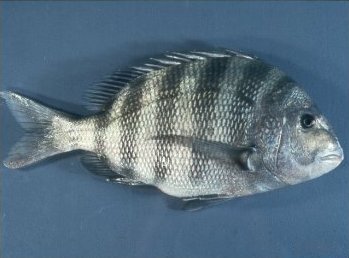 SheepsheadArchosargus probatocephalus
-
 Red Sea BreamPagrus major
-
 White Sea BreamDiplodus sargus
-
 Red PorgyPagrus pagrus
-
 Common DentexDentex dentex
-
 Sand SteenbrasLithognathus mormyrus
Compare
Questions and answers
What is the scientific name of the Salema Porgy?
The scientific name of the Salema Porgy is Sarpa salpa. Written with its author, the full name is Sarpa salpa (Linnaeus, 1758).
Which family does the Salema Porgy belong to?
Sarpa salpa belongs to the family Sparidae, in the order Perciformes and the class Teleostei.
Where is the Salema Porgy found?
Checklists and occurrence records place Sarpa salpa in 16 countries, including France, Spain, Greece, Portugal, Italy and Croatia.
What is the conservation status of the Salema Porgy?
The IUCN Red List category recorded for Sarpa salpa is Least Concern (LC).
What other names does the Salema Porgy have?
Sarpa salpa is also known in English as Bamboo-fish, Cow Bream, Gold Line, Karanteen, Saunders's Tern and Striped Karanteen.
What kind of fish is the salema porgy?
The Salema Porgy is a fish in the family Sparidae, order Perciformes and class Teleostei. It is predominantly herbivorous.[12]
Sources
Passages the profile rests on
- The dorsal fin has 11 spines and 14 or 15 soft rays. Source passage: “The dorsal fin is supported by 11 spines and 14 or 15 soft rays” — English Wikipedia
- The anal fin has three spines and between 13 and 15 soft rays. Source passage: “the anal fin contains 3 spines and between 13 and 15 soft rays.” — English Wikipedia
- The species has scales on its cheeks beneath the eyes. Source passage: “There are scales on the cheeks under the eyes.” — English Wikipedia
- Its upper jaw has a single row of notched incisor-like teeth, while its lower jaw has pointed incisor-like teeth. Source passage: “There is a single row of notched incisor-like teeth on the upper jaw and pointed incisor-like teeth on the lower jaw” — English Wikipedia
- Male individuals typically measure between 15 and 30 cm in length. Source passage: “Males are typically 15 to 30 cm (6–12 in) in length” — English Wikipedia
- Female individuals usually measure between 31 and 45 cm in length. Source passage: “while females are usually 31 to 45 cm (12–18 in).” — English Wikipedia
- The maximum recorded length is 51 cm. Source passage: “The maximum size is 51 cm (20 in).” — English Wikipedia
- The species occurs from near the sea surface to depths of 70 metres. Source passage: “It is generally common and found from near the surface to a depth of 70 m (230 ft).” — English Wikipedia
- The species occurs in the eastern Atlantic Ocean, Mediterranean Sea and southwestern Indian Ocean. Source passage: “It is found in the eastern Atlantic Ocean, Mediterranean Sea and southwestern Indian Ocean.” — English Wikipedia
- Its eastern Atlantic range extends from the Bay of Biscay to South Africa. Source passage: “The salema porgy is found in the East Atlantic, where it ranges from the Bay of Biscay to South Africa” — English Wikipedia
- The species has occasionally been recorded as far north as Great Britain. Source passage: “It has occasionally been found as far north as Great Britain.” — English Wikipedia
- The species is predominantly herbivorous. Source passage: “Salema porgies are largely herbivorous;” — English Wikipedia
- Seagrass was the dominant dietary component in a study conducted in Libya. Source passage: “a study in Libya found that sea grass dominated the diet” — English Wikipedia
- Algae was the second most important dietary component in the Libyan study. Source passage: “with algae being the second most important item” — English Wikipedia
- Crustaceans were the third most important dietary component in the Libyan study. Source passage: “and crustaceans the third.” — English Wikipedia
- Adult individuals off Corsica mainly consume Posidonia oceanica seagrass and its epiphytes. Source passage: “Off Corsica, the seagrass Posidonia oceanica and its epiphytes were found to be the main food of adults” — English Wikipedia
- Juvenile individuals feed on plankton. Source passage: “while the juveniles were plankton eaters.” — English Wikipedia
- The species is a protandrous hermaphrodite, changing from male to female during its life. Source passage: “This species is a protandrous hermaphrodite.” — English Wikipedia
- Off Italy, the transition from male to female occurs at total lengths of approximately 24–31 cm. Source passage: “Off Italy the change from male to female took place between total lengths of 24 and 31 cm (9.4 and 12.2 in)” — English Wikipedia
- The sex transition off Italy corresponds to ages of approximately three to seven years. Source passage: “and this corresponded to a ages between 3 and 7 years.” — English Wikipedia
- Half of the fish in the reported Italian population reached sexual maturity at a size of 19.5 cm. Source passage: “The size when sexual maturity was reached by half of the fish was 19.5 cm (7.7 in)” — English Wikipedia
- Spawning off South Africa occurs between April and September. Source passage: “Off South Africa spawning takes place between April and September” — English Wikipedia
- The species undertakes an annual migration from nursery areas in the Eastern and Western Cape to KwaZulu-Natal. Source passage: “there is an annual migration between nursery areas in the Eastern and Western Cape to KwaZulu-Natal.” — English Wikipedia
- The spawning season in the Canary Islands extends from September to March. Source passage: “In the northern hemisphere, the spawning season in the Canary Islands was found to extend from September to March.” — English Wikipedia
- The Italian population has separate spring and autumn spawning seasons. Source passage: “There were two separate spawning seasons in this population one in the spring” — English Wikipedia
- The spring spawning season in the reported Italian population runs from March through May. Source passage: “one in the spring, running between March and May” — English Wikipedia
- The autumn spawning season in the reported Italian population runs from late September through November. Source passage: “and a second in autumn, from the end of September to November.” — English Wikipedia
- The species is rarely sold for human consumption. Source passage: “This is why this fish is rare on plates and practically not sold.” — English Wikipedia
- The species is still consumed in France, Israel and Tunisia. Source passage: “The saupe is practically no longer consumed except in France, Israel and Tunisia.” — English Wikipedia
Data
- Catalogue of Life, 2026-10-16 XR cc by
- Global Biodiversity Information Facility CC BY 4.0
- Wikidata CC0
- GeoNames CC BY 4.0
- Wikimedia Commons per image; credit shown with each image
- iNaturalist per image; credit shown with each image
- Within the Catalogue of Life, this name comes from World Register of Marine Species cc by
This species in other databases
- Catalogue of Life 79PJZ
- Wikidata Q1130118
- iNaturalist 118663
- WoRMS urn:lsid:marinespecies.org:taxname:127064
- ITIS 182942
Page built on 27 November 2026. See how the catalog is made and all sources and licences.
Cite this page
ScientificNames.org. (2026). Sarpa salpa (Salema Porgy). Retrieved November 27, 2026, from https://scientificnames.org/species/sarpa-salpa
“Sarpa salpa (Salema Porgy).” ScientificNames.org, 2026, scientificnames.org/species/sarpa-salpa. Accessed 27 Nov. 2026.
ScientificNames.org. “Sarpa salpa (Salema Porgy).” Accessed November 27, 2026. https://scientificnames.org/species/sarpa-salpa.
@misc{scientificnames_sarpa_salpa_salema_porgy,
  author = {{ScientificNames.org}},
  title = {Sarpa salpa (Salema Porgy)},
  year = {2026},
  url = {https://scientificnames.org/species/sarpa-salpa},
  note = {Accessed 2026-11-27}
}