Species · Insects
Sphinctomyrmex stali
Sphinctomyrmex stali has no English name on record in the checklists used here. It is a species of insect in the family Formicidae (ant), order Hymenoptera. The name dates from 1866.
- Scientific name
- Sphinctomyrmex stali Mayr, 1866
- Genus
- Sphinctomyrmex
- Family
- Formicidae (Ant)
- Order
- Hymenoptera
- Class
- Insecta
- Recorded in
- 1 country
- Name status
- accepted in the Catalogue of Life

Overview
The species is known from scattered localities in the southeastern Brazilian Atlantic Forest, extending from Santa Catarina to southern Bahia. It is distinguished from related species by its elongated head and other differences in clypeal structure and surface features.
Written 27 November 2026 from the sources listed below. Each statement was checked against the passage it cites; statements that could not be supported were removed.
Similar species
Sphinctomyrmex stali is substantially larger than Sphinctomyrmex marcoyi and lacks the median smooth longitudinal stripe on the dorsal surface of the mesosoma found in the comparison with that species.[1][2]
Appearance
Ergatoid reproductive females differ from workers by having three equally developed ocelli and relatively well-developed compound eyes.[3]
The alate reproductive female is substantially larger than workers. It has well-developed ocelli and large compound eyes occupying almost one-third of the side of the head.[4][5]
The alate reproductive female has a large, trapezoidal scutum and shallow, almost indistinct notauli. Its petiole and gaster are comparatively larger than those of conspecific workers.[6][7][8]
Habitat
The species is most frequently collected in submontane forests above 600 metres in Santa Catarina and São Paulo.[9]
Behaviour
The species may have multiple reproductive females in a colony, as suggested by a collection containing six workers and two ergatoid gynes.[10]
Reproduction and life cycle
The species has two recognized reproductive female forms: alates and ergatoids.[11]
The only recorded normal winged reproductive female is the original holotype. All reproductive females collected after the original description have been ergatoid.[12][13]
Classification of Sphinctomyrmex stali
| Kingdom | Animalia |
|---|---|
| Phylum | Arthropoda |
| Subphylum | Hexapoda |
| Class | Insecta (Insect) |
| Order | Hymenoptera (Ants) |
| Suborder | Apocrita (Ants) |
| Infraorder | Aculeata |
| Superfamily | Formicoidea |
| Family | Formicidae (Ant) |
| Subfamily | Dorylinae |
| Genus | Sphinctomyrmex |
| Species | Sphinctomyrmex stali Mayr, 1866 |
Where Sphinctomyrmex stali is found
Checklists and occurrence records place Sphinctomyrmex stali in 1 country. GBIF holds 35 georeferenced records of it.
Countries
Regions and cities with the most records
- Minas Gerais, Brazil 17
- Viçosa, Brazil 17
- Santa Catarina, Brazil 9
- Seara, Brazil 4
- Paraty, Brazil 3
- Santo Amaro da Imperatriz, Brazil 3
- São Paulo, Brazil 3
A number beside a place is its count of GBIF occurrence records. A place without a number comes from a checklist alone. Records show where a species has been observed or collected, which can include escapes and vagrants.
Related species
- Sphinctomyrmex schoerederi
- Sphinctomyrmex marcoyi
-
 Bullet AntParaponera clavata
-
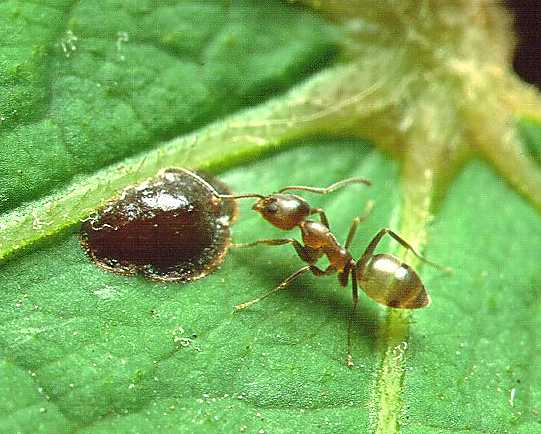 Argentine AntLinepithema humile
-
 Red Imported Fire AntSolenopsis invicta
-
 Yellow Crazy AntAnoplolepis gracilipes
-
 Pharaoh AntMonomorium pharaonis
- Jack Jumper AntMyrmecia pilosula
Compare
Questions and answers
What does the species name honor?
The species name honors the Swedish entomologist Carl Stål.[14]
Where is Sphinctomyrmex stali found?
It is known from scattered localities in the southeastern Brazilian Atlantic Forest, extending from Santa Catarina to southern Bahia.[15]
What reproductive female forms occur in the species?
The two recognized forms are alates and ergatoids.[11]
How rare is the genus Sphinctomyrmex?
Sphinctomyrmex is a Neotropical lineage of ants that is encountered extremely rarely.[16]
What is the type species of the genus Sphinctomyrmex?
Sphinctomyrmex stali was used by Mayr as the type species when he described the genus.[17]
Sources
Passages the profile rests on
- Sphinctomyrmex stali is substantially larger than Sphinctomyrmex marcoyi. Source passage: “This species can be separated from S. marcoyi by its much larger size” — English Wikipedia
- Sphinctomyrmex stali lacks the median smooth longitudinal stripe on the dorsal surface of the mesosoma found in the comparison with Sphinctomyrmex marcoyi. Source passage: “the absence of a median smooth longitudinal stripe on the dorsum of mesosoma.” — English Wikipedia
- Ergatoid reproductive females differ from workers by having three equally developed ocelli and relatively well-developed compound eyes. Source passage: “The ergatoids differ from the conspecific workers only by the presence of three equally developed ocelli and by the compound eyes being comparatively well developed.” — English Wikipedia
- The alate reproductive female has substantially larger body size than workers. Source passage: “This gyne differs from workers by the typical characters expected for ant reproductive females: size significantly larger;” — English Wikipedia
- The alate reproductive female has well-developed ocelli and large compound eyes occupying almost one-third of the side of the head. Source passage: “ocelli well developed; compound eyes considerably large, occupying almost one third of the lateral margin of head.” — English Wikipedia
- The alate reproductive female has a large, trapezoidal scutum. Source passage: “scutum large and trapezoidal;” — English Wikipedia
- The alate reproductive female has shallow, almost indistinct notauli. Source passage: “notauli shallow, almost indistinct;” — English Wikipedia
- The alate reproductive female has comparatively larger petiole and gaster than conspecific workers. Source passage: “Petiole and gaster comparatively larger than in conspecific workers.” — English Wikipedia
- The species is most frequently collected in submontane forests above 600 metres in Santa Catarina and São Paulo. Source passage: “most commonly found in submontane forests (above 600 m) of the states of Santa Catarina and São Paulo” — English Wikipedia
- The species may have multiple reproductive females in a colony, as suggested by a collection containing six workers and two ergatoid gynes. Source passage: “six workers and two ergatoid gynes very similar to the workers, were captured, which suggests that S. stali is polygynous” — English Wikipedia
- The species has two recognized reproductive female forms: alates and ergatoids. Source passage: “Two forms are recognized, alates and ergatoids.” — English Wikipedia
- The only recorded normal winged reproductive female is the original holotype. Source passage: “except for the holotype, there are no records of normal (alate) gynes for S. stali.” — English Wikipedia
- All reproductive females collected after the original description have been ergatoid. Source passage: “All reproductive females collected after the original description are ergatoids.” — English Wikipedia
- The species name honors the Swedish entomologist Carl Stål. Source passage: “Sphinctomyrmex stali (named after the Swedish entomologist Carl Stål)” — English Wikipedia
- The species is known from scattered localities in the southeastern Brazilian Atlantic Forest, extending from Santa Catarina to southern Bahia. Source passage: “known from sparse localities along the southeastern portion of the Brazilian Atlantic Forest, from Santa Catarina to southern Bahia.” — English Wikipedia
- The genus Sphinctomyrmex is a Neotropical lineage of ants that is encountered extremely rarely. Source passage: “Sphinctomyrmex is a Neotropical lineage of extremely rarely encountered ants.” — pmc.ncbi.nlm.nih.gov
- The genus Sphinctomyrmex was described by Mayr using Sphinctomyrmex stali as its type species. Source passage: “Mayr described the genus Sphinctomyrmex with S. stali as its type species” — English Wikipedia
Data
- Catalogue of Life, 2026-10-16 XR cc by
- Global Biodiversity Information Facility CC BY 4.0
- Wikidata CC0
- GeoNames CC BY 4.0
- Wikimedia Commons per image; credit shown with each image
- Within the Catalogue of Life, this name comes from An Online Catalog of the Ants of the World cc by
References
- Mayr, G. (1866). Diagnosen neuer und wenig gekannter Formiciden. Verhandlungen Der Kaiserlich-Königlichen Zoologisch-Botanischen Gesellschaft in Wien, 16, 885–908. https://antcat.org/documents/2144/4366.pdf Link where the name was published
This species in other databases
Page built on 28 November 2026. See how the catalog is made and all sources and licences.
Cite this page
ScientificNames.org. (2026). Sphinctomyrmex stali. Retrieved November 28, 2026, from https://scientificnames.org/species/sphinctomyrmex-stali
“Sphinctomyrmex stali.” ScientificNames.org, 2026, scientificnames.org/species/sphinctomyrmex-stali. Accessed 28 Nov. 2026.
ScientificNames.org. “Sphinctomyrmex stali.” Accessed November 28, 2026. https://scientificnames.org/species/sphinctomyrmex-stali.
@misc{scientificnames_sphinctomyrmex_stali,
  author = {{ScientificNames.org}},
  title = {Sphinctomyrmex stali},
  year = {2026},
  url = {https://scientificnames.org/species/sphinctomyrmex-stali},
  note = {Accessed 2026-11-28}
}