Species · Insects
Tlaocera Tlaocera saga
The scientific name of the Tlaocera is Tlaocera saga. It is a species of insect in the family Scarabaeidae (dung beetles), order Coleoptera. The name dates from 1904.
- Scientific name
- Tlaocera saga Péringuey, 1904
- Common name
- Tlaocera
- Genus
- Tlaocera
- Family
- Scarabaeidae (Dung Beetles)
- Order
- Coleoptera
- Class
- Insecta
- Recorded in
- 1 country
- Name status
- accepted in the Catalogue of Life
Overview
The species occurs in South Africa's Western Cape. Adults have black bodies, chestnut-brown elytra and antennae, and long, dense fulvous hairs on several body parts.
Written 28 November 2026 from the sources listed below. Each statement was checked against the passage it cites; statements that could not be supported were removed.
Appearance
Adults reach approximately 12.5 mm in length. Their bodies are black, with chestnut-brown elytra and antennae.[1][2]
The frontal part, pronotum, scutellum, pectus, and femora bear long, dense fulvous hairs. The frontal part is deeply punctured, with a long hair arising from each puncture.[3][4]
The anterior clypeus has two rows of deep punctures, while its suture is smooth. The anterior part of the pronotum is somewhat deeply impressed and more closely punctured than its posterior part.[5][6]
The posterior pronotum has more scattered punctures that are equally deep as those in the anterior part. The elytra are somewhat depressed in their dorsal region.[7][8]
Each elytron has two somewhat indistinct paired dorsal striae in addition to a plain juxta-sutural stria. The elytra have fine punctures and faint longitudinal rows of wider, shallow punctures.[9][10]
The pygidium is deeply but sparsely punctured basally and nearly unpunctured apically.[11]
Habitat
The species occurs in South Africa's Western Cape.[12]
Classification of the Tlaocera
| Kingdom | Animalia |
|---|---|
| Phylum | Arthropoda |
| Subphylum | Hexapoda |
| Class | Insecta (Insect) |
| Order | Coleoptera (Beetle) |
| Suborder | Polyphaga |
| Series | Staphyliniformia |
| Superfamily | Scarabaeoidea |
| Family | Scarabaeidae (Dung Beetles) |
| Subfamily | Melolonthinae |
| Tribe | Tanyproctini |
| Subtribe | Tanyproctina |
| Genus | Tlaocera |
| Species | Tlaocera saga Péringuey, 1904 |
Where the Tlaocera is found
Checklists and occurrence records place Tlaocera saga in 1 country. GBIF holds 3 georeferenced records of it.
Countries
Range as the checklists state it
Afrotropical(Republic South Africa:Western Cape)
A number beside a place is its count of GBIF occurrence records. A place without a number comes from a checklist alone. Records show where a species has been observed or collected, which can include escapes and vagrants.
Common names
English
- Tlaocera
Related species
-
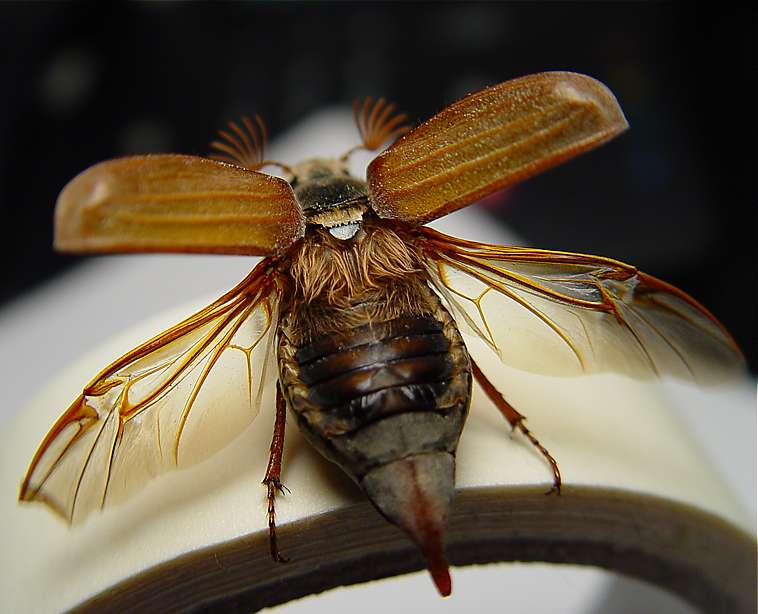 CockchaferMelolontha melolontha
-
 Hercules BeetleDynastes (Dynastes) hercules
-
 Japanese BeetlePopillia japonica
-
 Japanese Rhinoceros BeetleTrypoxylus dichotomus
-
 Sacred ScarabScarabaeus sacer
-
 Figeater BeetleCotinis (Cotinis) mutabilis
-
 Atlas BeetleChalcosoma atlas
-
 Coconut Rhinoceros BeetleOryctes (Rykanes) rhinoceros
Compare
Questions and answers
What is the scientific name of the Tlaocera?
The scientific name of the Tlaocera is Tlaocera saga. Written with its author, the full name is Tlaocera saga Péringuey, 1904.
Which family does the Tlaocera belong to?
Tlaocera saga belongs to the family Scarabaeidae, in the order Coleoptera and the class Insecta.
Where is the Tlaocera found?
Checklists and occurrence records place Tlaocera saga in 1 country: South Africa.
How large is Tlaocera?
Adults reach approximately 12.5 mm in length.[1]
What colour is Tlaocera?
Adults have black bodies with chestnut-brown elytra and antennae.[2]
Where does Tlaocera occur?
The species occurs in South Africa's Western Cape.[12]
Sources
Passages the profile rests on
- Adults reach approximately 12.5 mm in length. Source passage: “Adults reach a length of about 12.5 mm (0.49 in).” — English Wikipedia
- Adults have black bodies with chestnut-brown elytra and antennae. Source passage: “They are black, with the elytra and antennae chestnut-brown” — English Wikipedia
- The frontal part, pronotum, scutellum, pectus, and femora bear long, dense fulvous hairs. Source passage: “the frontal part, pronotum, scutellum, pectus, and femora clothed with long, dense fulvous hairs.” — English Wikipedia
- The frontal part is deeply punctured, with a long hair arising from each puncture. Source passage: “the frontal part is deeply punctured, each puncture bearing a long hair.” — English Wikipedia
- The anterior clypeus has two rows of deep punctures, while its suture is smooth. Source passage: “The clypeus has a double row of deep punctures on the anterior part, but is smooth along the suture” — English Wikipedia
- The anterior part of the pronotum is somewhat deeply impressed and more closely punctured than its posterior part. Source passage: “The pronotum is somewhat deeply impressed in the anterior part, which is also a little more closely punctured” — English Wikipedia
- The posterior pronotum has more scattered punctures that are equally deep as those in the anterior part. Source passage: “the posterior part where the punctures are more scattered but equally deep.” — English Wikipedia
- The elytra are somewhat depressed in their dorsal region. Source passage: “The elytra are somewhat depressed in the dorsal part” — English Wikipedia
- Each elytron has two somewhat indistinct paired dorsal striae in addition to a plain juxta-sutural stria. Source passage: “in addition to the plain juxta-sutural stria, two dorsal geminate somewhat indistinct ones” — English Wikipedia
- The elytra have fine punctures and faint longitudinal rows of wider, shallow punctures. Source passage: “they are punctulate and have faint longitudinal rows of wider but shallow punctures.” — English Wikipedia
- The pygidium is deeply but sparsely punctured basally and nearly unpunctured apically. Source passage: “The pygidium is deeply but not closely punctate in the basal part, nearly impunctate in the apical.” — English Wikipedia
- The species occurs in South Africa's Western Cape. Source passage: “which is found in South Africa (Western Cape).” — English Wikipedia
Data
- Catalogue of Life, 2026-10-16 XR cc by
- Global Biodiversity Information Facility CC BY 4.0
- Wikidata CC0
- GeoNames CC BY 4.0
- Within the Catalogue of Life, this name comes from World Scarabaeidae Database cc by
References
- Péringuey, L. (1904). Descriptive catalogue of the Coleoptera of South Africa (Lucanidae and Scarabaeidae). Transactions of the South African Philosophical Society. Cape Town 13(1):1-293. https://doi.org/10.1080/21560382.1904.9525994 Link where the name was published
This species in other databases
Page built on 28 November 2026. See how the catalog is made and all sources and licences.
Cite this page
ScientificNames.org. (2026). Tlaocera saga (Tlaocera). Retrieved November 28, 2026, from https://scientificnames.org/species/tlaocera-saga
“Tlaocera saga (Tlaocera).” ScientificNames.org, 2026, scientificnames.org/species/tlaocera-saga. Accessed 28 Nov. 2026.
ScientificNames.org. “Tlaocera saga (Tlaocera).” Accessed November 28, 2026. https://scientificnames.org/species/tlaocera-saga.
@misc{scientificnames_tlaocera_saga_tlaocera,
  author = {{ScientificNames.org}},
  title = {Tlaocera saga (Tlaocera)},
  year = {2026},
  url = {https://scientificnames.org/species/tlaocera-saga},
  note = {Accessed 2026-11-28}
}