Species · Birds
Red-fronted Parrotlet Touit costaricensis
The scientific name of the Red-fronted Parrotlet is Touit costaricensis. It is a species of bird in the family Psittacidae (macaws), order Psittaciformes. The name dates from 1913.
- Scientific name
- Touit costaricensis (Cory, 1913)
- Common name
- Red-fronted Parrotlet
- Genus
- Touit
- Family
- Psittacidae (Macaws)
- Order
- Psittaciformes
- Class
- Aves
- Red List category
- NT Near Threatened
- Recorded in
- 2 countries
- Name status
- accepted in the Catalogue of Life
Overview
Touit costaricensis occurs in Costa Rica and Panama, from western Costa Rica into western Panama as far as Coclé Province. It is predominantly green, with a red forehead, extensive red facial coloration, and a short, square-ended tail.
Written 26 November 2026 from the sources listed below. Each statement was checked against the passage it cites; statements that could not be supported were removed.
Appearance
The Red-fronted Parrotlet has a predominantly green body, with darker upperparts than underparts. Its forehead and much of its face are red, with some blue coloration and a white eye ring. Its crown and hindneck are bronze-green, while its throat is yellowish.[1][2][3]
The wings have extensive red coloration on the wrists. The primary flight feathers are black with green outer edges, and the underwing coverts are yellow.[4][5][6]
The tail is short and square-ended, with black central feathers and yellow outer feathers tipped with black. Yellow coloration on the underwings and tail is visible in flight.[7][8][9]
Males have more red coloration on their faces than females. Immature individuals have almost no red facial coloration.[10][11]
The species measures approximately 15–17 cm in length and weighs approximately 80 g.[12][13]
Habitat
During the dry season, the Red-fronted Parrotlet inhabits very wet and cool evergreen montane forests at elevations reaching 3,000 m. During the wet season, it moves to rainforest at lower elevations.[14][15][16]
The species is usually found year-round at elevations between 500 and 1,500 m.[17]
Diet
Plants belonging to the families Melastomataceae and Ericaceae are documented food contributors.[18]
Behaviour
The Red-fronted Parrotlet undertakes seasonal elevational migrations, occupying higher elevations during the dry season and lower elevations during the rainy season. It sometimes descends to sea level during the rainy season.[19][20]
The species typically forages in trees and epiphytes in the forest canopy.[21]
Its call is shrill and querulous. Its flight call has a slightly nasal quality.[22][23]
Conservation
The Red-fronted Parrotlet has been classified as Near Threatened since 2021. It was classified as Vulnerable in 2000.[24][25]
The species has a somewhat restricted geographic range, and its estimated population is fewer than 12,000 mature individuals. The population is believed to be decreasing.[26][27][28]
Habitat loss within its range is described as low, particularly in highland areas. The species is not considered to face substantial threats and is considered tolerant of some habitat disturbance. It is apparently not traded.[29][30][31][32]
Similar species
The Red-fronted Parrotlet was previously treated by some authors as a subspecies of the Blue-fronted Parrotlet (Touit dilectissimus). The two are currently considered a superspecies.[33][34]
The Red-fronted Parrotlet is classified as a monotypic species.[35]
Classification of the Red-fronted Parrotlet
| Kingdom | Animalia |
|---|---|
| Phylum | Chordata |
| Subphylum | Vertebrata |
| Infraphylum | Gnathostomata |
| Parvphylum | Osteichthyes |
| Megaclass | Tetrapoda |
| Class | Aves (Bird) |
| Order | Psittaciformes (Parrot) |
| Family | Psittacidae (Macaws) |
| Genus | Touit (Forest Parrotlets) |
| Species | Touit costaricensis (Cory, 1913) |
Where the Red-fronted Parrotlet is found
Checklists and occurrence records place Touit costaricensis in 2 countries across North America. GBIF holds 1,508 georeferenced records of it.
Countries
Regions and cities with the most records
- Cartago Province, Costa Rica 393
- San José, Costa Rica 367
- Turrialba, Costa Rica 306
- San Isidro, Costa Rica 263
- Puntarenas Province, Costa Rica 176
- Alajuela Province, Costa Rica 165
- Paraíso, Costa Rica 136
- Guanacaste Province, Costa Rica 117
- Limón Province, Costa Rica 95
- Cartago, Costa Rica 92
- Guápiles, Costa Rica 70
- Bocas del Toro Province, Panama 46
- Chiriquí Province, Panama 46
- Heredia Province, Costa Rica 32
- Quesada, Costa Rica 31
- Limón, Costa Rica 20
- Liberia, Costa Rica 19
- Changuinola, Panama 17
- San Diego, Costa Rica 16
- Patarrá, Costa Rica 14
- Guadalupe, Costa Rica 12
- Purral, Costa Rica 12
- San Vicente, Costa Rica 12
- San Vicente de Moravia, Costa Rica 12
- San Miguel, Costa Rica 11
- Curridabat, Costa Rica 10
- San Juan, Costa Rica 10
- San Pedro, Costa Rica 10
- Alajuela, Costa Rica 9
- Siquirres, Costa Rica 9
- Coclé, Panama 5
- Esparza, Costa Rica 4
Range as the checklists state it
Middle America
A number beside a place is its count of GBIF occurrence records. A place without a number comes from a checklist alone. Records show where a species has been observed or collected, which can include escapes and vagrants.
Common names
English
- Red-fronted Parrotlet
Names in 28 other languages
- Arabic
- ببغاء أحمر الجبهة
- Catalan
- cotorreta de Costa Rica
- Chinese
- 中美红额鹦哥, 紅額鸚哥
- Croatian
- kostarička papigica
- Czech
- papoušek kostarický, papoušík kostarický
- Danish
- Rødpandet Stumppapegøje
- Dutch
- Costaricaanse Papegaai
- Esperanto
- ruĝfrunta papageto
- Estonian
- kostariika väikepapagoi
- Finnish
- punaotsa-aranen
- French
- Toui du Costa Rica
- German
- Costa-Rica-Papagei, Rotstirnpapagei
- Hungarian
- costa rica-i aprópapagáj
- Italian
- Pappagallino fronterossa
- Japanese
- アカビタイイロオインコ
- Lithuanian
- raudonkaktė raibauodegė papūga
- Norwegian
- costaricaparakitt
- Polish
- barwniczka czerwonoczelna
- Portuguese
- apuim-de-testa-vermelha, periquito-de-testa-vermelha
- Russian
- Краснолобый пестрохвостый попугай, Краснолобый туети
- Serbian
- Kostarikanski crvenotemeni papagaj
- Slovak
- amazoňan kostarický, tui kostarický
- Spanish
- Cotorrita costarricense, Periquito Alirrojo
- Swedish
- costaricansk dvärgparakit
- Turkish
- Kosta Rika Papağanı
- Ukrainian
- папуга червонолобий
- mrj
- Якшар лепкӓн ала пачан попугай
- pnb
- ٹویٹ کوسٹاریسنسس
Synonyms
2 other scientific names have been used for this species and are now treated as synonyms of Touit costaricensis.
- Touit dilectissima costaricensis Cory, CB, 1913
- Urochroma costaricensis Cory, 1913
Related species
-
 Lilac-tailed ParrotletTouit batavicus
-
 Sapphire-rumped ParrotletTouit purpuratus
-
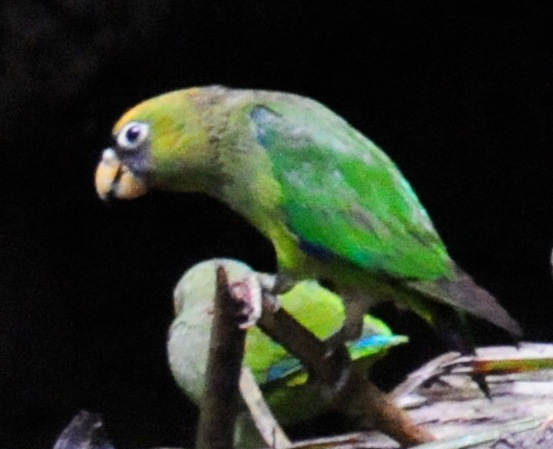 Scarlet-shouldered ParrotletTouit huetii
-
 Blue-fronted ParrotletTouit dilectissimus
-
 Brown-backed ParrotletTouit melanonotus
-
 Golden-tailed ParrotletTouit surdus
-
 Spot-winged ParrotletTouit stictopterus
-
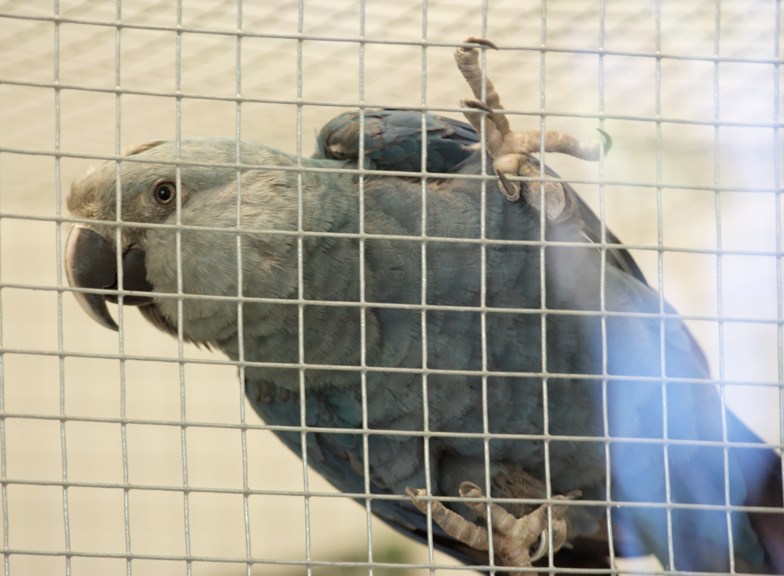 Spix's MacawCyanopsitta spixii
Compare
Questions and answers
What is the scientific name of the Red-fronted Parrotlet?
The scientific name of the Red-fronted Parrotlet is Touit costaricensis. Written with its author, the full name is Touit costaricensis (Cory, 1913).
Which family does the Red-fronted Parrotlet belong to?
Touit costaricensis belongs to the family Psittacidae, in the order Psittaciformes and the class Aves.
Where is the Red-fronted Parrotlet found?
Checklists and occurrence records place Touit costaricensis in 2 countries: Costa Rica and Panama.
What is the conservation status of the Red-fronted Parrotlet?
The IUCN Red List category recorded for Touit costaricensis is Near Threatened (NT).
What foods do parrotlets eat?
Plants belonging to the families Melastomataceae and Ericaceae are documented food contributors for the Red-fronted Parrotlet.[18]
Sources
Passages the profile rests on
- The species has a predominantly green body, with darker coloration on its upperparts than its underparts. Source passage: “Its body is mostly green, darker above than below.” — English Wikipedia
- The species has a red forehead and much of its face is red, with some blue coloration and a white eye ring. Source passage: “Its forehead ("front") and much of its face are red with a bit of blue on the latter and a white eye ring.” — English Wikipedia
- Its crown and hindneck are bronze-green, while its throat is yellowish. Source passage: “Its crown and hindneck are bronze-green and its throat yellowish.” — English Wikipedia
- The species has extensive red coloration on the wrist of its wings. Source passage: “It has much red on the wing's "wrist"” — English Wikipedia
- Its primary flight feathers are black with green outer edges. Source passage: “its primaries are black with green outer edges.” — English Wikipedia
- Its underwing coverts are yellow. Source passage: “Its underwing coverts are yellow.” — English Wikipedia
- Its tail has a square-ended shape, with black central feathers and yellow outer feathers tipped with black. Source passage: “Its tail has a square end; the central tail feathers are black and the others yellow with black tips.” — English Wikipedia
- The species has a short, square tail and is predominantly green with a red forehead and shoulder. Source passage: “Small parrot with short square tail. Mostly green with red forehead and shoulder.” — ebird.org
- Yellow coloration on the underwings and tail is visible when the species flies. Source passage: “In flight, partially yellow underwings and yellow in tail are visible.” — ebird.org
- Males have more red coloration on their faces than females. Source passage: “Males have more red on their face than females” — English Wikipedia
- Immature individuals have almost no red facial coloration. Source passage: “immatures have almost none.” — English Wikipedia
- The species measures approximately 15–17 cm in length. Source passage: “about 15 to 17 cm (5.9 to 6.7 in) long” — English Wikipedia
- The species weighs approximately 80 g. Source passage: “weighs about 80 g (2.8 oz).” — English Wikipedia
- During the dry season, the species inhabits very wet and cool evergreen montane forests. Source passage: “In the dry season it inhabits very wet and cool evergreen montane forest” — English Wikipedia
- During the dry season, the species occurs at elevations reaching 3,000 m. Source passage: “at elevations up to 3,000 m (9,800 ft)” — English Wikipedia
- During the wet season, the species moves to rainforest at lower elevations. Source passage: “in the wet season it moves to lower elevation rainforest.” — English Wikipedia
- The species is usually found year-round at elevations between 500 and 1,500 m. Source passage: “It is usually found year-round between 500 and 1,500 m (1,600 and 4,900 ft).” — English Wikipedia
- Plants belonging to the families Melastomataceae and Ericaceae are documented food contributors. Source passage: “plants of families Melastomataceae and Ericaceae are known contributors.” — English Wikipedia
- The species undertakes seasonal elevational migrations between higher elevations during the dry season and lower elevations during the rainy season. Source passage: “The red-fronted parrotlet is an elevational migrant, moving between high elevation in the dry season and lower, sometimes to sea level, in the rainy season.” — English Wikipedia
- The species sometimes descends to sea level during the rainy season. Source passage: “sometimes to sea level, in the rainy season.” — English Wikipedia
- The species typically forages in trees and epiphytes in the forest canopy. Source passage: “The red-fronted parrotlet typically forages on trees and epiphytes in the canopy.” — English Wikipedia
- The species produces a shrill, querulous call. Source passage: “The red-fronted parrotlet gives "a shrill, querulous chheee? chee, che-de-de-dee" call.” — English Wikipedia
- Its flight call has a slightly nasal quality. Source passage: “Its flight call is "a slightly nasal 'kyee kyee'."” — English Wikipedia
- The species has been classified as Near Threatened since 2021. Source passage: “and since 2021 again as Near Threatened.” — English Wikipedia
- The species was classified as Vulnerable in 2000. Source passage: “then in 2000 as Vulnerable” — English Wikipedia
- The species has a somewhat restricted geographic range. Source passage: “It has a somewhat restricted range” — English Wikipedia
- Its estimated population is fewer than 12,000 mature individuals. Source passage: “an estimated population of less than 12,000 mature individuals” — English Wikipedia
- The population is believed to be decreasing. Source passage: “that is believed to be decreasing.” — English Wikipedia
- Habitat loss within the species' range is described as low, particularly in highland areas. Source passage: “Habitat loss is however low within the range, particularly in the highlands” — English Wikipedia
- The species is not considered to face substantial threats. Source passage: “the species is not facing substantial threats.” — English Wikipedia
- The species is considered tolerant of some habitat disturbance. Source passage: “tolerant of a degree of habitat disturbance” — English Wikipedia
- The species is apparently not traded. Source passage: “apparently not traded.” — English Wikipedia
- The red-fronted parrotlet has previously been treated by some authors as a subspecies of the blue-fronted parrotlet (Touit dilectissimus). Source passage: “The red-fronted parrotlet has been treated by some authors as a subspecies of the blue-fronted parrotlet (T. dilectissimus)” — English Wikipedia
- The red-fronted parrotlet and the blue-fronted parrotlet are currently considered a superspecies. Source passage: “and the two are now considered a superspecies.” — English Wikipedia
- The red-fronted parrotlet is classified as a monotypic species. Source passage: “The red-fronted parrotlet is monotypic.” — English Wikipedia
Data
- Catalogue of Life, 2026-10-16 XR cc by
- Global Biodiversity Information Facility CC BY 4.0
- Wikidata CC0
- GeoNames CC BY 4.0
- Within the Catalogue of Life, this name comes from The Integrated Taxonomic Information System cc0
References
- Dickinson, Edward C., ed. (2003). The Howard and Moore Complete Checklist of the Birds of the World, 3rd Edition.
- Gill, Frank, & and Minturn Wright. (2006). Birds of the World: Recommended English Names.
- Dickinson, E. C., and L. Christidis, eds. (2014). The Howard and Moore Complete Checklist of the Birds of the World, 4th Edition, Vol. 2 Passerines.
This species in other databases
Page built on 29 November 2026. See how the catalog is made and all sources and licences.
Cite this page
ScientificNames.org. (2026). Touit costaricensis (Red-fronted Parrotlet). Retrieved November 29, 2026, from https://scientificnames.org/species/touit-costaricensis
“Touit costaricensis (Red-fronted Parrotlet).” ScientificNames.org, 2026, scientificnames.org/species/touit-costaricensis. Accessed 29 Nov. 2026.
ScientificNames.org. “Touit costaricensis (Red-fronted Parrotlet).” Accessed November 29, 2026. https://scientificnames.org/species/touit-costaricensis.
@misc{scientificnames_touit_costaricensis_red_fronted_parrotlet,
  author = {{ScientificNames.org}},
  title = {Touit costaricensis (Red-fronted Parrotlet)},
  year = {2026},
  url = {https://scientificnames.org/species/touit-costaricensis},
  note = {Accessed 2026-11-29}
}