Species · Birds
Brown-backed Parrotlet Touit melanonotus
The scientific name of the Brown-backed Parrotlet is Touit melanonotus. It is a species of bird in the family Psittacidae (macaws), order Psittaciformes. The name dates from 1820.
- Scientific name
- Touit melanonotus (zu Wied-Neuwied, 1820)
- Common name
- Brown-backed Parrotlet
- Genus
- Touit
- Family
- Psittacidae (Macaws)
- Order
- Psittaciformes
- Class
- Aves
- Red List category
- NT Near Threatened
- Recorded in
- 1 country
- Name status
- accepted in the Catalogue of Life

Overview
Touit melanonotus inhabits forests in south-eastern Brazil, primarily at elevations of 500–1,200 metres.
Written 26 November 2026 from the sources listed below. Each statement was checked against the passage it cites; statements that could not be supported were removed.
Appearance
Young individuals have a paler orbital ring than adults and a flesh-coloured cere, whereas adults have a dark grey cere.[1][2]
Habitat
The species inhabits humid forests at elevations of 500–1,000 metres, occasionally occurring down to sea level. It is primarily recorded in lower montane evergreen forest at elevations of 500–1,200 metres.[3][4]
It has been recorded at elevations reaching 1,400 metres in Itatiaia National Park.[5]
Diet
The species feeds on large leguminous seeds, fruit from Rapanea acuminata and Clusia species, and mistletoe fruits. It has also been observed feeding on the fruit of Clusia criuva.[6][7][8][9][10]
Behaviour
The species is generally observed in flocks containing 3–20 individuals. Seasonal migration or dispersal has been suspected, potentially involving short movements between elevations.[11][12]
Adults have been observed plucking fruit from trees by cutting the stalk with their bills. They carry the fruit to a more secure location on a firmer branch before eating it.[13][14]
The species opens fruit by wedging it against a branch and extracting seeds with its tongue. It does not use its feet during this process.[15][16]
Some presumed young individuals have been observed eating fruit directly where it grows rather than plucking it.[17]
Reproduction and life cycle
Breeding is suspected to occur between September and October. Well-grown young individuals were observed being fed by adults in Ubatuba, São Paulo state, in January 2010.[18][19]
Conservation
The species was considered rare even during the nineteenth century. Its inconspicuous nature and naturally low population densities may contribute to the scarcity of records.[20][21]
Sightings increased from the mid-1980s, partly following the discovery of its calls. The species was recorded in Bahia again after an absence of approximately a century.[22][23]
Classification of the Brown-backed Parrotlet
| Kingdom | Animalia |
|---|---|
| Phylum | Chordata |
| Subphylum | Vertebrata |
| Infraphylum | Gnathostomata |
| Parvphylum | Osteichthyes |
| Megaclass | Tetrapoda |
| Class | Aves (Bird) |
| Order | Psittaciformes (Parrot) |
| Family | Psittacidae (Macaws) |
| Genus | Touit (Forest Parrotlets) |
| Species | Touit melanonotus (zu Wied-Neuwied, 1820) |
Where the Brown-backed Parrotlet is found
Checklists and occurrence records place Touit melanonotus in 1 country across South America. GBIF holds 1,231 georeferenced records of it.
Countries
Regions and cities with the most records
- São Paulo, Brazil 526
- Bahia, Brazil 264
- Rio de Janeiro, Brazil 252
- Ubatuba, Brazil 178
- Peruíbe, Brazil 139
- Itacaré, Brazil 106
- Itariri, Brazil 92
- Rocinha, Brazil 92
- Barra da Tijuca, Brazil 91
- Estácio, Brazil 91
- Leblon, Brazil 91
- Acari, Brazil 90
- Catete, Brazil 90
- Rio de Janeiro, Brazil 90
- Santa Teresa, Brazil 90
- Vidigal, Brazil 90
- Botafogo, Brazil 89
- Cordovil, Brazil 89
- Ipanema, Brazil 89
- Duque de Caxias, Brazil 78
- São João de Meriti, Brazil 78
- Guapimirim, Brazil 77
- São Pedro, Brazil 77
- Teresópolis, Brazil 77
- Espírito Santo, Brazil 72
- Maraú, Brazil 64
- Camacan, Brazil 62
- Itanhaém, Brazil 53
- Guapiara, Brazil 52
- Santa Catarina, Brazil 50
- Niterói, Brazil 48
- Petrópolis, Brazil 47
- Magé, Brazil 40
- Paraty, Brazil 34
- Porto Seguro, Brazil 34
- Paraná, Brazil 27
Range as the checklists state it
South America
A number beside a place is its count of GBIF occurrence records. A place without a number comes from a checklist alone. Records show where a species has been observed or collected, which can include escapes and vagrants.
Common names
English
- Brown-backed Parrotlet
- Black-eared Parrotlet
Names in 29 other languages
- Arabic
- ببغاء بني الظهر
- Catalan
- Cotorreta dorsibruna, cotorreta de dors bru
- Chinese
- 褐背鸚哥, 褐背鹦哥
- Croatian
- smeđoleđa papigica
- Czech
- papoušek hnědohřbetý, papoušík hnědohřbetý
- Danish
- Sortrygget Stumppapegøje
- Dutch
- Bruinrugpapegaai
- Esperanto
- brundorsa papageto
- Estonian
- pruunselg-väikepapagoi
- Finnish
- nokiselkäaranen
- French
- Toui à dos noir
- German
- Braunrückenpapagei
- Hungarian
- barnahátú aprópapagáj
- Italian
- Pappagallino dorsobruno
- Japanese
- セグロイロオインコ
- Lithuanian
- rudnugarė raibauodegė papūga
- Norwegian
- brunryggparakitt
- Polish
- barwniczka brunatnogrzbieta
- Portuguese
- Apuim-de-cauda-vermelha, apuim-de-costas-pretas, periquito-de-dorso-castanho
- Russian
- Буроспинный туети, Черноспинный пестрохвостый попугай
- Serbian
- Smeđoleđi papagaj
- Slovak
- amazoňan hnedochrbtý, tui hnedochrbtý
- Spanish
- Cotorrita dorsinegra
- Swedish
- brunryggig dvärgparakit
- Turkish
- Kahverengi Sırtlı Papağan
- Ukrainian
- папуга багійський
- Welsh
- Parotan clustddu
- mrj
- Шим тупан ала пачан попугай
- pnb
- کالا مگر طوطا
Synonyms
7 other scientific names have been used for this species and are now treated as synonyms of Touit melanonotus.
- Psittacus melanonotus zu Wied-Neuwied, 1820
- Psittacus melanonotus Lichtenstein, MHC, 1818
- Touit melanonota (zu Wied-Neuwied, 1820)
- Touit melanonota melanonota (Wied, 1820) BirdLife International, 2000
- Touit melanonota melanonota (Wied, 1820) Collar et al., 1994
- Touit melanonota melanonota (Wied, 1820) Stotz et al., 1996
- Urochroma wiedi Allen, JA, 1889
Related species
-
 Lilac-tailed ParrotletTouit batavicus
-
 Sapphire-rumped ParrotletTouit purpuratus
-
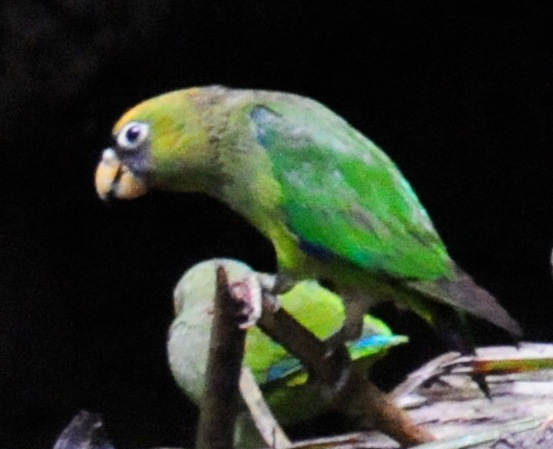 Scarlet-shouldered ParrotletTouit huetii
-
 Blue-fronted ParrotletTouit dilectissimus
-
 Golden-tailed ParrotletTouit surdus
- Red-fronted ParrotletTouit costaricensis
-
 Spot-winged ParrotletTouit stictopterus
-
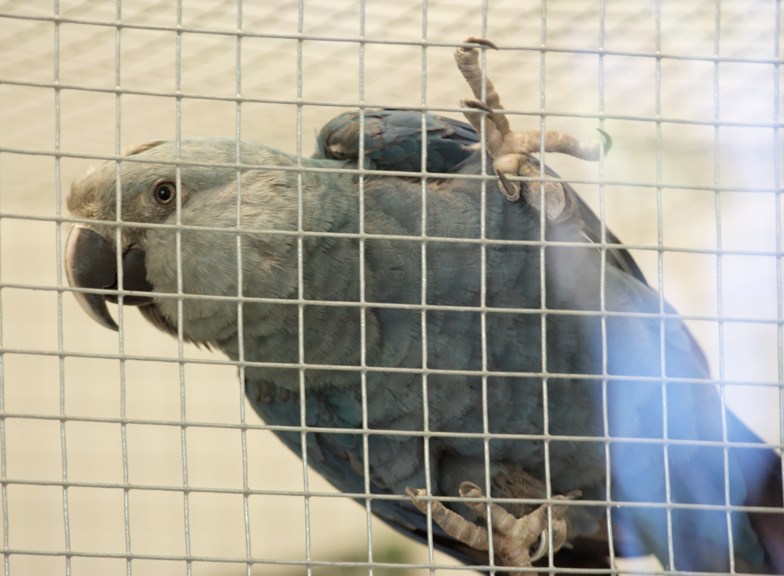 Spix's MacawCyanopsitta spixii
Compare
Questions and answers
What is the scientific name of the Brown-backed Parrotlet?
The scientific name of the Brown-backed Parrotlet is Touit melanonotus. Written with its author, the full name is Touit melanonotus (zu Wied-Neuwied, 1820).
Which family does the Brown-backed Parrotlet belong to?
Touit melanonotus belongs to the family Psittacidae, in the order Psittaciformes and the class Aves.
Where is the Brown-backed Parrotlet found?
Checklists and occurrence records place Touit melanonotus in 1 country: Brazil.
What is the conservation status of the Brown-backed Parrotlet?
The IUCN Red List category recorded for Touit melanonotus is Near Threatened (NT).
What other names does the Brown-backed Parrotlet have?
Touit melanonotus is also known in English as Black-eared Parrotlet.
Sources
Passages the profile rests on
- Young individuals have a paler orbital ring than adults. Source passage: “Young birds can be differentiated by their paler orbital ring” — English Wikipedia
- Young individuals have a flesh-coloured cere, whereas adults have a dark grey cere. Source passage: “their cere being flesh coloured as opposed to dark grey in adults.” — English Wikipedia
- The species inhabits humid forests at elevations of 500–1,000 metres, occasionally occurring down to sea level. Source passage: “They frequent humid forest from 500–1,000 m (1,600–3,300 ft) (occasionally down to sea level).” — English Wikipedia
- The species is primarily recorded in lower montane evergreen forest at elevations of 500–1,200 metres. Source passage: “It is mostly known from lower montane evergreen forest at 500–1,200 metres (1,600–3,900 ft)” — English Wikipedia
- The species has been recorded at elevations reaching 1,400 metres in Itatiaia National Park. Source passage: “but also up to 1,400 m (4,600 ft) in the Itatiaia National Park.” — English Wikipedia
- The species feeds on large leguminous seeds. Source passage: “Food items are poorly studied but include large leguminous seeds” — English Wikipedia
- The species consumes fruit from Rapanea acuminata. Source passage: “fruit of Rapanea acuminata, Clusia sp. and mistletoes.” — English Wikipedia
- The species consumes fruit from Clusia species. Source passage: “fruit of Rapanea acuminata, Clusia sp. and mistletoes.” — English Wikipedia
- The species feeds on mistletoe fruits. Source passage: “fruit of Rapanea acuminata, Clusia sp. and mistletoes.” — English Wikipedia
- The species has been observed feeding on the fruit of Clusia criuva. Source passage: “Observed feeding on Clusia criuva” — English Wikipedia
- The species is generally observed in flocks containing 3–20 individuals. Source passage: “are mostly found in small flocks of 3–20 birds.” — English Wikipedia
- Seasonal migration or dispersal has been suspected in the species, potentially involving short movements between elevations. Source passage: “Seasonal migration or dispersal is suspected, though this may amount to little more than short altitudinal movements.” — English Wikipedia
- Adults have been observed plucking fruit from trees by cutting the stalk with their bills. Source passage: “presumed adults pluck the fruit from the tree snipping the stalk with their bills” — English Wikipedia
- Adults carry plucked fruit to a more secure location on a firmer branch before eating it. Source passage: “carry the fruit to a more secure location on a firmer branch” — English Wikipedia
- The species opens fruit by wedging it against a branch and extracting seeds with its tongue. Source passage: “where they open the fruitwith their bill wedging it against the branch prising the seeds out with their tongue;” — English Wikipedia
- The species does not use its feet during the described fruit-feeding process. Source passage: “they do not use their feet at any time in the feeding process” — English Wikipedia
- Some presumed young individuals have been observed eating fruit directly where it grows rather than plucking it. Source passage: “Some individuals that were presumed to be young birds were seen to eat the fruits in situ and did not pluck them.” — English Wikipedia
- Breeding is suspected to occur between September and October. Source passage: “Breeding is suspected to occur from September to October.” — English Wikipedia
- Well-grown young individuals were observed being fed by adults in Ubatuba, São Paulo state, in January 2010. Source passage: “Well grown young birds were observed being fed by adults in Ubatuba, São Paulo state, January 2010.” — English Wikipedia
- The species was considered rare even during the nineteenth century. Source passage: “They were never deemed common, but seen as rather rare, even in the 19th century.” — English Wikipedia
- The species' inconspicuous nature and naturally low population densities may contribute to the scarcity of records. Source passage: “Their inconspicuous nature and naturally low densities may contribute to the paucity of records.” — English Wikipedia
- Sightings of the species increased from the mid-1980s, partly following the discovery of its calls. Source passage: “A resurgence in sightings since the mid-1980s, and their discovery at Espírito Santo, was due to knowledge of their calls.” — English Wikipedia
- The species has been recorded in Bahia again after an absence of approximately a century. Source passage: “They were resighted in Bahia after a century long absence.” — English Wikipedia
Data
- Catalogue of Life, 2026-10-16 XR cc by
- Global Biodiversity Information Facility CC BY 4.0
- Wikidata CC0
- GeoNames CC BY 4.0
- Wikimedia Commons per image; credit shown with each image
- Within the Catalogue of Life, this name comes from The Integrated Taxonomic Information System cc0
References
- Dickinson, Edward C., ed. (2003). The Howard and Moore Complete Checklist of the Birds of the World, 3rd Edition.
- Gill, Frank, & and Minturn Wright. (2006). Birds of the World: Recommended English Names.
- Dickinson, E. C., and L. Christidis, eds. (2014). The Howard and Moore Complete Checklist of the Birds of the World, 4th Edition, Vol. 2 Passerines.
This species in other databases
Page built on 27 November 2026. See how the catalog is made and all sources and licences.
Cite this page
ScientificNames.org. (2026). Touit melanonotus (Brown-backed Parrotlet). Retrieved November 27, 2026, from https://scientificnames.org/species/touit-melanonotus
“Touit melanonotus (Brown-backed Parrotlet).” ScientificNames.org, 2026, scientificnames.org/species/touit-melanonotus. Accessed 27 Nov. 2026.
ScientificNames.org. “Touit melanonotus (Brown-backed Parrotlet).” Accessed November 27, 2026. https://scientificnames.org/species/touit-melanonotus.
@misc{scientificnames_touit_melanonotus_brown_backed_parrotlet,
  author = {{ScientificNames.org}},
  title = {Touit melanonotus (Brown-backed Parrotlet)},
  year = {2026},
  url = {https://scientificnames.org/species/touit-melanonotus},
  note = {Accessed 2026-11-27}
}