Species · Birds
Black-tailed Nativehen Tribonyx ventralis
The scientific name of the Black-tailed Nativehen is Tribonyx ventralis. It is a species of bird in the family Rallidae (rail), order Gruiformes. The name dates from 1837.
- Scientific name
- Tribonyx ventralis (Gould, 1837)
- Common name
- Black-tailed Nativehen
- Genus
- Tribonyx
- Family
- Rallidae (Rail)
- Order
- Gruiformes
- Class
- Aves
- Red List category
- LC Least Concern
- Recorded in
- 2 countries
- Name status
- accepted in the Catalogue of Life

Overview
Tribonyx ventralis lives near fresh and brackish water, including permanent and intermittent water sources.
Written 26 November 2026 from the sources listed below. Each statement was checked against the passage it cites; statements that could not be supported were removed.
Appearance
It reaches approximately 38 cm in length and weighs approximately 400 g.[1][2]
Habitat
The Black-tailed Nativehen lives near fresh and brackish water throughout the year. It occurs near both permanent and intermittent water sources and is associated with terrestrial and inland freshwater habitats.[3][4][5]
Diet
The Black-tailed Nativehen eats insects, plant material and seeds.[6]
Behaviour
The Black-tailed Nativehen is nomadic and follows seasonal water sources. It is often noticeable in small flocks on the ground.[7][8]
It is not excessively vocal and commonly gives an alarm call resembling a kak sound. Its erect tail and social behaviour resemble those of domestic hens.[9][10]
Reproduction and life cycle
Breeding generally occurs between August and December or when environmental conditions are favourable. The species constructs a cup-shaped nest in vegetation near water or swampland.[11][12]
The female lays between five and seven pale green eggs. The eggs are incubated for approximately 20 days.[13][14]
Conservation
The Black-tailed Nativehen is classified as Least Concern by the IUCN. Its estimated global extent of occurrence is between 1,000,000 and 10,000,000 km².[15][16]
Uses
The Black-tailed Nativehen can cause crop damage in agricultural areas.[17]
Similar species
The Tasmanian Native-hen (Tribonyx mortierii) is similar in shape to the Black-tailed Nativehen but is larger.[18]
Classification of the Black-tailed Nativehen
| Kingdom | Animalia |
|---|---|
| Phylum | Chordata |
| Subphylum | Vertebrata |
| Infraphylum | Gnathostomata |
| Parvphylum | Osteichthyes |
| Megaclass | Tetrapoda |
| Class | Aves (Bird) |
| Order | Gruiformes (Rails) |
| Family | Rallidae (Rail) |
| Genus | Tribonyx (Nativehens) |
| Species | Tribonyx ventralis (Gould, 1837) |
Where the Black-tailed Nativehen is found
Checklists and occurrence records place Tribonyx ventralis in 2 countries across Oceania. GBIF holds 74,332 georeferenced records of it.
Countries
Regions and cities with the most records
- Victoria, Australia 23,860
- South Australia, Australia 19,979
- New South Wales, Australia 13,123
- Queensland, Australia 6,245
- Northern Territory, Australia 4,799
- Western Australia, Australia 4,294
- Adelaide, Australia 3,855
- Alice Springs, Australia 3,853
- Adelaide Hills, Australia 3,633
- Ballarat, Australia 1,573
- Geelong, Australia 1,537
- Melbourne, Australia 1,379
- St Albans, Australia 1,274
- Balwyn North, Australia 970
- Perth, Australia 824
- Canberra, Australia 660
- Australian Capital Territory, Australia 659
- Burwood, Australia 590
- Mildura, Australia 590
- Bendigo, Australia 541
- Gawler, Australia 530
- Torquay, Australia 529
- Mount Barker, Australia 520
- Tuggeranong, Australia 473
- Horsham, Australia 417
- Griffith, Australia 322
- Whyalla, Australia 315
- Wodonga, Australia 239
- Shepparton, Australia 216
- Warrnambool, Australia 211
- Frankston East, Australia 202
- Sydney, Australia 183
- Kwinana, Australia 145
- Mount Isa, Australia 122
- Hornsby, Australia 118
- Narangba, Australia 95
Range as the checklists state it
Australia
A number beside a place is its count of GBIF occurrence records. A place without a number comes from a checklist alone. Records show where a species has been observed or collected, which can include escapes and vagrants.
Common names
English
- Black-tailed Nativehen
- Black-tailed Native-hen
Names in 27 other languages
- Arabic
- دجاجة الماء سوداء الذيل
- Catalan
- polla cama-roja
- Chinese
- 黑尾水雞, 黑尾水鸡
- Croatian
- australska mlakuša
- Czech
- slípka černoocasá
- Danish
- Sorthalet Rørhøne
- Dutch
- Australisch Waterhoen
- Esperanto
- nigravosta galinolo
- Estonian
- austraalia kanatait
- Finnish
- australianliejukana
- French
- Gallinule aborigène
- German
- Rotfuß-Pfuhlhuhn, Rotfuß-Teichhuhn, Rotfußpfuhlhuhn
- Hungarian
- vöröslábú mocsárityúk
- Italian
- Gallinella codanera, Gallinella codanera australiana
- Japanese
- オグロバン
- Lithuanian
- juodauodegė vištelė
- Norwegian
- vandresivhøne
- Persian
- چارخو دم سیاه
- Polish
- kureczka duża
- Portuguese
- frango-d'água-de-rabo-preto, galinha-d'água-aborígene, galinha-d'água-de-cauda-preta, galinha-de-água-aborígene
- Russian
- Чернохвостая камышница
- Serbian
- Crnorepa barska kokica
- Slovak
- sliepočka červenonohá
- Spanish
- Gallineta patirroja
- Swedish
- svartstjärtad rörhöna
- Turkish
- Kara Kuyruklu Yertavuğu
- Ukrainian
- курочка чорнохвоста
Synonyms
2 other scientific names have been used for this species and are now treated as synonyms of Tribonyx ventralis.
- Gallinula ventralis Gould, 1837
- Tribonyx ventralis ventralis Gould, J, 1837
Related species
-
 Tasmanian NativehenTribonyx mortierii
- Hodgen's WaterhenTribonyx hodgenorum
-
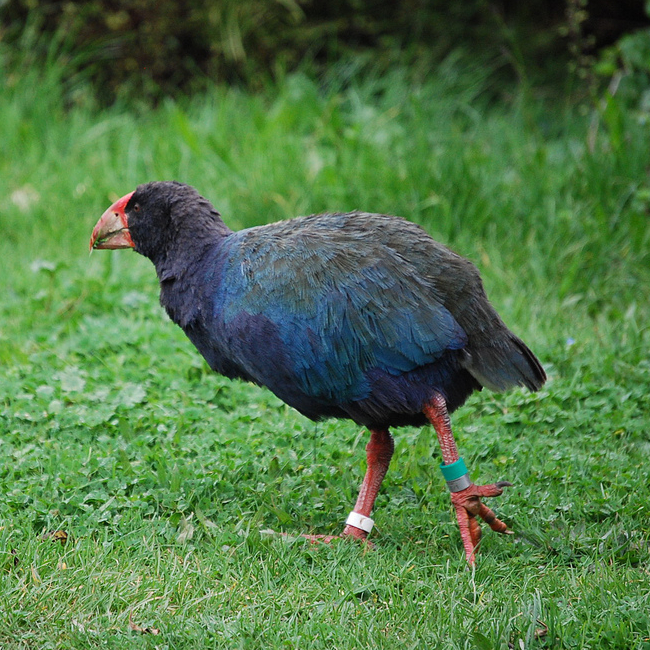 TakahēPorphyrio hochstetteri
-
 Australasian SwamphenPorphyrio melanotus
-
 American CootFulica americana
-
 Eurasian CootFulica atra
-
 Common MoorhenGallinula chloropus
-
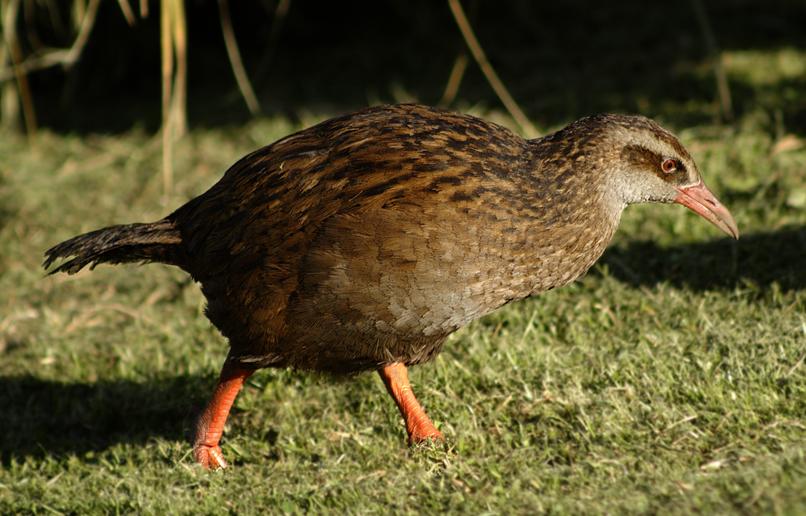 WekaGallirallus australis
Compare
Questions and answers
What is the scientific name of the Black-tailed Nativehen?
The scientific name of the Black-tailed Nativehen is Tribonyx ventralis. Written with its author, the full name is Tribonyx ventralis (Gould, 1837).
Which family does the Black-tailed Nativehen belong to?
Tribonyx ventralis belongs to the family Rallidae, in the order Gruiformes and the class Aves.
Where is the Black-tailed Nativehen found?
Checklists and occurrence records place Tribonyx ventralis in 2 countries: Australia and New Zealand.
What is the conservation status of the Black-tailed Nativehen?
The IUCN Red List category recorded for Tribonyx ventralis is Least Concern (LC).
What other names does the Black-tailed Nativehen have?
Tribonyx ventralis is also known in English as Black-tailed Native-hen.
What is the Tasmanian Native-hen?
The Tasmanian Native-hen (Tribonyx mortierii) is similar in shape to the Black-tailed Nativehen but is larger.[18]
Sources
Passages the profile rests on
- The species reaches approximately 38 cm in length. Source passage: “reaching about 38 cm in length” — English Wikipedia
- The species weighs approximately 400 g. Source passage: “weighing around 400 g (0.88 lb).” — English Wikipedia
- The species lives near fresh and brackish water throughout the year. Source passage: “It is found year-round living near fresh and brackish water.” — English Wikipedia
- The species occurs near both permanent and intermittent water sources. Source passage: “where it lives by permanent as well as intermittent water sources.” — English Wikipedia
- The species is associated with terrestrial and inland freshwater habitats. Source passage: “Habitat and Ecology. System. Terrestrial, Freshwater (=Inland waters)” — iucnredlist.org
- The species eats insects, plant material and seeds. Source passage: “This species' diet consists of insects, plant material and seeds.” — English Wikipedia
- The species is nomadic and follows seasonal water sources. Source passage: “This species is nomadic, following seasonal water sources.” — English Wikipedia
- The species is often noticeable in small flocks on the ground. Source passage: “They become noticeable when they are seen in small flocks on the ground.” — English Wikipedia
- The species is not excessively vocal and commonly gives an alarm call resembling a kak sound. Source passage: “This species is not excessively vocal, its main call is an alarm 'kak' sound.” — English Wikipedia
- The species' erect tail and social behaviour resemble those of domestic hens. Source passage: “Their erect tails and social behaviour are reminiscent of domestic hens.” — English Wikipedia
- Breeding generally occurs between August and December or when environmental conditions are favourable. Source passage: “Breeding generally takes place between August and December or when conditions are favourable.” — English Wikipedia
- The species constructs a cup-shaped nest in vegetation near water or swampland. Source passage: “A cup-shaped nest is built in vegetation near water or swampland.” — English Wikipedia
- The female lays between five and seven pale green eggs. Source passage: “5–7 pale green eggs are laid” — English Wikipedia
- The eggs are incubated for approximately 20 days. Source passage: “incubated for approximately 20 days.” — English Wikipedia
- The estimated global extent of occurrence for the species is between 1,000,000 and 10,000,000 km². Source passage: “with an estimated global extent of occurrence of 1,000,000–10,000,000 km2.” — English Wikipedia
- The species is classified as Least Concern by the IUCN. Source passage: “It is classified as Least Concern by IUCN.” — English Wikipedia
- The species can cause crop damage in agricultural areas. Source passage: “In farming areas, the black-tailed nativehen is capable of causing crop damage.” — English Wikipedia
- The Tasmanian Native-hen (Tribonyx mortierii) is similar in shape to the black-tailed native-hen but is larger. Source passage: “It is similar in shape to the Black-tailed Native-hen Tribonyx ventralis but is larger.” — australian.museum
Data
- Catalogue of Life, 2026-10-16 XR cc by
- Global Biodiversity Information Facility CC BY 4.0
- Wikidata CC0
- GeoNames CC BY 4.0
- Wikimedia Commons per image; credit shown with each image
- Within the Catalogue of Life, this name comes from The Integrated Taxonomic Information System cc0
References
- Peters, & James Lee. (1934). Check-List of Birds of the World, Vol. 2.
- Taylor, & Barry. (1988). Rails: A Guide to the Rails, Crakes, Gallinules and Coots of the World.
- Dickinson, E. C., and J. V. Remsen Jr., eds. (2013). The Howard and Moore Complete Checklist of the Birds of the World, 4th Edition, Vol. 1 Non-Passerines.
This species in other databases
Page built on 28 November 2026. See how the catalog is made and all sources and licences.
Cite this page
ScientificNames.org. (2026). Tribonyx ventralis (Black-tailed Nativehen). Retrieved November 28, 2026, from https://scientificnames.org/species/tribonyx-ventralis
“Tribonyx ventralis (Black-tailed Nativehen).” ScientificNames.org, 2026, scientificnames.org/species/tribonyx-ventralis. Accessed 28 Nov. 2026.
ScientificNames.org. “Tribonyx ventralis (Black-tailed Nativehen).” Accessed November 28, 2026. https://scientificnames.org/species/tribonyx-ventralis.
@misc{scientificnames_tribonyx_ventralis_black_tailed_nativehen,
  author = {{ScientificNames.org}},
  title = {Tribonyx ventralis (Black-tailed Nativehen)},
  year = {2026},
  url = {https://scientificnames.org/species/tribonyx-ventralis},
  note = {Accessed 2026-11-28}
}