Species · Birds
Cobb's Wren Troglodytes cobbi
The scientific name of the Cobb's Wren is Troglodytes cobbi. It is a species of bird in the family Troglodytidae (wren), order Passeriformes. The name dates from 1909.
- Scientific name
- Troglodytes cobbi Chubb, 1909
- Common name
- Cobb's Wren
- Genus
- Troglodytes
- Family
- Troglodytidae (Wren)
- Order
- Passeriformes
- Class
- Aves
- Red List category
- LC Least Concern
- Recorded in
- 1 country
- Name status
- accepted in the Catalogue of Life

Overview
Troglodytes cobbi is endemic to the Falkland Islands. It has brown plumage, a greyer head and breast, a rufous tail and dark bars on its flight feathers and tail.
Written 26 November 2026 from the sources listed below. Each statement was checked against the passage it cites; statements that could not be supported were removed.
Appearance
Cobb's Wren measures approximately 12–13.5 cm in length. Its plumage is brown, with greyer coloration on the head and breast and a more rufous tail. Its flight feathers and tail have dark bars.[1][2][3]
Its bill is long, blackish and slightly curved.[4]
Habitat
Cobb's Wrens typically inhabit dense coastal stands of tussac grass. The species is restricted to small islands without rats.[5][6]
Diet
Cobb's Wrens search among kelp and beach debris for small invertebrates, including insects and amphipods.[7]
Behaviour
Its vocalizations include several buzzing calls. Its song consists of jumbled trills and whistles and can be heard from August through February.[8][9][10]
Individual males have different song patterns.[11]
Cobb's Wrens are tame and can often be approached closely. When disturbed, they generally escape between boulders or tussac clumps rather than flying.[12][13]
Reproduction and life cycle
The nest is constructed as a ball of grass lined with feathers and tussac root fibres. It is built on or near the ground among tussac grass or in rock crevices.[14][15]
The eggs are pinkish and marked with small reddish spots. Clutches contain three or four eggs, and egg laying occurs from early October through December.[16][17][18]
Cobb's Wrens probably raise two broods during the breeding season.[19]
Conservation
The estimated population was 4,500–8,000 pairs in 1997–1998. The species occurs in fragmented small populations.[20][21]
Ground-level feeding and breeding make Cobb's Wren vulnerable to predation. Its island populations could disappear if rats or cats colonize their islands.[22][23]
Cobb's Wren was reclassified as Least Concern in 2017. Control of invasive rats on nearby islands contributed to this reclassification.[24][25]
Similar species
The grass wren is the principal species likely to be confused with Cobb's Wren. It is smaller and has a shorter bill, a buff eyestripe and dark streaks on its back and head.[26][27][28]
Classification of the Cobb's Wren
| Kingdom | Animalia |
|---|---|
| Phylum | Chordata |
| Subphylum | Vertebrata |
| Infraphylum | Gnathostomata |
| Parvphylum | Osteichthyes |
| Megaclass | Tetrapoda |
| Class | Aves (Bird) |
| Order | Passeriformes (Passerine) |
| Family | Troglodytidae (Wren) |
| Genus | Troglodytes (Wrens) |
| Species | Troglodytes cobbi Chubb, 1909 |
Where the Cobb's Wren is found
Checklists and occurrence records place Troglodytes cobbi in 1 country. GBIF holds 1,814 georeferenced records of it.
Countries
Regions and cities with the most records
A number beside a place is its count of GBIF occurrence records. A place without a number comes from a checklist alone. Records show where a species has been observed or collected, which can include escapes and vagrants.
Common names
English
- Cobb's Wren
- Cobb’s Wren
Names in 23 other languages
- Catalan
- cargolet de les Malvines
- Chinese
- 克布氏鷦鷯, 科氏鹪鹩
- Croatian
- falklandski palčić
- Czech
- střízlík falklandský
- Danish
- Falkland Gærdesmutte
- Dutch
- Cobbs Winterkoning
- Esperanto
- falklanda troglodito
- Finnish
- falklandinpeukaloinen
- French
- Troglodyte de Cobb
- German
- Falklandzaunkönig
- Hungarian
- falklandi ökörszem
- Italian
- Scricciolo di Cobb
- Japanese
- フォークランドミソサザイ
- Lithuanian
- Kobo karietaitė
- Norwegian
- falklandssmett
- Polish
- strzyżyk falklandzki
- Portuguese
- carriça-das-malvinas, corruíra-das-malvinas
- Russian
- Фолклендский крапивник
- Slovak
- oriešok falklandský
- Spanish
- Chochín malvinero, Ratona Malvinera, Ratona de Malvinas
- Swedish
- falklandsgärdsmyg
- Turkish
- Cobb Çıtkuşu
- Ukrainian
- волоочко фолклендське
Synonyms
One other scientific name has been used for this species and is now treated as a synonym of Troglodytes cobbi.
- Troglodytes aedon cobbi Chubb, C, 1909
Related species
-
 Eurasian WrenTroglodytes troglodytes
-
 Northern House WrenTroglodytes aedon
-
 Winter WrenTroglodytes hiemalis
-
 Pacific WrenTroglodytes pacificus
-
 Tepui WrenTroglodytes rufulus
-
 Socorro WrenTroglodytes sissonii
-
 Clarión WrenTroglodytes tanneri
-
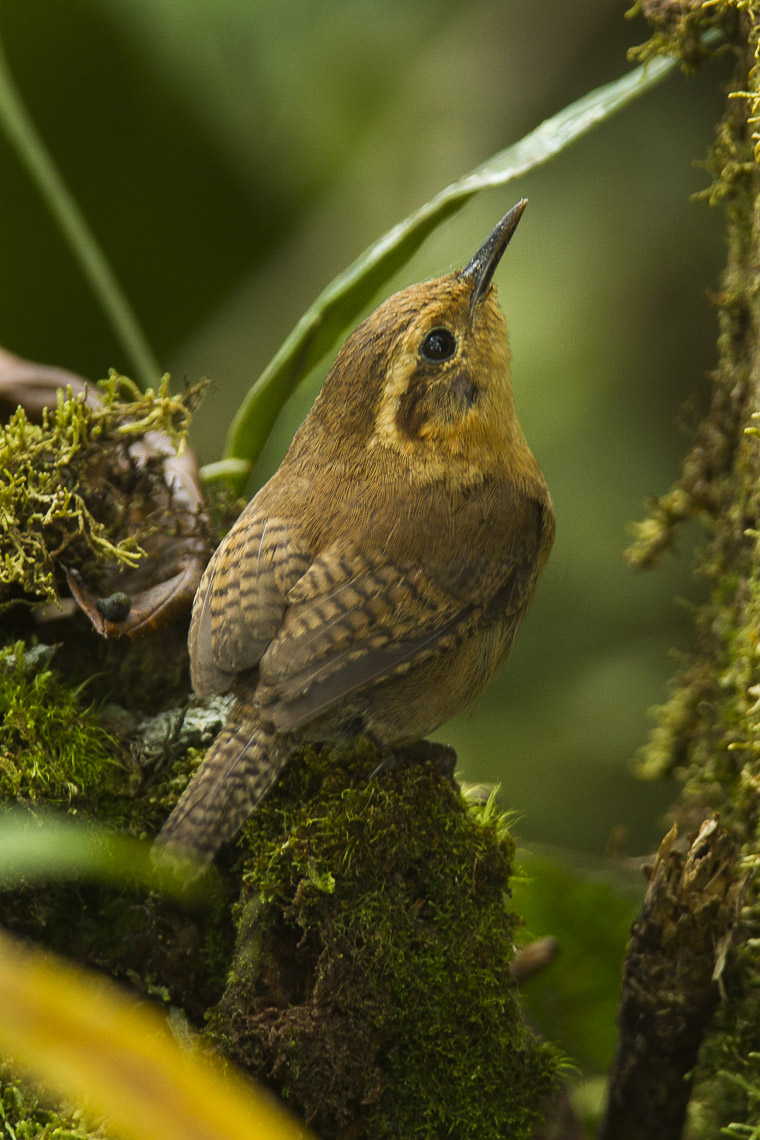 Mountain WrenTroglodytes solstitialis
Compare
Questions and answers
What is the scientific name of the Cobb's Wren?
The scientific name of the Cobb's Wren is Troglodytes cobbi. Written with its author, the full name is Troglodytes cobbi Chubb, 1909.
Which family does the Cobb's Wren belong to?
Troglodytes cobbi belongs to the family Troglodytidae, in the order Passeriformes and the class Aves.
Where is the Cobb's Wren found?
Checklists and occurrence records place Troglodytes cobbi in 1 country: Falkland Islands.
What is the conservation status of the Cobb's Wren?
The IUCN Red List category recorded for Troglodytes cobbi is Least Concern (LC).
What other names does the Cobb's Wren have?
Troglodytes cobbi is also known in English as Cobb’s Wren.
What does the bird wren eat?
Cobb's Wrens search among kelp and beach debris for small invertebrates, including insects and amphipods.[7]
Sources
Passages the profile rests on
- Cobb's Wren measures approximately 12–13.5 cm in length. Source passage: “fairly small (12-13.5 cm) wren” — English Wikipedia
- Its plumage is brown, with greyer coloration on the head and breast and a more rufous tail. Source passage: “The plumage is brown, greyer on the head and breast and more rufous on the tail.” — English Wikipedia
- Its flight feathers and tail have dark bars. Source passage: “There are dark bars on the flight feathers and tail.” — English Wikipedia
- Its bill is long, blackish and slightly curved. Source passage: “The bill is long, blackish and slightly curved.” — English Wikipedia
- Cobb's Wrens typically inhabit dense coastal stands of tussac grass. Source passage: “The birds typically inhabit dense stands of tussac grass near the coast.” — English Wikipedia
- The species is restricted to small islands without rats. Source passage: “restricted to small rat-free islands” — English Wikipedia
- Cobb's Wrens search among kelp and beach debris for small invertebrates, including insects and amphipods. Source passage: “searching among kelp and debris to find small invertebrates such as insects and amphipods.” — English Wikipedia
- Its vocalizations include several buzzing calls. Source passage: “Cobb's wrens have a number of buzzing calls” — English Wikipedia
- Its song consists of jumbled trills and whistles. Source passage: “their song is a series of jumbled trills and whistles.” — English Wikipedia
- Its song can be heard from August through February. Source passage: “The song can be heard from August to February” — English Wikipedia
- Individual males have different song patterns. Source passage: “with different males having different song patterns.” — English Wikipedia
- Cobb's Wrens are tame and can often be approached closely. Source passage: “They are tame and can often be approached closely.” — English Wikipedia
- When disturbed, Cobb's Wrens generally escape between boulders or tussac clumps rather than flying. Source passage: “When disturbed, they prefer to slip away like a mouse between boulders or tussac clumps rather than fly.” — English Wikipedia
- Its nest is constructed as a ball of grass lined with feathers and tussac root fibres. Source passage: “The nest is a ball of grass lined with feathers and tussac root fibres.” — English Wikipedia
- Its nest is built on or near the ground among tussac grass or in rock crevices. Source passage: “It is built on or near the ground among tussac or in a rock crevice.” — English Wikipedia
- Its eggs are pinkish and marked with small reddish spots. Source passage: “The eggs are pinkish with small reddish spots” — English Wikipedia
- Cobb's Wrens lay clutches of three or four eggs. Source passage: “three or four are laid in a clutch.” — English Wikipedia
- Egg laying occurs from early October through December. Source passage: “The eggs are laid from early October to December” — English Wikipedia
- Cobb's Wrens probably raise two broods during the breeding season. Source passage: “two broods are probably raised during the breeding season.” — English Wikipedia
- The estimated population was 4,500–8,000 pairs in 1997–1998. Source passage: “a population of only 4,500-8000 pairs (1997/1998 estimate).” — English Wikipedia
- The species occurs in fragmented small populations. Source passage: “It is fragmented into small populations” — English Wikipedia
- Its island populations could disappear if rats or cats colonize their islands. Source passage: “which could disappear if their islands were colonized by rats or cats.” — English Wikipedia
- Ground-level feeding and breeding make Cobb's Wren vulnerable to predation. Source passage: “The bird's habit of feeding and breeding at ground level makes it very vulnerable to predation” — English Wikipedia
- Cobb's Wren was reclassified as Least Concern in 2017. Source passage: “It has been reclassified as least concern in 2017” — English Wikipedia
- Control of invasive rats on nearby islands contributed to the species' reclassification as Least Concern. Source passage: “thanks to the control of invasive rats on nearby islands.” — English Wikipedia
- The grass wren is identified as the principal species likely to be confused with Cobb's Wren. Source passage: “The main confusion species is the grass wren” — English Wikipedia
- The grass wren is smaller than Cobb's Wren and has a shorter bill. Source passage: “which is smaller with a shorter bill” — English Wikipedia
- The grass wren has a buff eyestripe and dark streaks on its back and head. Source passage: “buff eyestripe and dark streaks on the back and head.” — English Wikipedia
Data
- Catalogue of Life, 2026-10-16 XR cc by
- Global Biodiversity Information Facility CC BY 4.0
- Wikidata CC0
- GeoNames CC BY 4.0
- Wikimedia Commons per image; credit shown with each image
- Within the Catalogue of Life, this name comes from The Integrated Taxonomic Information System cc0
This species in other databases
Page built on 29 November 2026. See how the catalog is made and all sources and licences.
Cite this page
ScientificNames.org. (2026). Troglodytes cobbi (Cobb's Wren). Retrieved November 29, 2026, from https://scientificnames.org/species/troglodytes-cobbi
“Troglodytes cobbi (Cobb's Wren).” ScientificNames.org, 2026, scientificnames.org/species/troglodytes-cobbi. Accessed 29 Nov. 2026.
ScientificNames.org. “Troglodytes cobbi (Cobb's Wren).” Accessed November 29, 2026. https://scientificnames.org/species/troglodytes-cobbi.
@misc{scientificnames_troglodytes_cobbi_cobbs_wren,
  author = {{ScientificNames.org}},
  title = {Troglodytes cobbi (Cobb's Wren)},
  year = {2026},
  url = {https://scientificnames.org/species/troglodytes-cobbi},
  note = {Accessed 2026-11-29}
}