Species · Conifers and allies
Western Hemlock Tsuga heterophylla
The scientific name of the Western Hemlock is Tsuga heterophylla. It is a species of gymnosperm in the family Pinaceae (pine family), order Pinales.
- Scientific name
- Tsuga heterophylla (Raf.) Sarg.
- Common name
- Western Hemlock
- Genus
- Tsuga
- Family
- Pinaceae (Pine Family)
- Order
- Pinales
- Class
- Pinopsida
- Red List category
- LC Least Concern
- Recorded in
- 18 countries
- Name status
- accepted in the Catalogue of Life

Overview
Tsuga heterophylla is native to the northwest coast of North America, from the Kenai Peninsula in Alaska to northern Sonoma County in California. It is distinguished by flattened, two-ranked needles with white stomatal bands underneath and branchlet tips that droop noticeably.
Written 26 November 2026 from the sources listed below. Each statement was checked against the passage it cites; statements that could not be supported were removed.
Appearance
The western hemlock has a broad conical crown when young that becomes cylindrical with age. Its principal branches spread horizontally from the trunk, while its branchlet sprays droop.[1][2]
Its needles are flattened and arranged in two ranks along the shoots. They measure 5–25 mm long and 1.5–2 mm wide, with a shiny, grooved, dark green upper surface and a whitened lower surface bearing white stomatal bands.[3][4][5][6][7]
Its bark is smooth and reddish-brown when young, becoming darker brown with deeply furrowed, flat-topped scaly ridges as it matures.[8][9]
Its cones are small, pendulous and slenderly cylindrical. Closed cones measure 14–30 mm long and 7–8 mm wide, and change from green to rosy red and then brown as they age.[10][11][12]
Habitat
The western hemlock is closely associated with temperate rainforests. Its valleys typically receive at least 80 cm of annual rainfall, and it mostly grows at elevations from sea level to 600 metres.[13][14][15]
It commonly grows mixed with western redcedar, Douglas-fir, grand fir, black cottonwood and red alder. Its seedlings commonly establish on rotten logs or partially decomposed forest litter.[16][17]
Behaviour
Its thin bark and shallow roots make it susceptible to fire.[18]
Reproduction and life cycle
The western hemlock generally begins producing cones when trees are about 25 years old. Its cones contain 15–25 thin, flexible scales and mature 5–7 months after pollination.[19][20][21]
Its seeds are brown and measure 2–3 mm long. Its cones may remain on the tree for one or two years.[22][23]
Conservation
The western hemlock has naturalized in parts of Great Britain and New Zealand. It is not considered an invasive species in those parts.[24][25]
Uses
Western hemlock wood is used for timber and paper production. Its timber is used to manufacture doors, joinery, furniture, siding, flooring, plywood, railway ties, boxes and crates.[26][27][28]
Its wood fibre is used to manufacture rayon and various plastics. Planting western hemlock along riverbanks can help reduce erosion.[29][30]
Classification of the Western Hemlock
| Kingdom | Plantae |
|---|---|
| Subkingdom | Pteridobiotina |
| Phylum | Tracheophyta |
| Class | Pinopsida (Conifer) |
| Subclass | Pinidae |
| Order | Pinales |
| Family | Pinaceae (Pine Family) |
| Genus | Tsuga (Hemlock) |
| Species | Tsuga heterophylla (Raf.) Sarg. |
Where the Western Hemlock is found
Checklists and occurrence records place Tsuga heterophylla in 18 countries. GBIF holds 43,553 georeferenced records of it.
Countries
- Austria 8
- Belgium 1,053
- Canada 11,873
- Denmark 217
- Finland 8
- France 178
- Germany 95
- Ireland 37
- Isle of Man 49
- Latvia 3
- Luxembourg 5
- Norway 2,024
- Poland 6
- Spain 3
- Sweden 153
- The Netherlands 3,132
- United Kingdom 13,627
- United States 11,082
Regions and cities with the most records
- British Columbia, Canada 11,487
- England, United Kingdom 7,180
- Washington, United States 5,531
- Scotland, United Kingdom 4,429
- Oregon, United States 2,674
- North Vancouver, Canada 2,436
- Burnaby, Canada 2,388
- Riley Park, Canada 2,325
- Victoria-Fraserview, Canada 2,303
- Vancouver, Canada 2,218
- West Vancouver, Canada 2,165
- New Westminster, Canada 1,903
- Port Coquitlam, Canada 1,798
- Coquitlam, Canada 1,796
- Port Moody, Canada 1,776
- Pitt Meadows, Canada 1,636
- Wales, United Kingdom 1,470
- Fleetwood, Canada 1,446
- Richmond, Canada 1,351
- Gelderland, The Netherlands 1,319
- Strawberry Hill, Canada 1,109
- Maple Ridge, Canada 1,015
- Nesttun, Norway 1,005
- Alaska, United States 840
- Bellevue, United States 840
- Barneveld, The Netherlands 818
- Mercer Island, United States 807
- Kirkland, United States 799
- Bergen, Norway 784
- Columbia City, United States 781
- Redmond, United States 739
- Seattle, United States 737
- Surrey, Canada 735
- Inglewood-Finn Hill, United States 734
- California, United States 709
- Kenmore, United States 684
2 more countries have a few records outside this range
These countries hold a few records of Tsuga heterophylla but lie outside the range the checklists give for it. Such records are often zoo or garden specimens, museum material or vagrants, so the species is not counted as occurring there.
A number beside a place is its count of GBIF occurrence records. A place without a number comes from a checklist alone. Records show where a species has been observed or collected, which can include escapes and vagrants.
Common names
English
- Western Hemlock
- Pacific Hemlock
- Western Hemlock-spruce
Names in 29 other languages
- Arabic
- أتسوغة متباينة الأوراق
- Chinese
- 西部鐵杉
- Czech
- jedlovec západní
- Danish
- Vestamerikansk hemlock, Vestamerikansk skarntydegran
- Dutch
- Westelijke hemlockspar
- Esperanto
- Okcidenta cugo
- Estonian
- läänetsuuga
- Finnish
- lännenhemlokki
- French
- hemlock de l'Ouest, pruche de l'Ouest, tsuga de Californie, tsuga de l'Ouest
- German
- Westamerikanische Hemlocktanne, Westliche Hemlock
- Hebrew
- צוגה מערבית
- Hungarian
- változótűs bürökfenyő
- Icelandic
- Marþöll
- Italian
- Tsuga occidentale, tsuga eterofilla
- Japanese
- アメリカツガ
- Lithuanian
- Kaliforninė cūga
- Norwegian Bokmål
- vestamerikansk hemlokk
- Persian
- کاج شوکران غربی
- Polish
- choina zachodnia
- Russian
- Тсуга западная
- Slovak
- jedľovec rôznolistý
- Spanish
- Tsuga del Pacífico
- Swedish
- jättehemlock
- Turkish
- Batı sugası, Pasifik Sugası
- Ukrainian
- Тсуґа різнолиста
- Welsh
- Hemlog y Gorllewin, Sbriws-Hemlog y Gorllewin, Sbriwsen-Hemlog y Gorllewin
- nok
- kwókwala
- nuk
- qʷiƛ̓aqmapt
- squ
- ḵwáýtsay
Synonyms
9 other scientific names have been used for this species and are now treated as synonyms of Tsuga heterophylla.
- Abies albertiana A.Murray bis
- Abies bridgesii Kellogg
- Abies microphylla Raf.
- Tsuga albertiana (A.Murray bis) Sénécl.
- Tsuga heterophylla f. argenteovariegata (C.K.Schneid.) Rehder
- Tsuga heterophylla var. argenteovariegata C.K.Schneid.
- Abies heterophylla Raf. ambiguous synonym
- Pinus hookeriana W.J.de Wilde ambiguous synonym
- Pinus pattoniana W.R.McNab ambiguous synonym
Related species
-
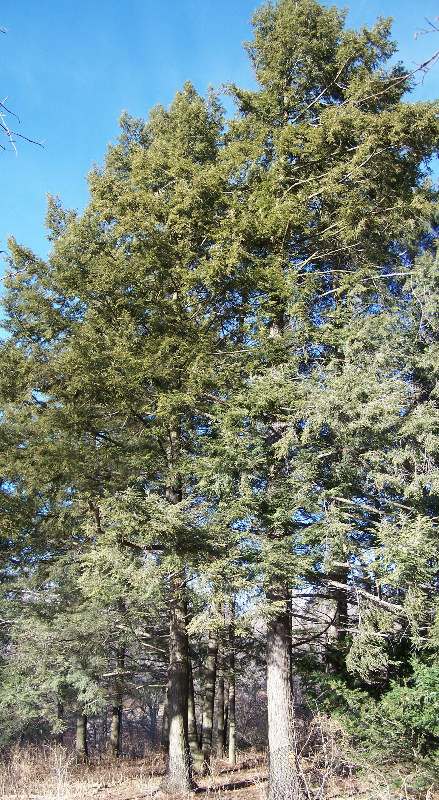 Eastern HemlockTsuga canadensis
-
 Mountain HemlockTsuga mertensiana
-
 Carolina HemlockTsuga caroliniana
-
 Japanese HemlockTsuga sieboldii
-
 Northern Japanese HemlockTsuga diversifolia
-
 Himalayan HemlockTsuga dumosa
-
 Chinese HemlockTsuga chinensis
- Ulleungdo HemlockTsuga ulleungensis
Compare
Questions and answers
What is the scientific name of the Western Hemlock?
The scientific name of the Western Hemlock is Tsuga heterophylla. Written with its author, the full name is Tsuga heterophylla (Raf.) Sarg..
Which family does the Western Hemlock belong to?
Tsuga heterophylla belongs to the family Pinaceae, in the order Pinales and the class Pinopsida.
Where is the Western Hemlock found?
Checklists and occurrence records place Tsuga heterophylla in 18 countries, including United Kingdom, Canada, United States, The Netherlands, Norway and Belgium.
What is the conservation status of the Western Hemlock?
The IUCN Red List category recorded for Tsuga heterophylla is Least Concern (LC).
What other names does the Western Hemlock have?
Tsuga heterophylla is also known in English as Pacific Hemlock and Western Hemlock-spruce.
Sources
Passages the profile rests on
- The western hemlock has a broad conical crown when young that becomes cylindrical with age. Source passage: “The crown is a very neat broad conic shape in young trees with a strongly drooping lead shoot, and becomes cylindrical in older trees” — English Wikipedia
- Its principal branches spread horizontally from the trunk and its branchlet sprays droop. Source passage: “Principal branches coarse, spreading horizontally from the trunk Drooping sprays of branchlets giving a graceful appearance” — tidcf.nrcan.gc.ca
- Its needles are flattened, dark green above and have two distinctive white stomatal bands underneath. Source passage: “They are mid to dark green above; the underside has two distinctive white bands of stomata” — English Wikipedia
- Its needles measure 5–25 mm long and 1.5–2 mm wide. Source passage: “5–25 mm (3⁄16–1 in) long and 1.5–2 mm (1⁄16–3⁄32 in) broad” — English Wikipedia
- Its needles are arranged in two ranks along the shoots. Source passage: “Needles clearly arranged in 2 ranks, with a few shorter ones on the upper side pressed against the twig” — tidcf.nrcan.gc.ca
- The upper needle surface is shiny dark green and grooved. Source passage: “Upper surface shiny dark green and grooved” — tidcf.nrcan.gc.ca
- The lower needle surface is whitened with indistinct lines of white dots on either side of the midvein. Source passage: “Whitened on lower surface with ill-defined lines of white dots on either side of the midvein” — tidcf.nrcan.gc.ca
- Its bark is smooth when young and develops deeply furrowed, flat-topped scaly ridges as it ages. Source passage: “Smooth when young, becoming deeply furrowed with flat-topped scaly ridges” — tidcf.nrcan.gc.ca
- Its bark changes from reddish-brown when young to darker brown as it matures. Source passage: “Reddish-brown when young, becoming darker” — tidcf.nrcan.gc.ca
- Its cones are small, pendulous and slenderly cylindrical. Source passage: “they are small, pendulous, slenderly cylindrical” — English Wikipedia
- Its cones measure 14–30 mm long and 7–8 mm wide when closed. Source passage: “14–30 mm (1⁄2–1+1⁄8 in) long and 7–8 mm (1⁄4–5⁄16 in) broad when closed” — English Wikipedia
- Its cones change from green to rosy red and then brown as they age. Source passage: “The small, one-inch cones are green when immature, and change from a rosy red to brown as they age.” — portland.gov
- The species is closely associated with temperate rainforests. Source passage: “The species is closely associated with temperate rainforests” — English Wikipedia
- Its valleys typically receive at least 80 cm of annual rainfall. Source passage: “Valleys it can be found in usually receive at least 80 cm (31 in) of rain annually.” — English Wikipedia
- It mostly grows at elevations from sea level to 600 metres. Source passage: “It mostly grows at low altitudes, from sea level to 600 m (2,000 ft).” — English Wikipedia
- It commonly grows mixed with western redcedar, Douglas-fir, grand fir, black cottonwood and red alder. Source passage: “usually mixed with western redcedar, Douglas-fir, grand fir, black cottonwood, and red alder” — tidcf.nrcan.gc.ca
- Its seedlings commonly establish on rotten logs or partially decomposed forest litter. Source passage: “Seedlings commonly found on rotten logs, or in partially decomposed forest litter” — tidcf.nrcan.gc.ca
- Its thin bark and shallow roots make it susceptible to fire. Source passage: “Its thin bark and shallow roots makes Western hemlock susceptible to fire.” — English Wikipedia
- The species generally begins producing cones when trees are about 25 years old. Source passage: “The cones appear on trees over about 25 years old” — English Wikipedia
- Its cones contain 15–25 thin, flexible scales. Source passage: “They have 15–25 thin, flexible scales 7–13 mm (1⁄4–1⁄2 in) long.” — English Wikipedia
- Its cones mature 5–7 months after pollination. Source passage: “maturing gray-brown 5–7 months after pollination.” — English Wikipedia
- Its seeds are brown and measure 2–3 mm long. Source passage: “The abundant seeds are brown, 2–3 mm (1⁄16–1⁄8 in) long” — English Wikipedia
- Its cones may remain on the tree for one or two years. Source passage: “Cones may stay on the tree for 1 or 2 years” — tidcf.nrcan.gc.ca
- The species has naturalized in parts of Great Britain and New Zealand. Source passage: “It has naturalised in some parts of Great Britain and New Zealand” — English Wikipedia
- Western hemlock is not considered an invasive species in the parts of Great Britain and New Zealand where it has naturalized. Source passage: “not so extensively as to be considered an invasive species” — English Wikipedia
- Western hemlock wood is used for timber and paper production. Source passage: “it has been greatly utilized for paper production and timber (as a softwood)” — English Wikipedia
- Its timber is used to manufacture doors, joinery and furniture. Source passage: “used for making doors, joinery, and furniture.” — English Wikipedia
- Its wood is used for siding, flooring, plywood, railway ties, boxes and crates. Source passage: “Siding, flooring, plywood, railway ties, boxes, and crates” — tidcf.nrcan.gc.ca
- Its wood fibre is used to manufacture rayon and various plastics. Source passage: “Its fiber is used to make rayon and various plastics” — English Wikipedia
- Planting western hemlock along riverbanks can help reduce erosion. Source passage: “When planted on the banks of a river, western hemlock can help reduce erosion.” — English Wikipedia
Data
- Catalogue of Life, 2026-10-16 XR cc by
- Global Biodiversity Information Facility CC BY 4.0
- Wikidata CC0
- GeoNames CC BY 4.0
- Wikimedia Commons per image; credit shown with each image
- Within the Catalogue of Life, this name comes from Pinopsida from WFO cc0
References
- Silva (Sargent) 12: 73, pl. 605 (1898) where the name was published
- Conifer TEN record for Tsuga heterophylla (Raf.) Sarg. Link
This species in other databases
- Catalogue of Life 59HMG
- Wikidata Q1144409
- iNaturalist 48254
- World Flora Online wfo-0000456392-2026-06
- GRIN 40705
Page built on 28 November 2026. See how the catalog is made and all sources and licences.
Cite this page
ScientificNames.org. (2026). Tsuga heterophylla (Western Hemlock). Retrieved November 28, 2026, from https://scientificnames.org/species/tsuga-heterophylla
“Tsuga heterophylla (Western Hemlock).” ScientificNames.org, 2026, scientificnames.org/species/tsuga-heterophylla. Accessed 28 Nov. 2026.
ScientificNames.org. “Tsuga heterophylla (Western Hemlock).” Accessed November 28, 2026. https://scientificnames.org/species/tsuga-heterophylla.
@misc{scientificnames_tsuga_heterophylla_western_hemlock,
  author = {{ScientificNames.org}},
  title = {Tsuga heterophylla (Western Hemlock)},
  year = {2026},
  url = {https://scientificnames.org/species/tsuga-heterophylla},
  note = {Accessed 2026-11-28}
}