Species · Flowering plants
White-spotted Thistle Tyrimnus leucographus
The scientific name of the White-spotted Thistle is Tyrimnus leucographus. It is a species of flowering plant in the family Asteraceae (composite), order Asterales.
- Scientific name
- Tyrimnus leucographus (L.) Cass.
- Common name
- White-spotted Thistle
- Genus
- Tyrimnus
- Family
- Asteraceae (Composite)
- Order
- Asterales
- Class
- Magnoliopsida
- Recorded in
- 15 countries
- Name status
- accepted in the Catalogue of Life

Overview
White-spotted Thistle is a biennial flowering plant in the family Asteraceae, order Asterales, and class Magnoliopsida. It is native to the Mediterranean region of southern Europe, North Africa, and the Middle East. It is distinguished by a pale, slender, leafless stalk bearing a spiny, bulb-like flower head.
Written 27 November 2026 from the sources listed below. Each statement was checked against the passage it cites; statements that could not be supported were removed.
Appearance
White-spotted Thistle has a pale, slender, leafless stalk bearing a spiny, bulb-like flower head. The head contains tubular florets that are pink or violet.[1][2]
Its basal leaves are serrated and lobed, while the upper leaves are small. The plant has both elliptic and lanceolate leaves.[3][4][5]
Its fruits are single-seeded achenes with feathery hairs.[6]
The plant reaches a height of 20 to 200 centimeters. Its inflorescence measures 14 to 16 millimeters.[7][8]
Habitat
White-spotted Thistle thrives in dry environments. It prefers lean soils with neutral to slightly alkaline pH values between 7.0 and 7.5.[9][10]
Behaviour
White-spotted Thistle flowers during spring and summer, with a flowering period extending from May through July. Its flowers attract bees.[11][12][13]
The species is resistant to wind and drought.[14]
Reproduction and life cycle
White-spotted Thistle produces single-seeded fruits called achenes.[15]
Classification of the White-spotted Thistle
| Kingdom | Plantae |
|---|---|
| Subkingdom | Pteridobiotina |
| Phylum | Tracheophyta |
| Class | Magnoliopsida |
| Order | Asterales |
| Family | Asteraceae (Composite) |
| Subfamily | Carduoideae |
| Tribe | Cardueae |
| Subtribe | Carduinae |
| Genus | Tyrimnus |
| Species | Tyrimnus leucographus (L.) Cass. |
Where the White-spotted Thistle is found
Checklists and occurrence records place Tyrimnus leucographus in 15 countries across Africa, Asia and Europe. GBIF holds 3,761 georeferenced records of it.
Countries
- Albania 8
- Bulgaria 6
- Croatia 81
- Cyprus 10
- France 2,830
- Greece 181
- Italy 97
- Lebanon 6
- Libya 4
- Montenegro 4
- North Macedonia 2
- Spain 484
- Syria 7
- Turkey 38
- Ukraine 3
Regions and cities with the most records
- Provence-Alpes-Côte d'Azur, France 1,439
- Occitanie, France 1,147
- Montpellier, France 622
- Castelnau-le-Lez, France 619
- Lattes, France 544
- Mauguio, France 513
- Martigues, France 320
- Vitrolles, France 297
- Lunel, France 293
- Les Pennes-Mirabeau, France 292
- Marignane, France 282
- Gardanne, France 279
- Frontignan, France 276
- Sanary-sur-Mer, France 262
- Istres, France 244
- Marseille 14, France 243
- Toulon, France 243
- Marseille 15, France 242
- Marseille 16, France 242
- Marseille 12, France 241
- Marseille 11, France 240
- Allauch, France 237
- La Valette-du-Var, France 236
- Marseille, France 235
- Marseille 03, France 235
- Marseille 02, France 234
- Marseille 13, France 234
- Aubagne, France 232
- Fos-sur-Mer, France 230
- Miramas, France 230
- Salon-de-Provence, France 229
- Marseille 04, France 228
- La Seyne-sur-Mer, France 227
- Port-de-Bouc, France 226
- Marseille 01, France 224
- Aix-en-Provence, France 223
Range as the checklists state it
E- & S-Spain; Baleares (Mallorca); France; Corsica; Italy; Sicily; Croatia; Bosnia & Hercegovina; Montenegro; North Macedonia; Albania; Bulgaria; European Turkey; Greece (widespread, incl. most islands); Crete; Libya; East Aegaean Isl. (widespread, incl. Rhodos); Turkey (NW-Anatolia: Bithynia, S-Anatolia, SSW-Anatolia, W-Anatolia, WN-Anatolia); Cyprus (C-Mountains, W-Cyprus); Lebanon (C-Lebanon, coastal W-Lebanon); Syria (coastal W-Syria, W-Syrian Mountains)
A number beside a place is its count of GBIF occurrence records. A place without a number comes from a checklist alone. Records show where a species has been observed or collected, which can include escapes and vagrants.
Common names
English
- White-spotted Thistle
Names in 6 other languages
- French
- Tyrimne à taches blanches
- Hebrew
- חרולית לבנבנה
- Italian
- Cardo variegato
- Russian
- Чертополох белополосый
- Swedish
- skrifttistel
- Turkish
- Dulkarıgömleği
Synonyms
6 other scientific names have been used for this species and are now treated as synonyms of Tyrimnus leucographus.
- Acarna leucographa (L.) Hill
- Carduus leucographus L.
- Cnicus leucographus (L.) Roth
- Tyrimnus leucographus f. leucographus
- Tyrimnus leucographus var. cavillieri Briq.
- Cirsium maculatum Lam. ambiguous synonym
Related species
-
 Jerusalem ArtichokeHelianthus tuberosus
-
 ChicoryCichorium intybus
-
 Absinthe WormwoodArtemisia absinthium
-
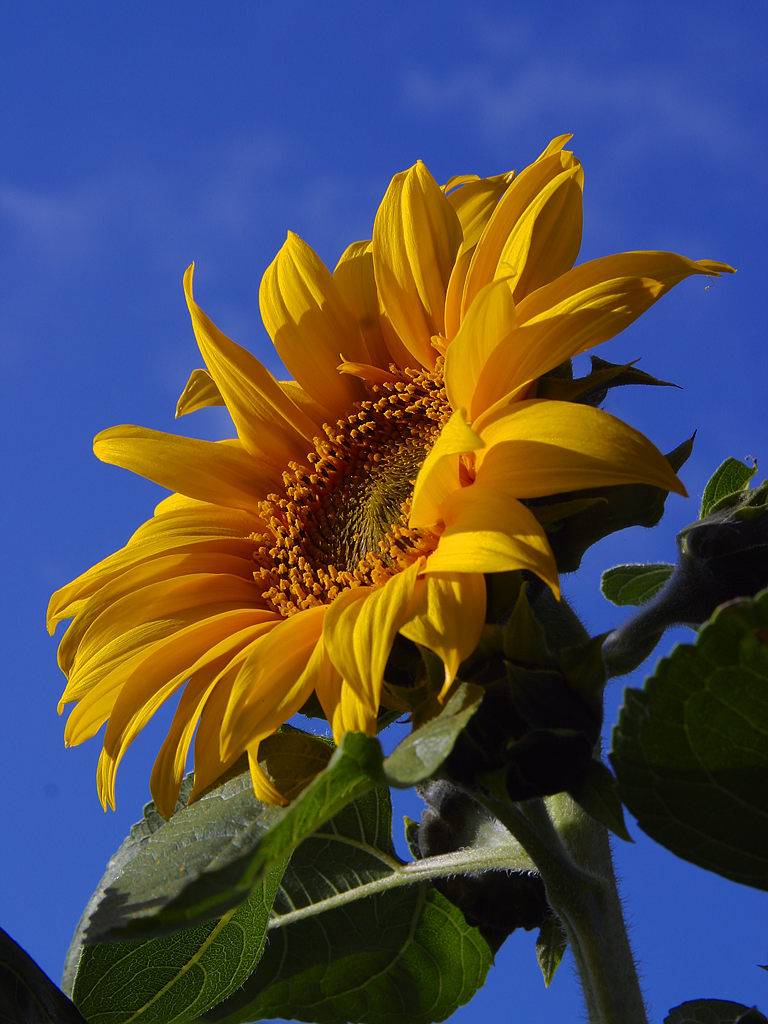 Common SunflowerHelianthus annuus
-
 Common YarrowAchillea millefolium
-
 LettuceLactuca sativa
-
 TarragonArtemisia dracunculus
-
 African MarigoldTagetes erecta
Compare
Questions and answers
What is the scientific name of the White-spotted Thistle?
The scientific name of the White-spotted Thistle is Tyrimnus leucographus. Written with its author, the full name is Tyrimnus leucographus (L.) Cass..
Which family does the White-spotted Thistle belong to?
Tyrimnus leucographus belongs to the family Asteraceae, in the order Asterales and the class Magnoliopsida.
Where is the White-spotted Thistle found?
Checklists and occurrence records place Tyrimnus leucographus in 15 countries, including France, Spain, Greece, Italy, Croatia and Turkey.
Sources
Passages the profile rests on
- The plant has a pale, slender, leafless stalk bearing a spiny, bulb-like flower head. Source passage: “The tyrimnus plant has a pale, slender and leafless stalk with a spiny bulb-like flower head” — English Wikipedia
- Its flower head contains tubular florets that are pink or violet. Source passage: “which consists of tubular florets that come in shades of pink or violet.” — English Wikipedia
- Its basal leaves are serrated and lobed. Source passage: “It has basal leaves that are notabely serrated and lobed” — English Wikipedia
- The upper leaves are small. Source passage: “whereas the upper leaves are small.” — English Wikipedia
- The plant has both elliptic and lanceolate leaves. Source passage: “There are both elliptic and lanceolate leaves.” — English Wikipedia
- Its fruits are single-seeded achenes with feathery hairs. Source passage: “As for its fruit (achenes), it has single seeded fruit clusters that have feathery hair.” — English Wikipedia
- The plant reaches a height of 20 to 200 centimeters. Source passage: “The height of this plant can range between 20 and 200 centimeters.” — English Wikipedia
- Its inflorescence measures 14 to 16 millimeters. Source passage: “inflorescence reaching 14 to 16 millimeters.” — English Wikipedia
- The species thrives in dry environments. Source passage: “This plant thrives in dry environments” — English Wikipedia
- The species prefers lean soils with neutral to slightly alkaline pH values between 7.0 and 7.5. Source passage: “It prefers lean soils with neutral to slightly alkaline (7.0 to 7.5) pH levels.” — English Wikipedia
- The species flowers during spring and summer. Source passage: “The plant flowers in the spring and summer months” — English Wikipedia
- The flowering period extends from May through July. Source passage: “While blooming from May to July” — English Wikipedia
- The flowering plant attracts bees. Source passage: “the tyrimnus attracts pollinators including bees.” — English Wikipedia
- The species is resistant to wind and drought. Source passage: “is remarkably wind and drought resistant.” — English Wikipedia
- The species produces single-seeded fruits called achenes. Source passage: “As for its fruit (achenes), it has single seeded fruit clusters” — English Wikipedia
Data
- Catalogue of Life, 2026-10-16 XR cc by
- Global Biodiversity Information Facility CC BY 4.0
- Wikidata CC0
- GeoNames CC BY 4.0
- Wikimedia Commons per image; credit shown with each image
- Within the Catalogue of Life, this name comes from Synonymic Checklists of the Vascular Plants of the World cc by
References
- Cass. (1828). Dict. Sci. Nat. [F.Cuvier], éd. 2, 56: 207 (1828). where the name was published
This species in other databases
Page built on 28 November 2026. See how the catalog is made and all sources and licences.
Cite this page
ScientificNames.org. (2026). Tyrimnus leucographus (White-spotted Thistle). Retrieved November 28, 2026, from https://scientificnames.org/species/tyrimnus-leucographus
“Tyrimnus leucographus (White-spotted Thistle).” ScientificNames.org, 2026, scientificnames.org/species/tyrimnus-leucographus. Accessed 28 Nov. 2026.
ScientificNames.org. “Tyrimnus leucographus (White-spotted Thistle).” Accessed November 28, 2026. https://scientificnames.org/species/tyrimnus-leucographus.
@misc{scientificnames_tyrimnus_leucographus_white_spotted_thistle,
  author = {{ScientificNames.org}},
  title = {Tyrimnus leucographus (White-spotted Thistle)},
  year = {2026},
  url = {https://scientificnames.org/species/tyrimnus-leucographus},
  note = {Accessed 2026-11-28}
}