Species · Flowering plants
Argentinian Vervain Verbena bonariensis
The scientific name of the Argentinian Vervain is Verbena bonariensis. It is a species of flowering plant in the family Verbenaceae (verbena family), order Lamiales.
- Scientific name
- Verbena bonariensis L.
- Common name
- Argentinian Vervain
- Genus
- Verbena
- Family
- Verbenaceae (Verbena Family)
- Order
- Lamiales
- Class
- Magnoliopsida
- Recorded in
- 54 countries
- Name status
- accepted in the Catalogue of Life

Overview
Verbena bonariensis is native to tropical South America, with a native range extending from Colombia and Brazil to Argentina and Chile. It has tall, slender stems and fragrant lavender to rose-purple flowers that grow in compact clusters.
Written 26 November 2026 from the sources listed below. Each statement was checked against the passage it cites; statements that could not be supported were removed.
Appearance
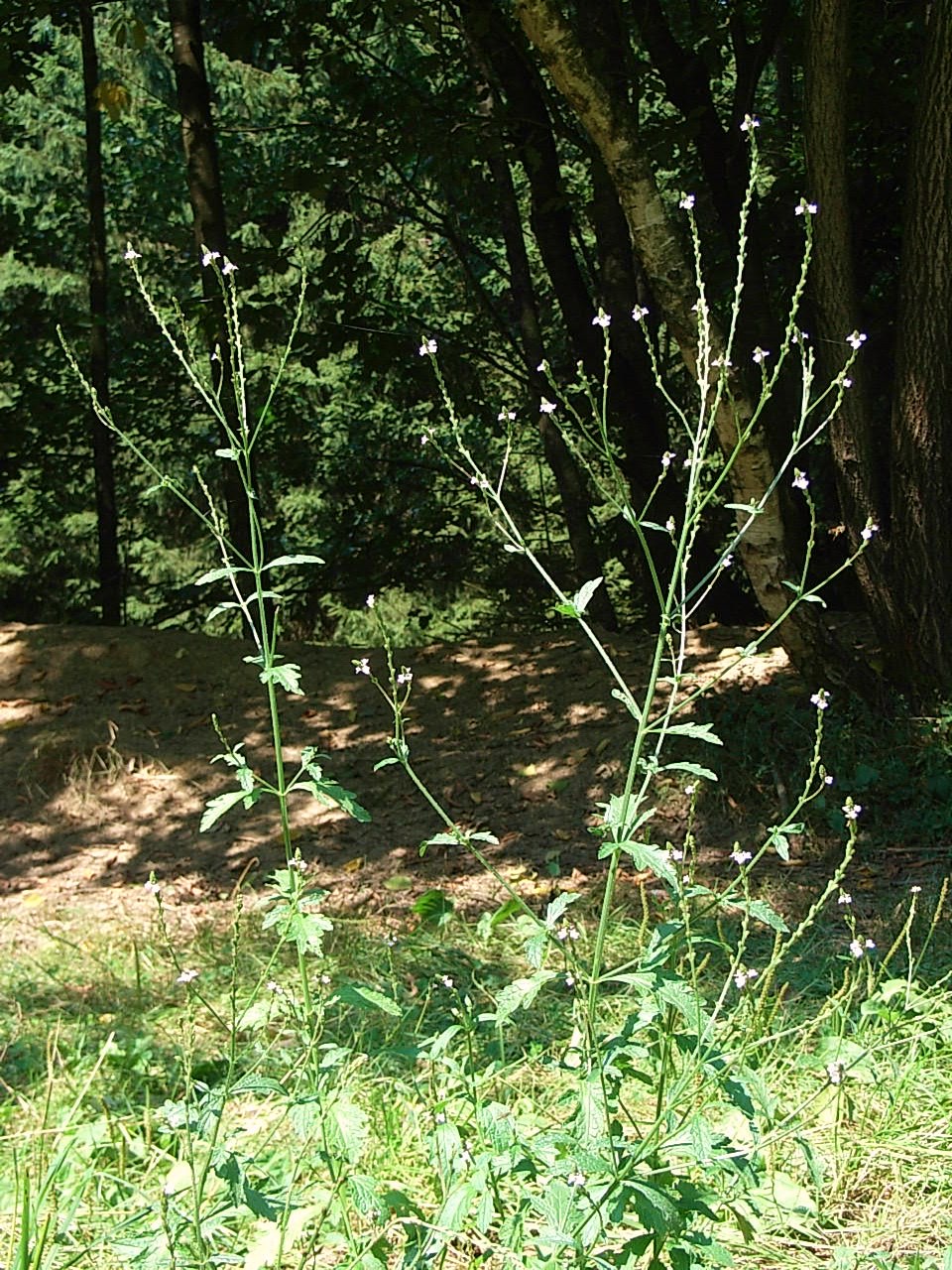
Argentinian Vervain is a perennial plant with tall, slender stems that can reach 1.8 metres in height and spread to approximately 0.91 metres in width. Mature plants develop a woody base.[1][2][3][4][5]
The stems have a square cross-section and very long internodes. The leaves are ovate to ovate-lanceolate, have toothed margins and can grow up to 100 millimetres long.[6][7][8]
Its fragrant flowers range in colour from lavender to rose-purple and grow in compact clusters on terminal and axillary stems. They bloom from mid-summer until the first autumn frost.[9][10][11]
Habitat
In its native range, Argentinian Vervain grows throughout most warm regions of tropical South America. Its native range extends from Colombia and Brazil to Argentina and Chile.[12][13]
The species grows best in well-drained soil and prefers full sun to partial shade. It requires regular moisture.[14][15][16]
Diet
The flowers provide nectar for native bees and beneficial garden insects.[17]
Behaviour
The long internodes give the plant a sparse appearance. Its sparse growth allows it to intermingle and coexist with other plants.[6][18][19]
The flowers attract butterflies. The species is rarely attacked by insect pests but may be susceptible to powdery mildew.[20][21][22]
Reproduction and life cycle
Argentinian Vervain commonly reproduces through seeds, which germinate readily without pretreatment. Plants grown from seed can flower during their first year.[23][24][25]
The species can also be propagated using herbaceous stem cuttings.[26]
Argentinian Vervain is a perennial plant but can be grown as an annual in regions where it cannot survive winter.[5][27]
Conservation
The species' ability to self-seed readily has raised concerns about its potential to become invasive and a noxious weed in suitable habitats. It is included on Washington state's invasive species watchlist.[24][25][28][29]
Argentinian Vervain has naturalized in parts of the southern United States, tropical and southern Africa, Australia and New Zealand, the United States including Hawaii, the West Indies and Macaronesia, and the Mascarene Islands.[30][31][32][33][34][35]
The species is considered a weed in Fiji and New Guinea, as well as other South Pacific islands.[36]
Uses
Argentinian Vervain is cultivated as an ornamental flowering plant in traditional gardens, drought-tolerant gardens and pollinator-host gardens, as well as parks.[37][38]
Classification of the Argentinian Vervain
| Kingdom | Plantae |
|---|---|
| Subkingdom | Pteridobiotina |
| Phylum | Tracheophyta |
| Class | Magnoliopsida |
| Order | Lamiales |
| Family | Verbenaceae (Verbena Family) |
| Tribe | Verbeneae |
| Genus | Verbena (Vervain) |
| Species | Verbena bonariensis L. |
Where the Argentinian Vervain is found
Checklists and occurrence records place Verbena bonariensis in 54 countries across Africa, Asia, Europe, North America, Oceania and South America. GBIF holds 50,889 georeferenced records of it.
Countries where it is native or its origin is not stated
- Argentina 1,089
- Austria 456
- Belgium 6,048
- Bolivia 22
- Brazil 763
- Chile 67
- Colombia 6
- Czechia 342
- Ecuador 20
- Paraguay 101
- Peru
- The Netherlands 6,481
- Uruguay 132
Countries where it has been introduced
- Algeria 1
- Australia 14,299
- Bahamas 3
- Bermuda 16
- Botswana
- Canada 261
- Democratic Republic of the Congo 13
- Denmark 169
- Eswatini 10
- Fiji 8
- France 988
- Germany 2,500
- India 32
- Ireland 47
- Jamaica 37
- Japan 447
- Kenya 268
- Lesotho 2
- Madagascar 21
- Mauritius 9
- Mexico 2
- Morocco
- Mozambique 3
- New Caledonia 46
- New Zealand 265
- Niue 3
- Pakistan 2
- Pitcairn 6
- Portugal 1,085
- Puerto Rico 15
- Saint Helena 5
- South Africa 2,059
- South Korea 55
- Spain 318
- Sri Lanka 5
- Sweden 2,257
- Switzerland 433
- Tanzania 37
- United Kingdom 5,990
- United States 3,610
- Zimbabwe 35
Regions and cities with the most records
- New South Wales, Australia 12,595
- England, United Kingdom 5,500
- Parramatta, Australia 1,424
- Liverpool, Australia 1,200
- Victoria, Australia 1,052
- Willebroek, Belgium 1,039
- Gelderland, The Netherlands 1,016
- Kontich, Belgium 1,012
- Wilrijk, Belgium 1,011
- Boom, Belgium 1,007
- Edegem, Belgium 1,002
- Mortsel, Belgium 996
- Lier, Belgium 983
- Duffel, Belgium 978
- Berchem, Belgium 976
- Hoboken, Belgium 972
- Mechelen, Belgium 956
- Western Cape, South Africa 956
- Sint-Katelijne-Waver, Belgium 953
- Borgerhout, Belgium 935
- Puurs, Belgium 934
- Ranst, Belgium 915
- Antwerp, Belgium 910
- Deurne, Belgium 904
- Bornem, Belgium 897
- Zemst, Belgium 888
- Wetteren, Belgium 885
- Kortenberg, Belgium 860
- Vilvoorde, Belgium 858
- Zwijndrecht, Belgium 853
- Merksem, Belgium 851
- Berkel en Rodenrijs, The Netherlands 848
- Meise, Belgium 844
- Temse, Belgium 844
- Bergschenhoek, The Netherlands 839
- Merelbeke, Belgium 835
27 more countries have a few records outside this range
These countries hold a few records of Verbena bonariensis but lie outside the range the checklists give for it. Such records are often zoo or garden specimens, museum material or vagrants, so the species is not counted as occurring there.
Range as the checklists state it
England [I] (England [I], Wales [I], Isle of Man [I], Scotland [I], Isles of Scilly [I]); Ireland [I] (Ireland [I]); Denmark [I]; Sweden [I]; Netherlands [I]; Germany [I]; Switzerland [I]; Portugal [I]; Spain [I]; ?France [I]; Morocco [I]; Algeria [I]; Azores [I] (Santa Maria Isl. [I], Sao Miguel Isl. [I], Terceira [I], Graciosa [I], Sao Jorge [I], Faial [I], Flores Isl. [I]); Madeira [I] (Madeira Isl. [I]); Canary Isl. [I] (Gran Canaria [I], Tenerife [I], La Gomera [I], La Palma [I]); D. R. Congo (Zaire [I]); Kenya [I]; Tanzania [I]; Zimbabwe [I]; Mozambique [I]; Botswana [I]; South Africa [I] (widespread); Lesotho [I]; Eswatini [Swaziland] [I]; St. Helena [I]; St. Helena [I]; Madagascar [I]; Mauritius [I]; La Réunion [I]; South Korea [I]; Japan [I] (Honshu [I], Kyushu [I]); Ryukyu Isl. [I] (Okinawa Isl. [I]); Pakistan [I] (Lahore [I], N. W. Frontier Prov. [I], Pakistani Punjab [I]); India [I] (Assam [I], Indian Punjab [I], Gujarat [I], Maharashtra [I], Rajasthan [I], Uttarakhand [I]); Sri Lanka [I]; peninsular Malaysia [I] (Pahang [I]); Jawa [I]; New Guinea [I]; Australia [I] (Capital Territory [I], New South Wales [I], Queensland [I], South Australia [I], Victoria [I]); Lord Howe Isl. [I]; Norfolk Isl. [I]; New Zealand [I] (North [I], South [I]); Kermadec Isl. [I] (Kermadec [I], Raoul [I]); New Caledonia [I] (incl. Loyalty Isl. [I]); Niue [I]; Fiji [I] (Viti Levu [I]); Austral Isl. [I] (Rapa Iti [I], Saint Marys [I], Tubuai [I]); Pitcairn Isl. [I]; Hawaii [I] (Kauai [I], Molokai [I], Lanai [I], E-Maui [I]); Canada [I] (Ontario [I], Québec [I]); USA [I] (Alabama [I], Arkansas [I], Arizona [I], California [I], Florida [I], Georgia [I], Illinois [I], Louisiana [I], Massachusetts [I], Mississippi [I], North Carolina [I], New Jersey [I], New York [I], Oklahoma [I], Oregon [I], South Carolina [I], Tennessee [I], Texas [I], Virginia [I]); Bermuda [I]; Mexico [I]; Bahamas [I]; Jamaica [I]; Puerto Rico [I]; Ecuador (Pichincha); Peru (Arequipa, Lima); Bolivia (Cochabamba, Santa Cruz); SE-Brazil (Minas Gerais, São Paulo); S-Brazil (Paraná, Rio Grande do Sul, Santa Catarina); Paraguay (Alto Paraná, Caazapa, Central, Guaira, Itapua, Misiones, Neembucu, Paraguari, San Pedro); Uruguay (Artigas, Canelones, Colonia, Florida Prov., Lavalleja, Maldonado, Montevideo, Paysandú, Rivera, Rio Negro, Rocha, Salto, San Jose, Soriano, Treinta y Tres); Argentina (Buenos Aires, Catamarca, Chaco, Córdoba, Corrientes, Entre Rios, Formosa, Jujuy, La Pampa, Mendoza, Misiones, Rio Negro, Salta, Santa Fe, San Juan, San Luis, Tucumán); Chile (Arica y Parinacota, Tarapacá, Antofagasta, Atacama, Coquimbo, Valparaíso, Metropolitana de Santiago, O'Higgins, Maule, Ñuble, Biobío, Araucanía, Los Rios, Los Lagos); Tristan da Cunha [I]
A number beside a place is its count of GBIF occurrence records. A place without a number comes from a checklist alone. Records show where a species has been observed or collected, which can include escapes and vagrants.
Common names
English
- Argentinian Vervain
- Argentina Vervain
- Argentine Vervain
- South American Vervain
- Cluster-flower Verbena
- Cluster-flower Vervain
- Pretty Vervain
- Purple-top Vervain
- Purpletop
- Purpletop Verbena
- Tall Verbena
- Wild Verbena
Names in 26 other languages
- Afrikaans
- Blouwaterbossie
- Catalan
- Berbena de Buenos Aires
- Chinese
- 南美馬鞭草, 柳葉馬鞭草
- Czech
- sporýš klasnatý
- Danish
- Kæmpe-Jernurt
- Dutch
- Stijf ijzerhard
- Estonian
- argentiina raudürt
- Finnish
- jättiverbena
- French
- Verveine de Buenos-Aires, verveine de Buenos Aires
- German
- Argentinische Verbene, Patagonisches Eisenkraut
- Hebrew
- ורבנה ארגנטינאית
- Hungarian
- ernyős verbéna
- Italian
- Verbena di Buenos Aires
- Japanese
- sanjaku-bā-bena, サンジャクバーベナ, ヤナギハナガサ
- Korean
- 버들마편초
- Lithuanian
- Patagoninė verbena
- Norwegian Bokmål
- argentinajernurt
- Polish
- Werbena argentyńska, Werbena patagońska, witułka patagońska
- Portuguese
- Cambará-de-capoeira, Erva-ferro, Gervão-roxo, Mucamba
- Russian
- Вербена буэнос-айресская
- Slovak
- železník argentínsky
- Spanish
- Flor de papel, Verbena argentina
- Swedish
- jätteverbena
- Thai
- เวอร์บีนาดอกม่วง
- Turkish
- Arjantin Mine Çiçeği
- Welsh
- Ferfain yr Ariannin
Synonyms
10 other scientific names have been used for this species and are now treated as synonyms of Verbena bonariensis.
- Verbena bonariensis f. albiflora Moldenke
- Verbena bonariensis f. robustior Chodat
- Verbena bonariensis var. bonariensis
- Verbena bonariensis var. conglomerata Briq.
- Verbena bonariensis var. hispida Rendle
- Verbena bonariensis var. hispida Moldenke
- Verbena bonariensis var. longibracteata Kuntze
- Verbena elongata Salisb.
- Verbena inamoena Briq.
- Verbena trichotoma Moench
Related species
-
 Common VervainVerbena officinalis
-
 American Blue VervainVerbena hastata
-
 Slender VervainVerbena rigida
-
 White VervainVerbena urticifolia
-
 Brazilian VervainVerbena brasiliensis
-
 Hoary VervainVerbena stricta
-
 Bracted VervainVerbena bracteata
-
 Brazilian VervainVerbena litoralis
Compare
Questions and answers
What is the scientific name of the Argentinian Vervain?
The scientific name of the Argentinian Vervain is Verbena bonariensis. Written with its author, the full name is Verbena bonariensis L..
Which family does the Argentinian Vervain belong to?
Verbena bonariensis belongs to the family Verbenaceae, in the order Lamiales and the class Magnoliopsida.
Where is the Argentinian Vervain found?
Checklists and occurrence records place Verbena bonariensis in 54 countries, including The Netherlands, Belgium, Argentina, Brazil, Austria and Czechia.
What other names does the Argentinian Vervain have?
Verbena bonariensis is also known in English as Argentina Vervain, Argentine Vervain, South American Vervain, Cluster-flower Verbena, Cluster-flower Vervain and Pretty Vervain.
What is purpletop?
Purpletop is an English name for Argentinian Vervain, a perennial flowering plant with fragrant flowers ranging from lavender to rose-purple.[1][9][5]
Is Verbena bonariensis an invasive plant?
Its ability to self-seed readily has raised concerns about its potential to become invasive and a noxious weed in suitable habitats. It is included on Washington state's invasive species watchlist and is considered a weed in Fiji and New Guinea, as well as other South Pacific islands.[24][25][28][29][36]
Where does verbena grow naturally?
Argentinian Vervain is native to tropical South America. Its native range extends from Colombia and Brazil to Argentina and Chile, and it grows throughout most warm regions of tropical South America.[39][12][13]
Sources
Passages the profile rests on
- Verbena bonariensis is a perennial plant with tall, slender stems. Source passage: “Verbena bonariensis is a tall and slender-stemmed perennial.” — English Wikipedia
- The plant can reach 1.8 metres in height. Source passage: “It can grow to 6 ft (1.8 m) tall” — English Wikipedia
- The plant can spread to approximately 0.91 metres in width. Source passage: “can spread to 3 ft (0.91 m) wide.” — English Wikipedia
- Mature plants develop a woody base. Source passage: “At maturity, it will develop a woody base.” — English Wikipedia
- Verbena bonariensis is a perennial plant. Source passage: “It is a perennial, hardy in USDA Zones 7-11.” — English Wikipedia
- The stems have a square cross-section and very long internodes. Source passage: “The stem is square with very long internodes.” — English Wikipedia
- The leaves are ovate to ovate-lanceolate and have toothed margins. Source passage: “Leaves are ovate to ovate-lanceolate with a toothed margin” — English Wikipedia
- The leaves can grow up to 100 millimetres long. Source passage: “grow up to 4 in (100 mm) long.” — English Wikipedia
- Its flowers are fragrant and range in colour from lavender to rose-purple. Source passage: “Fragrant lavender to rose-purple flowers” — English Wikipedia
- The flowers grow in compact clusters on terminal and axillary stems. Source passage: “flowers are in tight clusters located on terminal and axillary stems” — English Wikipedia
- The flowers bloom from mid-summer until the first autumn frost. Source passage: “blooming from mid-summer until fall frost.” — English Wikipedia
- In its native range, the species grows throughout most warm regions of tropical South America. Source passage: “where it grows throughout most of the warm regions” — English Wikipedia
- Its native range extends from Colombia and Brazil to Argentina and Chile. Source passage: “from Colombia and Brazil to Argentina and Chile.” — English Wikipedia
- The species grows best in well-drained soil. Source passage: “This species grows best in a well-drained soil.” — English Wikipedia
- The species prefers full sun to partial shade. Source passage: “It prefers full sun to partial shade” — English Wikipedia
- The species requires regular moisture. Source passage: “and needs regular moisture.” — English Wikipedia
- The flowers provide nectar for native bees and beneficial garden insects. Source passage: “provide nectar for native bees and many beneficial garden insects.” — English Wikipedia
- The long internodes give the plant a sparse appearance. Source passage: “Its long internodes give it a sparse appearance” — English Wikipedia
- The plant's sparse growth allows it to intermingle and coexist with other plants. Source passage: “but allow it to intermingle and coexist with other plants.” — English Wikipedia
- The flowers attract butterflies. Source passage: “The flowers, which appear in mid- to late summer, are very attractive to butterflies” — English Wikipedia
- The species is rarely attacked by insect pests. Source passage: “It has a reputation of rarely being attacked by insect pests” — English Wikipedia
- The species may be susceptible to powdery mildew. Source passage: “but may be susceptible to powdery mildew.” — English Wikipedia
- Plants grown from seed can flower during their first year. Source passage: “will bloom in the first year when grown from seed.” — English Wikipedia
- Verbena bonariensis commonly reproduces through seeds. Source passage: “V. bonariensis is commonly grown from seed” — English Wikipedia
- Its seeds germinate readily without pretreatment. Source passage: “which germinates readily without pre-treatment” — English Wikipedia
- The species can also be propagated using herbaceous stem cuttings. Source passage: “but can also be propagated from herbaceous stem cuttings.” — English Wikipedia
- The species can be grown as an annual in regions where it cannot survive winter. Source passage: “It can be grown as an annual in areas where it is not winter hardy” — English Wikipedia
- The species' ability to self-seed readily has raised concerns about its potential to become invasive and a noxious weed in suitable habitats. Source passage: “V. bonariensis self-seeds readily. This ability has raised concerns that it may become an invasive species and noxious weed in favorable habitats.” — English Wikipedia
- The species is included on Washington state's invasive species watchlist. Source passage: “the plant is on the invasive species watchlist for Washington state” — English Wikipedia
- The species has become naturalized in parts of the southern United States. Source passage: “It has naturalized in a number of southern United States.” — English Wikipedia
- The species has naturalized in tropical and southern Africa. Source passage: “naturalized in tropical and southern Africa” — English Wikipedia
- The species has naturalized in Australia and New Zealand. Source passage: “Australia, New Zealand” — English Wikipedia
- The species has naturalized in the United States, including Hawaii. Source passage: “the United States (including Hawaii)” — English Wikipedia
- The species has naturalized in the West Indies and Macaronesia. Source passage: “the West Indies, Macaronesia” — English Wikipedia
- The species has naturalized in the Mascarene Islands. Source passage: “and the Mascarene Islands.” — English Wikipedia
- Verbena bonariensis is considered a weed in Fiji and New Guinea, as well as other South Pacific islands. Source passage: “it is considered a weed in Fiji, New Guinea and other South Pacific islands.” — English Wikipedia
- The species is cultivated as an ornamental flowering plant. Source passage: “cultivated as a flowering annual or herbaceous perennial plant.” — English Wikipedia
- The species is cultivated in traditional gardens, drought-tolerant gardens and pollinator-host gardens, as well as parks. Source passage: “V. bonariensis is cultivated as an ornamental plant for traditional and drought tolerant and 'pollinator-host' gardens and parks.” — English Wikipedia
- The species is native to tropical South America. Source passage: “It is native to tropical South America” — English Wikipedia
Data
- Catalogue of Life, 2026-10-16 XR cc by
- Global Biodiversity Information Facility CC BY 4.0
- Wikidata CC0
- GeoNames CC BY 4.0
- Wikimedia Commons per image; credit shown with each image
- Within the Catalogue of Life, this name comes from Synonymic Checklists of the Vascular Plants of the World cc by
References
- L. Sp. Pl. [Linnaeus] 20 (1753). where the name was published
This species in other databases
- Catalogue of Life 5B2K7
- Wikidata Q2047281
- iNaturalist 79487
- World Flora Online wfo-0000331695
- GRIN 408616
Page built on 29 November 2026. See how the catalog is made and all sources and licences.
Cite this page
ScientificNames.org. (2026). Verbena bonariensis (Argentinian Vervain). Retrieved November 29, 2026, from https://scientificnames.org/species/verbena-bonariensis
“Verbena bonariensis (Argentinian Vervain).” ScientificNames.org, 2026, scientificnames.org/species/verbena-bonariensis. Accessed 29 Nov. 2026.
ScientificNames.org. “Verbena bonariensis (Argentinian Vervain).” Accessed November 29, 2026. https://scientificnames.org/species/verbena-bonariensis.
@misc{scientificnames_verbena_bonariensis_argentinian_vervain,
  author = {{ScientificNames.org}},
  title = {Verbena bonariensis (Argentinian Vervain)},
  year = {2026},
  url = {https://scientificnames.org/species/verbena-bonariensis},
  note = {Accessed 2026-11-29}
}