Species · Birds
Long-tailed Paradise Whydah Vidua paradisaea
The scientific name of the Long-tailed Paradise Whydah is Vidua paradisaea. It is a species of bird in the family Viduidae (whydahs and indigobirds), order Passeriformes. The name dates from 1758.
- Scientific name
- Vidua paradisaea (Linnaeus, 1758)
- Common name
- Long-tailed Paradise Whydah
- Genus
- Vidua
- Family
- Viduidae (Whydahs and Indigobirds)
- Order
- Passeriformes
- Class
- Aves
- Red List category
- LC Least Concern
- Recorded in
- 20 countries
- Name status
- accepted in the Catalogue of Life

Overview
Vidua paradisaea occurs across eastern and southern Africa, from Ethiopia south to South Africa and west to Angola.
Written 26 November 2026 from the sources listed below. Each statement was checked against the passage it cites; statements that could not be supported were removed.
Conservation
The Long-tailed Paradise Whydah was assessed as Least Concern on the IUCN Red List. Its most recent assessment was in 2018.[1][2]
Uses
Whydahs have historically been kept as cage birds for their songs and colourful breeding plumage.[3]
Similar species
The breeding male of the Broad-tailed Paradise-Whydah has a shorter and broader tail than the Eastern Paradise-Whydah.[4]
Appearance
Breeding males have black heads and backs, rusty-coloured breasts, bright buffy-yellow napes, white abdomens and broad, elongated black tail feathers.[5][6]
Females have grey bills and greyish-brown plumage with blackish streaks and predominantly white undertail feathers.[7]
Non-breeding males have predominantly brown plumage, black crown stripes and facial markings, darker brown chests and cream-coloured abdomens.[8]
The species typically measures approximately 13 cm in length and weighs approximately 21 grams. Breeding males can develop tail feathers measuring 36 cm or longer, with tails exceeding three times their body length.[9][10][11][12]
Habitat
The Long-tailed Paradise Whydah inhabits grasslands, savannas and open woodlands. It also occurs in bushed grassland around cultivated areas.[13][14]
The species generally avoids areas with surface water.[15]
Behaviour
Individuals commonly roost together in flocks during both breeding and non-breeding seasons.[16]
Males mimic the songs of their host species, including the Melba Finch. Females respond more strongly to songs mimicked by males of their own species than to songs mimicked by closely related species.[17][18][19]
Females use male song mimicry to narrow their choice of potential mates and favour males raised by the same host species.[20]
The species uses a double-scratch technique involving nearly simultaneous scratching with both feet to locate seeds. After scratching the ground, individuals hop backwards to collect them.[21][22]
Individuals remove the husks from grass seeds by rolling them with their tongues against the ridge of the palate.[23]
Reproduction and life cycle
The Long-tailed Paradise Whydah reproduces through brood parasitism, laying its eggs in the nests of other songbirds. It lays its eggs alongside the host bird's eggs without destroying the existing eggs.[24][25]
The primary host species belong to the family Estrildidae.[26]
Hybridisation with other related paradise whydahs can occur when females select mates based on plumage or flight displays rather than song mimicry.[27][28]
Classification of the Long-tailed Paradise Whydah
| Kingdom | Animalia |
|---|---|
| Phylum | Chordata |
| Subphylum | Vertebrata |
| Infraphylum | Gnathostomata |
| Parvphylum | Osteichthyes |
| Megaclass | Tetrapoda |
| Class | Aves (Bird) |
| Order | Passeriformes (Passerine) |
| Family | Viduidae (Whydahs and Indigobirds) |
| Genus | Vidua (Whydahs) |
| Species | Vidua paradisaea (Linnaeus, 1758) |
Where the Long-tailed Paradise Whydah is found
Checklists and occurrence records place Vidua paradisaea in 20 countries. GBIF holds 45,155 georeferenced records of it.
Countries
- Angola 64
- Botswana 1,893
- Democratic Republic of the Congo 15
- Eritrea 3
- Eswatini 430
- Ethiopia 560
- Kenya 2,760
- Malawi 477
- Mozambique 439
- Namibia 4,168
- Rwanda 6
- Senegal 9
- Somalia 35
- South Africa 28,511
- South Sudan 8
- Sudan 10
- Tanzania 2,061
- Uganda 155
- Zambia 1,328
- Zimbabwe 2,223
Regions and cities with the most records
- Limpopo, South Africa 11,870
- North West, South Africa 5,851
- Mpumalanga, South Africa 5,463
- KwaZulu-Natal, South Africa 2,266
- Khomas Region, Namibia 1,733
- Gauteng, South Africa 1,608
- Windhoek, Namibia 1,500
- Taita Taveta, Kenya 1,340
- Matabeleland North, Zimbabwe 897
- Otjozondjupa Region, Namibia 799
- Free State, South Africa 756
- Oshikoto Region, Namibia 613
- Bela Bela, South Africa 529
- Stilfontein, South Africa 514
- North-West, Botswana 510
- Chobe, Botswana 490
- Victoria Falls, Zimbabwe 488
- Livingstone, Zambia 478
- Southern Province, Zambia 458
- Polokwane, South Africa 433
- Voi, Kenya 430
- Klerksdorp, South Africa 429
- Manyara, Tanzania 425
- Masvingo Province, Zimbabwe 423
- Northern Cape, South Africa 416
- Arusha, Tanzania 400
- Central, Botswana 390
- Bulawayo, Zimbabwe 324
- Lubombo Region, Eswatini 322
- Mashonaland West, Zimbabwe 293
- Āfar, Ethiopia 290
- Komatipoort, South Africa 288
- Lusaka Province, Zambia 285
- Bulawayo, Zimbabwe 271
- Kilifi County, Kenya 265
- Fochville, South Africa 258
2 more countries have a few records outside this range
These countries hold a few records of Vidua paradisaea but lie outside the range the checklists give for it. Such records are often zoo or garden specimens, museum material or vagrants, so the species is not counted as occurring there.
A number beside a place is its count of GBIF occurrence records. A place without a number comes from a checklist alone. Records show where a species has been observed or collected, which can include escapes and vagrants.
Common names
English
- Long-tailed Paradise Whydah
- Eastern Paradise-Whydah
- LTPW
- Long-tailed Paradise Widow
- Long-tailed Paradise-whydah
Names in 24 other languages
- Afrikaans
- Gewone Paradysvink
- Arabic
- هويدة الجنة طويلة الذيل
- Catalan
- vídua del paradís
- Chinese
- 乐园维达雀, 天堂維達雀
- Croatian
- dugorepa udovičica
- Danish
- Paradisenke
- Dutch
- Smalstaartparadijswida
- Esperanto
- paradiza viduo
- Finnish
- paratiisileski
- French
- Veuve de paradis, Veuve à longue queue
- German
- Schmalschwanz-Paradieswitwe, Schmalschwanzparadieswitwe, Schmalschwanzwitwe, Spitzschwanz-Paradieswitwe, Spitzschwanzparadieswitwe
- Hungarian
- keleti paradicsomvida
- Italian
- Vedova del Paradiso, Vedova paradisea orientale
- Japanese
- ホウオウジャク
- Lithuanian
- rojinė našlytė
- Polish
- wdówka rajska
- Portuguese
- viúva-do-paraíso, viúva-do-paraíso-oriental, viúva-do-paraíso-rabilonga
- Russian
- Длиннохвостая райская вдовушка, Райская вдовушка
- Serbian
- Kopljorepa rajska udovica
- Slovak
- vdovka rajská
- Spanish
- Viuda del paraíso
- Swedish
- Vanlig paradisänka, östlig paradisänka
- Turkish
- Doğulu Cennet Vidyası
- Ukrainian
- вдовичка райська
Synonyms
2 other scientific names have been used for this species and are now treated as synonyms of Vidua paradisaea.
- Emberiza paradisaea Linnaeus, C, 1758
- Vidua verreauxi Cassin, J, 1850
Related species
-
 Pin-tailed WhydahVidua macroura
-
 Village IndigobirdVidua chalybeata
-
 Shaft-tailed WhydahVidua regia
-
 Exclamatory Paradise WhydahVidua interjecta
-
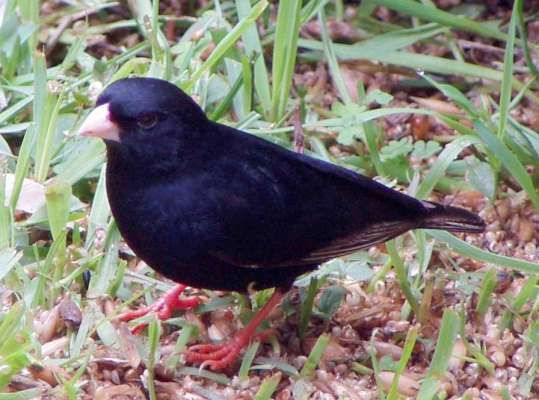 Dusky IndigobirdVidua funerea
-
 Broad-tailed Paradise WhydahVidua obtusa
-
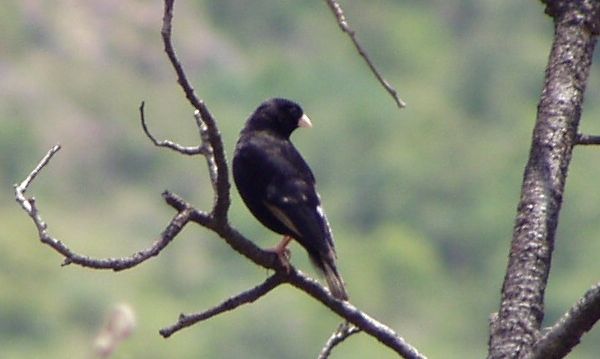 Purple IndigobirdVidua purpurascens
-
 Steel-blue WhydahVidua hypocherina
Compare
Questions and answers
What is the scientific name of the Long-tailed Paradise Whydah?
The scientific name of the Long-tailed Paradise Whydah is Vidua paradisaea. Written with its author, the full name is Vidua paradisaea (Linnaeus, 1758).
Which family does the Long-tailed Paradise Whydah belong to?
Vidua paradisaea belongs to the family Viduidae, in the order Passeriformes and the class Aves.
Where is the Long-tailed Paradise Whydah found?
Checklists and occurrence records place Vidua paradisaea in 20 countries, including South Africa, Namibia, Kenya, Zimbabwe, Tanzania and Botswana.
What is the conservation status of the Long-tailed Paradise Whydah?
The IUCN Red List category recorded for Vidua paradisaea is Least Concern (LC).
What other names does the Long-tailed Paradise Whydah have?
Vidua paradisaea is also known in English as Eastern Paradise-Whydah, LTPW, Long-tailed Paradise Widow and Long-tailed Paradise-whydah.
Sources
Passages the profile rests on
- The species was assessed as Least Concern on the IUCN Red List. Source passage: “Widespread throughout its large range, the long-tailed paradise whydah is evaluated as Least Concern on the IUCN Red List of Threatened Species.” — English Wikipedia
- The species was most recently assessed for the IUCN Red List in 2018. Source passage: “Long-tailed Paradise-whydah Vidua paradisaea has most recently been assessed for The IUCN Red List of Threatened Species in 2018.” — iucnredlist.org
- Whydahs have historically been kept as cage birds for their songs and colourful breeding plumage. Source passage: “Whydahs in general have been kept for many years as cage birds, for their song and brightly coloured breeding plumage.” — English Wikipedia
- The breeding male of the Broad-tailed Paradise-Whydah has a shorter and broader tail than the Eastern Paradise-Whydah. Source passage: “The Broad-tailed Paradise-Whydah differs from the Eastern Paradise-Whydah as follows: the breeding male has a shorter broader tail;” — ebird.org
- Breeding males have black heads and backs, rusty-coloured breasts, bright buffy-yellow napes, white abdomens and elongated black tail feathers. Source passage: “Breeding male long-tailed paradise whydahs have black heads and back, a rusty coloured breast, a bright buffy-yellow nape, and white abdomen” — English Wikipedia
- Breeding males develop broad, elongated black tail feathers. Source passage: “with broad, elongated black tail feathers that can grow up to 36 cm or more.” — English Wikipedia
- Females have grey bills and greyish-brown plumage with blackish streaks and predominantly white undertail feathers. Source passage: “Females tend to have a grey bill and feathers that are greyish-brown with blackish streaks along with their under tail feather being more white.” — English Wikipedia
- Non-breeding males have predominantly brown plumage with black crown stripes and facial markings, darker brown chests and cream-coloured abdomens. Source passage: “Males during the non-breeding season tend to have mostly browner plumage with black stripes on the crown, black parts along the face, and deeper brown colour for the chest and creamer colour for the abdomen.” — English Wikipedia
- The species typically measures approximately 13 cm in length. Source passage: “Usually, they are about 13 cm in length” — English Wikipedia
- The species typically weighs approximately 21 grams. Source passage: “and weigh about 21 grams.” — English Wikipedia
- Breeding males can develop tail feathers measuring 36 cm or longer. Source passage: “tail feathers that can grow up to 36 cm or more.” — English Wikipedia
- Breeding males can have tails exceeding three times their body length. Source passage: “This can be up to three times longer than its own body or even more.” — English Wikipedia
- The species inhabits grasslands, savannas and open woodlands. Source passage: “found in grassland, savanna and open woodland” — English Wikipedia
- It occurs in bushed grassland around cultivated areas. Source passage: “where they live in bushed grassland around cultivation.” — English Wikipedia
- The species generally avoids areas with surface water. Source passage: “The majority of the time, these whydahs stay away from surface waters.” — English Wikipedia
- Individuals commonly roost together in flocks during both breeding and non-breeding seasons. Source passage: “they usually roost together in flocks during both breeding and non-breeding seasons.” — English Wikipedia
- Males mimic the songs of their host species. Source passage: “Males develop the ability to mimic songs of their host.” — English Wikipedia
- Females respond more strongly to songs mimicked by males of their own species than to songs mimicked by closely related species. Source passage: “female whydahs respond more strongly to songs mimicked by males of their own species than they do to closely related species.” — English Wikipedia
- The species mimics the songs of the Melba Finch. Source passage: “Researchers discovered that these paradise whydahs mimic the songs of Melba Finch.” — English Wikipedia
- Females use male song mimicry to narrow their choice of potential mates and favour males raised by the same host species. Source passage: “Females use this mimicry to eliminate among potential mates and prefer those raised by the same host species.” — English Wikipedia
- The species uses a double-scratch technique involving nearly simultaneous scratching with both feet to locate seeds. Source passage: “they use something called "double scratch" where they use both of their feet almost simultaneously scratching the ground to find seeds” — English Wikipedia
- After scratching the ground, individuals hop backwards to collect seeds. Source passage: “and hop backwards to pick up the seed.” — English Wikipedia
- Individuals remove the husks from grass seeds by rolling them with their tongues against the ridge of the palate. Source passage: “They dehusk grass seeds with their bill by rolling the seeds with their tongue one at a time back and forth against the ridge of the palate.” — English Wikipedia
- The species reproduces through brood parasitism, laying its eggs in the nests of other songbirds. Source passage: “The long-tailed paradise whydah are known to be brood parasites where they would lay their eggs in nests of other songbirds.” — English Wikipedia
- The species lays its eggs alongside the host bird's eggs without destroying the existing eggs. Source passage: “They do not destroy the host eggs that are originally there, but lay their own eggs alogside in the other bird's nest.” — English Wikipedia
- The primary host species belong to the family Estrildidae. Source passage: “The primary host species are in the family Estrildidae, also known as the waxbills.” — English Wikipedia
- Hybridisation with other related paradise whydahs can occur. Source passage: “Hybrids can occur with other related paradise whydahs;” — English Wikipedia
- Hybridisation may occur when females select mates based on plumage or flight displays rather than song mimicry. Source passage: “when female whydahs do not choose mates based on their song mimicry but instead on male traits such as plumage and flight displays” — English Wikipedia
Data
- Catalogue of Life, 2026-10-16 XR cc by
- Global Biodiversity Information Facility CC BY 4.0
- Wikidata CC0
- GeoNames CC BY 4.0
- Wikimedia Commons per image; credit shown with each image
- Within the Catalogue of Life, this name comes from The Integrated Taxonomic Information System cc0
References
- Gill, Frank, & and Minturn Wright. (2006). Birds of the World: Recommended English Names.
This species in other databases
Page built on 28 November 2026. See how the catalog is made and all sources and licences.
Cite this page
ScientificNames.org. (2026). Vidua paradisaea (Long-tailed Paradise Whydah). Retrieved November 28, 2026, from https://scientificnames.org/species/vidua-paradisaea
“Vidua paradisaea (Long-tailed Paradise Whydah).” ScientificNames.org, 2026, scientificnames.org/species/vidua-paradisaea. Accessed 28 Nov. 2026.
ScientificNames.org. “Vidua paradisaea (Long-tailed Paradise Whydah).” Accessed November 28, 2026. https://scientificnames.org/species/vidua-paradisaea.
@misc{scientificnames_vidua_paradisaea_long_tailed_paradise_whydah,
  author = {{ScientificNames.org}},
  title = {Vidua paradisaea (Long-tailed Paradise Whydah)},
  year = {2026},
  url = {https://scientificnames.org/species/vidua-paradisaea},
  note = {Accessed 2026-11-28}
}