Overview
The Arnhem Land Rock Rat is a rodent with long whiskers, a swollen tail and a Roman-shaped nose. It is endemic to the sandstone massif of western Arnhem Land and occurs on the Arnhem Land Plateau and nearby rocky outcrops in the Northern Territory of Australia. It is distinguishable from other local rodents by its long whiskers, swollen tail and Roman-shaped nose.
Written 27 November 2026 from the sources listed below. Each statement was checked against the passage it cites; statements that could not be supported were removed.
Appearance
The Arnhem Land Rock Rat is distinguishable from other local rodents by its long whiskers, swollen tail and Roman-shaped nose.[1]
Adults typically measure approximately 15 centimetres in length and weigh between 100 and 150 grams.[2][3]
Habitat
The Arnhem Land Rock Rat is endemic to the sandstone massif of western Arnhem Land. It occurs on the Arnhem Land Plateau and nearby rocky outcrops in the Northern Territory of Australia.[4][5]
Monsoonal rainforest patches are its preferred vegetation habitat.[6]
The species is restricted to the Top End Region of the Northern Territory, Australia. Its total area of occupancy is estimated at 100–1,000 square kilometres.[7][8]
Diet
The Arnhem Land Rock Rat feeds mainly on seeds, fruit and other vegetable matter.[9]
Behaviour
The Arnhem Land Rock Rat is entirely terrestrial and nocturnal.[10]
It caches large seeds or moves them to locations where they can be eaten safely.[11]
Reproduction and life cycle
The Arnhem Land Rock Rat is capable of breeding throughout the year. Females are rarely recorded as pregnant late in the dry season.[12][13]
Conservation
The Arnhem Land Rock Rat is classified as Near Threatened by the IUCN. Its population is declining.[14][15]
Its population is highly fragmented because of the complex topography of the deeply dissected plateau. Approximately 30 percent of the population occurs within Kakadu National Park.[16][17]
Classification of the Arnhem Land Rock Rat
| Kingdom | Animalia |
|---|---|
| Phylum | Chordata |
| Subphylum | Vertebrata |
| Infraphylum | Gnathostomata |
| Parvphylum | Osteichthyes |
| Megaclass | Tetrapoda |
| Class | Mammalia (Mammal) |
| Subclass | Theria |
| Infraclass | Eutheria |
| Order | Rodentia (Rodent) |
| Suborder | Myomorpha (Mice) |
| Superfamily | Muroidea |
| Family | Muridae (Mice) |
| Subfamily | Murinae (Old World Mice) |
| Genus | Zyzomys (Australian Rock Rats) |
| Species | Zyzomys maini Kitchener, 1989 |
Where the Arnhem Land Rock Rat is found
Checklists and occurrence records place Zyzomys maini in 1 country across Oceania. GBIF holds 729 georeferenced records of it.
Countries
Regions and cities with the most records
Range as the checklists state it
Australia
A number beside a place is its count of GBIF occurrence records. A place without a number comes from a checklist alone. Records show where a species has been observed or collected, which can include escapes and vagrants.
Common names
English
- Arnhem Land Rock Rat
- Arnham Land Rock Rat
- Arnhem Rock-rat
Names in 4 other languages
- Finnish
- arnheminmaanrotta
- Japanese
- アーネムランドイワバネズミ
- Polish
- skałoskakun wąwozowy
- Russian
- Арнхемская крыса
Related species
-
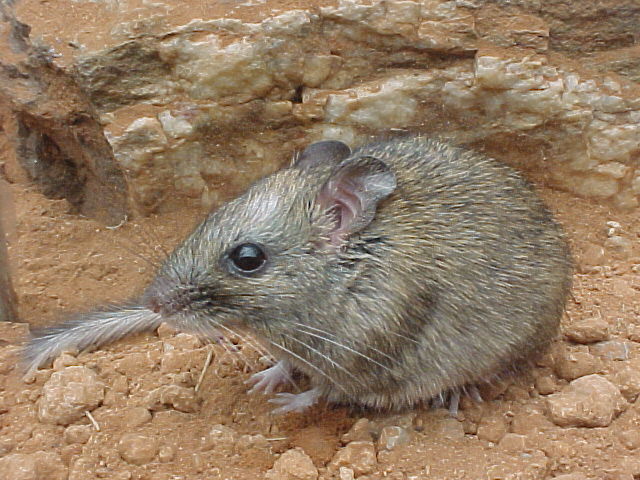 Central Rock RatZyzomys pedunculatus
- Carpentarian Rock RatZyzomys palatilis
- Common Rock RatZyzomys argurus
- Kimberley Rock RatZyzomys woodwardi
-
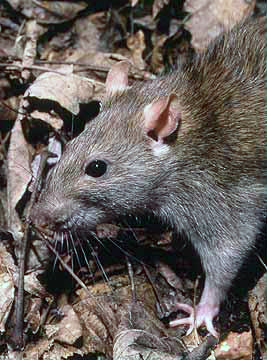 Brown RatRattus norvegicus
-
 Black RatRattus rattus
-
 Polynesian RatRattus exulans
-
 RakaliHydromys chrysogaster
Compare
Questions and answers
What is the scientific name of the Arnhem Land Rock Rat?
The scientific name of the Arnhem Land Rock Rat is Zyzomys maini. Written with its author, the full name is Zyzomys maini Kitchener, 1989.
Which family does the Arnhem Land Rock Rat belong to?
Zyzomys maini belongs to the family Muridae, in the order Rodentia and the class Mammalia.
Where is the Arnhem Land Rock Rat found?
Checklists and occurrence records place Zyzomys maini in 1 country: Australia.
What is the conservation status of the Arnhem Land Rock Rat?
The IUCN Red List category recorded for Zyzomys maini is Vulnerable (VU).
What other names does the Arnhem Land Rock Rat have?
Zyzomys maini is also known in English as Arnham Land Rock Rat and Arnhem Rock-rat.
Sources
Passages the profile rests on
- The species is distinguishable from other local rodents by its long whiskers, swollen tail and Roman-shaped nose. Source passage: “It can be distinguished from other local rodents by its long whiskers, swollen tail and Roman nose.” — English Wikipedia
- Adults typically measure approximately 15 centimetres in length. Source passage: “The rat typically grows to a size of 15 centimetres (6 in) in length” — English Wikipedia
- The species typically weighs between 100 and 150 grams. Source passage: “with a mass of 100 to 150 grams (4 to 5 oz).” — English Wikipedia
- The species is endemic to the sandstone massif of western Arnhem Land. Source passage: “Endemic to the sandstone massif of western Arnhem Land” — English Wikipedia
- The species occurs on the Arnhem Land Plateau and nearby rocky outcrops in the Northern Territory of Australia. Source passage: “The Arnhem Rock-rat (Zyzomys maini) is endemic to the Arnhem Land Plateau and nearby rocky outcrops, Northern Territory, Australia.” — iucnredlist.org
- Monsoonal rainforest patches are the preferred vegetation habitat of this species. Source passage: “The preferred vegetation for the rat is monsoonal rainforest which is found patched throughout the landscape.” — English Wikipedia
- The species is restricted to the Top End Region of the Northern Territory, Australia. Source passage: “It is found only in the Top End Region of the Northern Territory in Australia.” — English Wikipedia
- The species' total area of occupancy is estimated at 100–1,000 square kilometres. Source passage: “The total area of occupancy is estimated to be from 100 to 1,000 square kilometres (39 to 386 sq mi).” — English Wikipedia
- The species feeds mainly on seeds, fruit and other vegetable matter. Source passage: “with a diet that consists mainly of seeds, fruit and some other vegetable matter.” — English Wikipedia
- The Arnhem Land rock rat is entirely terrestrial and nocturnal. Source passage: “It is an entirely terrestrial and nocturnal species” — English Wikipedia
- The species caches large seeds or moves them to locations where they can be eaten safely. Source passage: “The rat will cache large seeds or at least move them to sites where it is safe to eat.” — English Wikipedia
- The species is capable of breeding throughout the year. Source passage: “It is able to breed all year round” — English Wikipedia
- Females are rarely recorded as pregnant late in the dry season. Source passage: “females are rarely found to be pregnant late in the dry season.” — English Wikipedia
- The species is classified as Near Threatened by the IUCN. Source passage: “The species is listed as near threatened with the IUCN” — English Wikipedia
- The population of the species is declining. Source passage: “although the population of the species is in decline.” — English Wikipedia
- The species has a highly fragmented population because of the complex topography of the deeply dissected plateau. Source passage: “the population is highly fragmented as a result of the topographic complexity of the deeply dissected plateau.” — English Wikipedia
- Approximately 30 percent of the population occurs within Kakadu National Park. Source passage: “Approximately 30% of the population is found within Kakadu National Park.” — English Wikipedia
Data
- Catalogue of Life, 2026-10-16 XR cc by
- Global Biodiversity Information Facility CC BY 4.0
- Wikidata CC0
- GeoNames CC BY 4.0
- Within the Catalogue of Life, this name comes from The Integrated Taxonomic Information System cc0
References
- Rec. West. Aust. Mus. vol.14 p.357 where the name was published
- Wilson, Don E., and DeeAnn M. Reeder, eds. (1993). Mammal Species of the World: A Taxonomic and Geographic Reference, 2nd Ed., 3rd Printing.
- Musser, Guy G., and Michael D. Carleton / Wilson, Don E., and DeeAnn M. Reeder, eds. (2005). Superfamily Muroidea. Mammal Species of the World: A Taxonomic and Geographic Reference, 3rd Ed., Vol. 2.
This species in other databases
Page built on 28 November 2026. See how the catalog is made and all sources and licences.
Cite this page
ScientificNames.org. (2026). Zyzomys maini (Arnhem Land Rock Rat). Retrieved November 28, 2026, from https://scientificnames.org/species/zyzomys-maini
“Zyzomys maini (Arnhem Land Rock Rat).” ScientificNames.org, 2026, scientificnames.org/species/zyzomys-maini. Accessed 28 Nov. 2026.
ScientificNames.org. “Zyzomys maini (Arnhem Land Rock Rat).” Accessed November 28, 2026. https://scientificnames.org/species/zyzomys-maini.
@misc{scientificnames_zyzomys_maini_arnhem_land_rock_rat,
  author = {{ScientificNames.org}},
  title = {Zyzomys maini (Arnhem Land Rock Rat)},
  year = {2026},
  url = {https://scientificnames.org/species/zyzomys-maini},
  note = {Accessed 2026-11-28}
}