Species · Birds
Saipan Reed Warbler Acrocephalus hiwae
The scientific name of the Saipan Reed Warbler is Acrocephalus hiwae. It is a species of bird in the family Acrocephalidae (reed warblers & allies), order Passeriformes. The name dates from 1942.
- Scientific name
- Acrocephalus hiwae (Yamashina, 1942)
- Common name
- Saipan Reed Warbler
- Genus
- Acrocephalus
- Family
- Acrocephalidae (Reed Warblers & Allies)
- Order
- Passeriformes
- Class
- Aves
- Red List category
- EN Endangered
- Recorded in
- 1 country
- Name status
- accepted in the Catalogue of Life

Overview
The species is endemic to Saipan and Alamagan in the Northern Mariana Islands. It has predominantly uniform brown plumage, a darker-coloured cap and tail, and an exceptionally long decurved bill.
Written 26 November 2026 from the sources listed below. Each statement was checked against the passage it cites; statements that could not be supported were removed.
Appearance
The Saipan Reed Warbler has predominantly uniform brown plumage, with a darker-coloured cap and tail. It has a very long, downward-curving bill.[1][2][3]
The species is relatively large compared with other reed warblers.[4]
Habitat
On Saipan, the Saipan Reed Warbler inhabits scrubby meadows. On Alamagan, it occurs in open woodland and woodland along ravine edges.[5][6][7]
Behaviour
The Saipan Reed Warbler produces a slow, repetitive song consisting of loud whistles. Its song also includes warbles, trills and harsh chacking sounds.[8][9]
Conservation
The Saipan Reed Warbler is classified as endangered. Habitat destruction caused by urban development and agricultural development, along with introduced invasive species, threatens the species.[10][11][12][13]
The global population was estimated at between 1,019 and 6,356 birds, with a mean estimate of 3,688. It declined by more than 1,000 birds between the first quantitative surveys in 1982 and 2010, representing a decline of 24% over 28 years.[14][15][16]
The Alamagan population was estimated at between 428 and 1,762 birds in 2010, with a mean estimate of 946. It represented approximately 25% of the global population in the reported assessment and declined slightly between 2000 and 2010, although the reported decline was not statistically significant.[17][18][19][20]
The Saipan population has also declined. Conservation of wetland habitat on Saipan is identified as a beneficial measure, while restoration and protection of tall native and secondary forests could benefit the Alamagan population.[21][22][23]
Individuals from Saipan and Alamagan could potentially establish founder populations on Aguiguan following suitable habitat restoration. The species was assessed for the IUCN Red List in 2024.[24][25]
Classification of the Saipan Reed Warbler
| Kingdom | Animalia |
|---|---|
| Phylum | Chordata |
| Subphylum | Vertebrata |
| Infraphylum | Gnathostomata |
| Parvphylum | Osteichthyes |
| Megaclass | Tetrapoda |
| Class | Aves (Bird) |
| Order | Passeriformes (Passerine) |
| Family | Acrocephalidae (Reed Warblers & Allies) |
| Genus | Acrocephalus (Reed-Warblers) |
| Species | Acrocephalus hiwae (Yamashina, 1942) |
Where the Saipan Reed Warbler is found
Checklists and occurrence records place Acrocephalus hiwae in 1 country. GBIF holds 426 georeferenced records of it.
Countries
Regions and cities with the most records
- Saipan, Northern Mariana Islands 407
- Saipan, Northern Mariana Islands 404
- Northern Islands, Northern Mariana Islands 7
A number beside a place is its count of GBIF occurrence records. A place without a number comes from a checklist alone. Records show where a species has been observed or collected, which can include escapes and vagrants.
Common names
English
- Saipan Reed Warbler
- Saipan Reed-warbler
Names in 21 other languages
- Chinese
- 塞班島葦鶯, 塞班苇莺
- Croatian
- dugokljuni trstenjak
- Danish
- Hiwai´-sanger, Saipan Rørsanger
- Dutch
- Saipankarekiet
- Esperanto
- saipana kanbirdo
- Finnish
- saipaninkerttunen
- French
- Rousserolle de Saipan, Rousserolle de Saïpan
- German
- Marianenrohrsänger
- Hungarian
- Saipan-szigeti nádiposzáta
- Japanese
- サイパンヨシキリ
- Norwegian
- saipansanger
- Polish
- trzciniak wielkodzioby
- Portuguese
- felosa-de-saipan, felosa-de-saipã
- Russian
- Сайпанская камышевка, Сайпанская камышовка
- Slovak
- trsteniarik saipanský
- Spanish
- Carricero de Saipán
- Swedish
- saipansångare
- Turkish
- Guam Kamışçını
- Ukrainian
- очеретянка саїпанська
- cha
- Gå'ga' karisu
- nav
- Eʼeʼaahjí Tónteeldę́ę́ʼ teełtah ayáásh
Synonyms
2 other scientific names have been used for this species and are now treated as synonyms of Acrocephalus hiwae.
- Acrocephalus luscinius hiwae Yamashina, Y, 1942
- Conopoderas luscinia hivae Yamashina, Y, 1942
Related species
-
 Common Reed WarblerAcrocephalus scirpaceus
-
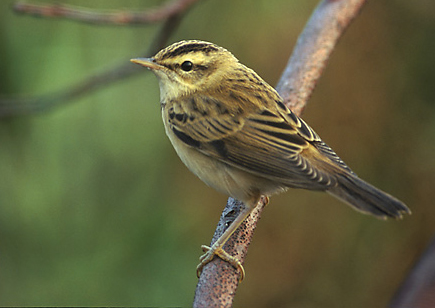 Sedge WarblerAcrocephalus schoenobaenus
-
 Great Reed WarblerAcrocephalus arundinaceus
-
 Blyth's Reed WarblerAcrocephalus dumetorum
-
 Marsh WarblerAcrocephalus palustris
-
 Australian Reed WarblerAcrocephalus australis
-
 Nauru Reed WarblerAcrocephalus rehsei
-
 Aquatic WarblerAcrocephalus paludicola
Compare
Questions and answers
What is the scientific name of the Saipan Reed Warbler?
The scientific name of the Saipan Reed Warbler is Acrocephalus hiwae. Written with its author, the full name is Acrocephalus hiwae (Yamashina, 1942).
Which family does the Saipan Reed Warbler belong to?
Acrocephalus hiwae belongs to the family Acrocephalidae, in the order Passeriformes and the class Aves.
Where is the Saipan Reed Warbler found?
Checklists and occurrence records place Acrocephalus hiwae in 1 country: Northern Mariana Islands.
What is the conservation status of the Saipan Reed Warbler?
The IUCN Red List category recorded for Acrocephalus hiwae is Endangered (EN).
What other names does the Saipan Reed Warbler have?
Acrocephalus hiwae is also known in English as Saipan Reed-warbler.
What is the largest warbler?
The Saipan Reed Warbler is relatively large compared with other reed warblers.[4]
Sources
Passages the profile rests on
- The Saipan Reed Warbler has predominantly uniform brown plumage. Source passage: “a large, mainly uniform brown reed warbler” — English Wikipedia
- The species has a darker-coloured cap and tail. Source passage: “a darker coloured cap and tail” — English Wikipedia
- The species has a very long, downward-curving bill. Source passage: “a very long downward curved bill” — English Wikipedia
- The Saipan Reed Warbler is relatively large compared with other reed warblers. Source passage: “A relatively large plain brown reed warbler” — ebird.org
- On Saipan, the species inhabits scrubby meadows. Source passage: “On Saipan this pscies is found in scrubby meadows” — English Wikipedia
- On Alamagan, the species occurs in open woodland. Source passage: “on Alamagan it occurs in open woodland” — English Wikipedia
- On Alamagan, the species occurs in woodland along ravine edges. Source passage: “woodland on the edge of ravines.” — English Wikipedia
- The species produces a slow, repetitive song consisting of loud whistles. Source passage: “The song is a slow, repetitive series of loud whistles” — English Wikipedia
- The species' song includes warbles, trills and harsh chacking sounds. Source passage: “interspersed with warbles, trills and harsh chacking.” — English Wikipedia
- The Saipan Reed Warbler is classified as endangered. Source passage: “The Saipan reed warbler has been assessed by the International Union for Conservation of Nature as Endangered” — English Wikipedia
- Habitat destruction caused by urban development threatens the species. Source passage: “habitat destruction resulting from urban development and agriculture” — English Wikipedia
- Agricultural development is identified as a threat to the species through habitat destruction. Source passage: “habitat destruction resulting from urban development and agriculture” — English Wikipedia
- Introduced invasive species are among the threats facing the Saipan Reed Warbler. Source passage: “the introduction of invasive species” — English Wikipedia
- The global population was estimated at between 1,019 and 6,356 birds, with a mean estimate of 3,688. Source passage: “We estimated the global population at between 1,019 and 6,356 birds (95% CI; mean estimate 3,688)” — usgs.gov
- The global population declined by more than 1,000 birds between the first quantitative surveys in 1982 and 2010. Source passage: “which has declined by more than 1,000 birds since the first quantitative surveys were conducted in 1982” — usgs.gov
- The global population declined by 24% over 28 years. Source passage: “i.e. a 24% decline in 28 years.” — usgs.gov
- The Alamagan population was estimated at between 428 and 1,762 birds in 2010, with a mean estimate of 946. Source passage: “We estimated the Alamagan population to be between 428 and 1,762 birds in 2010 (mean estimate 946).” — usgs.gov
- The Alamagan population represented approximately 25% of the global population in the reported assessment. Source passage: “Thus, the Alamagan population is ~25 % of the global population” — usgs.gov
- The Alamagan population declined slightly between 2000 and 2010. Source passage: “and it has declined slightly since 2000.” — usgs.gov
- The reported decline in the Alamagan population was not statistically significant. Source passage: “This decline was not significant” — usgs.gov
- Conservation of wetland habitat on Saipan is identified as a beneficial measure for the species. Source passage: “similar conservation on Saipan that includes wetland habitat.” — usgs.gov
- Restoration and protection of tall native and secondary forests could benefit the Alamagan population. Source passage: “Restoration and protection of tall-stature native and secondary forest could benefit the Alamagan population” — usgs.gov
- The Saipan population has also declined. Source passage: “which has also declined.” — usgs.gov
- Individuals from Saipan and Alamagan could potentially establish founder populations on Aguiguan following suitable habitat restoration. Source passage: “After suitable restoration of forest and wetland habitats on Aguiguan, Guam and Pagan, individuals from Alamagan and Saipan could serve as founder populations.” — usgs.gov
- The species was assessed for the IUCN Red List in 2024. Source passage: “Saipan Reed-warbler Acrocephalus hiwae has most recently been assessed for The IUCN Red List of Threatened Species in 2024.” — iucnredlist.org
Data
- Catalogue of Life, 2026-10-16 XR cc by
- Global Biodiversity Information Facility CC BY 4.0
- Wikidata CC0
- GeoNames CC BY 4.0
- Wikimedia Commons per image; credit shown with each image
- Within the Catalogue of Life, this name comes from The Integrated Taxonomic Information System cc0
References
- Cibois, Alice, Jon S. Beadell, Gary R. Graves, Eric Pasquet, Beth Slikas, et al. (2011). Charting the course of reed-warblers across the Pacific islands. Journal of Biogeography, Vol. 38, No. 10.
This species in other databases
Page built on 28 November 2026. See how the catalog is made and all sources and licences.
Cite this page
ScientificNames.org. (2026). Acrocephalus hiwae (Saipan Reed Warbler). Retrieved November 28, 2026, from https://scientificnames.org/species/acrocephalus-hiwae
“Acrocephalus hiwae (Saipan Reed Warbler).” ScientificNames.org, 2026, scientificnames.org/species/acrocephalus-hiwae. Accessed 28 Nov. 2026.
ScientificNames.org. “Acrocephalus hiwae (Saipan Reed Warbler).” Accessed November 28, 2026. https://scientificnames.org/species/acrocephalus-hiwae.
@misc{scientificnames_acrocephalus_hiwae_saipan_reed_warbler,
  author = {{ScientificNames.org}},
  title = {Acrocephalus hiwae (Saipan Reed Warbler)},
  year = {2026},
  url = {https://scientificnames.org/species/acrocephalus-hiwae},
  note = {Accessed 2026-11-28}
}