Species · Birds · Extinct
Moorea Reed Warbler Acrocephalus longirostris
The scientific name of the Moorea Reed Warbler is Acrocephalus longirostris. It is an extinct species of bird in the family Acrocephalidae (reed warblers & allies), order Passeriformes. The name dates from 1789.
- Scientific name
- Acrocephalus longirostris (Gmelin, 1789)
- Common name
- Moorea Reed Warbler
- Genus
- Acrocephalus
- Family
- Acrocephalidae (Reed Warblers & Allies)
- Order
- Passeriformes
- Class
- Aves
- Red List category
- CR Critically Endangered
- Name status
- accepted in the Catalogue of Life

Overview
The species is endemic to Moorea in the Society Islands, French Polynesia. It has two distinct colour morphs, one light with pale yellow plumage and mottled brownish upperparts, and one dark with olive-brown plumage.
Written 26 November 2026 from the sources listed below. Each statement was checked against the passage it cites; statements that could not be supported were removed.
Similar species
The Moorea Reed Warbler was formerly classified as a subspecies of the Tahiti reed warbler.[1]
Appearance
The species has two distinct colour morphs, one light and one dark. The light morph has pale yellow plumage with mottled brownish upperparts, while the dark morph has olive-brown plumage.[2][3][4]
Habitat
The Moorea Reed Warbler occurs in second-growth forest and Polynesian 'ohe thickets. It inhabits river valleys and hillsides.[5][6]
Reproduction and life cycle
The species is thought to breed exclusively in Polynesian 'ohe thickets.[7]
Conservation
The Moorea Reed Warbler was last observed in 1987 and was recorded as rare.[8][9]
The species was previously feared extinct because of habitat destruction associated with hydroelectric power development, road construction, bamboo exploitation, and introduced invasive species. Introduced miconia trees, common mynas, and feral cats were identified among its threats.[10][11]
Two unconfirmed sightings during the 21st century suggest that the species may persist in very small numbers.[12]
A 2018 study recommended changing the species' classification from Critically Endangered or possibly extinct to Critically Endangered.[13]
Classification of the Moorea Reed Warbler
| Kingdom | Animalia |
|---|---|
| Phylum | Chordata |
| Subphylum | Vertebrata |
| Infraphylum | Gnathostomata |
| Parvphylum | Osteichthyes |
| Megaclass | Tetrapoda |
| Class | Aves (Bird) |
| Order | Passeriformes (Passerine) |
| Family | Acrocephalidae (Reed Warblers & Allies) |
| Genus | Acrocephalus (Reed-Warblers) |
| Species | Acrocephalus longirostris (Gmelin, 1789) |
Common names
English
- Moorea Reed Warbler
- Mo'orea Reed Warbler
- Mo'orea Reed-warbler
- Moorea Reed-warbler
Names in 19 other languages
- Chinese
- 木雷亞島葦鶯, 莫岛苇莺
- Croatian
- maslinasti trstenjak
- Danish
- Moorea Rørsanger, Mooreasanger
- Dutch
- Mooreakarekiet
- Esperanto
- moorea kanbirdo
- Finnish
- mooreankerttunen
- French
- Rousserolle de Moorea
- German
- Moorea-Rohrsänger, Moorearohrsänger
- Hungarian
- Moorea-szigeti nádiposzáta
- Japanese
- モーレアヨシキリ
- Persian
- سسک نوکدراز
- Polish
- trzciniak duży
- Portuguese
- felosa-de-moorea
- Russian
- Муреанская камышевка, Муреанская камышовка
- Slovak
- trsteniarik bambusový
- Spanish
- Carricero de Moorea
- Swedish
- mooreasångare
- Turkish
- Moorea kamışçını, Murea Kamışçını
- Ukrainian
- очеретянка мореанська
Synonyms
2 other scientific names have been used for this species and are now treated as synonyms of Acrocephalus longirostris.
- Acrocephalus caffer longirostris (Gmelin, 1789)
- Turdus longirostris Gmelin, JF, 1789
Related species
-
 Common Reed WarblerAcrocephalus scirpaceus
-
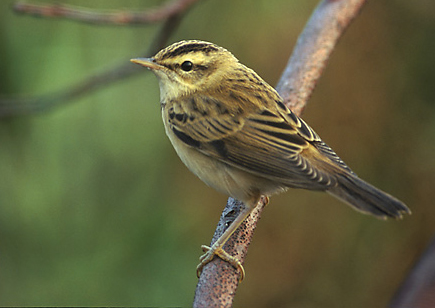 Sedge WarblerAcrocephalus schoenobaenus
-
 Great Reed WarblerAcrocephalus arundinaceus
-
 Blyth's Reed WarblerAcrocephalus dumetorum
-
 Marsh WarblerAcrocephalus palustris
-
 Australian Reed WarblerAcrocephalus australis
-
 Nauru Reed WarblerAcrocephalus rehsei
-
 Aquatic WarblerAcrocephalus paludicola
Compare
Questions and answers
What is the scientific name of the Moorea Reed Warbler?
The scientific name of the Moorea Reed Warbler is Acrocephalus longirostris. Written with its author, the full name is Acrocephalus longirostris (Gmelin, 1789).
Which family does the Moorea Reed Warbler belong to?
Acrocephalus longirostris belongs to the family Acrocephalidae, in the order Passeriformes and the class Aves.
What is the conservation status of the Moorea Reed Warbler?
The IUCN Red List category recorded for Acrocephalus longirostris is Critically Endangered (CR).
What other names does the Moorea Reed Warbler have?
Acrocephalus longirostris is also known in English as Mo'orea Reed Warbler, Mo'orea Reed-warbler and Moorea Reed-warbler.
Sources
Passages the profile rests on
- The species was formerly classified as a subspecies of the Tahiti reed warbler. Source passage: “It was once considered a subspecies of the Tahiti reed warbler.” — English Wikipedia
- The species has two distinct colour morphs, one light and one dark. Source passage: “It has two color morphs; a light morph that is pale yellow with mottled brownish above, and an olive-brown dark morph.” — English Wikipedia
- The light morph has pale yellow plumage with mottled brownish upperparts. Source passage: “a light morph that is pale yellow with mottled brownish above” — English Wikipedia
- The dark morph has olive-brown plumage. Source passage: “an olive-brown dark morph.” — English Wikipedia
- The species occurs in second-growth forest and Polynesian 'ohe thickets. Source passage: “It occurs in second-growth forest as well as Polynesian 'ohe thickets” — English Wikipedia
- The species inhabits river valleys and hillsides. Source passage: “in river valleys and hillsides.” — English Wikipedia
- The species is thought to breed exclusively in Polynesian 'ohe thickets. Source passage: “and likely breeds exclusively in the latter” — English Wikipedia
- The species was last observed in 1987. Source passage: “It was last seen in 1987” — English Wikipedia
- The species was recorded as rare. Source passage: “It was recorded as being rare by the Whitney South Sea ...” — datazone.birdlife.org
- The species was previously feared extinct because of habitat destruction associated with hydroelectric power development, road construction, bamboo exploitation, and introduced invasive species. Source passage: “previously feared to have gone extinct due to habitat destruction by hydroelectric power, road-building, and exploitation of bamboo, as well as the introduction of the invasive species” — English Wikipedia
- Introduced miconia trees, common mynas, and feral cats were identified among the threats to the species. Source passage: “such as the miconia tree, the common myna, and the feral cat.” — English Wikipedia
- Two unconfirmed sightings during the 21st century suggest that the species may persist in very small numbers. Source passage: “two unconfirmed sightings in the 21st century indicate that it may possibly survive in very low numbers.” — English Wikipedia
- A 2018 study recommended changing the species' classification from Critically Endangered or possibly extinct to Critically Endangered. Source passage: “A 2018 study recommended downlisting the species from Critically Endangered or possibly extinct to just Critically Endangered.” — English Wikipedia
Data
- Catalogue of Life, 2026-10-16 XR cc by
- Wikidata CC0
- Wikimedia Commons per image; credit shown with each image
- Within the Catalogue of Life, this name comes from The Integrated Taxonomic Information System cc0
References
- Cibois, Alice, Jean-Claude Thibault, & and Eric Pasquet. (2008). Systematics of the extinct reed warblers Acrocephalus of the Society Islands of eastern Polynesia. Ibis, Vol. 150, No. 2.
This species in other databases
Page built on 28 November 2026. See how the catalog is made and all sources and licences.
Cite this page
ScientificNames.org. (2026). Acrocephalus longirostris (Moorea Reed Warbler). Retrieved November 28, 2026, from https://scientificnames.org/species/acrocephalus-longirostris
“Acrocephalus longirostris (Moorea Reed Warbler).” ScientificNames.org, 2026, scientificnames.org/species/acrocephalus-longirostris. Accessed 28 Nov. 2026.
ScientificNames.org. “Acrocephalus longirostris (Moorea Reed Warbler).” Accessed November 28, 2026. https://scientificnames.org/species/acrocephalus-longirostris.
@misc{scientificnames_acrocephalus_longirostris_moorea_reed_warbler,
  author = {{ScientificNames.org}},
  title = {Acrocephalus longirostris (Moorea Reed Warbler)},
  year = {2026},
  url = {https://scientificnames.org/species/acrocephalus-longirostris},
  note = {Accessed 2026-11-28}
}