Species · Fishes
Snail Bullhead Ameiurus brunneus
The scientific name of the Snail Bullhead is Ameiurus brunneus. It is a species of fish in the family Ictaluridae (bullhead catfishes), order Siluriformes. The name dates from 1877.
- Scientific name
- Ameiurus brunneus Jordan, 1877
- Common name
- Snail Bullhead
- Genus
- Ameiurus
- Family
- Ictaluridae (Bullhead Catfishes)
- Order
- Siluriformes
- Class
- Teleostei
- Red List category
- LC Least Concern
- Environment
- freshwater
- Recorded in
- 1 country
- Name status
- accepted in the Catalogue of Life
Overview
Ameiurus brunneus has eight mouth barbels, a scaleless body, and pectoral-fin spines with fine serrations but no coarse teeth.
Written 27 November 2026 from the sources listed below. Each statement was checked against the passage it cites; statements that could not be supported were removed.
Appearance
The Snail Bullhead has a flattened head, eight mouth barbels, a rounded anal fin, an emarginate tail, two pectoral fins, an adipose fin, and a scaleless body. Its anal fin usually has 17–20 rays, although some individuals have up to 22.[1][2]
The species has one dorsal-fin spine and two pectoral-fin spines coated with a toxic irritant. The pectoral spines have fine serrations but lack coarse teeth.[3][4]
Common color forms have brown to yellow-green backs, mottled sides, and white bellies. A dark spot or bar is present at the base of the dorsal fin.[5][6]
Adults typically reach approximately 29 cm in fluvial habitats and up to 45 cm in disturbed habitats such as reservoirs and impounded rivers.[7]
Habitat
The Snail Bullhead occurs in shallow, slow-moving water and deep, fast-moving water. Its habitats include riffles, runs, and pools in streams, rivers, and lakes.[8][9]
The species prefers fast-flowing water in high-gradient streams but can also inhabit stagnant water. During daylight hours, individuals prefer cover beneath rocks and woody structures.[10][11]
Diet
The Snail Bullhead is an omnivorous benthic bottom feeder that uses its barbels to detect taste, touch, and electrical currents. Documented animal prey includes snails, crayfish, caddisflies, and other fish, primarily cyprinids.[12][13]
The species is believed to consume filamentous algae and other plants, potentially indirectly through ingestion of caddisfly larval cases. The composition of its diet has been observed to remain similar across its lifespan.[14][15]
Behaviour
The Snail Bullhead is ectothermic, bilaterally symmetrical, and nocturnal.[16]
Conservation
The Snail Bullhead may currently be classified as least concern.[17]
Other reported threats include sedimentation, hydrologic modification, impoundments, non-point source pollution, and development.[18]
A 2021 analysis of ictalurid populations in the Cape Fear River basin supported recommendations to restrict harvesting Snail Bullheads in North Carolina.[19]
Similar species
The brown bullhead (Ameiurus nebulosus) and black bullhead (Ameirurus melas) are identified as North American relatives of the Snail Bullhead.[20][21]
The flat bullhead (A. platycephalus) has more anal-fin rays than the Snail Bullhead typically possesses. The absence of coarse teeth on the pectoral spines helps distinguish the Snail Bullhead from spotted bullheads (A. serracanthus).[22][23]
Uses
The Snail Bullhead is not particularly prized as a fish because of its small size.[24]
Classification of the Snail Bullhead
| Kingdom | Animalia |
|---|---|
| Phylum | Chordata |
| Subphylum | Vertebrata |
| Infraphylum | Gnathostomata |
| Parvphylum | Osteichthyes |
| Gigaclass | Actinopterygii |
| Superclass | Actinopteri |
| Class | Teleostei (Teleost) |
| Order | Siluriformes (Catfish) |
| Family | Ictaluridae (Bullhead Catfishes) |
| Genus | Ameiurus (Bullheads) |
| Species | Ameiurus brunneus Jordan, 1877 |
Where the Snail Bullhead is found
Checklists and occurrence records place Ameiurus brunneus in 1 country. GBIF holds 1,882 georeferenced records of it.
Countries
Regions and cities with the most records
- Georgia, United States 925
- North Carolina, United States 403
- Alabama, United States 157
- Florida, United States 142
- South Carolina, United States 133
- Milledgeville, United States 112
- Macon, United States 72
- Opelika, United States 65
- Carrboro, United States 47
- Chapel Hill, United States 43
- Phenix City, United States 36
- Athens, United States 33
- Durham, United States 33
- Brookhaven, United States 31
- Columbus, United States 31
- Sandy Springs, United States 28
- Chamblee, United States 25
- LaGrange, United States 25
- Norcross, United States 24
- North Druid Hills, United States 24
- Marietta, United States 23
- Atlanta, United States 22
- Dunwoody, United States 22
- North Decatur, United States 22
- Decatur, United States 21
- Mableton, United States 21
- Asheboro, United States 20
- Duluth, United States 20
- Smyrna, United States 20
- Johns Creek, United States 19
- Milton, United States 19
- Tucker, United States 19
- Peachtree Corners, United States 18
- Winder, United States 18
- Belvedere Park, United States 17
- Pooler, United States 17
A number beside a place is its count of GBIF occurrence records. A place without a number comes from a checklist alone. Records show where a species has been observed or collected, which can include escapes and vagrants.
Common names
English
- Snail Bullhead
Names in 3 other languages
- Chinese
- 棕鮰
- Czech
- sumeček černolemý
- Danish
- Sortfinnet dværgmalle
Synonyms
2 other scientific names have been used for this species and are now treated as synonyms of Ameiurus brunneus.
- Amiurus brunneus Jordan, 1877
- Ictalurus brunneus (Jordan, 1877)
Related species
-
 Brown BullheadAmeiurus nebulosus
-
 Black BullheadAmeiurus melas
-
 Yellow BullheadAmeiurus natalis
-
 White BullheadAmeiurus catus
-
 Flat BullheadAmeiurus platycephalus
-
 Spotted BullheadAmeiurus serracanthus
-
 Channel CatfishIctalurus punctatus
-
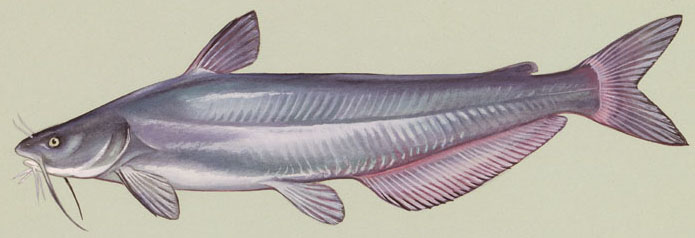 Blue CatfishIctalurus furcatus
Compare
Questions and answers
What is the scientific name of the Snail Bullhead?
The scientific name of the Snail Bullhead is Ameiurus brunneus. Written with its author, the full name is Ameiurus brunneus Jordan, 1877.
Which family does the Snail Bullhead belong to?
Ameiurus brunneus belongs to the family Ictaluridae, in the order Siluriformes and the class Teleostei.
Where is the Snail Bullhead found?
Checklists and occurrence records place Ameiurus brunneus in 1 country: United States.
What is the conservation status of the Snail Bullhead?
The IUCN Red List category recorded for Ameiurus brunneus is Least Concern (LC).
How venomous are bullheads?
The Snail Bullhead has two pectoral-fin spines coated with a toxic irritant.[3]
What is the scientific name of snail genus and species?
The scientific name of the Snail Bullhead is Ameiurus brunneus.[25]
What do bullhead catfish eat?
The Snail Bullhead eats snails, crayfish, caddisflies, and other fish, primarily cyprinids. It is also believed to consume filamentous algae and other plants.[12][13][14]
Are bullheads good eating?
The Snail Bullhead is not particularly prized as a fish because of its small size.[24]
Sources
Passages the profile rests on
- The species has a flattened head, eight mouth barbels, a rounded anal fin, an emarginate tail, two pectoral fins, an adipose fin, and a scaleless body. Source passage: “The fish has a has a flat head, typical of North American ictalurids, eight mouth barbels, a rounded anal fin, an emarginate tail, two pectoral fins, an adipose fin and a body lacking scales.” — English Wikipedia
- Its anal fin usually contains 17–20 rays, although some individuals have up to 22. Source passage: “The anal fin of A. brunneus typically has 17 to 20 fin rays, fewer than that of a related species, the flat bullhead (A. platycephalus), although some individuals may have as many as 22 rays.” — English Wikipedia
- The species has one dorsal-fin spine and two pectoral-fin spines coated with a toxic irritant. Source passage: “They also have three spines, one on the dorsal and two on the pectoral fins, which are coated with a toxic irritant that inflicts local pain and swelling as a defense against predation.” — English Wikipedia
- Its pectoral spines have fine serrations but lack coarse teeth. Source passage: “The pectoral spines have fine serrations, but lack coarse teeth, which helps to distinguish snail bullheads from spotted bullheads (A. serracanthus).” — English Wikipedia
- Common color forms have brown to yellow-green backs, mottled sides, and white bellies. Source passage: “A. brunneus can vary greatly in color but the most commonly observed morphs have brown to yellow-green backs with mottled sides and a white belly.” — English Wikipedia
- A dark spot or bar is present at the base of the dorsal fin. Source passage: “There is a dark spot or bar that colors the base of the dorsal fin.” — English Wikipedia
- Adults typically reach approximately 29 cm in fluvial habitats and up to 45 cm in disturbed habitats such as reservoirs and impounded rivers. Source passage: “The snail bullhead grows to an adult size of approximately 11.4 inches (29 cm) in fluvial habitat and up to 17.6 inches (45 cm) in disturbed habitats, such as reservoirs and impounded rivers.” — English Wikipedia
- The species occurs in shallow, slow-moving water as well as deep, fast-moving water. Source passage: “It has been found in shallow, slow water and, preferred, deep, fast water.” — English Wikipedia
- Its habitats include riffles, runs, and pools in streams, rivers, and lakes. Source passage: “They are found in riffles, runs and pools and streams, rivers and lakes.” — English Wikipedia
- During daylight hours, individuals prefer cover beneath rocks and woody structures. Source passage: “As a nocturnal species, they prefer cover under rock and wood structures during the day and forage in the open at riffles at night.” — English Wikipedia
- The species prefers fast-flowing water in high-gradient streams but can also inhabit stagnant water. Source passage: “They prefer fast flowing water in high gradient streams due to the purity and clarity of the water but will also live in stagnant water.” — English Wikipedia
- The species is an omnivorous benthic bottom feeder that uses its barbels to detect taste, touch, and electrical currents. Source passage: “They are known omnivorous benthic bottom feeders that use their barbels for taste, touch and reading electric currents due to their poor sight.” — English Wikipedia
- Its documented animal prey includes snails, crayfish, caddisflies, and other fish, primarily cyprinids. Source passage: “They are predators of invertebrates, like snails, crayfish and caddisflies, as well as other fish, mainly cyprinids.” — English Wikipedia
- The species is believed to consume filamentous algae and other plants, potentially indirectly through ingestion of caddisfly larval cases. Source passage: “Additionally, they are believed to forage on filamentous algae and other plants, although these may be sourced indirectly from the ingestion of caddisfly larval cases.” — English Wikipedia
- The composition of its diet has been observed to remain similar across its lifespan. Source passage: “It has also been observed that the diet of snail bullheads has similar composition across the lifespan.” — English Wikipedia
- The species is ectothermic, bilaterally symmetrical, and nocturnal. Source passage: “It should also be noted that these fish are ectothermic, bilaterally symmetrical and nocturnal.” — English Wikipedia
- The species may currently be classified as least concern. Source passage: “The snail bullhead may currently be a species of "least concern", but that doesn't mean it is safe.” — English Wikipedia
- Other reported threats include sedimentation, hydrologic modification, impoundments, non-point source pollution, and development. Source passage: “Along with invasive predators, snail bullheads are threatened by sedimentation, hydrologic modification, impoundments, non-point source pollution and development.” — English Wikipedia
- A 2021 analysis of ictalurid populations in the Cape Fear River basin supported recommendations to restrict harvesting snail bullheads in North Carolina. Source passage: “An analysis of the population of snail bullheads and other ictalurids in the Cape Fear River basin, published in 2021, supported previous recommendations that the harvest of snail bullheads, along with their native bullhead relatives, be restricted in North Carolina.” — English Wikipedia
- The brown bullhead (Ameiurus nebulosus) is identified as a North American relative of the snail bullhead. Source passage: “Among its bullhead catfish congeners, it has many North American relatives, like the brown bullhead (Ameiurus nebulosus) and black bullhead (Ameirurus melas).” — English Wikipedia
- The black bullhead (Ameirurus melas) is identified as a North American relative of the snail bullhead. Source passage: “Among its bullhead catfish congeners, it has many North American relatives, like the brown bullhead (Ameiurus nebulosus) and black bullhead (Ameirurus melas).” — English Wikipedia
- The flat bullhead (A. platycephalus) has more anal-fin rays than the snail bullhead typically possesses. Source passage: “The anal fin of A. brunneus typically has 17 to 20 fin rays, fewer than that of a related species, the flat bullhead (A. platycephalus), although some individuals may have as many as 22 rays.” — English Wikipedia
- The absence of coarse teeth on the pectoral spines helps distinguish snail bullheads from spotted bullheads (A. serracanthus). Source passage: “The pectoral spines have fine serrations, but lack coarse teeth, which helps to distinguish snail bullheads from spotted bullheads (A. serracanthus).” — English Wikipedia
- The species is not particularly prized as a fish because of its small size. Source passage: “Little is known about this species of fish and it is not a particularly prized fish due to its small size.” — English Wikipedia
- The U.S. Fish and Wildlife Service identifies Ameiurus brunneus as the scientific name of the snail bullhead. Source passage: “Scientific Name Ameiurus brunneus Common Name Snail Bullhead” — fws.gov
Data
- Catalogue of Life, 2026-10-16 XR cc by
- Global Biodiversity Information Facility CC BY 4.0
- Wikidata CC0
- GeoNames CC BY 4.0
- Within the Catalogue of Life, this name comes from World Register of Marine Species cc by
References
- Jordan, D. S. (1877). A partial synopsis of the fishes of upper Georgia; with supplementary papers on fishes of Tennessee, Kentucky, and Indiana. Annals of the Lyceum of Natural History of New York, v. 11 (nos 11–12) (art. 29): 307–377. where the name was published
This species in other databases
- Catalogue of Life CQK9
- Wikidata Q943236
- iNaturalist 93843
- WoRMS urn:lsid:marinespecies.org:taxname:1020249
- ITIS 164035
Page built on 29 November 2026. See how the catalog is made and all sources and licences.
Cite this page
ScientificNames.org. (2026). Ameiurus brunneus (Snail Bullhead). Retrieved November 29, 2026, from https://scientificnames.org/species/ameiurus-brunneus
“Ameiurus brunneus (Snail Bullhead).” ScientificNames.org, 2026, scientificnames.org/species/ameiurus-brunneus. Accessed 29 Nov. 2026.
ScientificNames.org. “Ameiurus brunneus (Snail Bullhead).” Accessed November 29, 2026. https://scientificnames.org/species/ameiurus-brunneus.
@misc{scientificnames_ameiurus_brunneus_snail_bullhead,
  author = {{ScientificNames.org}},
  title = {Ameiurus brunneus (Snail Bullhead)},
  year = {2026},
  url = {https://scientificnames.org/species/ameiurus-brunneus},
  note = {Accessed 2026-11-29}
}