Species · Birds · Extinct
Saint Helena Rail Aphanocrex podarces
The scientific name of the Saint Helena Rail is Aphanocrex podarces. It is an extinct species of bird in the family Rallidae (rail), order Gruiformes. The name dates from 1963.
- Scientific name
- Aphanocrex podarces Wetmore, 1963
- Common name
- Saint Helena Rail
- Genus
- Aphanocrex
- Family
- Rallidae (Rail)
- Order
- Gruiformes
- Class
- Aves
- Name status
- accepted in the Catalogue of Life

Overview
The Saint Helena rail (Aphanocrex podarces) is an extinct species of flightless rail from Saint Helena. It disappeared from the island in the early 16th century.
Classification of the Saint Helena Rail
| Kingdom | Animalia |
|---|---|
| Phylum | Chordata |
| Subphylum | Vertebrata |
| Infraphylum | Gnathostomata |
| Parvphylum | Osteichthyes |
| Megaclass | Tetrapoda |
| Class | Aves (Bird) |
| Order | Gruiformes (Rails) |
| Family | Rallidae (Rail) |
| Genus | Aphanocrex (Saint Helena Rail) |
| Species | Aphanocrex podarces Wetmore, 1963 |
Where the Saint Helena Rail is found
Checklists place Aphanocrex podarces in Africa.
Range as the checklists state it
Africa
A number beside a place is its count of GBIF occurrence records. A place without a number comes from a checklist alone. Records show where a species has been observed or collected, which can include escapes and vagrants.
Common names
English
- Saint Helena Rail
- Saint Helena Crake
- St. Helena Crake
- St. Helena Rail
Names in 15 other languages
- Catalan
- Rascló de Santa Helena
- Croatian
- svetohelenska kokošica
- Danish
- Skt. Helena-muserikse
- Dutch
- Sint-Helenaral
- Estonian
- saint helena ruik
- French
- Râle de Sainte-Hélène
- German
- Helenaralle, Sankt Helena-Ralle
- Hungarian
- Szent Ilona-szigeti guvat
- Italian
- Rallo di Sant'Elena
- Polish
- chruścielowiec wielkostopy, derkaczyk wielki
- Portuguese
- Franga-d'água-de-Santa-Helena, frango-d'água-de-santa-helena, frango-de-água-de-santa-helena
- Russian
- Пастушок острова святая елена, Святоеленский пастушок
- Slovak
- chriašteľ pazúrnatý
- Spanish
- Calamón de Santa Helena
- Swedish
- sankthelenarall
Synonyms
2 other scientific names have been used for this species and are now treated as synonyms of Aphanocrex podarces.
- Atlantisia podarces (Wetmore, 1963)
- Laterallus podarces (Wetmore, 1963)
Related species
-
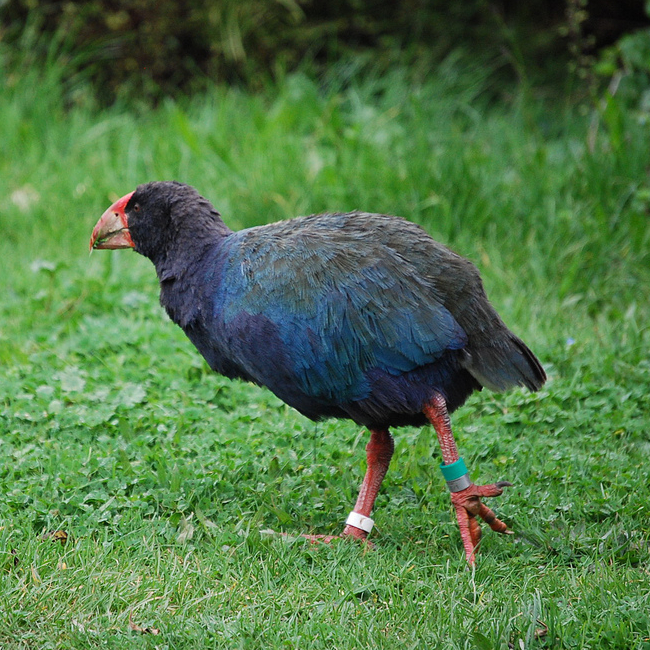 TakahēPorphyrio hochstetteri
-
 Australasian SwamphenPorphyrio melanotus
-
 American CootFulica americana
-
 Eurasian CootFulica atra
-
 Common MoorhenGallinula chloropus
-
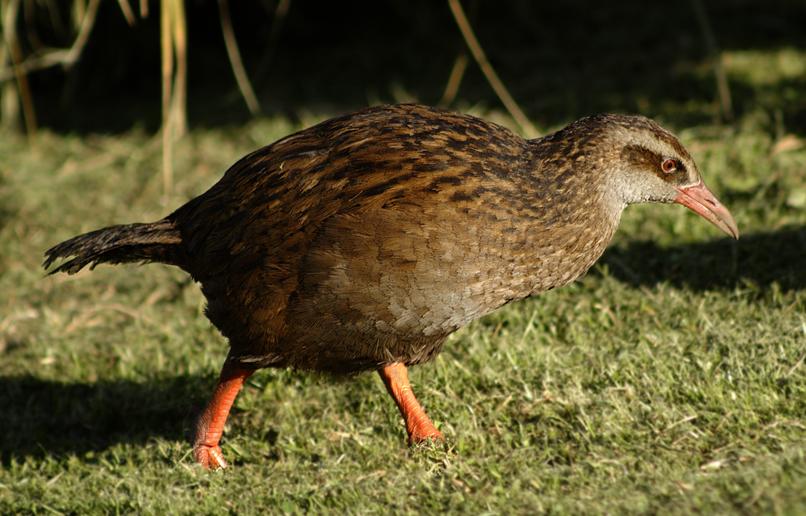 WekaGallirallus australis
-
 Corn CrakeCrex crex
-
 Tasmanian NativehenTribonyx mortierii
Compare
Questions and answers
What is the scientific name of the Saint Helena Rail?
The scientific name of the Saint Helena Rail is Aphanocrex podarces. Written with its author, the full name is Aphanocrex podarces Wetmore, 1963.
Which family does the Saint Helena Rail belong to?
Aphanocrex podarces belongs to the family Rallidae, in the order Gruiformes and the class Aves.
What other names does the Saint Helena Rail have?
Aphanocrex podarces is also known in English as Saint Helena Crake, St. Helena Crake and St. Helena Rail.
Sources
Data
- Catalogue of Life, 2026-10-16 XR cc by
- Wikidata CC0
- English Wikipedia CC BY-SA 4.0
- Wikimedia Commons per image; credit shown with each image
- Within the Catalogue of Life, this name comes from The Integrated Taxonomic Information System cc0
References
- An extinct rail from the island of St. Helena. (1963). Ibis, 103b. https://doi.org/10.1111/j.1474-919x.1963.tb06760.x Link where the name was published
This species in other databases
Page built on 25 November 2026. See how the catalog is made and all sources and licences.
Cite this page
ScientificNames.org. (2026). Aphanocrex podarces (Saint Helena Rail). Retrieved November 25, 2026, from https://scientificnames.org/species/aphanocrex-podarces
“Aphanocrex podarces (Saint Helena Rail).” ScientificNames.org, 2026, scientificnames.org/species/aphanocrex-podarces. Accessed 25 Nov. 2026.
ScientificNames.org. “Aphanocrex podarces (Saint Helena Rail).” Accessed November 25, 2026. https://scientificnames.org/species/aphanocrex-podarces.
@misc{scientificnames_aphanocrex_podarces_saint_helena_rail,
  author = {{ScientificNames.org}},
  title = {Aphanocrex podarces (Saint Helena Rail)},
  year = {2026},
  url = {https://scientificnames.org/species/aphanocrex-podarces},
  note = {Accessed 2026-11-25}
}