Species · Flowering plants
Low Sagebrush Artemisia arbuscula
The scientific name of the Low Sagebrush is Artemisia arbuscula. It is a species of flowering plant in the family Asteraceae (composite), order Asterales.
- Scientific name
- Artemisia arbuscula Nutt.
- Common name
- Low Sagebrush
- Genus
- Artemisia
- Family
- Asteraceae (Composite)
- Order
- Asterales
- Class
- Magnoliopsida
- Recorded in
- 1 country
- Name status
- accepted in the Catalogue of Life

Overview
The species is native to Washington, Oregon, California, Colorado, and Wyoming.
Written 26 November 2026 from the sources listed below. Each statement was checked against the passage it cites; statements that could not be supported were removed.
Appearance
Low sagebrush generally grows to no more than 30 centimetres in height. Its numerous branches bear hairy leaves that are less than one centimetre long.[1][2]
Its inflorescence consists of a spike-shaped arrangement of clusters of hairy flower heads. Each flower head contains a few pale yellow disc florets and lacks ray florets.[3][4]
Its fruit is a small achene less than one millimetre wide.[5]
Three listed subspecies are A. arbuscula subsp. arbuscula, A. arbuscula subsp. longiloba, and A. arbuscula subsp. thermopola.[6]
Habitat
Recognized gray low sagebrush habitat types include communities associated with bluebunch wheatgrass, Idaho fescue, and Thurber's needlegrass.[7]
In eastern Washington, low sagebrush grows alongside stiff sagebrush and mountain big sagebrush. Associated understory plants include elk sedge, Idaho fescue, Sandberg bluegrass, and bluebunch wheatgrass.[8][9]
On mesic Oregon sites occupied by low sagebrush, antelope bitterbrush, California oatgrass, and prairie Junegrass may also occur. Low sagebrush and antelope bitterbrush dominate some sites that are slightly drier than those occupied by ponderosa pine forests.[10][11]
Green rabbitbrush and rubber rabbitbrush occur as minor shrubs in some low sagebrush habitats where soils are deeper.[12]
Low sagebrush communities in poor condition are characterized by increasing rabbitbrush and cheatgrass.[13]
Similar species
Low sagebrush has been reported to hybridize with tall threetip sagebrush, basin big sagebrush, and Wyoming big sagebrush. Intermediates between gray low sagebrush and alkali sagebrush have also been reported.[14][15]
Stable hybrids of alkali sagebrush and Wyoming big sagebrush have been described in populations in Sublette County, Wyoming.[16]
Black sagebrush was formerly classified as a variant or subspecies of low sagebrush. Genetic analyses distinguished black sagebrush from low sagebrush based on their different ploidy levels.[17][18]
Classification of the Low Sagebrush
| Kingdom | Plantae |
|---|---|
| Subkingdom | Pteridobiotina |
| Phylum | Tracheophyta |
| Class | Magnoliopsida |
| Order | Asterales |
| Family | Asteraceae (Composite) |
| Subfamily | Asteroideae |
| Tribe | Anthemideae |
| Subtribe | Artemisiinae |
| Genus | Artemisia (Sagewort) |
| Species | Artemisia arbuscula Nutt. |
Where the Low Sagebrush is found
Checklists and occurrence records place Artemisia arbuscula in 1 country across North America. GBIF holds 2,874 georeferenced records of it.
Countries
Regions and cities with the most records
- Idaho, United States 406
- Nevada, United States 359
- California, United States 320
- Oregon, United States 320
- Utah, United States 153
- Wyoming, United States 145
- Montana, United States 59
- Colorado, United States 51
- Truckee, United States 43
- Washington, United States 26
- Reno, United States 14
- Sparks, United States 14
- Susanville, United States 13
- Sun Valley, United States 11
- Draper, United States 10
- Pocatello, United States 10
- South Jordan, United States 10
- West Jordan, United States 10
- Midvale, United States 9
- North Ogden, United States 9
- Sandy, United States 9
- Brigham City, United States 8
- Cottonwood Heights, United States 7
- East Millcreek, United States 7
- Holladay, United States 7
- Millcreek, United States 7
- Spanish Springs, United States 7
- Arizona, United States 6
- Bend, United States 6
- Boise, United States 6
- Eagle Mountain, United States 6
- Herriman, United States 6
- Lehi, United States 6
- Logan, United States 6
- Murray, United States 6
- Ogden, United States 6
A number beside a place is its count of GBIF occurrence records. A place without a number comes from a checklist alone. Records show where a species has been observed or collected, which can include escapes and vagrants.
Common names
English
- Low Sagebrush
- Sagebrush
Synonyms
3 other scientific names have been used for this species and are now treated as synonyms of Artemisia arbuscula.
- Artemisia arbuscula var. arbuscula
- Seriphidium arbusculum subsp. arbusculum
- Seriphidium arbusculum var. arbusculum
Subspecies and varieties
- Artemisia arbuscula subsp. arbuscula (Gray Low Sagebrush) subspecies
- Artemisia arbuscula subsp. longicaulis (Lahontan Sagebrush) subspecies
- Artemisia arbuscula subsp. longiloba (Early Sagebrush) subspecies
- Artemisia arbuscula subsp. thermopola (Cleftleaf Sagebrush) subspecies
Related species
-
 Absinthe WormwoodArtemisia absinthium
-
 TarragonArtemisia dracunculus
-
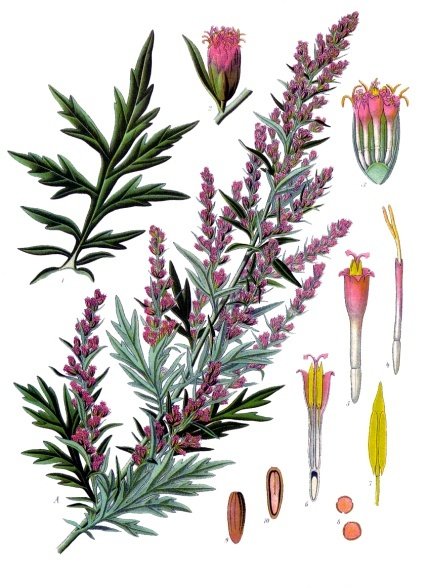 MugwortArtemisia vulgaris
-
 Annual WormwoodArtemisia annua
-
 Big SagebrushArtemisia tridentata
-
 Chinese MugwortArtemisia argyi
-
 Japanese MugwortArtemisia princeps
-
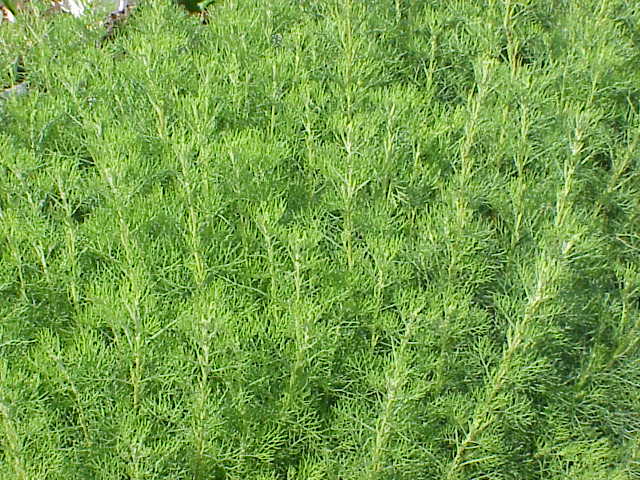 Lad's-loveArtemisia abrotanum
Compare
Questions and answers
What is the scientific name of the Low Sagebrush?
The scientific name of the Low Sagebrush is Artemisia arbuscula. Written with its author, the full name is Artemisia arbuscula Nutt..
Which family does the Low Sagebrush belong to?
Artemisia arbuscula belongs to the family Asteraceae, in the order Asterales and the class Magnoliopsida.
Where is the Low Sagebrush found?
Checklists and occurrence records place Artemisia arbuscula in 1 country: United States.
What other names does the Low Sagebrush have?
Artemisia arbuscula is also known in English as Sagebrush.
Sources
Passages the profile rests on
- The shrub generally grows to no more than 30 centimetres in height. Source passage: “generally no higher than 30 centimetres (12 in).” — English Wikipedia
- Its numerous branches bear hairy leaves that are less than one centimetre long. Source passage: “Its many branches are covered in hairy leaves each less than a centimeter long.” — English Wikipedia
- Its inflorescence consists of a spike-shaped arrangement of clusters of hairy flower heads. Source passage: “The inflorescence is a spike-shaped array of clusters of hairy flower heads.” — English Wikipedia
- Each flower head contains a few pale yellow disc florets and lacks ray florets. Source passage: “Each head contains a few pale yellow disc florets but no ray florets.” — English Wikipedia
- Its fruit is a small achene less than one millimetre wide. Source passage: “The fruit is a tiny achene less than a millimeter wide.” — English Wikipedia
- Three subspecies listed for the species are A. arbuscula subsp. arbuscula, A. arbuscula subsp. longiloba, and A. arbuscula subsp. thermopola. Source passage: “Artemisia arbuscula subsp. arbuscula Artemisia arbuscula subsp. longiloba (Osterh.) L.M.Shultz Artemisia arbuscula subsp. thermopola Beetle - Idaho, Utah, Wyoming” — English Wikipedia
- Recognized gray low sagebrush habitat types include communities associated with bluebunch wheatgrass, Idaho fescue, and Thurber's needlegrass. Source passage: “Recognized habitat types include gray low sagebrush/bluebunch wheatgrass (Pseudoroegneria spicata), gray low sagebrush/Idaho fescue (Festuca idahoensis), gray low sagebrush/Thurber's needlegrass (Achnatherum thurberianum)” — fs.usda.gov
- In eastern Washington, low sagebrush grows alongside stiff sagebrush and mountain big sagebrush. Source passage: “In eastern Washington low sagebrush grows with stiff sagebrush (A. rigida) and mountain big sagebrush (A. t. ssp. vaseyana)” — fs.usda.gov
- In eastern Washington, associated understory plants include elk sedge, Idaho fescue, Sandberg bluegrass, and bluebunch wheatgrass. Source passage: “with an understory of elk sedge (Carex geyeri), Idaho fescue, Sandberg bluegrass (Poa secunda), and bluebunch wheatgrass” — fs.usda.gov
- On mesic Oregon sites occupied by low sagebrush, antelope bitterbrush, California oatgrass, and prairie Junegrass may also occur. Source passage: “on mesic sites antelope bitterbrush, California oatgrass (Danthonia californica), and prairie Junegrass (Koeleria macrantha) are present” — fs.usda.gov
- Low sagebrush and antelope bitterbrush dominate some sites that are slightly drier than those occupied by ponderosa pine forests. Source passage: “On sites slightly drier than those occupied by ponderosa pine (Pinus ponderosa) forests, low sagebrush and antelope bitterbrush are dominant” — fs.usda.gov
- Green rabbitbrush and rubber rabbitbrush occur as minor shrubs in some low sagebrush habitats where soils are deeper. Source passage: “with green rabbitbrush (Chrysothamnus viscidiflorus) and rubber rabbitbrush (C. nauseosus) as minor shrubs where soils are deeper.” — fs.usda.gov
- Low sagebrush communities in poor condition are characterized by increasing rabbitbrush and cheatgrass. Source passage: “Such habitats in "poor condition" are characterized by increasing rabbitbrush (Chrysothamnus spp.) and cheatgrass (Bromus tectorum)” — fs.usda.gov
- Low sagebrush has been reported to hybridize with tall threetip sagebrush, basin big sagebrush, and Wyoming big sagebrush. Source passage: “Hybridization has apparently occurred between low sagebrush and tall threetip sagebrush (A. tripartita ssp. tripartita), basin big sagebrush (A. tridentata ssp. tridentata), and Wyoming big sagebrush (A. t. ssp. wyomingensis)” — fs.usda.gov
- Intermediates between gray low sagebrush and alkali sagebrush have been reported. Source passage: “Intermediates between gray low sagebrush and alkali sagebrush have been reported” — fs.usda.gov
- Stable hybrids of alkali sagebrush and Wyoming big sagebrush have been described in populations in Sublette County, Wyoming. Source passage: “populations in Sublette County, Wyoming, have been described as stable hybrids of alkali sagebrush and Wyoming big sagebrush” — fs.usda.gov
- Black sagebrush was formerly classified as a variant or subspecies of low sagebrush. Source passage: “Black sagebrush (A. nova) used to be included as a variant or subspecies of low sagebrush” — fs.usda.gov
- Genetic analyses distinguished black sagebrush from low sagebrush based on their different ploidy levels. Source passage: “The species were separated when genetic analyses showed that black sagebrush is tetraploid while low sagebrush is diploid” — fs.usda.gov
Data
- Catalogue of Life, 2026-10-16 XR cc by
- Global Biodiversity Information Facility CC BY 4.0
- Wikidata CC0
- GeoNames CC BY 4.0
- Wikimedia Commons per image; credit shown with each image
- Within the Catalogue of Life, this name comes from Synonymic Checklists of the Vascular Plants of the World cc by
References
- Nutt. where the name was published
This species in other databases
Page built on 28 November 2026. See how the catalog is made and all sources and licences.
Cite this page
ScientificNames.org. (2026). Artemisia arbuscula (Low Sagebrush). Retrieved November 28, 2026, from https://scientificnames.org/species/artemisia-arbuscula
“Artemisia arbuscula (Low Sagebrush).” ScientificNames.org, 2026, scientificnames.org/species/artemisia-arbuscula. Accessed 28 Nov. 2026.
ScientificNames.org. “Artemisia arbuscula (Low Sagebrush).” Accessed November 28, 2026. https://scientificnames.org/species/artemisia-arbuscula.
@misc{scientificnames_artemisia_arbuscula_low_sagebrush,
  author = {{ScientificNames.org}},
  title = {Artemisia arbuscula (Low Sagebrush)},
  year = {2026},
  url = {https://scientificnames.org/species/artemisia-arbuscula},
  note = {Accessed 2026-11-28}
}