Species · Flowering plants
Hoary Sagebrush Artemisia cana
The scientific name of the Hoary Sagebrush is Artemisia cana. It is a species of flowering plant in the family Asteraceae (composite), order Asterales.
- Scientific name
- Artemisia cana Pursh
- Common name
- Hoary Sagebrush
- Genus
- Artemisia
- Family
- Asteraceae (Composite)
- Order
- Asterales
- Class
- Magnoliopsida
- Recorded in
- 2 countries
- Name status
- accepted in the Catalogue of Life

Overview
Hoary sagebrush (Artemisia cana Pursh) is an aromatic shrub in the Asteraceae family. It is native to western and central North America. Its evergreen, grey-green, narrowly shaped leaves have a distinct aroma.
Written 26 November 2026 from the sources listed below. Each statement was checked against the passage it cites; statements that could not be supported were removed.
Appearance
Hoary sagebrush is an aromatic shrub with evergreen, grey-green, narrowly shaped leaves and a distinct aroma.[1][2]
The shrub generally grows between 50 and 150 centimetres tall. Plants west of the Continental Divide are typically shorter than those east of it.[3][4]
Habitat
Hoary sagebrush occurs in grasslands, floodplains and montane forests. It grows in rocky, open grasslands and floodplains.[5][6]
Diet
Antelope feed on hoary sagebrush.[7]
Similar species
Artemisia cana subsp. bolanderi is associated with mountain meadows and streambanks in eastern California, Oregon and northwestern Nevada.[8]
Artemisia cana subsp. cana is also known as plains silver sagebrush and Coaltown sagebrush.[9]
Artemisia cana subsp. viscidula is associated with sagebrush lowlands in the Great Basin, Colorado Plateau and Snake River Plain.[10]
Classification of the Hoary Sagebrush
| Kingdom | Plantae |
|---|---|
| Subkingdom | Pteridobiotina |
| Phylum | Tracheophyta |
| Class | Magnoliopsida |
| Order | Asterales |
| Family | Asteraceae (Composite) |
| Subfamily | Asteroideae |
| Tribe | Anthemideae |
| Subtribe | Artemisiinae |
| Genus | Artemisia (Sagewort) |
| Species | Artemisia cana Pursh |
Where the Hoary Sagebrush is found
Checklists and occurrence records place Artemisia cana in 2 countries across North America. GBIF holds 6,955 georeferenced records of it.
Countries
Regions and cities with the most records
- Alberta, Canada 2,913
- Montana, United States 475
- Saskatchewan, Canada 457
- California, United States 365
- Wyoming, United States 266
- Colorado, United States 229
- North Dakota, United States 210
- Utah, United States 182
- Lethbridge, Canada 137
- Nevada, United States 130
- Oregon, United States 125
- Idaho, United States 124
- South Dakota, United States 110
- Medicine Hat, Canada 84
- Nebraska, United States 51
- Bozeman, United States 28
- Billings, United States 26
- Washington, United States 17
- Truckee, United States 16
- Commerce City, United States 14
- Denver, United States 14
- Sherrelwood, United States 14
- Arvada, United States 13
- New Mexico, United States 13
- Westminster, United States 13
- Wheat Ridge, United States 13
- Aurora, United States 12
- Thornton, United States 11
- Loveland, United States 10
- Great Falls, United States 9
- Laramie, United States 9
- Northglenn, United States 9
- Swift Current, Canada 9
- Brighton, United States 8
- Reno, United States 8
- Fort Collins, United States 7
A number beside a place is its count of GBIF occurrence records. A place without a number comes from a checklist alone. Records show where a species has been observed or collected, which can include escapes and vagrants.
Common names
English
- Hoary Sagebrush
- Hoary Wormwood
- Silver Sagebrush
- Silver Wormwood
- Silvery Sagebrush
Names in 4 other languages
- Chinese
- 銀艾蒿
- Czech
- pelyněk šedý
- French
- armoise argentée
- Polish
- bylica szara
Synonyms
2 other scientific names have been used for this species and are now treated as synonyms of Artemisia cana.
- Artemisia cana var. cana
- Seriphidium canum subsp. canum
Subspecies and varieties
- Artemisia cana subsp. bolanderi subspecies
- Artemisia cana subsp. cana (Hoary Wormwood) subspecies
- Artemisia cana subsp. viscidula (Mountain Silver Sagebrush) subspecies
Related species
-
 Absinthe WormwoodArtemisia absinthium
-
 TarragonArtemisia dracunculus
-
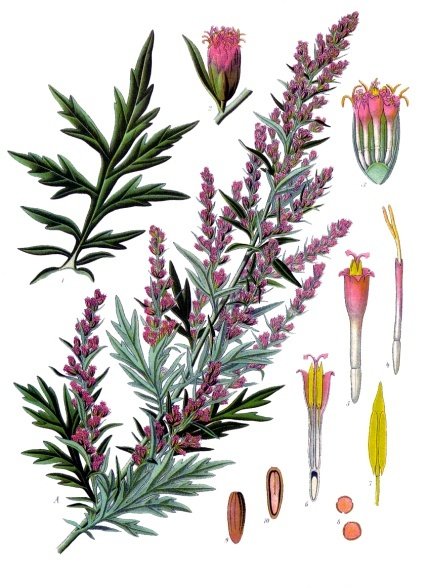 MugwortArtemisia vulgaris
-
 Annual WormwoodArtemisia annua
-
 Big SagebrushArtemisia tridentata
-
 Chinese MugwortArtemisia argyi
-
 Japanese MugwortArtemisia princeps
-
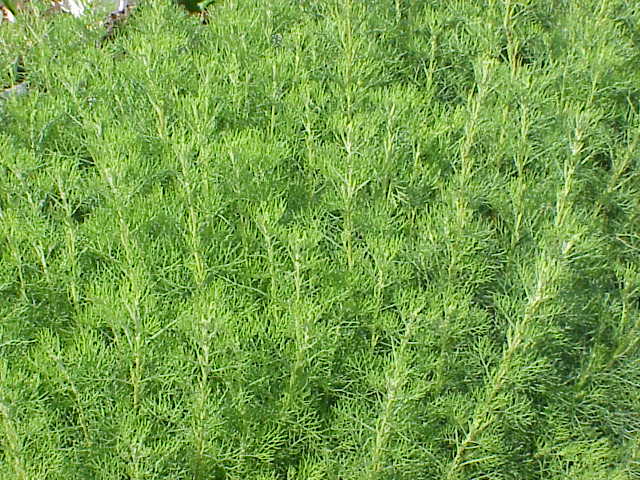 Lad's-loveArtemisia abrotanum
Compare
Questions and answers
What is the scientific name of the Hoary Sagebrush?
The scientific name of the Hoary Sagebrush is Artemisia cana. Written with its author, the full name is Artemisia cana Pursh.
Which family does the Hoary Sagebrush belong to?
Artemisia cana belongs to the family Asteraceae, in the order Asterales and the class Magnoliopsida.
Where is the Hoary Sagebrush found?
Checklists and occurrence records place Artemisia cana in 2 countries: United States and Canada.
What other names does the Hoary Sagebrush have?
Artemisia cana is also known in English as Hoary Wormwood, Silver Sagebrush, Silver Wormwood and Silvery Sagebrush.
Sources
Passages the profile rests on
- Artemisia cana is an aromatic shrub. Source passage: “Artemisia cana, Silver sagebrush, is an aromatic shrub found in grasslands, floodplains and montane forests.” — English Wikipedia
- The leaves are evergreen, grey-green and narrowly shaped, with a distinct aroma. Source passage: “The leaves have a narrow blade shape, are evergreen, grey-green in colour, and have a distinct aroma.” — English Wikipedia
- The shrub generally grows between 50 and 150 centimetres tall. Source passage: “Artemisia cana generally reaches 50–150 centimetres (20–59 in) in height” — English Wikipedia
- Plants west of the Continental Divide are typically shorter than those east of it. Source passage: “with examples west of the Continental Divide typically being shorter than those east of the divide.” — English Wikipedia
- The species occurs in grasslands, floodplains and montane forests. Source passage: “found in grasslands, floodplains and montane forests.” — English Wikipedia
- The species grows in rocky, open grasslands and floodplains. Source passage: “It grows in rocky, open grasslands and floodplains.” — English Wikipedia
- Antelope feed on the plant described in the historical account associated with the species. Source passage: “of this last the A[n]telope is very fond; they feed on it” — English Wikipedia
- Artemisia cana subsp. bolanderi is associated with mountain meadows and streambanks in eastern California, Oregon and northwestern Nevada. Source passage: “mountain meadows and streambanks in eastern California and Oregon, and northwestern Nevada.” — English Wikipedia
- Artemisia cana subsp. cana is also known as plains silver sagebrush and Coaltown sagebrush. Source passage: “plains silver sagebrush, Coaltown sagebrush, silver sagebrush” — English Wikipedia
- Artemisia cana subsp. viscidula is associated with sagebrush lowlands in the Great Basin, Colorado Plateau and Snake River Plain. Source passage: “sagebrush lowlands in Great Basin, Colorado Plateau, Snake River Plain.” — English Wikipedia
Data
- Catalogue of Life, 2026-10-16 XR cc by
- Global Biodiversity Information Facility CC BY 4.0
- Wikidata CC0
- GeoNames CC BY 4.0
- Wikimedia Commons per image; credit shown with each image
- Within the Catalogue of Life, this name comes from Synonymic Checklists of the Vascular Plants of the World cc by
References
- Pursh. where the name was published
This species in other databases
Page built on 29 November 2026. See how the catalog is made and all sources and licences.
Cite this page
ScientificNames.org. (2026). Artemisia cana (Hoary Sagebrush). Retrieved November 29, 2026, from https://scientificnames.org/species/artemisia-cana
“Artemisia cana (Hoary Sagebrush).” ScientificNames.org, 2026, scientificnames.org/species/artemisia-cana. Accessed 29 Nov. 2026.
ScientificNames.org. “Artemisia cana (Hoary Sagebrush).” Accessed November 29, 2026. https://scientificnames.org/species/artemisia-cana.
@misc{scientificnames_artemisia_cana_hoary_sagebrush,
  author = {{ScientificNames.org}},
  title = {Artemisia cana (Hoary Sagebrush)},
  year = {2026},
  url = {https://scientificnames.org/species/artemisia-cana},
  note = {Accessed 2026-11-29}
}