Species · Flowering plants
Siberian Wormwood Artemisia laciniata
The scientific name of the Siberian Wormwood is Artemisia laciniata. It is a species of flowering plant in the family Asteraceae (composite), order Asterales.
- Scientific name
- Artemisia laciniata Willd.
- Common name
- Siberian Wormwood
- Genus
- Artemisia
- Family
- Asteraceae (Composite)
- Order
- Asterales
- Class
- Magnoliopsida
- Recorded in
- 15 countries
- Name status
- accepted in the Catalogue of Life

Overview
Artemisia laciniata occurs predominantly in Russia, Alaska, the Yukon, and other parts of the United States and Europe. It has alternate, gray-green, bipinnate leaves and produces numerous greenish-yellow flowers.
Written 27 November 2026 from the sources listed below. Each statement was checked against the passage it cites; statements that could not be supported were removed.
Appearance
Siberian wormwood has alternate, gray-green, bipinnate leaves. Its leaflets are lanceolate with entire margins.[1][2]
The plant produces numerous greenish-yellow flowers and can grow to heights of 50–60 centimeters.[3][4]
Reproduction and life cycle
Siberian wormwood is hermaphroditic, possessing both male and female reproductive organs. It produces achenes as its fruit.[5][6]
The plant blooms between August and October.[7]
Habitat
Siberian wormwood occurs along dry, gravelly stream banks, on grassy flats, in forested areas, and on dry hillsides.[8][9][10][11]
It occurs at elevations between 100 and 1,500 meters.[12]
Similar species
Tanacetum bipinnatum and Artemisia norvegica can be confused with Siberian wormwood. Tanacetum bipinnatum differs by having pointed leaves.[13][14][15]
Artemisia norvegica differs by having larger flowers and less developed leaves.[16]
Classification of the Siberian Wormwood
| Kingdom | Plantae |
|---|---|
| Subkingdom | Pteridobiotina |
| Phylum | Tracheophyta |
| Class | Magnoliopsida |
| Order | Asterales |
| Family | Asteraceae (Composite) |
| Subfamily | Asteroideae |
| Tribe | Anthemideae |
| Subtribe | Artemisiinae |
| Genus | Artemisia (Sagewort) |
| Species | Artemisia laciniata Willd. |
Where the Siberian Wormwood is found
Checklists and occurrence records place Artemisia laciniata in 15 countries across Asia, Europe and North America. GBIF holds 1,861 georeferenced records of it.
Countries
- Austria 45
- Canada 54
- China 61
- Czechia 4
- Germany 66
- India 5
- Japan 84
- Kazakhstan 66
- Mongolia 80
- North Korea 10
- Pakistan 19
- Russia 1,098
- South Korea 4
- Sweden 150
- United States 115
Regions and cities with the most records
- Irkutsk Oblast, Russia 127
- Krasnoyarsk Krai, Russia 78
- Kalmar, Sweden 65
- Primorye, Russia 53
- Buryatiya Republic, Russia 52
- Yukon, Canada 50
- Novosibirsk Oblast, Russia 38
- Alaska, United States 35
- Kurgan Oblast, Russia 34
- Sakha, Russia 33
- Tyumen Oblast, Russia 29
- Colorado, United States 28
- Kamchatka, Russia 27
- Chukotka, Russia 24
- Amur Oblast, Russia 23
- Sakhalin Oblast, Russia 23
- Omsk Oblast, Russia 21
- Usol’ye-Sibirskoye, Russia 20
- Saxony-Anhalt, Germany 18
- Bernburg, Germany 17
- Devínska Nová Ves, Slovakia 17
- Dúbravka, Slovakia 17
- Karlova Ves, Slovakia 17
- Lower Austria, Austria 17
- Aschersleben, Germany 16
- Staßfurt, Germany 16
- Karaganda, Kazakhstan 15
- Burgenland, Austria 13
- Chelyabinsk, Russia 13
- East Kazakhstan, Kazakhstan 13
- Angarsk, Russia 9
- Hailar, China 8
- Hulunbuir, China 8
- Magadan Oblast, Russia 8
- Kurgan, Russia 7
- Thuringia, Germany 7
A number beside a place is its count of GBIF occurrence records. A place without a number comes from a checklist alone. Records show where a species has been observed or collected, which can include escapes and vagrants.
Common names
English
- Siberian Wormwood
- Cut-leaved Wormwood
Names in 2 other languages
- French
- armoise laciniée
- German
- schlitzblättriger Beifuß
Synonyms
2 other scientific names have been used for this species and are now treated as synonyms of Artemisia laciniata.
- Artemisia laciniata f. laciniata
- Artemisia laciniatiformis subsp. laciniatiformis
Subspecies and varieties
- Artemisia laciniata subsp. laciniata (Siberian Wormwood) subspecies
- Artemisia laciniata subsp. parryi (Parry's Wormwood) subspecies
Related species
-
 Absinthe WormwoodArtemisia absinthium
-
 TarragonArtemisia dracunculus
-
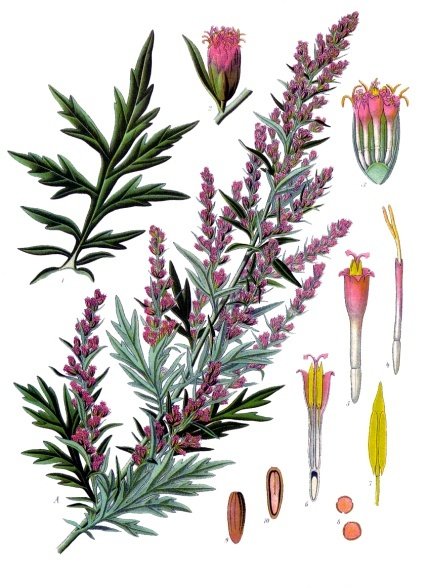 MugwortArtemisia vulgaris
-
 Annual WormwoodArtemisia annua
-
 Big SagebrushArtemisia tridentata
-
 Chinese MugwortArtemisia argyi
-
 Japanese MugwortArtemisia princeps
-
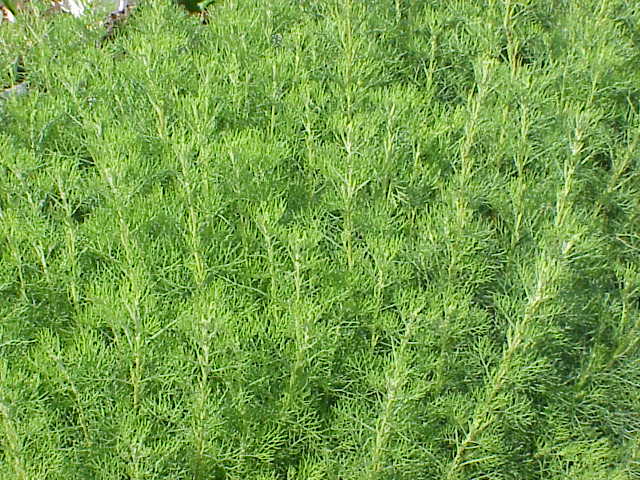 Lad's-loveArtemisia abrotanum
Compare
Questions and answers
What is the scientific name of the Siberian Wormwood?
The scientific name of the Siberian Wormwood is Artemisia laciniata. Written with its author, the full name is Artemisia laciniata Willd..
Which family does the Siberian Wormwood belong to?
Artemisia laciniata belongs to the family Asteraceae, in the order Asterales and the class Magnoliopsida.
Where is the Siberian Wormwood found?
Checklists and occurrence records place Artemisia laciniata in 15 countries, including Russia, Sweden, United States, Japan, Mongolia and Germany.
What other names does the Siberian Wormwood have?
Artemisia laciniata is also known in English as Cut-leaved Wormwood.
Sources
Passages the profile rests on
- The plant has alternate, gray-green, bipinnate leaves. Source passage: “The alternate leaves are gray-green in color and are bipinnate.” — English Wikipedia
- Its leaflets are lanceolate and have entire margins. Source passage: “The lanceolate leaflets have entire margins.” — English Wikipedia
- The plant produces numerous greenish-yellow flowers. Source passage: “It produces a lot of greenish yellow flowers with many stellates.” — English Wikipedia
- The plant can grow to heights of 50–60 centimeters. Source passage: “Artemisia laciniata can reach heights up to 50 or 60 centimeters.” — English Wikipedia
- The plant is hermaphroditic, possessing both male and female reproductive organs. Source passage: “It is a hermaphrodite (has both male and female organs).” — English Wikipedia
- The plant produces achenes as its fruit. Source passage: “The fruit type is achenes.” — English Wikipedia
- The plant blooms between August and October. Source passage: “Its bloom period is from August to October.” — English Wikipedia
- The species occurs along dry, gravelly stream banks. Source passage: “It can be found in dry gravelly stream banks, grassy flats, forested areas, and dry hillsides.” — English Wikipedia
- The species inhabits grassy flats. Source passage: “It can be found in dry gravelly stream banks, grassy flats, forested areas, and dry hillsides.” — English Wikipedia
- The species occurs in forested areas. Source passage: “It can be found in dry gravelly stream banks, grassy flats, forested areas, and dry hillsides.” — English Wikipedia
- The species grows on dry hillsides. Source passage: “It can be found in dry gravelly stream banks, grassy flats, forested areas, and dry hillsides.” — English Wikipedia
- The species occurs at elevations between 100 and 1,500 meters. Source passage: “Its elevation is between 100 and 1500 meters.” — English Wikipedia
- Tanacetum bipinnatum can be confused with Artemisia laciniata. Source passage: “May be confused with Tanacetum bipinnatum and Artemisia norvegica” — English Wikipedia
- Artemisia norvegica can be confused with Artemisia laciniata. Source passage: “May be confused with Tanacetum bipinnatum and Artemisia norvegica” — English Wikipedia
- Tanacetum bipinnatum differs from Artemisia laciniata by having pointed leaves. Source passage: “Tanacetum has pointed leaves” — English Wikipedia
- Artemisia norvegica differs from Artemisia laciniata by having larger flowers and less developed leaves. Source passage: “A. novegica has bigger flowers and less developed leaves, differentiating the plants.” — English Wikipedia
Data
- Catalogue of Life, 2026-10-16 XR cc by
- Global Biodiversity Information Facility CC BY 4.0
- Wikidata CC0
- GeoNames CC BY 4.0
- Wikimedia Commons per image; credit shown with each image
- Within the Catalogue of Life, this name comes from Synonymic Checklists of the Vascular Plants of the World cc by
References
- Willd. where the name was published
This species in other databases
Page built on 29 November 2026. See how the catalog is made and all sources and licences.
Cite this page
ScientificNames.org. (2026). Artemisia laciniata (Siberian Wormwood). Retrieved November 29, 2026, from https://scientificnames.org/species/artemisia-laciniata
“Artemisia laciniata (Siberian Wormwood).” ScientificNames.org, 2026, scientificnames.org/species/artemisia-laciniata. Accessed 29 Nov. 2026.
ScientificNames.org. “Artemisia laciniata (Siberian Wormwood).” Accessed November 29, 2026. https://scientificnames.org/species/artemisia-laciniata.
@misc{scientificnames_artemisia_laciniata_siberian_wormwood,
  author = {{ScientificNames.org}},
  title = {Artemisia laciniata (Siberian Wormwood)},
  year = {2026},
  url = {https://scientificnames.org/species/artemisia-laciniata},
  note = {Accessed 2026-11-29}
}