Species · Flowering plants
Birdfoot Sagebrush Artemisia pedatifida
The scientific name of the Birdfoot Sagebrush is Artemisia pedatifida. It is a species of flowering plant in the family Asteraceae (composite), order Asterales.
- Scientific name
- Artemisia pedatifida Nutt.
- Common name
- Birdfoot Sagebrush
- Genus
- Artemisia
- Family
- Asteraceae (Composite)
- Order
- Asterales
- Class
- Magnoliopsida
- Recorded in
- 1 country
- Name status
- accepted in the Catalogue of Life

Overview
Birdfoot Sagebrush (Artemisia pedatifida Nutt.) is a flowering plant in the family Asteraceae, order Asterales, and class Magnoliopsida. It is native to the west-central United States, with a range extending through parts of Idaho, Montana, Wyoming, and Colorado. It is a dwarf, somewhat mat-forming perennial subshrub that reaches approximately 5–15 cm in height.
Written 27 November 2026 from the sources listed below. Each statement was checked against the passage it cites; statements that could not be supported were removed.
Appearance
Birdfoot Sagebrush is a dwarf, somewhat mat-forming perennial subshrub with numerous erect stems emerging from a branching woody base. Its root is tough and woody.[1][2][3]
Its leaves are predominantly basal, grow in tufts, and measure 1–2 cm long. The plant reaches approximately 5–15 cm in height.[4][5][6]
Its inflorescence is raceme-like or spike-like and measures 1–7 cm in length. Each flower head produces four to seven marginal pistillate ray flowers and five to ten perfect but sterile staminate disc flowers.[7][8][9][10]
Its fruit is a one-seeded achene.[11]
Habitat
Birdfoot Sagebrush grows in small, isolated stands on dry hills, mesas, ridges, high plains, and foothills. It commonly inhabits mountain and plains grasslands.[12][13]
Its habitats commonly have shale, clay, or bentonite soils with saline or alkaline substrates. Known habitats occur at elevations of approximately 1,250–2,134 m, and annual precipitation at most habitat locations averages 203–356 mm.[14][15][16]
In southwestern Montana, Birdfoot Sagebrush occurs in an Idaho fescue habitat type on dry, alkaline, alluvial soils. Bluebunch wheatgrass is a common associate in this habitat type.[17][18]
A birdfoot sagebrush-Gardner's saltbush-Hood's phlox habitat type occurs in heavily grazed low spots throughout Wyoming.[19]
Reproduction and life cycle
Birdfoot Sagebrush reproduces and regenerates through seeds. The species is monoecious and is pollinated by wind.[20][21][22][23]
The species flowers from May through June. Its seeds fall or are shaken from the plant by wind.[24][25]
The species lacks asexual vegetative regeneration and does not sprout after fire or other disturbances.[26][27]
Seeds of Artemisia species generally lack special appendages for seed dispersal and lack a long-lived seed bank. They generally require light and moist chilling for germination.[28][29][30]
Conservation
Birdfoot Sagebrush is classified as native and noninvasive in the United States Forest Service species review. The Idaho Fish and Game Species Catalog lists the species with a state rank of SNR.[31][32]
Classification of the Birdfoot Sagebrush
| Kingdom | Plantae |
|---|---|
| Subkingdom | Pteridobiotina |
| Phylum | Tracheophyta |
| Class | Magnoliopsida |
| Order | Asterales |
| Family | Asteraceae (Composite) |
| Subfamily | Asteroideae |
| Tribe | Anthemideae |
| Subtribe | Artemisiinae |
| Genus | Artemisia (Sagewort) |
| Species | Artemisia pedatifida Nutt. |
Where the Birdfoot Sagebrush is found
Checklists and occurrence records place Artemisia pedatifida in 1 country across North America. GBIF holds 381 georeferenced records of it.
Countries
Regions and cities with the most records
- Wyoming, United States 186
- Montana, United States 28
- Colorado, United States 12
- Idaho, United States 1
Range as the checklists state it
USA (Colorado, Idaho, Montana, Wyoming)
A number beside a place is its count of GBIF occurrence records. A place without a number comes from a checklist alone. Records show where a species has been observed or collected, which can include escapes and vagrants.
Common names
English
- Birdfoot Sagebrush
Synonyms
2 other scientific names have been used for this species and are now treated as synonyms of Artemisia pedatifida.
- Oligosporus pedatifidus (Nutt.) Poljakov
- Oligosporus pedatifidus (Nutt.) W.A.Weber
Related species
-
 Absinthe WormwoodArtemisia absinthium
-
 TarragonArtemisia dracunculus
-
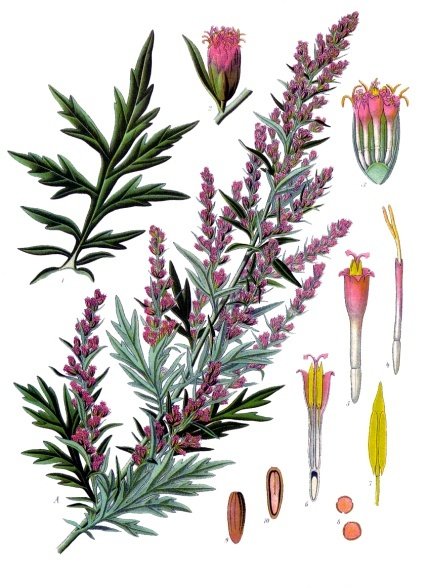 MugwortArtemisia vulgaris
-
 Annual WormwoodArtemisia annua
-
 Big SagebrushArtemisia tridentata
-
 Chinese MugwortArtemisia argyi
-
 Japanese MugwortArtemisia princeps
-
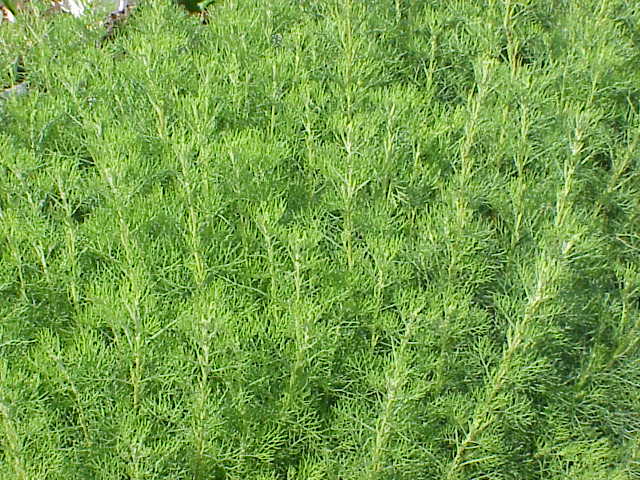 Lad's-loveArtemisia abrotanum
Compare
Questions and answers
What is the scientific name of the Birdfoot Sagebrush?
The scientific name of the Birdfoot Sagebrush is Artemisia pedatifida. Written with its author, the full name is Artemisia pedatifida Nutt..
Which family does the Birdfoot Sagebrush belong to?
Artemisia pedatifida belongs to the family Asteraceae, in the order Asterales and the class Magnoliopsida.
Where is the Birdfoot Sagebrush found?
Checklists and occurrence records place Artemisia pedatifida in 1 country: United States.
Is sagebrush actually sage?
The species is identified as Birdfoot Sagebrush and belongs to the genus Artemisia.[33]
Is artemisia the same as sagebrush?
Birdfoot Sagebrush is an Artemisia species, identified scientifically as Artemisia pedatifida Nutt.[33]
What family is sagebrush in?
Birdfoot Sagebrush belongs to the family Asteraceae.[33]
Sources
Passages the profile rests on
- Artemisia pedatifida is a dwarf, somewhat mat-forming perennial subshrub. Source passage: “Birdfoot sagebrush is a native, dwarf, somewhat mat-forming perennial subshrub” — research.fs.usda.gov
- The plant has numerous erect stems emerging from a branching woody base. Source passage: “Numerous erect stems arise from a branching woody base” — research.fs.usda.gov
- Its root is tough and woody. Source passage: “The root is described as tough and woody” — research.fs.usda.gov
- Its leaves are predominantly basal and grow in tufts. Source passage: “Leaves are mainly basal, tufted” — research.fs.usda.gov
- Its leaves are 1–2 cm long. Source passage: “0.4 to 0.8 inches (1-2 cm) long” — research.fs.usda.gov
- The plant reaches approximately 5–15 cm in height. Source passage: “grows from 2.0 to 5.9 inches (5.0-15.0 cm) in height” — research.fs.usda.gov
- Its inflorescence is raceme-like or spike-like. Source passage: “The inflorescence is raceme- or spikelike” — research.fs.usda.gov
- Its inflorescences measure 1–7 cm in length. Source passage: “growing from 0.4 to 2.7 inches (1-7 cm) long” — research.fs.usda.gov
- Each flower head produces four to seven marginal pistillate ray flowers. Source passage: “Four to seven marginal pistillate ray flowers are produced” — research.fs.usda.gov
- Each flower head produces five to ten perfect but sterile staminate disc flowers. Source passage: “5 to 10 perfect but sterile staminate disc flowers” — research.fs.usda.gov
- Its fruit is a one-seeded achene. Source passage: “The fruit is a one-seeded achene” — research.fs.usda.gov
- The species grows in small, isolated stands on dry hills, mesas, ridges, high plains, and foothills. Source passage: “Birdfoot sagebrush grows in small, isolated stands on dry hills, mesas, ridges, high plains and foothills” — research.fs.usda.gov
- The species commonly inhabits mountain and plains grasslands. Source passage: “Birdfoot sagebrush is most common on mountain and plains grasslands.” — research.fs.usda.gov
- Its habitats commonly have shale, clay, or bentonite soils with saline or alkaline substrates. Source passage: “Soils are commonly shale, clay or bentonite material with saline or alkaline substrates.” — research.fs.usda.gov
- Its known habitats occur at elevations of approximately 1,250–2,134 m. Source passage: “Birdfoot sagebrush is found at elevations ranging from 4,100 to 7,000 feet (1,250-2,134 m)” — research.fs.usda.gov
- Annual precipitation at most of its habitat locations averages 203–356 mm. Source passage: “Annual precipitation averages from 8 to 14 inches (203-356 mm) at most locations” — research.fs.usda.gov
- In southwestern Montana, the species occurs in an Idaho fescue habitat type on dry, alkaline, alluvial soils. Source passage: “A birdfoot sagebrush/Idaho fescue (Festuca idahoensis) habitat type occurs in southwestern Montana on dry, alkaline, alluvial soils.” — research.fs.usda.gov
- Bluebunch wheatgrass is a common associate in the Idaho fescue habitat type occupied by the species. Source passage: “Bluebunch wheatgrass (Pseudoroegneria spicata) is a common associate in this habitat type” — research.fs.usda.gov
- A birdfoot sagebrush-Gardner's saltbush-Hood's phlox habitat type occurs in heavily grazed low spots throughout Wyoming. Source passage: “A birdfoot sagebrush-Gardner saltbush/Hood's phlox (Phlox hoodii) habitat type occurs throughout Wyoming in low spots in areas that have been heavily grazed” — research.fs.usda.gov
- The species reproduces through seeds. Source passage: “The plant reproduces by seed.” — English Wikipedia
- Birdfoot sagebrush regenerates through seeds. Source passage: “Birdfoot sagebrush regenerates by seeds.” — research.fs.usda.gov
- The species is pollinated by wind. Source passage: “Birdfoot sagebrush is pollinated by wind” — research.fs.usda.gov
- The species is monoecious. Source passage: “Birdfoot sagebrush is monoecious” — research.fs.usda.gov
- The species flowers from May through June. Source passage: “Birdfoot sagebrush flowers from May to June.” — research.fs.usda.gov
- Its seeds fall or are shaken from the plant by wind. Source passage: “Seeds fall or are shaken from the plant by wind” — research.fs.usda.gov
- The species lacks asexual vegetative regeneration. Source passage: “Birdfoot sagebrush lacks any form of asexual regeneration” — research.fs.usda.gov
- The species does not sprout after fire or other disturbances. Source passage: “sprouting after fire or other disturbance does not occur.” — research.fs.usda.gov
- Seeds of Artemisia species generally lack special appendages for seed dispersal. Source passage: “Seeds of Artemisia species lack any special appendages to aid in seed dispersal.” — research.fs.usda.gov
- Artemisia species generally lack a long-lived seed bank. Source passage: “Artemisia species generally lack a long-lived seed bank” — research.fs.usda.gov
- Seeds of Artemisia species generally require light and moist chilling for germination. Source passage: “seeds of Artemisia species in general require light and moist chilling for germination to occur” — research.fs.usda.gov
- The species is classified as native and noninvasive in the United States Forest Service species review. Source passage: “Nativity: NativeInvasiveness: Noninvasive” — research.fs.usda.gov
- The Idaho Fish and Game Species Catalog lists the species with a state rank of SNR. Source passage: “Artemisia pedatifida (Bird's-foot Sagebrush) Plantae/Anthophyta/Dicotyledoneae/Asterales/Asteraceae/Artemisia pedatifida State Rank: SNR” — idfg.idaho.gov
- The species is identified by the scientific name Artemisia pedatifida Nutt. Source passage: “The scientific name of birdfoot sagebrush is Artemisia pedatifida Nutt. (Asteraceae)” — research.fs.usda.gov
Data
- Catalogue of Life, 2026-10-16 XR cc by
- Global Biodiversity Information Facility CC BY 4.0
- Wikidata CC0
- GeoNames CC BY 4.0
- Wikimedia Commons per image; credit shown with each image
- Within the Catalogue of Life, this name comes from Synonymic Checklists of the Vascular Plants of the World cc by
References
- Nutt. (1841). Trans. Amer. Philos. Soc., n. s. 7: 399 (1841). where the name was published
This species in other databases
- Catalogue of Life GWRS
- Wikidata Q609719
- iNaturalist 158716
- World Flora Online wfo-0000006140
- GRIN 460265
Page built on 29 November 2026. See how the catalog is made and all sources and licences.
Cite this page
ScientificNames.org. (2026). Artemisia pedatifida (Birdfoot Sagebrush). Retrieved November 29, 2026, from https://scientificnames.org/species/artemisia-pedatifida
“Artemisia pedatifida (Birdfoot Sagebrush).” ScientificNames.org, 2026, scientificnames.org/species/artemisia-pedatifida. Accessed 29 Nov. 2026.
ScientificNames.org. “Artemisia pedatifida (Birdfoot Sagebrush).” Accessed November 29, 2026. https://scientificnames.org/species/artemisia-pedatifida.
@misc{scientificnames_artemisia_pedatifida_birdfoot_sagebrush,
  author = {{ScientificNames.org}},
  title = {Artemisia pedatifida (Birdfoot Sagebrush)},
  year = {2026},
  url = {https://scientificnames.org/species/artemisia-pedatifida},
  note = {Accessed 2026-11-29}
}