Species · Flowering plants
Andalusian Belladonna Atropa baetica
The scientific name of the Andalusian Belladonna is Atropa baetica. It is a species of flowering plant in the family Solanaceae (nightshades), order Solanales.
- Scientific name
- Atropa baetica Willk.
- Common name
- Andalusian Belladonna
- Genus
- Atropa
- Family
- Solanaceae (Nightshades)
- Order
- Solanales
- Class
- Magnoliopsida
- Recorded in
- 2 countries
- Name status
- accepted in the Catalogue of Life

Overview
Andalusian Belladonna is a flowering plant with yellowish-green, hairless stems and foliage. It is distinguished by its green to yellow flowers and glossy, spherical black berries.
Written 26 November 2026 from the sources listed below. Each statement was checked against the passage it cites; statements that could not be supported were removed.
Appearance
Andalusian Belladonna has yellowish-green, hairless stems and foliage. Its stems are upright and fleshy, remaining unbranched or branching in their upper portions.[1][2]
Its leaves are arranged alternately or oppositely and have simple, entire, ovate blades. The blades can measure up to 13 by 7 cm.[3][4]
Its solitary flowers grow in the leaf axils and are funnel-shaped, with green to yellow colouring. The corolla can reach 25 mm in diameter.[5][6][7]
Its fruit consists of glossy, spherical black berries measuring approximately 10 mm in diameter.[8][9]
Its relatively dense, shallow root system spreads through rhizomes that can form substantial clumps.[10]
Its stems can reach 125 cm in height.[11]
Habitat
Andalusian Belladonna grows in lightly shaded upland forests on calcareous rocks and scree. It also occurs in the undergrowth of mixed upland forests on dry, sunny, rocky or stony slopes.[12][13]
It grows in calcium-rich soils and sometimes occupies disturbed locations rich in nitrogen. It occasionally occurs in wetter and shadier locations near watercourses.[14][15]
Diet
Several true bug species feed on the juice or sap of its ripe and unripe fruits.[16]
Behaviour
Andalusian Belladonna has a relatively short growing season of approximately five months. Its green shoots generally emerge at ground level in mid-May.[17][18]
Its stems reach their full height within approximately three to four weeks of initial rapid growth.[19]
Its flowering period can extend from the third week of June until mid-August. The greatest number of open flowers occurs during the first two weeks of July.[20][21]
Its ripe berries are generally present from early September until mid-October. Its aerial growth disappears shortly after the first rains or heavy snowfall.[22][23]
Reproduction and life cycle
Its flowers are regularly visited by the bumblebees Bombus lucorum and Bombus pascuorum and the European honeybee Apis mellifera.[24]
Birds disperse its seeds by consuming the berries and transporting the seeds away from the parent plant. Bird digestive acids and enzymes help break down the seed coats and accelerate germination.[25][26]
Its chromosome number is 2n=72.[27]
Conservation
Andalusian Belladonna is described as one of Europe's rarest wildflowers.[28]
Browsing by ibexes during September can substantially reduce its production of ripe berries and viable seeds.[29]
Uses
Andalusian Belladonna contains tropane alkaloids with anticholinergic, deliriant, antispasmodic and mydriatic properties. The plant is extremely poisonous.[30][31]
Similar species
Andalusian Belladonna is closely related to Atropa belladonna. It differs from that species by having yellow or greenish-yellow flowers rather than dark purple flowers.[32][33]
Its berries are slightly smaller and contain fewer seeds than those of Atropa belladonna, although its individual seeds are larger.[34]
Andalusian Belladonna has yellowish-green, relatively hairless foliage, whereas Atropa belladonna has dark green, somewhat hairy foliage. Andalusian Belladonna is generally shorter than Atropa belladonna, which can reach 150 cm or occasionally 200 cm.[35][36]
Classification of the Andalusian Belladonna
| Kingdom | Plantae |
|---|---|
| Subkingdom | Pteridobiotina |
| Phylum | Tracheophyta |
| Class | Magnoliopsida |
| Order | Solanales |
| Family | Solanaceae (Nightshades) |
| Subfamily | Solanoideae |
| Tribe | Hyoscyameae |
| Subtribe | Hyoscyaminae |
| Genus | Atropa (Belladonna) |
| Species | Atropa baetica Willk. |
Where the Andalusian Belladonna is found
Checklists and occurrence records place Atropa baetica in 2 countries across Africa. GBIF holds 434 georeferenced records of it.
Countries
Regions and cities with the most records
- Catalonia, Spain 26
- Tortosa, Spain 24
- Ronda, Spain 23
- Chefchaouen, Morocco 20
- Coín, Spain 16
- Ubrique, Spain 10
- Baza, Spain 5
- Campiña, Spain 5
- Guadix, Spain 4
- Priego de Córdoba, Spain 4
- Torre del Mar, Spain 4
- Torrox, Spain 4
- Vélez-Málaga, Spain 4
- Antequera, Spain 3
- Berkane, Morocco 3
- Oriental, Morocco 3
- Sidi Slimane Echcharaa, Morocco 3
Range as the checklists state it
EC- & S-Spain; Morocco
A number beside a place is its count of GBIF occurrence records. A place without a number comes from a checklist alone. Records show where a species has been observed or collected, which can include escapes and vagrants.
Common names
English
- Andalusian Belladonna
Names in 2 other languages
- Russian
- Красавка бетийская
- Swedish
- Spansk belladonna
Synonyms
2 other scientific names have been used for this species and are now treated as synonyms of Atropa baetica.
- Atropa belladonna subsp. baetica (Willk.) Font Quer
- Atropa belladonna var. baetica (Willk.) Pau ex Font Quer
Related species
- Indian BelladonnaAtropa acuminata
- Hyrcanian BelladonnaAtropa pallidiflora
- Deadly NightshadeAtropa belladonna
- Turkmenistan BelladonnaAtropa komarovii
- Atropa × martiana
-
 PotatoSolanum tuberosum
-
 Indian GinsengWithania somnifera
-
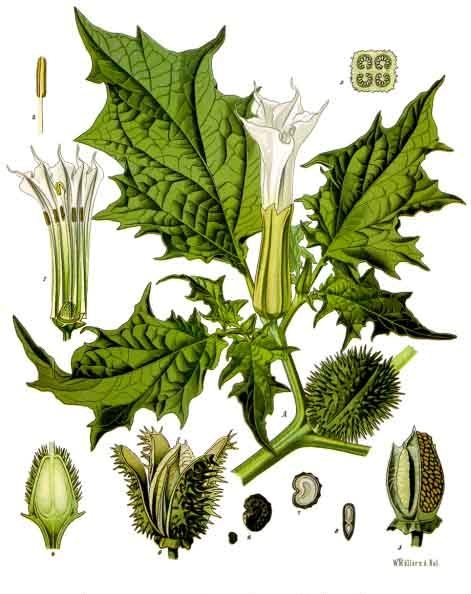 JimsonweedDatura stramonium
Compare
Questions and answers
What is the scientific name of the Andalusian Belladonna?
The scientific name of the Andalusian Belladonna is Atropa baetica. Written with its author, the full name is Atropa baetica Willk..
Which family does the Andalusian Belladonna belong to?
Atropa baetica belongs to the family Solanaceae, in the order Solanales and the class Magnoliopsida.
Where is the Andalusian Belladonna found?
Checklists and occurrence records place Atropa baetica in 2 countries: Spain and Morocco.
Sources
Passages the profile rests on
- The plant has yellowish-green, hairless stems and foliage. Source passage: “Plant yellowish-green, glabrous” — English Wikipedia
- Its stems are upright, fleshy and either unbranched or branched in their upper portions. Source passage: “stems erect, fleshy, up to 125 cm in height, simple or branched above.” — English Wikipedia
- Its leaves are arranged alternately or oppositely and have simple, entire, ovate blades. Source passage: “Leaves alternate or opposite, simple, entire, lamina up to 13 × 7 cm, densely crowded, ovate” — English Wikipedia
- Its leaf blades can measure up to 13 by 7 cm. Source passage: “lamina up to 13 × 7 cm” — English Wikipedia
- Its flowers are solitary and grow in the leaf axils. Source passage: “Flowers solitary, axillary, borne in July.” — English Wikipedia
- Its funnel-shaped flowers are green to yellow. Source passage: “Corolla infundibuliform, up to 25 mm in diameter, twice as long as calyx, having lobes roughly equal in length to tube, green to yellow.” — English Wikipedia
- Its corolla can reach 25 mm in diameter. Source passage: “Corolla infundibuliform, up to 25 mm in diameter” — English Wikipedia
- Its fruit consists of glossy, spherical black berries. Source passage: “Fruit a globose, shining, black berry, some 10mm in diameter.” — English Wikipedia
- Its berries measure approximately 10 mm in diameter. Source passage: “Fruit a globose, shining, black berry, some 10mm in diameter.” — English Wikipedia
- Its root system is relatively dense and shallow, spreading through rhizomes that can form substantial clumps. Source passage: “Rhizomatous root system relatively dense and shallow, penetrating to a depth of only 10–20 cm, but often spreading to form substantial clump.” — English Wikipedia
- The plant's stems can reach 125 cm in height. Source passage: “stems erect, fleshy, up to 125 cm in height” — English Wikipedia
- The species grows in lightly shaded upland forests on calcareous rocks and scree. Source passage: “Habitat: light shade of upland forest on calcareous rocks and screes.” — English Wikipedia
- It occurs in the undergrowth of mixed upland forests on dry, sunny, rocky or stony slopes. Source passage: “Atropa baetica grows among the undergrowth of mixed, upland forest on dry, sunny, rocky or stony slopes” — English Wikipedia
- It grows in calcium-rich soils, sometimes in disturbed locations rich in nitrogen. Source passage: “in limy (Calcium-rich) soils (often in disturbed, nitrogen-rich locations” — English Wikipedia
- It occasionally occurs in wetter and shadier locations near watercourses. Source passage: “and also, occasionally, in moister, shadier areas near watercourses” — English Wikipedia
- Several true bug species feed on the juice or sap of its ripe and unripe fruits. Source passage: “Several species of Hemiptera have been observed to feed on the juice of the fruits – both ripe and unripe” — English Wikipedia
- The species has a relatively short growing season of approximately five months. Source passage: “Atropa baetica has a short growing season (around 5 months)” — English Wikipedia
- Its green shoots generally emerge at ground level in mid-May. Source passage: “The green shoots begin to sprout at ground level in mid-May.” — English Wikipedia
- Its stems reach their full height within approximately three to four weeks of initial rapid growth. Source passage: “stems reaching their full height in a mere 3–4 weeks” — English Wikipedia
- Its flowering period can extend from the third week of June until mid-August. Source passage: “Anthesis (flowering) can occur from as early as the third week in June until mid-August” — English Wikipedia
- The greatest number of open flowers occurs during the first two weeks of July. Source passage: “the greatest number of open flowers being present during the first fortnight of July.” — English Wikipedia
- Its ripe berries are generally present from early September until mid-October. Source passage: “Ripe berries are present from the beginning of September to mid-October” — English Wikipedia
- Its aerial growth disappears shortly after the first rains or heavy snowfall. Source passage: “The last vestiges of aerial growth disappear shortly after the first rains or heavy falls of snow.” — English Wikipedia
- Its flowers are regularly visited by the bumblebees Bombus lucorum and Bombus pascuorum and the European honeybee Apis mellifera. Source passage: “The three insects observed to visit the flowers of Atropa baetica most regularly are the bumblebees Bombus lucorum L. and Bombus pascuorum Scop. and the European honeybee Apis mellifera” — English Wikipedia
- Birds act as seed-dispersal vectors by consuming its berries and transporting the seeds away from the parent plant. Source passage: “A. baetica is dependent on various species of birds as seed-dispersal vectors. Birds transport the berries they have eaten far from the parent plant” — English Wikipedia
- Bird digestive acids and enzymes help break down its seed coats and accelerate germination. Source passage: “the acids and enzymes present in the avian gut serve to break down the seed coat and speed the rate of germination” — English Wikipedia
- Its chromosome number is 2n=72. Source passage: “Chromosome number of Atropa baetica and infraspecific taxa 2n=72” — English Wikipedia
- The species is described as one of Europe's rarest wildflowers. Source passage: “Atropa baetica, commonly known as the Andalusian belladonna, is one of Europe's rarest wildflowers.” — English Wikipedia
- Browsing by ibexes during September can substantially reduce its production of ripe berries and viable seeds. Source passage: “fewer ripe berries – and therefore fewer viable seeds – survive such wholesale destruction” — English Wikipedia
- The plant contains tropane alkaloids with anticholinergic, deliriant, antispasmodic and mydriatic properties. Source passage: “containing a variety of tropane alkaloids with anticholinergic, deliriant, antispasmodic and mydriatic properties.” — English Wikipedia
- The species is extremely poisonous. Source passage: “it is an extremely poisonous plant” — English Wikipedia
- Atropa baetica is closely related to Atropa belladonna. Source passage: “A close relative of the infamous deadly nightshade (Atropa belladonna)” — English Wikipedia
- Atropa baetica differs from Atropa belladonna by having yellow or greenish-yellow flowers rather than dark purple flowers. Source passage: “the open, cup-like, yellow corollas of the former more ornamental than the sombre, purple bells of the latter” — English Wikipedia
- Its berries are slightly smaller and contain fewer seeds than those of Atropa belladonna, although its individual seeds are larger. Source passage: “The berries of A. baetica are slightly smaller than those of A. bella-donna and contain fewer seeds, although the seeds themselves are larger” — English Wikipedia
- Atropa baetica has yellowish-green foliage and is relatively hairless, whereas Atropa belladonna has dark green, somewhat hairy foliage. Source passage: “A. baetica has yellowish-green foliage and the plant is relatively glabrous, while A. belladonna is a somewhat pubescent plant with dark green foliage.” — English Wikipedia
- Atropa baetica is generally shorter than Atropa belladonna, which can reach 150 cm or occasionally 200 cm. Source passage: “A. baetica is a somewhat smaller plant, rarely exceeding 125 cm in height, while A. bella-donna often reaches 150 cm with occasional very robust specimens reaching 200 cm.” — English Wikipedia
Data
- Catalogue of Life, 2026-10-16 XR cc by
- Global Biodiversity Information Facility CC BY 4.0
- Wikidata CC0
- GeoNames CC BY 4.0
- Wikimedia Commons per image; credit shown with each image
- Within the Catalogue of Life, this name comes from Synonymic Checklists of the Vascular Plants of the World cc by
References
- Willk. (1852). Linnaea 25: 50 (1852). where the name was published
This species in other databases
- Catalogue of Life JLWK
- Wikidata Q5711166
- iNaturalist 509194
- World Flora Online wfo-0001019408-2026-06
- GRIN 6050
Page built on 29 November 2026. See how the catalog is made and all sources and licences.
Cite this page
ScientificNames.org. (2026). Atropa baetica (Andalusian Belladonna). Retrieved November 29, 2026, from https://scientificnames.org/species/atropa-baetica
“Atropa baetica (Andalusian Belladonna).” ScientificNames.org, 2026, scientificnames.org/species/atropa-baetica. Accessed 29 Nov. 2026.
ScientificNames.org. “Atropa baetica (Andalusian Belladonna).” Accessed November 29, 2026. https://scientificnames.org/species/atropa-baetica.
@misc{scientificnames_atropa_baetica_andalusian_belladonna,
  author = {{ScientificNames.org}},
  title = {Atropa baetica (Andalusian Belladonna)},
  year = {2026},
  url = {https://scientificnames.org/species/atropa-baetica},
  note = {Accessed 2026-11-29}
}