Species · Flowering plants
Hyrcanian Belladonna Atropa pallidiflora
The scientific name of the Hyrcanian Belladonna is Atropa pallidiflora. It is a species of flowering plant in the family Solanaceae (nightshades), order Solanales.
- Scientific name
- Atropa pallidiflora Schönb.-Tem.
- Common name
- Hyrcanian Belladonna
- Genus
- Atropa
- Family
- Solanaceae (Nightshades)
- Order
- Solanales
- Class
- Magnoliopsida
- Recorded in
- 1 country
- Name status
- accepted in the Catalogue of Life
Overview
Hyrcanian Belladonna (Atropa pallidiflora Schönb.-Tem.) is a flowering plant in the family Solanaceae, order Solanales and class Magnoliopsida. It inhabits temperate rainforest along the southern shore of the Caspian Sea and is endemic to the Caspian Hyrcanian mixed forests of northern Iran.
Written 26 November 2026 from the sources listed below. Each statement was checked against the passage it cites; statements that could not be supported were removed.
Appearance
The species has glabrous vegetative parts. Its lower flowering stems are generally bent in a zigzag pattern.[1][2]
Its largest lower leaves are ovate-lanceolate, measuring up to 15.5 cm long and 7.5 cm wide. The upper leaves become progressively smaller and narrower, with the smallest becoming almost thread-like.[3][4]
Its flowers range from greenish to dingy greenish-yellow and are funnel-shaped, bell-shaped or urn-shaped, with five lobes. The corolla lobes measure approximately 6–7 mm long.[5][6][7]
The flowers have stamens of unequal lengths that project somewhat beyond the corolla. The style is longer than the corolla.[8][9]
Flower stalks measure 1–2 cm long, averaging 1.5 cm. The calyx measures approximately 10–12 mm long, while the corolla measures approximately 2–2.5 cm long in dried specimens.[10][11][12]
Its seeds are brownish, angular and kidney-shaped, with a netted, pitted surface. They measure approximately 1.6–1.7 mm long and 1.2–1.3 mm wide.[13][14]
Habitat
The species inhabits temperate rainforest along the southern shore of the Caspian Sea, within a forest region benefiting from moisture from the Caspian Sea. Its habitat forms part of the northern edge of the Elburz Range forest steppe ecoregion.[15][16][17]
The species is endemic to the Caspian Hyrcanian mixed forests of northern Iran. Its geographical range extends from the Talysh Mountains in southeastern Azerbaijan through the Iranian provinces of Gilan, Mazandaran and Golestan.[18][19]
Its range extends eastward into two woodland spurs in Iran's North Khorasan province. The northern and southern spurs end near the villages of Ghosha Tapeh and Havar, respectively.[20][21]
The species occurs mainly, and possibly exclusively, in the Hyrcanian forest belt of Mazandaran province. Recorded localities include Karehsang, Abanjarmahali, the area near Nowshahr, the area between Abbasabad and Shahi, south of Amol and south of Chalus.[22][23]
Conservation
The species may be particularly vulnerable to habitat damage from urban expansion because of its potentially lowland distribution.[24]
Uses
The plant contains tropane alkaloids valued for their anticholinergic, antispasmodic and mydriatic properties. The species is described as extremely poisonous.[25][26]
Similar species
Atropa pallidiflora is morphologically closer to Atropa acuminata than to the other species in its genus.[27]
It differs from Atropa belladonna through its lack of hairs, narrower leaves, smaller yellow flowers with shorter stalks and smaller berries.[28]
It differs from Atropa komarovii through its generally ovate-lanceolate leaves and flowers that often occur in pairs on glandular-hairy stalks.[29]
It differs from Atropa acuminata through its broad-based leaves, narrower calyx lobes and shorter flower stalks.[30]
Classification of the Hyrcanian Belladonna
| Kingdom | Plantae |
|---|---|
| Subkingdom | Pteridobiotina |
| Phylum | Tracheophyta |
| Class | Magnoliopsida |
| Order | Solanales |
| Family | Solanaceae (Nightshades) |
| Subfamily | Solanoideae |
| Tribe | Hyoscyameae |
| Subtribe | Hyoscyaminae |
| Genus | Atropa (Belladonna) |
| Species | Atropa pallidiflora Schönb.-Tem. |
Where the Hyrcanian Belladonna is found
Checklists and occurrence records place Atropa pallidiflora in 1 country across Asia. GBIF holds 8 georeferenced records of it.
Countries
Range as the checklists state it
Iran (N-Iran)
A number beside a place is its count of GBIF occurrence records. A place without a number comes from a checklist alone. Records show where a species has been observed or collected, which can include escapes and vagrants.
Common names
English
- Hyrcanian Belladonna
Related species
-
 Andalusian BelladonnaAtropa baetica
- Indian BelladonnaAtropa acuminata
- BelladonnaAtropa belladonna
- Turkmenistan BelladonnaAtropa komarovii
- Atropa × martiana
-
 PotatoSolanum tuberosum
-
 Indian GinsengWithania somnifera
-
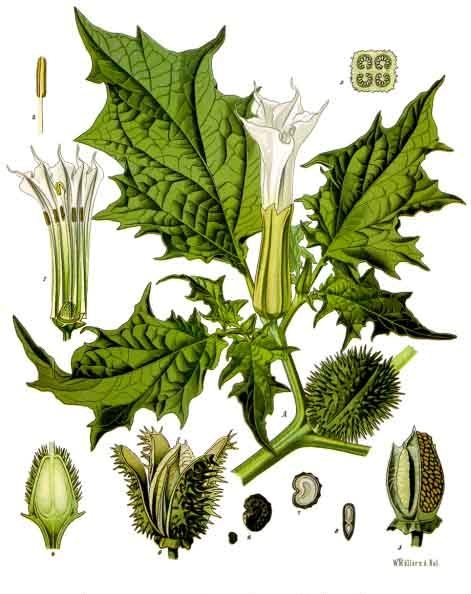 JimsonweedDatura stramonium
Compare
Questions and answers
What is the scientific name of the Hyrcanian Belladonna?
The scientific name of the Hyrcanian Belladonna is Atropa pallidiflora. Written with its author, the full name is Atropa pallidiflora Schönb.-Tem..
Which family does the Hyrcanian Belladonna belong to?
Atropa pallidiflora belongs to the family Solanaceae, in the order Solanales and the class Magnoliopsida.
Where is the Hyrcanian Belladonna found?
Checklists and occurrence records place Atropa pallidiflora in 1 country: Iran.
What is the scientific name for belladonna?
The scientific name of Hyrcanian Belladonna is Atropa pallidiflora Schönb.-Tem.[31]
Sources
Passages the profile rests on
- The species has glabrous vegetative parts. Source passage: “Vegetative parts glabrous.” — English Wikipedia
- Its lower flowering stems are generally bent in a zigzag pattern. Source passage: “Lower stems, in flowering part, more or less bent in zigzag fashion.” — English Wikipedia
- Its largest lower leaves are ovate-lanceolate and measure up to 15.5 cm long and 7.5 cm wide. Source passage: “Largest of lower leaves to 15.5 x 7.5 cm, ovate-lanceolate, widest at base” — English Wikipedia
- The upper leaves become progressively smaller and narrower, with the smallest becoming almost thread-like. Source passage: “Upper leaves quickly diminished and narrowed, bases cuneate, the tips finely acuminate, the smaller ones greatly reduced, oblong-lanceolate becoming almost thread-like.” — English Wikipedia
- The flowers range in colour from greenish to dingy greenish-yellow. Source passage: “The flowers of A. pallidiflora, like those of A.baetica, vary from greenish to yellow, but, as the designation 'having pallid flowers' might suggest, the yellow in question is a dingy greenish-yellow” — English Wikipedia
- Its flowers are funnel-shaped to bell-shaped or urn-shaped, with five lobes. Source passage: “Corolla in the dry state 2-2.5 cm in length, more or less funnel-shaped to campanulate-urceolate with a greatly narrowed base, five-lobed” — English Wikipedia
- Its flowers have five corolla lobes measuring approximately 6–7 mm long. Source passage: “five-lobed (the lobes 6–7 mm in length)” — English Wikipedia
- Its flowers have unequal-length stamens that project somewhat beyond the corolla. Source passage: “Stamens of unequal length, somewhat exserted” — English Wikipedia
- Its style is longer than its corolla. Source passage: “Style longer than corolla.” — English Wikipedia
- Its flower stalks measure 1–2 cm long, averaging 1.5 cm. Source passage: “the pedicels 1–2 cm (average 1.5 cm) in length” — English Wikipedia
- Its calyx measures approximately 10–12 mm long. Source passage: “Calyx circa 10–12 mm in length” — English Wikipedia
- Its corolla measures approximately 2–2.5 cm long in dried specimens. Source passage: “Corolla in the dry state 2-2.5 cm in length” — English Wikipedia
- Its seeds are angular and kidney-shaped, with a netted, pitted surface and brownish colour. Source passage: “Seeds 1.6–1.7 x 1.2–1.3 mm, angular-reniform, reticulate-foveolate (the partitions of the reticulations slightly wavy), of a brownish colour.” — English Wikipedia
- Its seeds measure approximately 1.6–1.7 mm long and 1.2–1.3 mm wide. Source passage: “Seeds 1.6–1.7 x 1.2–1.3 mm” — English Wikipedia
- The species inhabits temperate rainforest along the southern shore of the Caspian Sea. Source passage: “a narrow belt of temperate rainforest fringing the Southern shore of the Caspian Sea” — English Wikipedia
- Its habitat forms part of the northern edge of the Elburz Range forest steppe ecoregion. Source passage: “the Northern edge of the Elburz Range forest steppe ecoregion” — English Wikipedia
- The species occurs in a forest region benefiting from moisture from the Caspian Sea. Source passage: “benefitting from the moisture from the Caspian Sea.” — English Wikipedia
- The species is endemic to the Caspian Hyrcanian mixed forests of northern Iran. Source passage: “is endemic to the remarkable Caspian Hyrcanian mixed forests of Northern Iran” — English Wikipedia
- Its geographical range extends from the Talysh Mountains in southeastern Azerbaijan through the Iranian provinces of Gilan, Mazandaran and Golestan. Source passage: “stretching (travelling from West to East) from the Talysh Mountains of the extreme Southeast of Azerbaijan through the Iranian provinces of Gilan, Mazandaran and Golestan” — English Wikipedia
- Its range extends eastward into two woodland spurs in Iran's North Khorasan province. Source passage: “and petering out in two spurs of woodland in Iran's North Khorasan province.” — English Wikipedia
- The two northern and southern woodland spurs end near the villages of Ghosha Tapeh and Havar, respectively. Source passage: “The Northern spur ends near the village of Ghosha Tapeh and the Southern near the village of Havar” — English Wikipedia
- The species occurs mainly, and possibly exclusively, in the Hyrcanian forest belt of Mazandaran province. Source passage: “Atropa pallidiflora is found mainly (possibly even exclusively) in that portion of the Hyrcanian forest belt lying within the province of Mazandaran” — English Wikipedia
- Recorded localities in Mazandaran include Karehsang, Abanjarmahali, the area near Nowshahr, the area between Abbasabad and Shahi, south of Amol and south of Chalus. Source passage: “Flora Iranica lists the following localities in Mazandaran : a) Karehsang (referable probably to the Karehsang Hydrological station in the valley of the Haraz River), b) Abanjarmahali, c) the type locality near Nowshahr, d) a locality between Abbasabad and Shahi, e) a locality to the south of Amol and lastly f) a locality to the south of Chalus.” — English Wikipedia
- The species may be particularly vulnerable to habitat damage from urban expansion because of its potentially lowland distribution. Source passage: “it is the species with the most lowland distribution and thus, potentially, the species most vulnerable to habitat damage caused by a proliferation of urban sprawl in those areas of Mazandaran fringing the Caspian.” — English Wikipedia
- The plant contains tropane alkaloids valued for their anticholinergic, antispasmodic and mydriatic properties. Source passage: “containing a variety of tropane alkaloids valued in medicine for their anticholinergic, antispasmodic and mydriatic properties” — English Wikipedia
- The species is described as extremely poisonous. Source passage: “like it, is an extremely poisonous plant” — English Wikipedia
- Atropa pallidiflora is morphologically closer to Atropa acuminata than to the other species in its genus. Source passage: “Atropa pallidiflora is closer in its morphology to A.acuminata than to any of the other species in the genus.” — English Wikipedia
- It differs from Atropa belladonna through its lack of hairs, narrower leaves, smaller yellow flowers with shorter stalks and smaller berries. Source passage: “Atropa pallidiflora differs from Atropa belladonna chiefly in its glabrescence (lack of hairs), also in its narrower leaves, its smaller yellow flowers with shorter pedicels and its smaller berries” — English Wikipedia
- It differs from Atropa komarovii through its generally ovate-lanceolate leaves and flowers that often occur in pairs on glandular-hairy stalks. Source passage: “from Atropa komarovii in its most often ovate-lanceolate leaves and its flowers often produced in pairs and having puberulent-glandulose pedicels.” — English Wikipedia
- It differs from Atropa acuminata through its broad-based leaves, narrower calyx lobes and shorter flower stalks. Source passage: “from Atropa acuminata in its leaves with very wide bases, its narrower (acuminate to hair-like) calyx lobes, the shorter pedicels of its flowers” — English Wikipedia
- The species was formally described by Eva Schönbeck-Temesy in 1972. Source passage: “The binomial Atropa pallidiflora was published by Eva Schönbeck-Temesy in volume 100 ('Solanaceae') of Karl Heinz Rechinger's monumental Flora Iranica in 1972.” — English Wikipedia
Data
- Catalogue of Life, 2026-10-16 XR cc by
- Global Biodiversity Information Facility CC BY 4.0
- Wikidata CC0
- GeoNames CC BY 4.0
- Within the Catalogue of Life, this name comes from Synonymic Checklists of the Vascular Plants of the World cc by
References
- Schönb.-Tem. (1972). Fl. Iranica [Rechinger] 100: 4 1, t. 6 (1972). where the name was published
This species in other databases
Page built on 27 November 2026. See how the catalog is made and all sources and licences.
Cite this page
ScientificNames.org. (2026). Atropa pallidiflora (Hyrcanian Belladonna). Retrieved November 27, 2026, from https://scientificnames.org/species/atropa-pallidiflora
“Atropa pallidiflora (Hyrcanian Belladonna).” ScientificNames.org, 2026, scientificnames.org/species/atropa-pallidiflora. Accessed 27 Nov. 2026.
ScientificNames.org. “Atropa pallidiflora (Hyrcanian Belladonna).” Accessed November 27, 2026. https://scientificnames.org/species/atropa-pallidiflora.
@misc{scientificnames_atropa_pallidiflora_hyrcanian_belladonna,
  author = {{ScientificNames.org}},
  title = {Atropa pallidiflora (Hyrcanian Belladonna)},
  year = {2026},
  url = {https://scientificnames.org/species/atropa-pallidiflora},
  note = {Accessed 2026-11-27}
}