Species · Fishes
Pike Topminnow Belonesox belizanus
The scientific name of the Pike Topminnow is Belonesox belizanus. It is a species of fish in the family Poeciliidae (topminnows), order Cyprinodontiformes. The name dates from 1860.
- Scientific name
- Belonesox belizanus Kner, 1860
- Common name
- Pike Topminnow
- Genus
- Belonesox
- Family
- Poeciliidae (Topminnows)
- Order
- Cyprinodontiformes
- Class
- Teleostei
- Red List category
- LC Least Concern
- Environment
- brackish, freshwater
- Recorded in
- 7 countries
- Name status
- accepted in the Catalogue of Life

Overview
Belonesox belizanus is a specialized predator with enlarged jaws forming a long, pointed beak.
Written 26 November 2026 from the sources listed below. Each statement was checked against the passage it cites; statements that could not be supported were removed.
Appearance
It has large eyes and a dorsal fin positioned toward the rear of its body. Its teeth include backward-curving conical outer teeth that are smaller than the inner teeth.[1][2]
It has eight to nine dorsal-fin rays, eight to ten anal-fin rays, and small, smooth scales arranged in 52–63 lateral rows.[3][4]
Its body is brownish above and whitish below, with transparent fins and numerous small black spots along the upper lateral half. Young fish have a dark stripe running laterally from the eye toward the tail base, which may help them resemble floating twigs or plant litter.[5][6][7][8]
Habitat
The Pike Topminnow inhabits coastal freshwater and strongly brackish waters. It commonly occurs in slow-flowing rivers, ponds, and lakes with abundant aquatic vegetation, as well as nearshore and backwater habitats.[9][10][11]
Diet
The Pike Topminnow is a specialized predator capable of capturing prey items that are large relative to its own body size. Its diet consists largely of other surface- or near-surface-dwelling poeciliid fishes, including mosquitofishes, swordtails, and platies.[12][13]
Juveniles prey on other juvenile and larval fishes.[14]
Behaviour
Individuals of all sizes have been reported to engage in cannibalism. Young fish can remain motionless at the water surface.[15][16]
Reproduction and life cycle
The Pike Topminnow gives birth to live young. Fertilization occurs internally through sperm transfer using the male gonopodium, and fertilized eggs develop inside the female before birth.[17][18][19]
The male anal fin is modified into an elongated reproductive organ. Under favorable conditions, the species can reproduce throughout the year.[20][21]
Females can store sperm and produce an average of one brood every 38–49 days depending on environmental conditions. The highest reproductive outputs tend to coincide with rising water levels during the rainy season.[22][23]
A single brood can contain as many as 322 young.[24]
Uses
The species was formerly used as a research animal in medical science. Its introduced southern Florida population originated from fish released after funding for a medical research program ended.[25][26]
The Pike Topminnow occurs in the aquarium trade but is considered difficult to maintain in aquariums. Its aggressive piscivory and cannibalistic tendencies limit its popularity among aquarium enthusiasts.[27][28]
Similar species
The Pike Topminnow is not likely to be confused with other cyprinodontiform fishes or killifishes.[29]
Classification of the Pike Topminnow
| Kingdom | Animalia |
|---|---|
| Phylum | Chordata |
| Subphylum | Vertebrata |
| Infraphylum | Gnathostomata |
| Parvphylum | Osteichthyes |
| Gigaclass | Actinopterygii |
| Superclass | Actinopteri |
| Class | Teleostei (Teleost) |
| Order | Cyprinodontiformes |
| Family | Poeciliidae (Topminnows) |
| Subfamily | Poeciliinae |
| Genus | Belonesox (Pike Topminnow) |
| Species | Belonesox belizanus Kner, 1860 |
Where the Pike Topminnow is found
Checklists and occurrence records place Belonesox belizanus in 7 countries. GBIF holds 2,173 georeferenced records of it.
Countries
Regions and cities with the most records
- Florida, United States 619
- Chiapas, Mexico 167
- Petén, Guatemala 142
- Homestead, United States 136
- Veracruz, Mexico 136
- Quintana Roo, Mexico 123
- Tabasco, Mexico 103
- Leisure City, United States 86
- Richmond West, United States 83
- Limón Province, Costa Rica 80
- Princeton, United States 79
- South Miami Heights, United States 79
- Campeche, Mexico 77
- Cutler Ridge, United States 71
- Country Walk, United States 70
- Cutler Bay, United States 70
- Three Lakes, United States 69
- Cutler, United States 68
- Palmetto Bay, United States 68
- Kendall, United States 67
- Kendale Lakes, United States 66
- Pinecrest, United States 66
- Glenvar Heights, United States 65
- Sunset, United States 65
- The Hammocks, United States 60
- The Crossings, United States 59
- Yucatán, Mexico 56
- Coconut Grove, United States 53
- Coral Gables, United States 52
- Coral Terrace, United States 50
- Kendall West, United States 49
- Belize District, Belize 48
- Ruskin, United States 47
- Hialeah Gardens, United States 46
- Brownsville, United States 45
- Doral, United States 45
A number beside a place is its count of GBIF occurrence records. A place without a number comes from a checklist alone. Records show where a species has been observed or collected, which can include escapes and vagrants.
Common names
English
- Pike Topminnow
- Top Minnow
- Pike Killifish
- Piketop Minnow
Names in 8 other languages
- Chinese
- 墨西哥魣鱂
- Czech
- štička živorodá
- Danish
- Geddetandkarpe
- French
- Vairon-brochet
- Polish
- szczupaczek żyworodny
- Portuguese
- Barrigudinho-boca-de-jacaré
- Russian
- Сарганощука
- Spanish
- picudito
Synonyms
2 other scientific names have been used for this species and are now treated as synonyms of Belonesox belizanus.
- Belonesox belizanus maxillosus Hubbs, 1936
- Belonesox maxillosus Hubbs, 1936
Related species
-
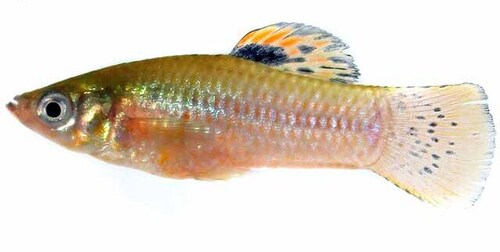 Island MollyPoecilia vandepolli
-
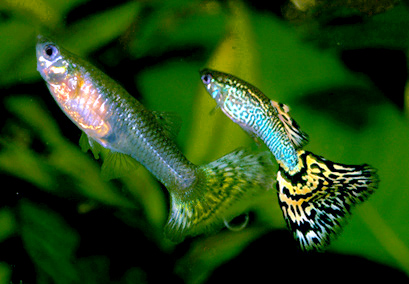 GuppyPoecilia reticulata
-
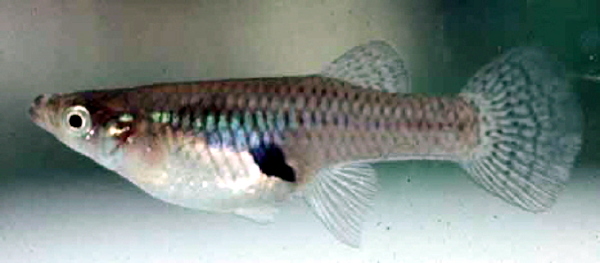 MosquitofishGambusia affinis
-
 Common MollyPoecilia sphenops
-
 Endler's LivebearerPoecilia wingei
-
 Green SwordtailXiphophorus hellerii
-
 Amazon MollyPoecilia formosa
-
 Sailfin MollyPoecilia latipinna
Compare
Questions and answers
What is the scientific name of the Pike Topminnow?
The scientific name of the Pike Topminnow is Belonesox belizanus. Written with its author, the full name is Belonesox belizanus Kner, 1860.
Which family does the Pike Topminnow belong to?
Belonesox belizanus belongs to the family Poeciliidae, in the order Cyprinodontiformes and the class Teleostei.
Where is the Pike Topminnow found?
Checklists and occurrence records place Belonesox belizanus in 7 countries, including Mexico, United States, Guatemala, Belize, Costa Rica and Honduras.
What is the conservation status of the Pike Topminnow?
The IUCN Red List category recorded for Belonesox belizanus is Least Concern (LC).
What other names does the Pike Topminnow have?
Belonesox belizanus is also known in English as Top Minnow, Pike Killifish and Piketop Minnow.
Sources
Passages the profile rests on
- The species has large eyes and a dorsal fin positioned toward the rear of its body. Source passage: “The pike topminnow has large eyes and a dorsal fin set far back on the body.” — English Wikipedia
- Its teeth include backward-curving conical outer teeth that are smaller than the inner teeth. Source passage: “teeth are canines, outer series conical, curved backwards and smaller than inner series” — biogeodb.stri.si.edu
- It has eight to nine dorsal-fin rays and eight to ten anal-fin rays. Source passage: “1 dorsal fin with short base, at rear of body, 8-9; anal fin 8-10” — biogeodb.stri.si.edu
- Its scales are small and smooth, with 52–63 lateral rows. Source passage: “scales smooth and small, 52-63 lateral rows.” — biogeodb.stri.si.edu
- Its body is brownish above and whitish below, with transparent fins. Source passage: “Brownish above, whitish below; a series of small black spots along the flank behind the pectoral fin, plus a round black spot at the end of the tail base; fins transparent.” — biogeodb.stri.si.edu
- Its coloration includes numerous small black spots along the upper lateral half of the body. Source passage: “Many rows of numerous, small black spots are present on the lateral upper half of the fish” — floridamuseum.ufl.edu
- A dark stripe runs laterally from the eye toward the tail base in young fish. Source passage: “Young with a thick black stripe from eye to base of tail fin.” — biogeodb.stri.si.edu
- Young fish have a dark lateral stripe that may help them resemble floating twigs or plant litter. Source passage: “Cryptic young possess a dark lateral stripe that presumably aids in their ability to mimic small twigs or plant litter as they float motionless at the surface.” — floridamuseum.ufl.edu
- The species inhabits coastal freshwater and strongly brackish waters. Source passage: “Lives in coastal fresh to strong brackish water” — biogeodb.stri.si.edu
- It commonly inhabits slow-flowing rivers, ponds, and lakes with abundant aquatic vegetation. Source passage: “Pike killifish prefer the warm surface waters of slow flowing rivers, ponds, and lakes, particularly those with abundant aquatic vegetation.” — floridamuseum.ufl.edu
- It commonly occurs in nearshore and backwater habitats. Source passage: “A common resident of near shore and backwater habitats” — floridamuseum.ufl.edu
- The species is a specialized predator capable of capturing prey items that are large relative to its own body size. Source passage: “this is a highly specialized predator, with an extremely flexible upper jaw that enables it to take very large prey items for its size.” — English Wikipedia
- Its diet consists largely of other surface- or near-surface-dwelling poeciliid fishes, including mosquitofishes, swordtails, and platies. Source passage: “feeds largely on other surface or near surface dwelling poeciliids such as the familiar mosquitofishes, swordtails, and platies.” — floridamuseum.ufl.edu
- Juveniles prey on other juvenile and larval fishes. Source passage: “Juveniles prey on other juvenile or larval fishes.” — floridamuseum.ufl.edu
- Individuals of all sizes have been reported to engage in cannibalism. Source passage: “Pike killifishes of all sizes are reported to engage in cannibalism.” — floridamuseum.ufl.edu
- Young fish can remain motionless at the water surface. Source passage: “as they float motionless at the surface.” — floridamuseum.ufl.edu
- The species gives birth to live young. Source passage: “They are also a livebearing fish.” — English Wikipedia
- Fertilization occurs internally through sperm transfer using the male gonopodium. Source passage: “Males inseminate females through the use of the gonopodium.” — floridamuseum.ufl.edu
- Fertilized eggs develop inside the female before live young are born. Source passage: “The fertilized ova develop within the female, the end result of which is the birth of live young.” — floridamuseum.ufl.edu
- The male anal fin is modified into an elongated reproductive organ. Source passage: “anal fin modified in male to form an elongate sex organ” — biogeodb.stri.si.edu
- Under favorable conditions, the species can reproduce throughout the year. Source passage: “livebearers living in tropical environments often breed year round and pike killifish are no exception.” — floridamuseum.ufl.edu
- Females can store sperm and produce an average of one brood every 38–49 days depending on environmental conditions. Source passage: “female pike killifish store sperm and depending on environmental factors produce on average one brood every 38 to 49 days.” — floridamuseum.ufl.edu
- The highest reproductive outputs tend to coincide with rising water levels during the rainy season. Source passage: “the highest reproductive outputs among these fish tend to coincide with the rising waters brought on by the rainy season.” — floridamuseum.ufl.edu
- A single brood can contain as many as 322 young. Source passage: “with as many as 322 young recorded in a single brood” — floridamuseum.ufl.edu
- The species was formerly used as a research animal in medical science. Source passage: “At one time, pike killifish were of importance to medical science as research animals.” — floridamuseum.ufl.edu
- The introduced southern Florida population originated from fish released after funding for a medical research program ended. Source passage: “stems from the release of pike killifish that were the subject of a medical research program whose funding had been terminated.” — floridamuseum.ufl.edu
- The species occurs in the aquarium trade but is considered difficult to maintain in aquariums. Source passage: “This fish can be found in the aquarium trade, but is not an easy aquarium resident” — English Wikipedia
- Its aggressive piscivory and cannibalistic tendencies limit its popularity among aquarium enthusiasts. Source passage: “due to their aggressive piscivory and cannibalistic tendencies their potential for wide spread popularity has been limited.” — floridamuseum.ufl.edu
- The species is not likely to be confused with other cyprinodontiform fishes or killifishes. Source passage: “The pike killifish is not likely to be confused with any other cyprinodontiforms or “killifishes”” — floridamuseum.ufl.edu
- The species typically reaches approximately 9.7 cm in total length. Source passage: “It grows typically to 9.7 cm (3.8 in) total length” — English Wikipedia
- Exceptional individuals have been reported to reach 20 cm in total length. Source passage: “exceptionally to 20 cm (7.9 in).” — English Wikipedia
- Females are almost twice as long as males. Source passage: “females almost twice as long as males” — biogeodb.stri.si.edu
- The species can reach a maximum total length of 150 mm. Source passage: “Obtaining a maximum total length of 150mm” — floridamuseum.ufl.edu
Data
- Catalogue of Life, 2026-10-16 XR cc by
- Global Biodiversity Information Facility CC BY 4.0
- Wikidata CC0
- GeoNames CC BY 4.0
- Wikimedia Commons per image; credit shown with each image
- Within the Catalogue of Life, this name comes from World Register of Marine Species cc by
References
- Kner, R. (1860). Über Belonesox belizanus, nov. gen. et spec., aus der Familie der Cyprinodonten. Sitzungsberichte Der Kaiserlichen Akademie Der Wissenschaften. Mathematisch-Naturwissenschaftliche Classe, v. 40 (no. 10): 419–422, Pl. [Also as a separate, pp. 3–6.]. where the name was published
This species in other databases
- Catalogue of Life 5WGFZ
- Wikidata Q1535154
- iNaturalist 179516
- WoRMS urn:lsid:marinespecies.org:taxname:279891
- ITIS 165913
Page built on 29 November 2026. See how the catalog is made and all sources and licences.
Cite this page
ScientificNames.org. (2026). Belonesox belizanus (Pike Topminnow). Retrieved November 29, 2026, from https://scientificnames.org/species/belonesox-belizanus
“Belonesox belizanus (Pike Topminnow).” ScientificNames.org, 2026, scientificnames.org/species/belonesox-belizanus. Accessed 29 Nov. 2026.
ScientificNames.org. “Belonesox belizanus (Pike Topminnow).” Accessed November 29, 2026. https://scientificnames.org/species/belonesox-belizanus.
@misc{scientificnames_belonesox_belizanus_pike_topminnow,
  author = {{ScientificNames.org}},
  title = {Belonesox belizanus (Pike Topminnow)},
  year = {2026},
  url = {https://scientificnames.org/species/belonesox-belizanus},
  note = {Accessed 2026-11-29}
}