Species · Birds
Chaco Eagle Buteogallus coronatus
The scientific name of the Chaco Eagle is Buteogallus coronatus. It is a species of bird in the family Accipitridae (hawks), order Accipitriformes. The name dates from 1817.
- Scientific name
- Buteogallus coronatus (Vieillot, 1817)
- Common name
- Chaco Eagle
- Genus
- Buteogallus
- Family
- Accipitridae (Hawks)
- Order
- Accipitriformes
- Class
- Aves
- Red List category
- EN Endangered
- Recorded in
- 4 countries
- Name status
- accepted in the Catalogue of Life

Overview
Buteogallus coronatus inhabits eastern and central South America, with a range extending through southern and central Brazil, Bolivia, Paraguay and Argentina as far south as northern Patagonia. It is distinguished by predominantly silvery-grey plumage, a darker grey crest and a short black tail with a broad white central band and white tip.
Written 26 November 2026 from the sources listed below. Each statement was checked against the passage it cites; statements that could not be supported were removed.
Appearance
Adults have predominantly dull, silvery-grey body plumage and a crest of darker grey feathers. Their short black tail has a broad white central band and a white tip, while the cere and legs are yellow.[1][2][3][4]
Juveniles have a dark brown crest and a creamy head and underbody marked with grey streaks.[5]
The body is predominantly grey. In flight, the silhouette features a short tail and very broad inner wings that narrow toward the tips.[6][7]
Habitat
The Chaco Eagle inhabits semi-open environments, including open mixed grasslands, brushlands, savannahs, marshes and open woodlands.[8]
Large trees are important components of its habitat because they provide nesting sites.[9]
Diet
Its diet consists primarily of small and medium-sized mammals. Principal mammalian prey includes pichis, nine-banded armadillos and Andes skunks.[10][11]
Other recorded mammalian prey includes rodents, possums, European hares and lesser grisons.[12]
Reptiles, including snakes, tortoises and lizards, form a smaller part of its diet.[13]
It has occasionally been observed consuming dead deer, sheep, armadillos and roadkill.[14]
Behaviour
The Chaco Eagle commonly occurs alone, in pairs or in small groups of three. It is described as tame and crepuscular and forages during the early hours.[15][16]
It hunts by waiting on perches and capturing prey. Its call is a powerful, shrill whistle audible from up to 2 km away.[17][18]
When hunting snakes, it often removes the head first. Specialized scales on its tarsus protect it against snake bites.[19][20]
It captures small lizards directly with its talons. When capturing large lizards, it approaches from the side and uses one foot to grasp the hip and the other to grasp the head.[21][22]
Reproduction and life cycle
The species is monogamous. Egg laying takes place between August and October, and a typical clutch consists of one white egg marked with grey spots.[23][24][25]
Its nest is a platform-like structure made from sticks and leaves. Nests are generally constructed 10–13 metres above the ground in the tallest trees of breeding territories.[26][27]
The species sometimes nests on human-made buildings where trees are unavailable.[28]
Eggs hatch approximately 45 days after laying, around November or December. Young remain in the nest for approximately 65–70 days.[29][30]
The female remains near the offspring from egg laying until the chick can be left alone briefly. The male continuously supplies food to the nest.[31][32]
The female begins participating in hunting after the chick hatches and grows somewhat. Breeding is estimated to begin when individuals are approximately 3–5 years old.[33][34]
Conservation
The Chaco Eagle is classified as endangered, and its population is declining, probably because of human activities.[35][36]
Recorded threats include habitat degradation, collisions with human structures and persecution. Electrocution by power poles is another significant threat.[37][38]
The estimated population comprises 250–999 mature individuals and 375–1,499 individuals overall.[39]
A national conservation plan for the species was established in Argentina.[40]
Similar species
The Chaco Eagle and the Solitary Eagle are sister species according to DNA phylogenetic analyses. The Great Black Hawk is also identified as a sister species.[41][42]
Classification of the Chaco Eagle
| Kingdom | Animalia |
|---|---|
| Phylum | Chordata |
| Subphylum | Vertebrata |
| Infraphylum | Gnathostomata |
| Parvphylum | Osteichthyes |
| Megaclass | Tetrapoda |
| Class | Aves (Bird) |
| Order | Accipitriformes (Hawks) |
| Family | Accipitridae (Hawks) |
| Genus | Buteogallus (Black-Hawks) |
| Species | Buteogallus coronatus (Vieillot, 1817) |
Where the Chaco Eagle is found
Checklists and occurrence records place Buteogallus coronatus in 4 countries across South America. GBIF holds 2,509 georeferenced records of it.
Countries
Regions and cities with the most records
- Santa Fe, Argentina 397
- Minas Gerais, Brazil 358
- São Paulo, Brazil 182
- San Luis, Argentina 142
- Cordoba, Argentina 139
- Rio de Janeiro, Brazil 124
- Mendoza, Argentina 98
- Goiás, Brazil 96
- Santiago del Estero, Argentina 80
- Mato Grosso, Brazil 77
- Mato Grosso do Sul, Brazil 62
- Corrientes, Argentina 57
- Beni Department, Bolivia 56
- Santa Catarina, Brazil 51
- La Pampa, Argentina 50
- Catamarca, Argentina 48
- Rio Grande do Sul, Brazil 48
- Paraná, Brazil 47
- Salta, Argentina 44
- Boquerón Department, Paraguay 41
- La Rioja, Argentina 35
- Tibagi, Brazil 29
- Jacareí, Brazil 25
- Concepción, Paraguay 24
- Guararema, Brazil 23
- Chapada dos Guimarães, Brazil 22
- Tostado, Argentina 22
- Itajubá, Brazil 20
- Formosa, Argentina 18
- Itatiaia, Brazil 18
- Santa Cruz Department, Bolivia 18
- Campos do Jordão, Brazil 17
- São Francisco de Paula, Brazil 17
- Sumidouro, Brazil 16
- Tocantins, Brazil 16
- Biritiba Mirim, Brazil 15
Range as the checklists state it
South America
A number beside a place is its count of GBIF occurrence records. A place without a number comes from a checklist alone. Records show where a species has been observed or collected, which can include escapes and vagrants.
Common names
English
- Chaco Eagle
- American Crowned Eagle
- Crowned Solitary Eagle
Names in 28 other languages
- Arabic
- عقاب تشاكو, عقاب منعزل متوج
- Breton
- Baou gabellek
- Bulgarian
- Качулат орел отшелник
- Catalan
- Àguila coronada americana, àguila solitària coronada
- Chinese
- 冕雕, 冕鵰
- Croatian
- veliki škanjac
- Czech
- harpyjovec korunkatý, káně korunkatá
- Danish
- Toppet Eremitørn
- Dutch
- Kransarend
- Esperanto
- Krona solaglo, krona buteo
- Estonian
- hall-hiidviu
- Finnish
- kruunuerakkohaukka
- French
- Buse couronnée
- German
- Kronenbussard, Zaunadler
- Hungarian
- bóbitás remetesas
- Italian
- Aquila coronata
- Japanese
- カンムリノスリ
- Lithuanian
- vainikuotasis erelis atsiskyrėlis
- Norwegian
- toppvåk
- Polish
- urubitinga czubata
- Portuguese
- bútio-do-chaco, águia-cinzenta
- Russian
- Хохлатая агуйя-отшельник, Хохлатый орёл-отшельник
- Slovak
- myšiak chochlatý
- Spanish
- Aguila Coronada, Aguila de Azara, Aguila del Chaco, Águila coronada, Águila de Azara
- Swedish
- chacoörn
- Turkish
- Tepeli Kartal Şahini
- Ukrainian
- орел-самітник чубатий
- Vietnamese
- Đại bàng ẩn sĩ vương miện
Synonyms
4 other scientific names have been used for this species and are now treated as synonyms of Buteogallus coronatus.
- Harpyhaliaetus coronatus (Vieillot, 1817)
- Harpyia coronata Vieillot, 1817
- Spizaetus coronatus Vieillot, LJP, 1817
- Urubitinga coronata Vieillot, LJP, 1817
Related species
-
 Common Black HawkButeogallus anthracinus
-
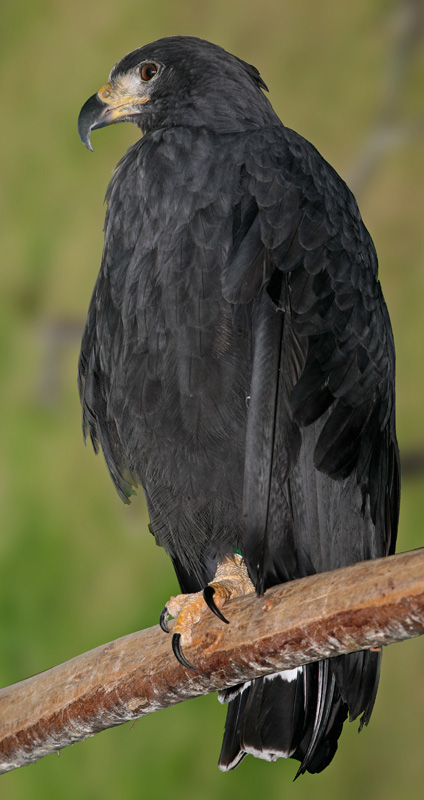 Solitary EagleButeogallus solitarius
-
 Great Black HawkButeogallus urubitinga
-
 Savanna HawkButeogallus meridionalis
-
 Buteogallus borrasi
-
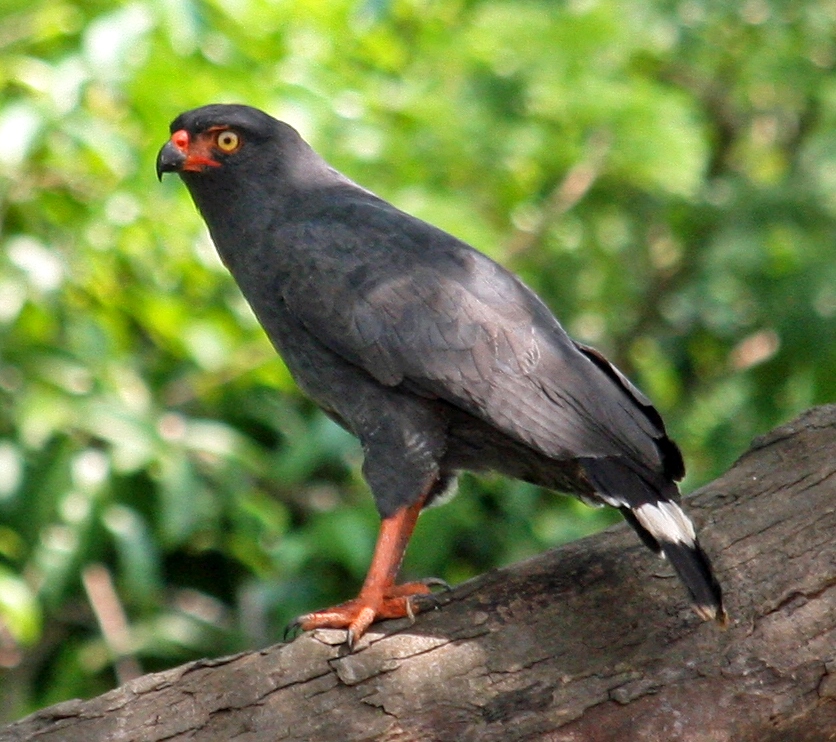 Slate-colored HawkButeogallus schistaceus
-
 Rufous Crab HawkButeogallus aequinoctialis
-
 Cuban Black HawkButeogallus gundlachii
Compare
Questions and answers
What is the scientific name of the Chaco Eagle?
The scientific name of the Chaco Eagle is Buteogallus coronatus. Written with its author, the full name is Buteogallus coronatus (Vieillot, 1817).
Which family does the Chaco Eagle belong to?
Buteogallus coronatus belongs to the family Accipitridae, in the order Accipitriformes and the class Aves.
Where is the Chaco Eagle found?
Checklists and occurrence records place Buteogallus coronatus in 4 countries: Argentina, Brazil, Paraguay and Bolivia.
What is the conservation status of the Chaco Eagle?
The IUCN Red List category recorded for Buteogallus coronatus is Endangered (EN).
What other names does the Chaco Eagle have?
Buteogallus coronatus is also known in English as American Crowned Eagle and Crowned Solitary Eagle.
Do eagles eat carrion?
The Chaco Eagle has occasionally been observed consuming dead deer, sheep, armadillos and roadkill.[14]
Sources
Passages the profile rests on
- The adult has predominantly dull, silvery-grey body plumage. Source passage: “mostly dull and silvery grey body plumage.” — English Wikipedia
- The adult has a short black tail with a broad white central band and a white tip. Source passage: “Its short black tail has a broad white medial band as well as a white tip” — English Wikipedia
- Its cere and legs are yellow. Source passage: “both its cere and legs are yellow.” — English Wikipedia
- The adult has a crest of darker grey feathers. Source passage: “the Crowned Solitary Eagle has a crest of darker grey feathers.” — English Wikipedia
- Juveniles have a dark brown crest and a creamy head and underbody with grey streaks. Source passage: “The juvenile also has a crest but its colour dark brown, except for it creamy head and underbody which are both have grey streaks.” — English Wikipedia
- Its body is predominantly grey. Source passage: “Body is largely gray” — ebird.org
- Its flight silhouette features a short tail and very broad inner wings that narrow toward the tips. Source passage: “Distinctive flight shape with a short tail and very broad inner wings that taper towards the tip.” — ebird.org
- It inhabits semi-open environments, including open mixed grasslands, brushlands, savannahs, marshes and open woodlands. Source passage: “semi open habitats such as open mixed grasslands, brushlands, savannahs, marshes and open woodlands.” — English Wikipedia
- Large trees are important components of its habitat because they provide nesting sites. Source passage: “the presence of large trees in the habitat is very important for the Chaco eagle since they are used for nesting.” — English Wikipedia
- Its diet consists primarily of small and medium-sized mammals. Source passage: “Its diet consists mostly of small to medium size mammals.” — English Wikipedia
- Its principal mammalian prey includes pichis, nine-banded armadillos and Andes skunks. Source passage: “It primarily preys on armadillos such as pichis (Zaedyus pichiy) and nine-banded armadillos (Dasypus novemcinctus) as well as Andes skunks (Conepatus chinga).” — English Wikipedia
- Other recorded mammalian prey includes rodents, possums, European hares and lesser grisons. Source passage: “rodents, possums, European hares (Lepus europaeus), and lesser grisons (Galictis cuja) are also taken.” — English Wikipedia
- Reptiles, including snakes, tortoises and lizards, form a smaller part of its diet. Source passage: “Reptiles such as snakes, tortoises, and lizards also make up a smaller part of their diet.” — English Wikipedia
- It has occasionally been observed consuming dead deer, sheep, armadillos and roadkill. Source passage: “some individuals have been seen eating dead deer, sheep, armadillos, and roadkill.” — English Wikipedia
- It commonly occurs alone, in pairs or in small groups of three. Source passage: “Often seen in solitary pairs or small groups of three” — English Wikipedia
- It is described as tame and crepuscular and forages during the early hours. Source passage: “a tame crepuscular species that forages during early hours.” — English Wikipedia
- It hunts by waiting on perches and capturing prey. Source passage: “Chaco Eagles still-hunt from perches.” — English Wikipedia
- Its call is a powerful, shrill whistle audible from up to 2 km away. Source passage: “very powerful and shrill whistling call that can be heard 2 km away.” — English Wikipedia
- When hunting snakes, it often removes the head first. Source passage: “When hunting snakes, the eagles often remove the head first.” — English Wikipedia
- It has specialized scales on its tarsus that protect it against snake bites. Source passage: “Singular scales on the eagle's tarsus protected them from snake bites.” — English Wikipedia
- It captures small lizards directly with its talons. Source passage: “Small lizards are caught directly with talons” — English Wikipedia
- When capturing large lizards, it approaches from the side and uses one foot to grasp the hip and the other to grasp the head. Source passage: “captured by approaching them from the side, grabbing them by the hip with one foot and then by the head with the other” — English Wikipedia
- The species is monogamous. Source passage: “The Chaco Eagle is a monogamous species.” — English Wikipedia
- Egg laying takes place between August and October. Source passage: “Between August and October, a single white egg with grey spots is laid” — English Wikipedia
- A typical clutch consists of one white egg marked with grey spots. Source passage: “a single white egg with grey spots” — English Wikipedia
- Its nest is a platform-like structure made from sticks and leaves. Source passage: “platform-like nest of sticks and leaves.” — English Wikipedia
- Nests are generally constructed 10–13 metres above the ground in the tallest trees of breeding territories. Source passage: “The nest is constructed on the tallest trees of breeding territories, 10-13m above ground.” — English Wikipedia
- It sometimes nests on human-made buildings where trees are unavailable. Source passage: “Some eagles have been seen nesting on human made buildings in area where no trees were available.” — English Wikipedia
- Eggs hatch approximately 45 days after laying, around November or December. Source passage: “The egg hatches around 45 days after it was laid (November–December).” — English Wikipedia
- Young remain in the nest for approximately 65–70 days. Source passage: “The offspring will stay in the nest for 65–70 days.” — English Wikipedia
- The female remains near the offspring from egg laying until the chick can be left alone briefly. Source passage: “The female stays near its offspring from the moment the egg is laid until the chick is old enough to be left alone for short periods of time.” — English Wikipedia
- The male continuously supplies food to the nest. Source passage: “The male continuously brings food to the nest” — English Wikipedia
- The female begins participating in hunting after the chick hatches and grows somewhat. Source passage: “the female joins the hunting when the chick hatches and grows a bit.” — English Wikipedia
- Breeding is estimated to begin when individuals are approximately 3–5 years old. Source passage: “it is estimated that they do not breed before they reach 3–5 years of age.” — English Wikipedia
- The species is classified as endangered. Source passage: “The Chaco Eagle is considered endangered.” — English Wikipedia
- Its population is declining, probably because of human activities. Source passage: “Its population is declining, a trend that is most likely due to human activities.” — English Wikipedia
- Recorded threats include habitat degradation, collisions with human structures and persecution. Source passage: “including habitat degradation, collisions with human structures, and persecution.” — English Wikipedia
- Electrocution by power poles is another significant threat to the species. Source passage: “Another important factor is the electrocution of Chaco Eagles by power poles” — English Wikipedia
- The estimated population comprises 250–999 mature individuals and 375–1,499 individuals overall. Source passage: “Only 250-999 mature individuals are left, while the total individual count of the species reaches 375-1499 birds.” — English Wikipedia
- A national conservation plan for the species was established in Argentina. Source passage: “the creation of a national plan of plan of conservation for the Chaco Eagle in Argentina” — English Wikipedia
- The Chaco Eagle and the Solitary Eagle are sister species according to DNA phylogenetic analyses. Source passage: “phylogenetic analyses of their DNA showed that they are, in fact, sister species.” — English Wikipedia
- The Great Black Hawk is also identified as a sister species. Source passage: “another species, the Great black hawk (Buteogallus anthracinus), is also a sister species.” — English Wikipedia
Data
- Catalogue of Life, 2026-10-16 XR cc by
- Global Biodiversity Information Facility CC BY 4.0
- Wikidata CC0
- GeoNames CC BY 4.0
- Wikimedia Commons per image; credit shown with each image
- iNaturalist per image; credit shown with each image
- Within the Catalogue of Life, this name comes from The Integrated Taxonomic Information System cc0
This species in other databases
Page built on 28 November 2026. See how the catalog is made and all sources and licences.
Cite this page
ScientificNames.org. (2026). Buteogallus coronatus (Chaco Eagle). Retrieved November 28, 2026, from https://scientificnames.org/species/buteogallus-coronatus
“Buteogallus coronatus (Chaco Eagle).” ScientificNames.org, 2026, scientificnames.org/species/buteogallus-coronatus. Accessed 28 Nov. 2026.
ScientificNames.org. “Buteogallus coronatus (Chaco Eagle).” Accessed November 28, 2026. https://scientificnames.org/species/buteogallus-coronatus.
@misc{scientificnames_buteogallus_coronatus_chaco_eagle,
  author = {{ScientificNames.org}},
  title = {Buteogallus coronatus (Chaco Eagle)},
  year = {2026},
  url = {https://scientificnames.org/species/buteogallus-coronatus},
  note = {Accessed 2026-11-28}
}