Species · Birds
White-backed Swallow Cheramoeca leucosterna
The scientific name of the White-backed Swallow is Cheramoeca leucosterna. It is a species of bird in the family Hirundinidae (swallow), order Passeriformes. The name dates from 1841.
- Scientific name
- Cheramoeca leucosterna (Gould, 1841)
- Common name
- White-backed Swallow
- Genus
- Cheramoeca
- Family
- Hirundinidae (Swallow)
- Order
- Passeriformes
- Class
- Aves
- Red List category
- LC Least Concern
- Recorded in
- 1 country
- Name status
- accepted in the Catalogue of Life

Overview
The White-backed Swallow (Cheramoeca leucosterna) is a bird in the family Hirundinidae, order Passeriformes and class Aves. It is endemic to Australia and is widely distributed across arid inland Australia. It is distinguished by its white back, black belly and deeply forked black tail.
Written 26 November 2026 from the sources listed below. Each statement was checked against the passage it cites; statements that could not be supported were removed.
Appearance
The adult has a white back and mostly white breast, contrasting with its black belly, wings and tail. Its head has a mottled grey cap, white eyebrows, a grey eye and a dark stripe extending from the lores across the nape.[1][2][3]
The species has a deeply forked tail, curved pointed wings and a slender, streamlined body. Its short bill is black, while its legs and feet are grey, and its eyes have prominent dark irises.[4][5][6][7]
Males and females have similar colouring. Juveniles have duller colouring than adults.[8][9]
Adults average 15 cm in length.[10]
Habitat
The White-backed Swallow is associated with arid inland Australia. It prefers open grasslands and areas with low shrubs.[11][12]
During the breeding season, the species strongly prefers habitats around creek beds.[13][14]
Diet
The White-backed Swallow is insectivorous and captures insects while flying. The composition of its diet varies geographically and seasonally.[15][16]
Behaviour
The species is adapted to aerial feeding. Individuals can extend their range into desert regions following inland rainfall.[17][18]
Reproduction and life cycle
The White-backed Swallow constructs nests by digging horizontal tunnels into vertical dirt cliffs. It prefers creek-bed habitats during its breeding season.[19][14]
Foxes and cats are known predators of the species' nests.[20]
Conservation
The White-backed Swallow is classified as Least Concern by the IUCN. It was most recently assessed for the IUCN Red List in 2024.[21][22]
The species is reported to be common, although no population count is available. Its population is estimated to be increasing, partly because of range expansion associated with land clearance and mining.[23][24]
Similar species
The grey-rumped swallow is identified as the White-backed Swallow's closest relative.[25]
Classification of the White-backed Swallow
| Kingdom | Animalia |
|---|---|
| Phylum | Chordata |
| Subphylum | Vertebrata |
| Infraphylum | Gnathostomata |
| Parvphylum | Osteichthyes |
| Megaclass | Tetrapoda |
| Class | Aves (Bird) |
| Order | Passeriformes (Passerine) |
| Family | Hirundinidae (Swallow) |
| Genus | Cheramoeca |
| Species | Cheramoeca leucosterna (Gould, 1841) |
Where the White-backed Swallow is found
Checklists and occurrence records place Cheramoeca leucosterna in 1 country across Oceania. GBIF holds 32,012 georeferenced records of it.
Countries
Regions and cities with the most records
- New South Wales, Australia 9,138
- South Australia, Australia 6,894
- Western Australia, Australia 4,804
- Victoria, Australia 4,055
- Northern Territory, Australia 3,683
- Queensland, Australia 2,866
- Alice Springs, Australia 1,240
- Broken Hill, Australia 276
- Toowoomba, Australia 221
- Mildura, Australia 201
- Bendigo, Australia 191
- Shepparton, Australia 153
- Gawler, Australia 91
- Tamworth, Australia 78
- Perth, Australia 75
- Wangaratta, Australia 68
- Geraldton, Australia 66
- Muswellbrook, Australia 63
- Kalgoorlie, Australia 61
- Echuca, Australia 60
- Liverpool, Australia 56
- Grafton, Australia 54
- Parramatta, Australia 53
- Wodonga, Australia 51
- Logan City, Australia 47
- Brisbane, Australia 45
- Kwinana, Australia 42
- Dubbo, Australia 41
- Adelaide, Australia 33
- Rockingham, Australia 31
- Griffith, Australia 29
- Adelaide Hills, Australia 28
- Gold Coast, Australia 19
- Sunshine Coast, Australia 19
- Capalaba, Australia 18
- Maitland, Australia 15
Range as the checklists state it
Australia
A number beside a place is its count of GBIF occurrence records. A place without a number comes from a checklist alone. Records show where a species has been observed or collected, which can include escapes and vagrants.
Common names
English
- White-backed Swallow
Names in 25 other languages
- Arabic
- سنونو أبيض الظهر
- Catalan
- oreneta de dors blanc
- Chinese
- 白背燕
- Croatian
- bjeloleđa lastavica
- Czech
- vlaštovka bělohřbetá
- Danish
- Hvidrygget Svale
- Dutch
- Witrugzwaluw
- Esperanto
- blankdorsa hirundo
- Estonian
- valgeselg-pääsuke
- Finnish
- valkoselkäpääsky
- French
- Hirondelle à dos blanc
- German
- Weißrückenschwalbe
- Hebrew
- סנונית לבנת גב
- Italian
- Rondine dorsobianco
- Japanese
- セジロツバメ
- Lithuanian
- baltanugarė kregždė
- Norwegian
- hvitryggsvale
- Polish
- Chera australijska, chera
- Portuguese
- andorinha-de-dorso-branco
- Russian
- Белоспинная ласточка
- Slovak
- lastovička bielochrbtá
- Spanish
- Golondrina dorsiblanca
- Swedish
- vitryggig svala
- Turkish
- Ak Sırtlı Kırlangıç
- Ukrainian
- ластівка білоспинна
Synonyms
6 other scientific names have been used for this species and are now treated as synonyms of Cheramoeca leucosterna.
- Cheramoeca leucosternum marngli Mathews, GM, 1912
- Cheramoeca leucosternum stonei Mathews, GM, 1912
- Cheramoeca leucosternus (Gould, 1841)
- Cheramoeca leucosternus leucosternus Christidis & Boles (1994)
- Cheramoeca leucosternus leucosternus Sibley & Monroe (1990, 1993)
- Hirundo leucosternus Gould, 1841
Related species
-
 Barn SwallowHirundo rustica
-
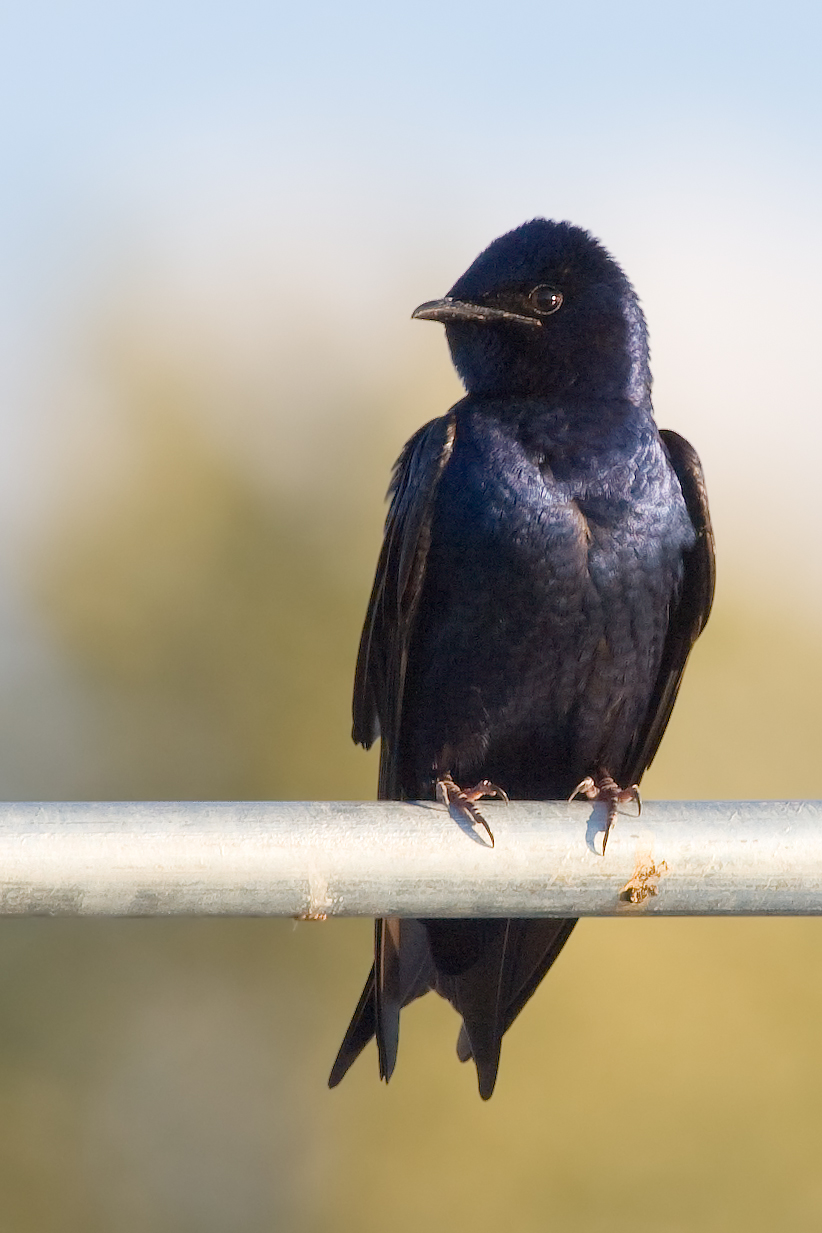 Purple MartinProgne subis
-
 Welcome SwallowHirundo neoxena
-
 Western House MartinDelichon urbicum
-
 Tree SwallowTachycineta bicolor
-
 Sand MartinRiparia riparia
-
 Cliff SwallowPetrochelidon pyrrhonota
-
 Eurasian Crag MartinPtyonoprogne rupestris
Compare
Questions and answers
What is the scientific name of the White-backed Swallow?
The scientific name of the White-backed Swallow is Cheramoeca leucosterna. Written with its author, the full name is Cheramoeca leucosterna (Gould, 1841).
Which family does the White-backed Swallow belong to?
Cheramoeca leucosterna belongs to the family Hirundinidae, in the order Passeriformes and the class Aves.
Where is the White-backed Swallow found?
Checklists and occurrence records place Cheramoeca leucosterna in 1 country: Australia.
What is the conservation status of the White-backed Swallow?
The IUCN Red List category recorded for Cheramoeca leucosterna is Least Concern (LC).
What are the different types of swallows?
The White-backed Swallow is the only species assigned to the genus Cheramoeca.[26]
Sources
Passages the profile rests on
- The adult has a white back and most of the breast is white, contrasting with its black belly, wings and tail. Source passage: “The back and most of the breast is white. The belly, wings and tail are black.” — English Wikipedia
- The species has a mottled grey cap, white eyebrows and a grey eye. Source passage: “The adult has a mottled grey cap above white eyebrows and a grey eye.” — English Wikipedia
- Its head has a dark stripe extending from the lores across the nape. Source passage: “It has a dark stripe running from the lores and across the nape of the neck.” — English Wikipedia
- The species has a deeply forked tail and curved, pointed wings. Source passage: “The white-backed swallow has a deeply forked tail, with curved and pointed wings.” — English Wikipedia
- Its bill is short and black, while its legs and feet are grey. Source passage: “The short bill is black; the legs and feet are grey.” — English Wikipedia
- The species has a slender, streamlined body. Source passage: “It has a slender, streamlined body.” — English Wikipedia
- Its eyes have prominent dark irises. Source passage: “The eyes consist of a prominent, dark iris.” — English Wikipedia
- Males and females have similar colouring. Source passage: “The sexes have similar colouring” — English Wikipedia
- Juveniles have duller colouring than adults. Source passage: “during adolescence the white-backed swallow has duller colours.” — English Wikipedia
- Adults average 15 cm in length. Source passage: “An adult white-backed swallow averages 15 cm long, similar in size to other swallows found in Australia.” — English Wikipedia
- The species prefers open grasslands and areas with low shrubs. Source passage: “White-backed swallows prefer open country, above open grassland and low shrubs.” — English Wikipedia
- The species is associated with arid inland Australia. Source passage: “A very distinctive black-and-white swallow of arid inland Australia.” — ebird.org
- During breeding, the species strongly prefers habitats around creek beds. Source passage: “During the breeding season, they have a strong preference for habitats around creek beds.” — English Wikipedia
- The species prefers creek-bed habitats during its breeding season. Source passage: “During the breeding season, they have a strong preference for habitats around creek beds.” — English Wikipedia
- The species is insectivorous and captures insects while flying. Source passage: “White-backed swallows are insectivorous and feed in-flight on insects, like all known swallows.” — English Wikipedia
- The composition of its diet varies geographically and seasonally. Source passage: “The composition of their diet varies by geographic region and with the time of year.” — English Wikipedia
- The species is adapted to aerial feeding. Source passage: “As with all swallows, it is characterised by adaptation to aerial feeding.” — English Wikipedia
- Individuals can extend their range into desert regions following inland rainfall. Source passage: “Occasionally, after inland rainfall, white-backed swallows can extend their range to encompass the entire southern portion of Australia including the desert regions.” — English Wikipedia
- The species constructs nests by digging horizontal tunnels into vertical dirt cliffs. Source passage: “They typically nest by digging a horizontal tunnel into a vertical dirt cliff.” — English Wikipedia
- Foxes and cats are known predators of the species' nests. Source passage: “Predation of swallows nests is known to occur, typically from foxes and cats.” — English Wikipedia
- The species is classified as Least Concern by the IUCN. Source passage: “Due to the large range and increasing population, the white-backed swallow is categorised as least concern by the IUCN.” — English Wikipedia
- The species was most recently assessed for the IUCN Red List in 2024. Source passage: “White-backed Swallow Cheramoeca leucosterna has most recently been assessed for The IUCN Red List of Threatened Species in 2024.” — iucnredlist.org
- The species is reported to be common despite the absence of a population count. Source passage: “There is no population count, but the species is reported to be common.” — English Wikipedia
- The population is estimated to be increasing, partly because of range expansion associated with land clearance and mining. Source passage: “Due to range expansion from land clearance and mining, the population is estimated to be increasing.” — English Wikipedia
- The grey-rumped swallow is identified as the species' closest relative. Source passage: “Phylogenetic analysis has shown that the white-backed swallow is most closely related to the grey-rumped swallow (Pseudhirundo griseopyga) that is widely distributed across Africa.” — English Wikipedia
- The White-backed Swallow is the only species assigned to the genus Cheramoeca. Source passage: “The white-backed swallow is now the only species placed in the genus Cheramoeca” — English Wikipedia
Data
- Catalogue of Life, 2026-10-16 XR cc by
- Global Biodiversity Information Facility CC BY 4.0
- Wikidata CC0
- GeoNames CC BY 4.0
- Wikimedia Commons per image; credit shown with each image
- Within the Catalogue of Life, this name comes from The Integrated Taxonomic Information System cc0
This species in other databases
Page built on 26 November 2026. See how the catalog is made and all sources and licences.
Cite this page
ScientificNames.org. (2026). Cheramoeca leucosterna (White-backed Swallow). Retrieved November 26, 2026, from https://scientificnames.org/species/cheramoeca-leucosterna
“Cheramoeca leucosterna (White-backed Swallow).” ScientificNames.org, 2026, scientificnames.org/species/cheramoeca-leucosterna. Accessed 26 Nov. 2026.
ScientificNames.org. “Cheramoeca leucosterna (White-backed Swallow).” Accessed November 26, 2026. https://scientificnames.org/species/cheramoeca-leucosterna.
@misc{scientificnames_cheramoeca_leucosterna_white_backed_swallow,
  author = {{ScientificNames.org}},
  title = {Cheramoeca leucosterna (White-backed Swallow)},
  year = {2026},
  url = {https://scientificnames.org/species/cheramoeca-leucosterna},
  note = {Accessed 2026-11-26}
}